The Museum of Modern and Contemporary Art of Trento and Rovereto, widely recognized by the acronym MART, stands as a premier pillar of European cultural heritage, bridging the historical weight of the Trentino-Alto Adige region with the avant-garde spirit of the 20th and 21st centuries. Located in Rovereto, a city traditionally celebrated for its strategic role in Italian history and its unique status as the "City of Peace," MART has redefined the local urban landscape through its architectural grandeur and its rigorous preservation of the Futurist movement. Since its inauguration in 2002, the museum has functioned not merely as a repository for art but as a dynamic cultural engine that influences regional tourism, international academic research, and the conceptual dialogue between institutional order and artistic rebellion.
The Architectural Vision of Mario Botta and Giulio Andreolli
The MART facility is an architectural masterpiece designed by the renowned Swiss architect Mario Botta in collaboration with the Rovereto-born engineer Giulio Andreolli. The structure is a testament to the "Late Modern" style, characterized by clean lines, geometric precision, and a sophisticated use of materials such as Vicenza stone and glass. The most iconic feature of the museum is its massive glass and steel dome, which spans a central circular plaza. This dome, inspired by the dimensions of the Roman Pantheon, has a diameter of 40 meters and rises to a height of 25 meters. Unlike its ancient predecessor, however, the MART dome is transparent, allowing natural light to flood the central courtyard and creating a seamless transition between the sky and the museum’s interior.
The design of the museum was intentionally integrated into the existing urban fabric of Rovereto. Rather than creating a detached monolith, Botta and Andreolli envisioned a space that connects two 18th-century palaces—Palazzo Alberti and Palazzo Annona—thereby linking the city’s historical past with its contemporary ambitions. The central plaza serves as a public "agora," a communal space that invites residents and visitors alike to engage with the architecture before even entering the exhibition halls. This design philosophy emphasizes the museum’s role as a civic center, emphasizing accessibility and transparency in an era where cultural institutions are often viewed as exclusionary.
The Legacy of Fortunato Depero and the Futurist Movement
While MART’s architecture is a draw for global tourists, its soul is deeply rooted in the legacy of Fortunato Depero, a titan of the "Second Futurism" movement. Unlike the initial wave of Futurism, which was largely centered in Milan and focused on the glorification of speed and industrial machinery, Second Futurism—of which Depero was a leading figure—expanded into the realms of applied arts, advertising, and interior design.
In 1919, Depero founded the "Casa d’Arte Futurista Depero" in Rovereto, a unique institution that functioned as a workshop, gallery, and living experiment in Futurist aesthetics. This was the only museum founded by a Futurist artist during their lifetime, and it remains a vital component of the MART institutional network. Depero’s influence is visible throughout Rovereto, a town that has embraced his "breaking of rules" as a core part of its identity. His work, characterized by bold geometric shapes, vibrant colors, and a playful yet mechanical aesthetic, revolutionized graphic design and commercial branding—most notably through his iconic 1932 design for the Campari Soda bottle, which remains in production today.
The permanent collection at MART houses approximately 20,000 works, with a significant portion dedicated to Futurism. The institution serves as the primary archive for the movement, holding the personal papers, sketches, and manifestos of various Futurist artists. This concentration of resources has made Rovereto a global hub for scholars of the Italian avant-garde.
Chronology of Institutional Development
The evolution of MART from a regional initiative to an international powerhouse followed a structured timeline of growth and expansion:
- 1987: The MART institution is officially established as a collaborative effort between the Autonomous Province of Trento and the Municipality of Rovereto. The initial goal was to manage the provincial art collections and the Depero legacy.
- 1991: The architectural competition for the new headquarters in Rovereto is finalized, with Mario Botta and Giulio Andreolli selected to lead the project.
- 2002: On December 15, MART officially opens its main facility in Rovereto. The opening ceremony marks a turning point for the Trentino region, signaling its intent to become a major player in the European contemporary art circuit.
- 2009: Following extensive restoration, the Casa d’Arte Futurista Depero is reopened to the public as a satellite of MART, further solidifying the museum’s connection to the town’s historical center.
- 2010–2020: The museum expands its focus to include major retrospectives of international artists and thematic exhibitions exploring the intersections of art, science, and politics.
- 2024–2026: MART implements new digital archives and interactive exhibition paths, aiming to modernize the visitor experience while maintaining the integrity of its physical collections.
Curatorial Philosophy and the Visitor Experience
A recurring point of discussion among visitors and critics alike is the structured nature of the museum experience within MART. The museum utilizes a specific navigational logic, often directing visitors through a chronological or thematic "path" that maximizes the impact of the exhibition design. This institutional rigidity occasionally creates a paradox: in a city that celebrates Depero’s rule-breaking spirit, the museum itself operates with a high degree of order.
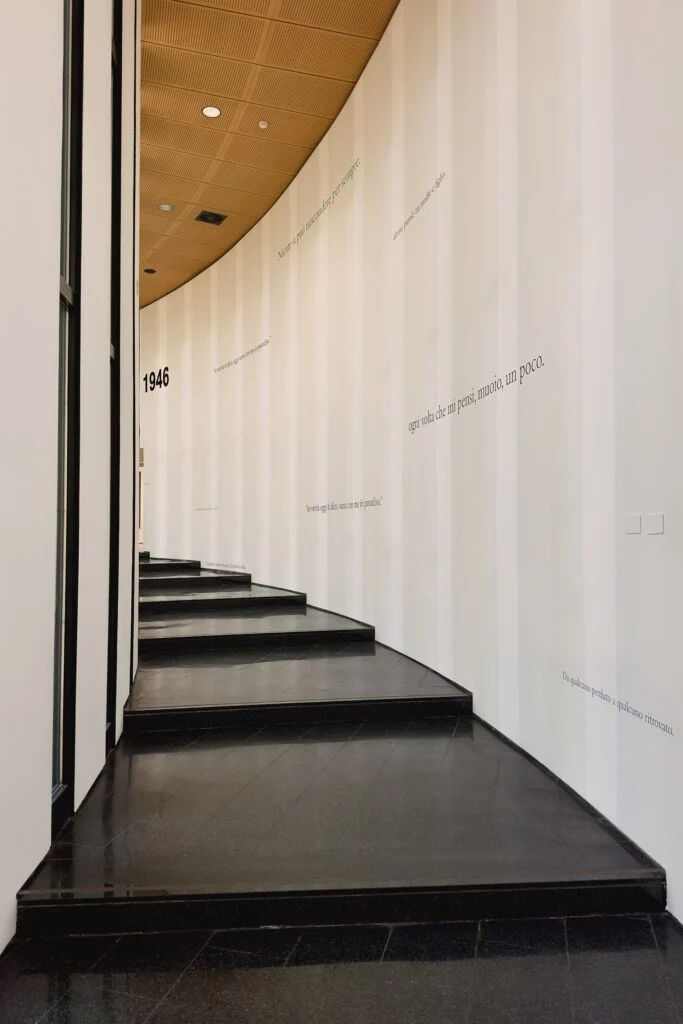
For instance, the transitional spaces—such as the curved staircases connecting the final exhibition rooms to the main hall—are designed for efficient visitor flow. While some visitors may find the strict directions of museum assistants to be at odds with the "rebellious" nature of the art on display, curators argue that this structure is necessary to manage the facility’s complex layout and to ensure that the narrative arc of the exhibitions is maintained. This tension between the avant-garde content and the formal institutional container is a defining characteristic of modern museum management, where the safety of the works and the clarity of the educational message must be balanced against the artist’s original intent of disruption.
Supporting Data and Economic Impact
The impact of MART on the Trentino-Alto Adige region is quantifiable through both visitor statistics and economic contributions. According to regional tourism data:
- Annual Attendance: MART consistently attracts between 150,000 and 200,000 visitors annually, making it one of the most visited modern art museums in Italy outside of Milan and Rome.
- Collection Size: The museum manages over 20,000 works of art, spanning from the mid-19th century to the present day, with a valuation estimated in the hundreds of millions of euros.
- Economic Multiplier: Cultural tourism in Rovereto has seen a 25% increase in hotel stays and local commerce revenue since the museum’s opening, as it serves as a primary "anchor" for travelers moving between Verona and the Dolomites.
- Educational Outreach: The museum’s education department hosts over 1,500 workshops and guided tours for schools annually, serving as a critical resource for the Italian national curriculum.
Official Responses and Institutional Perspectives
Institutional leaders at MART have frequently emphasized the museum’s role as a bridge-builder. In recent statements, the museum’s administration highlighted that the facility was designed to be "a place for everyone," regardless of their prior knowledge of contemporary art. The administration’s focus has increasingly shifted toward sustainability and the preservation of the "Depero DNA," ensuring that the Futurist spirit remains relevant in a digital age.
Critics and art historians have noted that MART’s strength lies in its ability to contextualize Italian art within a global framework. By hosting international exhibitions alongside its permanent Futurist collection, the museum prevents the local legacy from becoming stagnant or purely nostalgic. Instead, it positions Depero and his contemporaries as precursors to modern digital aesthetics and industrial design.
Broader Implications and Future Outlook
The significance of MART extends beyond the borders of Rovereto. It serves as a model for how smaller European cities can leverage cultural heritage to achieve global visibility. In an era where "over-tourism" plagues cities like Venice and Florence, MART offers a sustainable alternative—a high-quality cultural experience in a mid-sized urban environment that values quality over quantity.
Looking forward, MART is expected to deepen its exploration of the "Second Futurism" while also addressing contemporary issues such as environmental sustainability and social cohesion through art. The museum’s future strategy involves the further integration of augmented reality (AR) within its exhibition spaces, allowing visitors to see the "rules" of the museum interact with the "chaos" of the art in real-time.
In conclusion, MART is more than a building or a collection; it is a manifestation of the Italian capacity to harmonize history with innovation. From the geometric perfection of Mario Botta’s dome to the rebellious spirit of Fortunato Depero, the museum stands as a vital landmark on the European cultural map, inviting visitors to navigate its halls—whether they follow the "right" path or choose to forge their own.