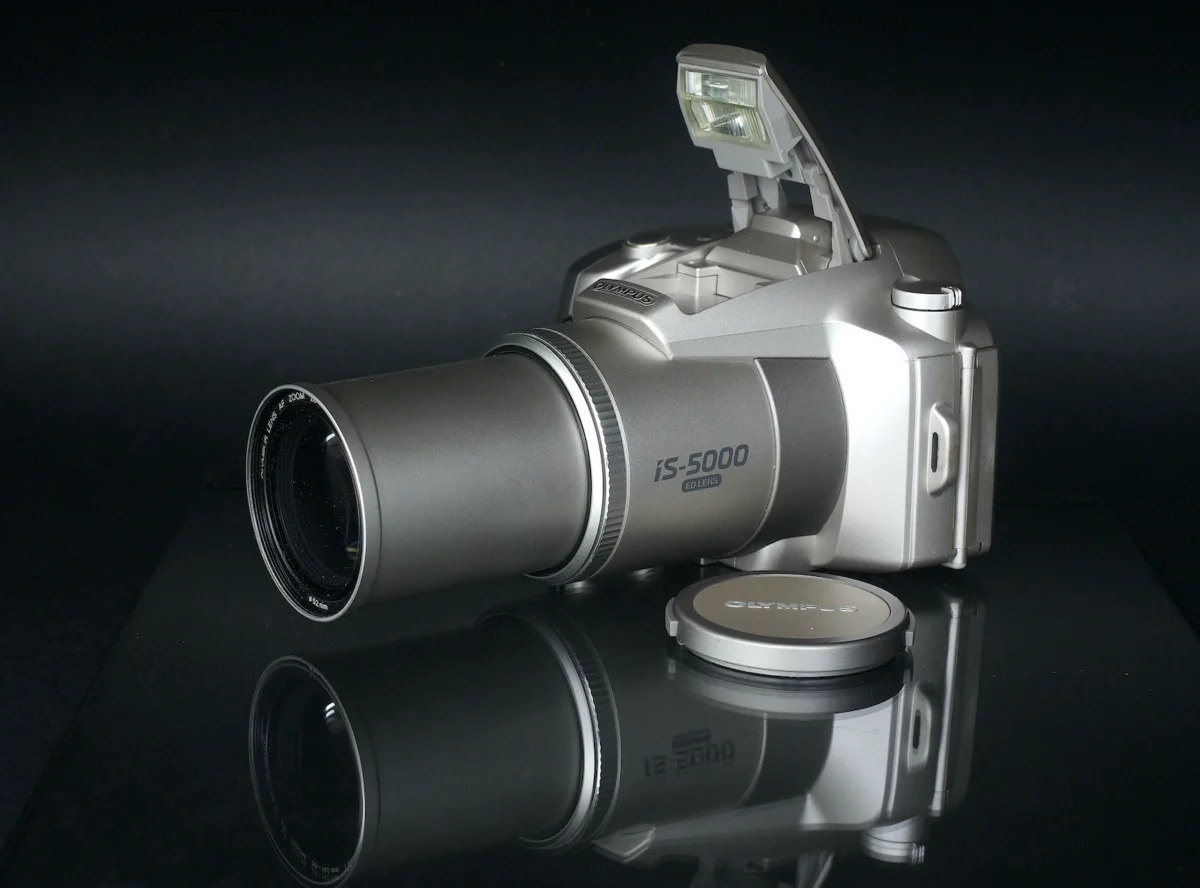
The Olympus IS-5000 arrived at a peculiar crossroads in photographic history, marking one of the final significant attempts to innovate within the analog consumer market. Released in 2002, the IS-5000—known as the L-5000 in the Japanese market—was launched during a period when the industry was rapidly pivoting toward digital sensors. While professional photographers were migrating to early digital single-lens reflex (dSLR) systems like the Canon EOS D60 or the Nikon D100, and casual users were embracing compact digital point-and-shoots, Olympus produced the IS-5000 as a "Zoom Lens Reflex" (ZLR) camera. This category, often referred to as a "bridge camera," sought to combine the high-quality optics and through-the-lens (TTL) viewing of an SLR with the simplified, all-in-one convenience of a fixed-lens compact.
The development of the IS-5000 represented the culmination of a century-long philosophy first articulated by George Eastman of Kodak in 1888: "You press the button, we do the rest." By the early 2000s, this concept had reached its technical zenith in the analog world. The IS-5000 was designed to automate every technical variable of photography—focus, exposure, film transport, and flash management—allowing the user to focus entirely on composition. However, its release coincided with a time when 5-megapixel digital sensors were becoming affordable, rendering the high-tech film bridge camera a niche product almost immediately upon its debut.
A Chronology of the Olympus IS Series
The IS-5000 was the final evolution of a lineage that began in 1990 with the Olympus IS-1000. At the time of the series’ inception, the ZLR concept was revolutionary. Most consumers were forced to choose between a bulky SLR with expensive interchangeable lenses or a pocket-sized point-and-shoot with limited optical capabilities. Olympus identified a "middle ground" for advanced enthusiasts who wanted SLR performance without the complexity of lens changes.
The early 1990s models, such as the IS-1000 and IS-3000, were high-end machines frequently labeled "Made in Japan." These cameras featured fast glass and sophisticated metering systems. As the decade progressed, production shifted to reflect the economic realities of the consumer electronics market. Mid-range models began appearing with "Assembled in China" designations, and by the time the IS-5000 was released in 2002, the transition to Chinese manufacturing was complete. This shift allowed Olympus to maintain a competitive price point as film sales began their terminal decline.
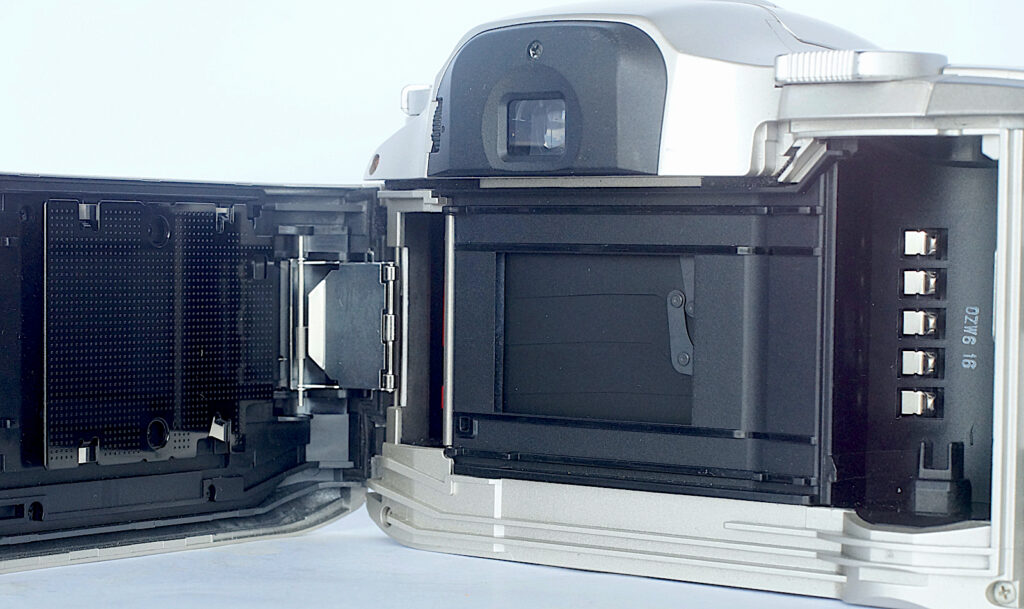
The IS-5000 specifically replaced the IS-500 (or IS-50 in some regions), stretching the zoom range and updating the internal electronics to the most modern standards available before the company fully committed its resources to the Four Thirds digital system.
Technical Specifications and Optical Engineering
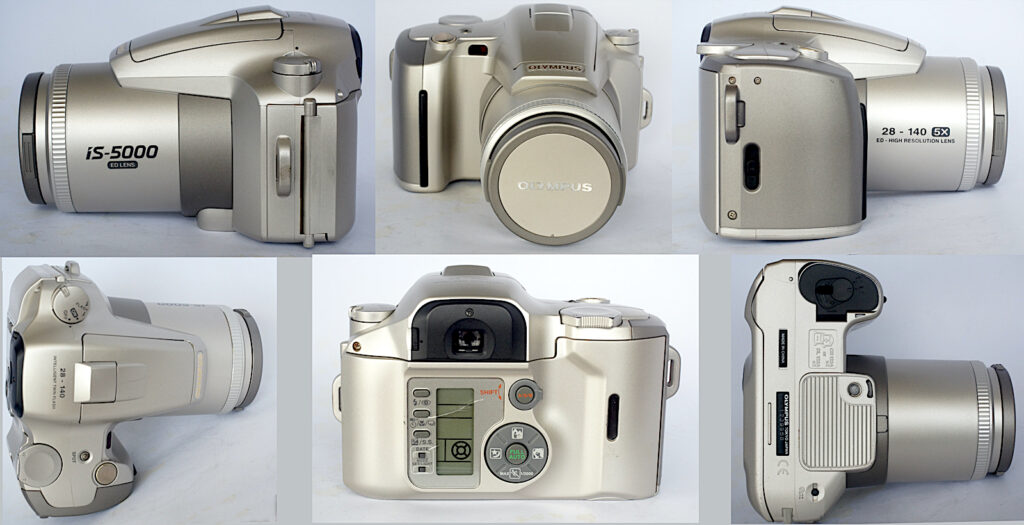
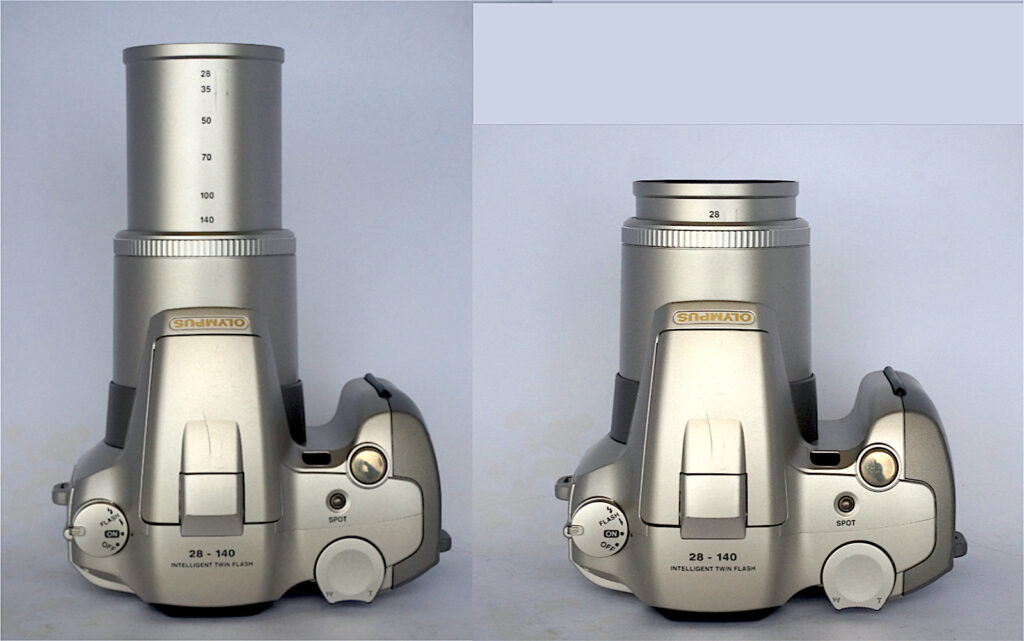
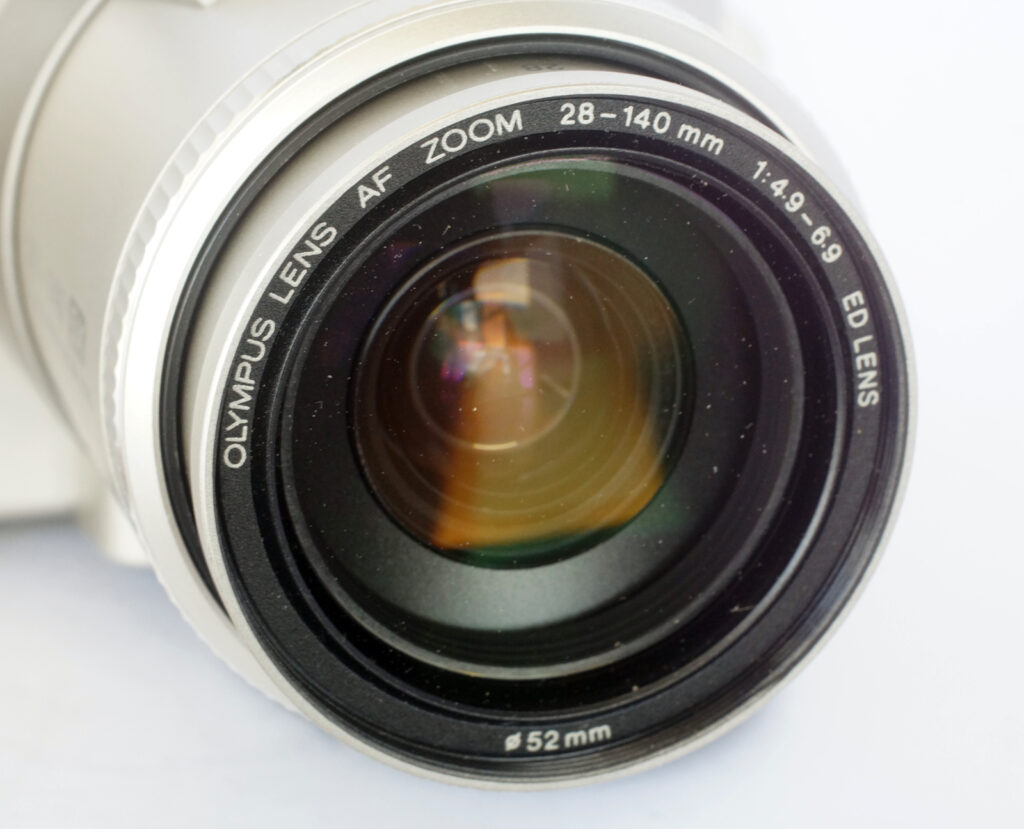
The centerpiece of the Olympus IS-5000 is its integrated 28mm to 140mm power zoom lens. In an era where 3x zooms were standard for compacts, a 5x zoom with a wide-angle starting point of 28mm was a significant selling point. The optical formula is surprisingly complex for a consumer-grade fixed lens, consisting of 15 elements arranged in 10 groups. To combat the chromatic aberrations common in high-magnification zooms, Olympus incorporated a single Extra-low Dispersion (ED) element.
Despite the sophisticated glass, the lens was constrained by its maximum aperture range of f/4.9 at the wide end to f/6.9 at the telephoto end. These relatively "slow" apertures were a necessary trade-off to keep the camera’s physical footprint compact and lightweight. While the apertures limited the camera’s ability to create a shallow depth of field, the integrated "twin tube" flash system was designed to compensate for low-light situations. The flash would automatically deploy and adjust its power based on the focal length and the distance to the subject, ensuring balanced exposures even for novice users.
The camera’s autofocus system featured a predictive "Stop Action" mode, a high-end feature for the time that allowed the camera to track moving subjects and fire the shutter at the calculated point of focus. This was supported by a TTL (Through-The-Lens) phase-detection system. For close-up photography, the IS-5000 offered a macro capability that functioned across the zoom range, with a minimum focusing distance of 0.6 meters at most settings and 0.9 meters at full telephoto.
Design, Ergonomics, and User Interface
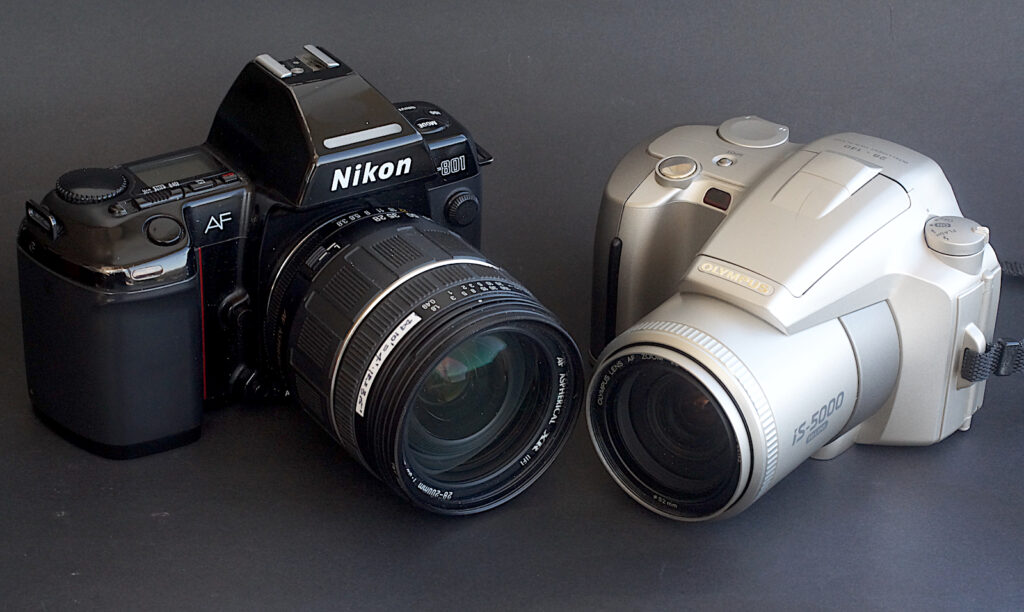
The IS-5000’s design language was a precursor to the modern digital bridge camera. Constructed primarily of high-grade plastics with a brushed aluminum finish, it featured a prominent right-hand grip that housed two 3V CR123A batteries. This design provided a stable shooting platform, mimicking the ergonomics of a professional SLR while remaining significantly lighter than a contemporary Nikon or Canon film body.
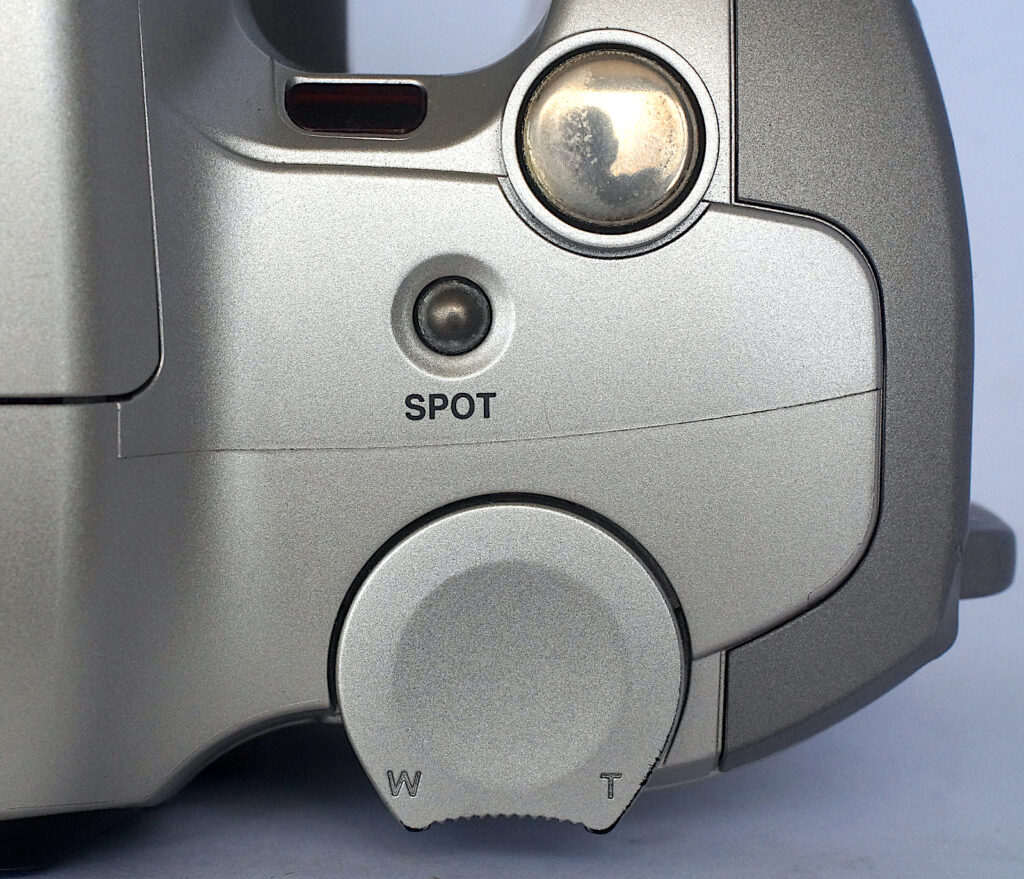
The user interface was centered around a large LCD panel on the camera’s rear, accompanied by a series of "nudge" controls and push buttons. Olympus prioritized "Program" modes over manual control. A large central button allowed users to toggle between:
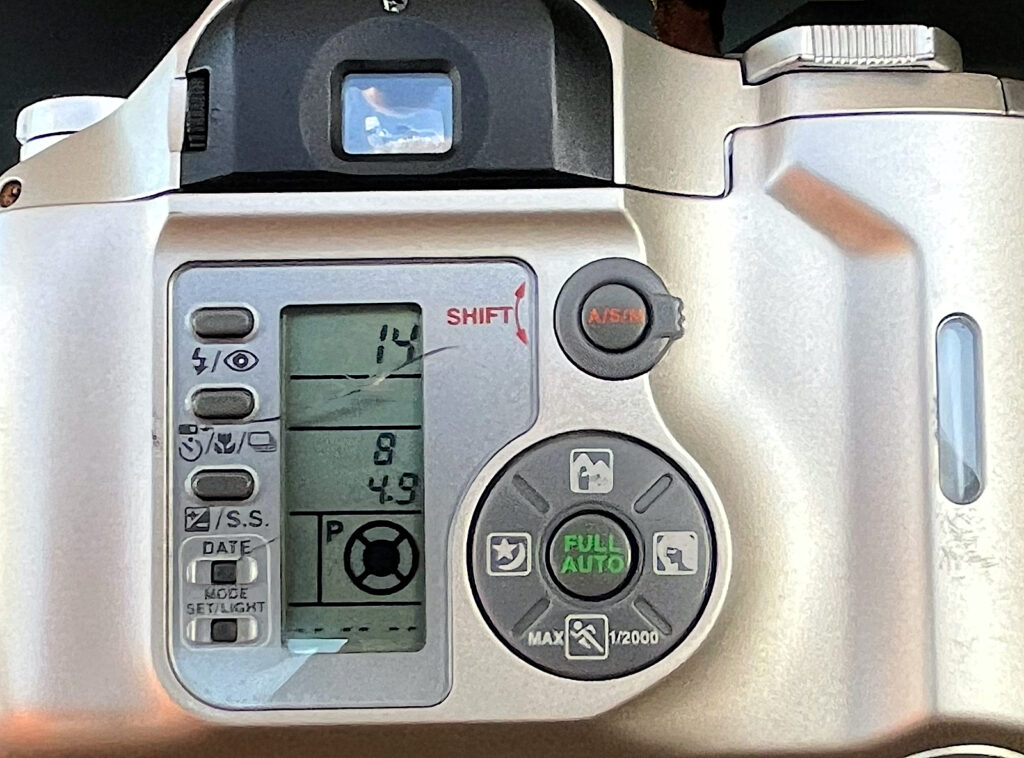
- Full Auto: The camera makes all decisions.
- Landscape: Prioritizes a narrow aperture for maximum depth of field.
- Portrait: Prioritizes the widest available aperture to soften backgrounds.
- Stop Action: Prioritizes high shutter speeds to freeze motion.
- Night Scene: Synchronizes the flash with a slow shutter speed to capture background ambient light.
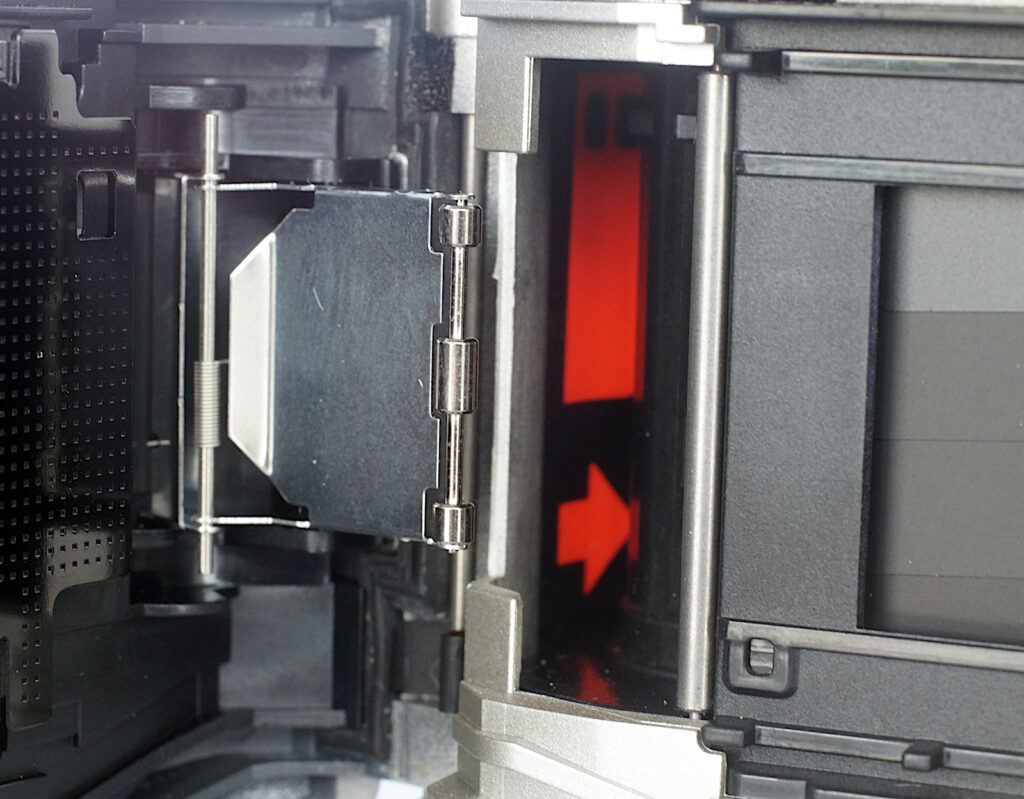
While the camera did offer full PASM (Program, Aperture Priority, Shutter Priority, and Manual) modes, these were buried within the menu system, signaling that the IS-5000 was intended for a demographic that valued convenience over granular control. Additionally, the camera featured an automatic film transport system. Users simply placed the film leader across the take-up drum; closing the back would automatically advance the film to the first frame.
Viewfinder Limitations and Industry Context
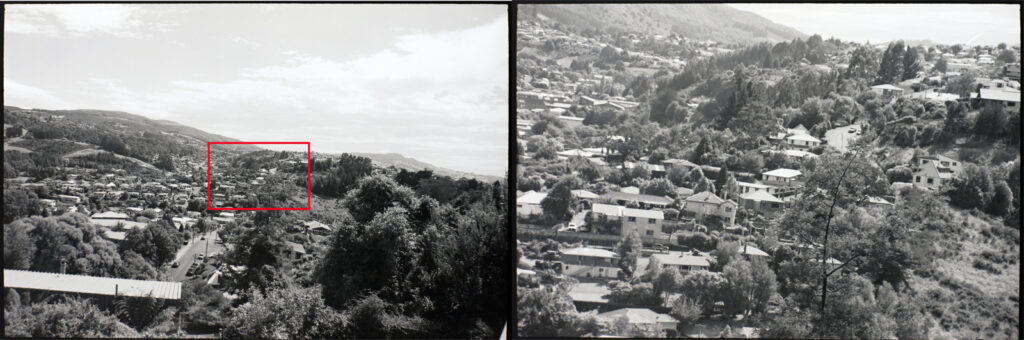
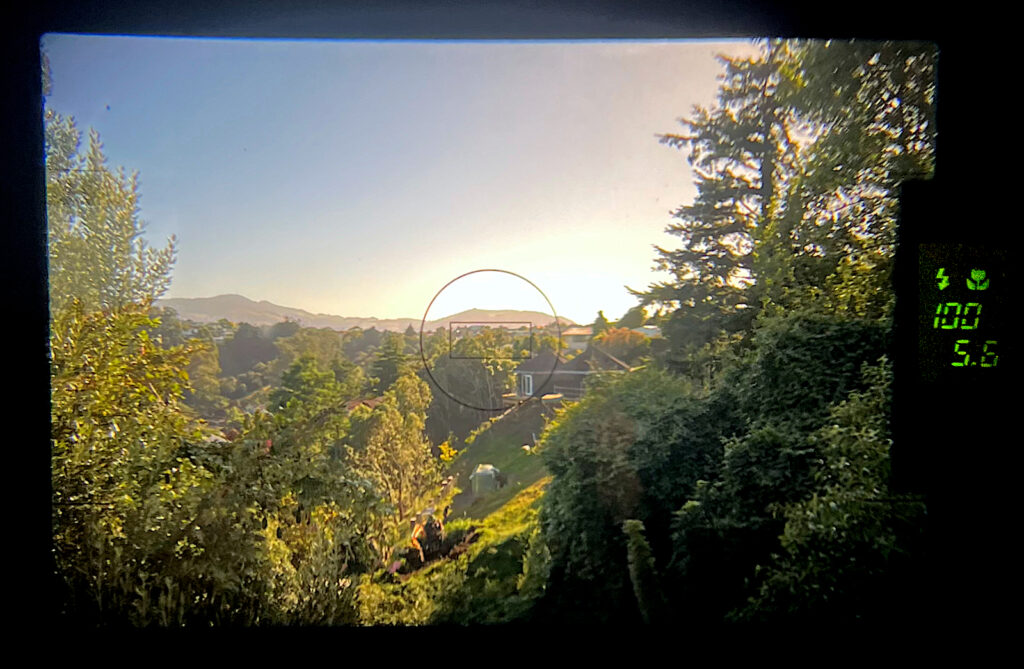
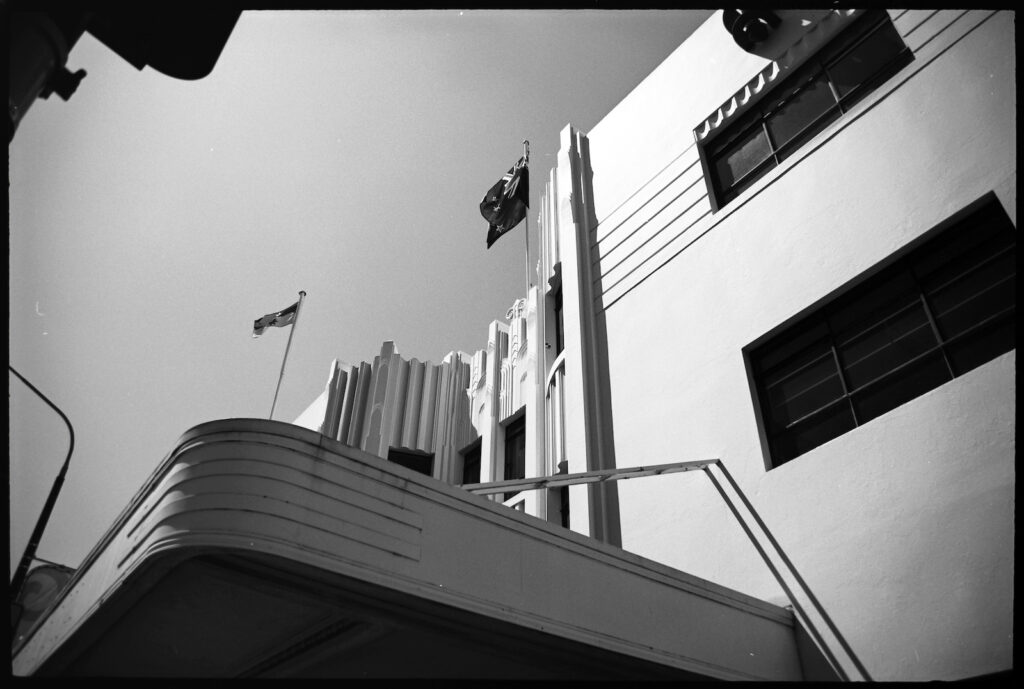
One of the most notable technical compromises of the IS-5000 was its viewfinder. While it was a true TTL system—meaning the user looked through the actual taking lens—it only offered 85% coverage of the final frame. In practical terms, this meant that the resulting negative would contain significantly more visual information at the edges than what the photographer saw through the eyepiece.
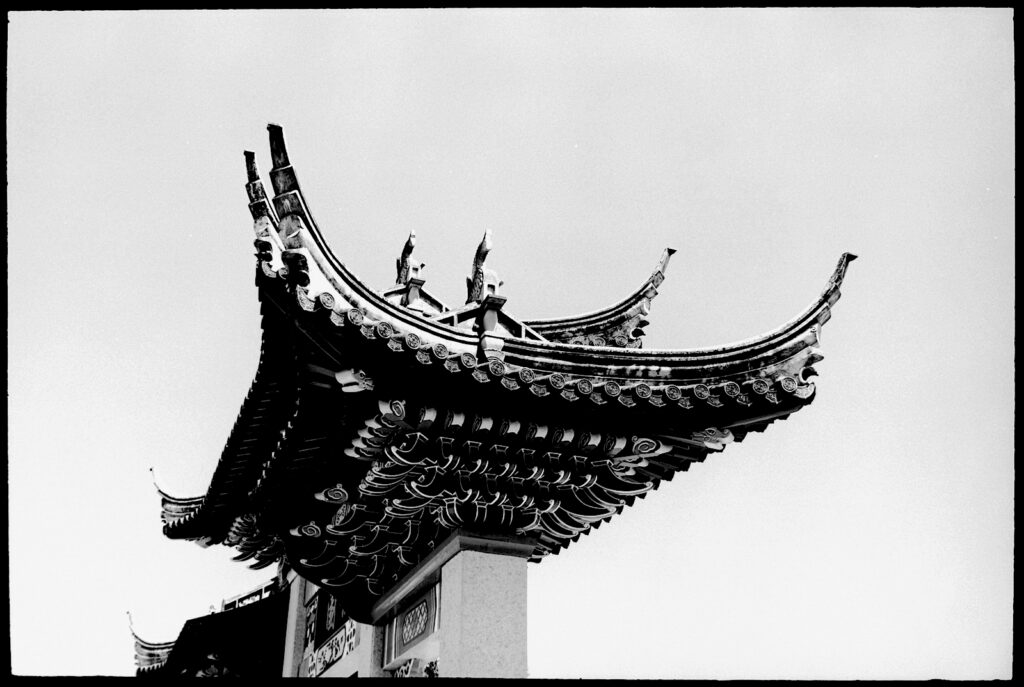
This design choice was likely an intentional move by Olympus to account for the "automated cropping" prevalent in high-speed commercial photo labs of the early 2000s. Most consumer-grade 4×6 prints were slightly cropped during the printing process. By providing an 85% view, Olympus ensured that the user’s intended composition remained intact on the final physical print, even if it led to "intruding elements" appearing on the full negative.

The inclusion of a diopter adjustment was a sophisticated touch, allowing users with varying eyesight to calibrate the viewfinder without the need for spectacles. However, the brightness of the screen was hampered by the lens’s f/4.9–6.9 aperture, making the view darker than that of a professional SLR equipped with an f/2.8 lens.
Market Impact and the Transition to Digital
The Olympus IS-5000 was released into a market that was rapidly evaporating. By 2002, the "Bridge Camera" concept was being successfully ported to digital. Olympus’s own Camedia C-series was already proving that consumers preferred the instant gratification of a digital screen over the delayed results of film.

Data from the Japan Camera Industry Institute (JCII) shows that 2002 was the pivotal year when digital camera shipments began to eclipse film camera shipments globally. In this context, the IS-5000 serves as a "parts bin" masterpiece—a camera that utilized Olympus’s decades of analog expertise and efficient Chinese manufacturing to provide a high-value product for the remaining film loyalists.

The legacy of the IS-5000 is found in today’s "superzoom" digital cameras, such as the Sony RX10 series or the Nikon P1000. These modern descendants follow the exact blueprint established by the IS series: a fixed, high-magnification zoom lens, an SLR-style body, and a heavy reliance on electronic automation to bridge the gap between amateur and professional results.
Conclusion: The Final Chapter of Consumer Analog
The Olympus IS-5000 was not a revolutionary leap forward, but rather the ultimate refinement of a specific vision for photography. It succeeded in making the technical complexities of 35mm film photography invisible to the user. From the DX-coding that automatically set the film speed to the intelligent flash and predictive autofocus, the IS-5000 was a machine that "did the rest" with remarkable efficiency.
Today, the IS-5000 remains a durable and capable option for film enthusiasts who appreciate the ZLR form factor. Despite its plastic construction and "Made in China" origins, many units remain functional decades later, a testament to the robust electronic engineering of the late analog era. It stands as a historical marker—the point where the century-long development of the consumer film camera reached its end, handing the baton to the digital age. For those who still choose to shoot film, the IS-5000 offers a glimpse into the peak of analog convenience, providing a shooting experience that is as intuitive as a modern smartphone but with the unmistakable character of 35mm silver halide.