The global resurgence of analogue photography has not only revitalized the production of traditional 35mm and medium-format films but has also sparked a renewed interest in "sub-miniature" formats, most notably the 110-cartridge system. Once considered a consumer-grade relic of the 1970s and 80s, the 110 format is currently experiencing a niche revival, driven by enthusiasts seeking the unique grain and aesthetic of small-scale negatives. Central to this movement is the challenge of sustainability and supply; with fewer manufacturers producing fresh 110 stock, photographers have increasingly turned to "reloading"—the process of cutting down larger film formats to fit sub-miniature cartridges. Addressing this technical gap is Ausgeknipst, a specialized engineering firm based in Würzburg, Germany, which has introduced a comprehensive suite of 3D-printed accessories designed to streamline the 110 and 16mm workflow.
The Intersection of Additive Manufacturing and Analogue Preservation
Ausgeknipst’s entry into the market represents a growing trend where additive manufacturing (3D printing) is utilized to solve hardware shortages in the analogue industry. By producing bespoke tools that would be prohibitively expensive to manufacture via traditional injection molding, the company provides solutions for film slitting, cartridge reloading, and specialized development. The recent release of their 110-range follows an iterative development cycle influenced by the global "maker" community and prominent analogue photography platforms such as 35mmc.
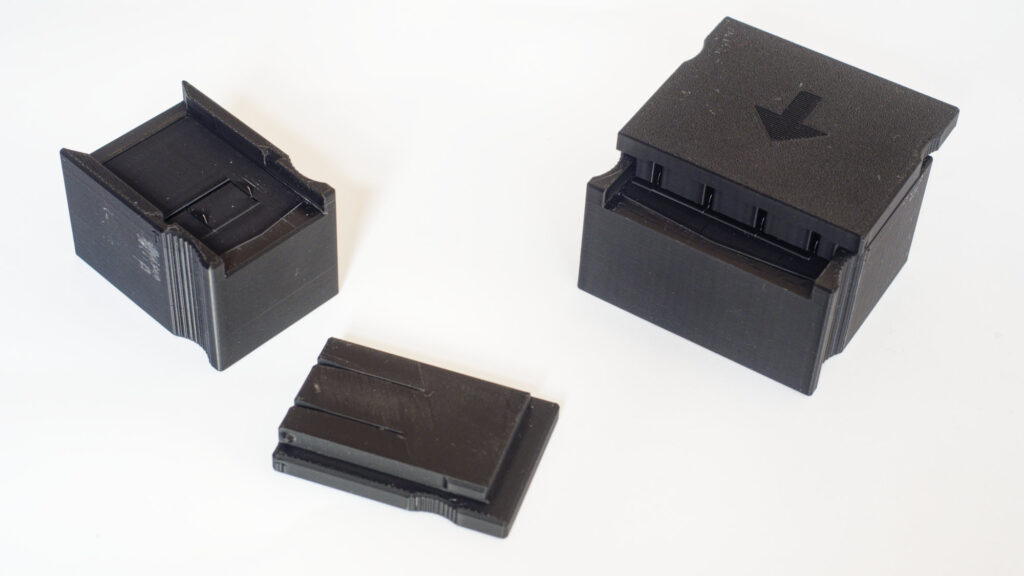
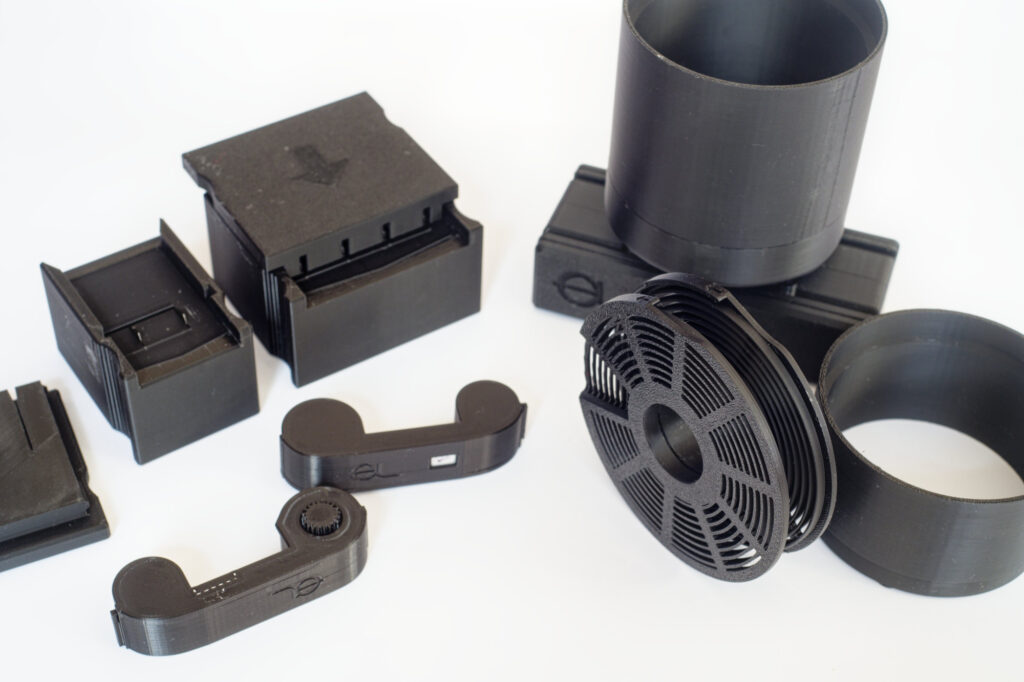
The product lineup evaluated includes precision film cutters for 120 and 135 formats, reloadable 110 cartridges with integrated ISO signaling, specialized developing reels compatible with industry-standard Paterson tanks, and a modular magnetic film holder for digital duplication. This ecosystem aims to provide a "closed-loop" solution for the sub-miniature photographer, from the initial slitting of bulk film to the final digital scan.
Precision Engineering in Film Slitting: The Ausgeknipst Cutters
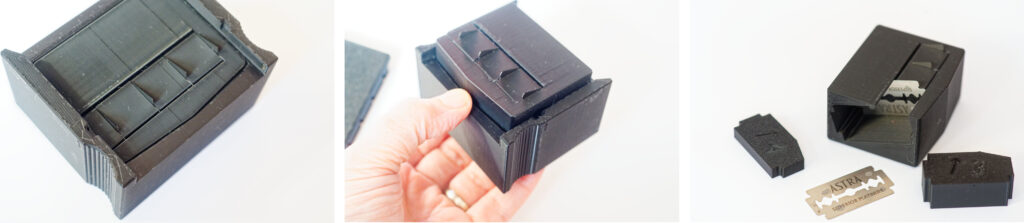
The primary barrier to entry for 110 photography is the scarcity and cost of fresh film. To circumvent this, many photographers utilize 16mm motion picture film or slit down 120 or 135 (35mm) still film. Ausgeknipst has developed two distinct cutters to facilitate this process. The first is designed for 120 roll film, capable of yielding three separate 16mm strips from a single roll, while the second extracts a single 16mm strip from the center of a standard 135 cassette.
From a technical standpoint, the cutters utilize standard double-edged safety razor blades, a choice that ensures low operating costs and high accessibility for the end-user. The design exposes only the final 10mm of the blade edge, allowing users to rotate the blades four times to utilize all corners before replacement is required. This focus on longevity is paired with a safety-conscious housing that encloses the sharp edges, addressing a common deterrent for DIY enthusiasts.
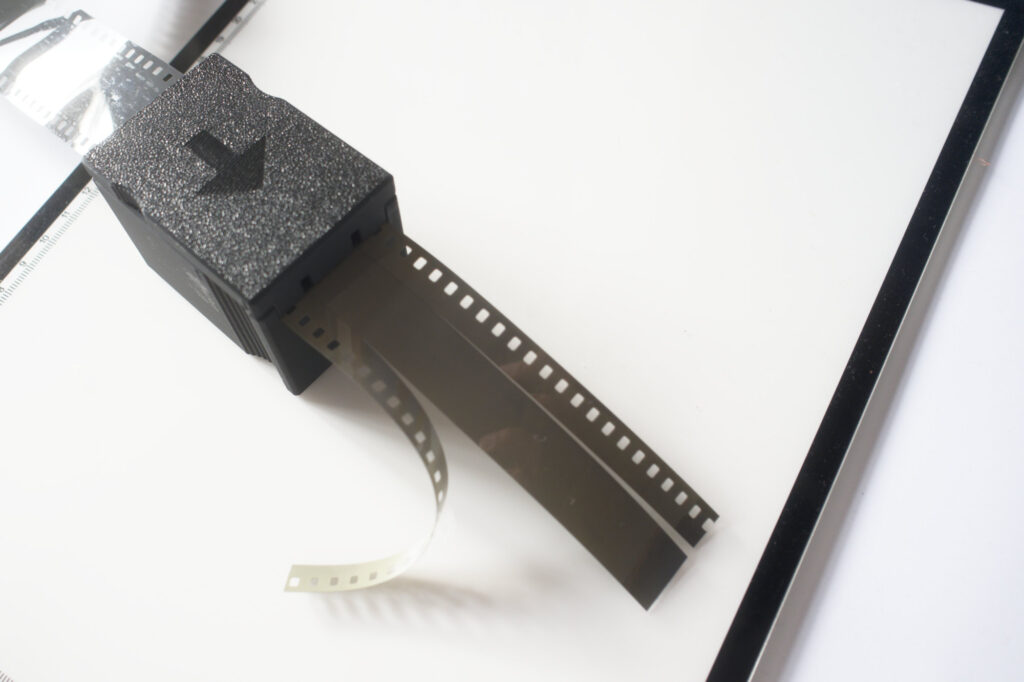
In field testing, the 135 cutter demonstrated superior ease of use, producing a 1.6-meter strip of unperforated 16mm film. The 120 cutter, while more efficient in terms of yield, requires a more significant physical "pull" to move the film and backing paper through the assembly. Technical reports indicate that while the cutters are highly effective, the physical constraints of a dark bag—necessary for handling light-sensitive film—can complicate the process. Photographers are advised to use larger darkroom environments or spacious changing bags to manage the multiple strips of film and backing paper produced during the slitting of 120 stock.
Technical Innovations in 110 Cartridge Design
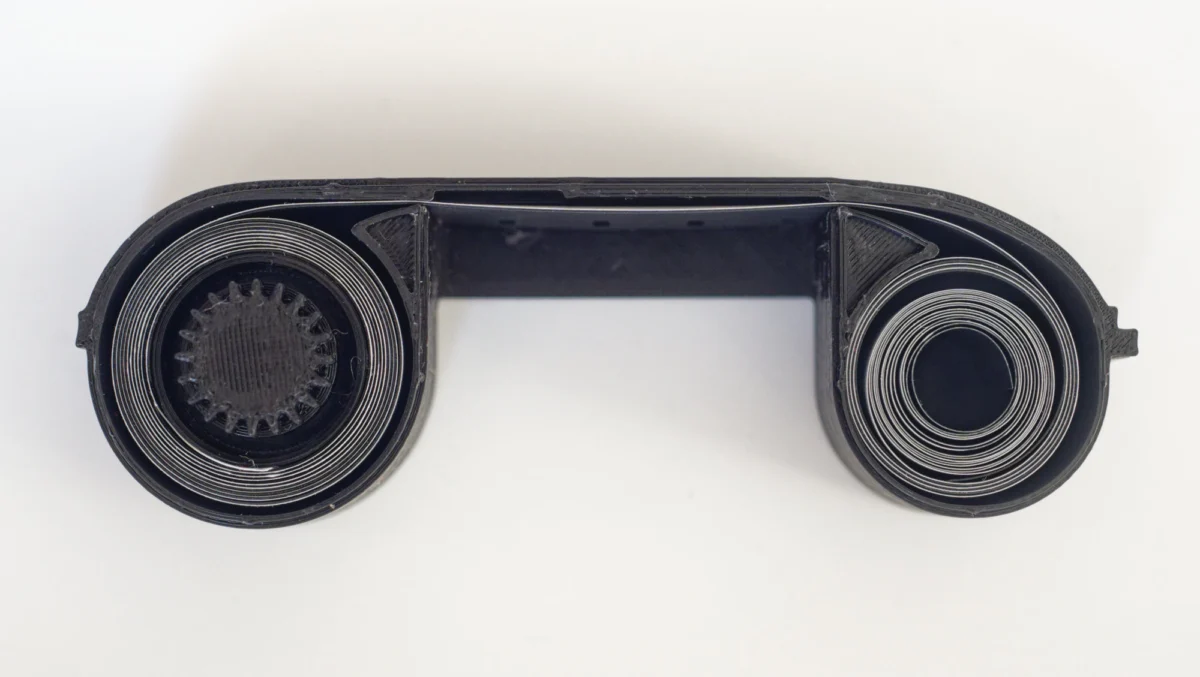
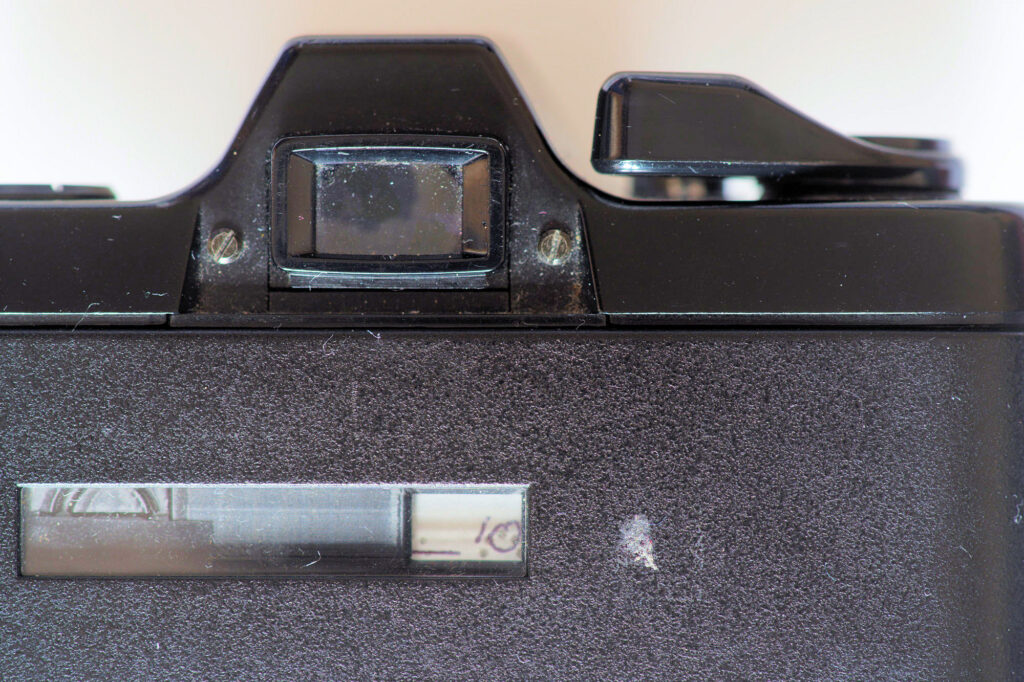
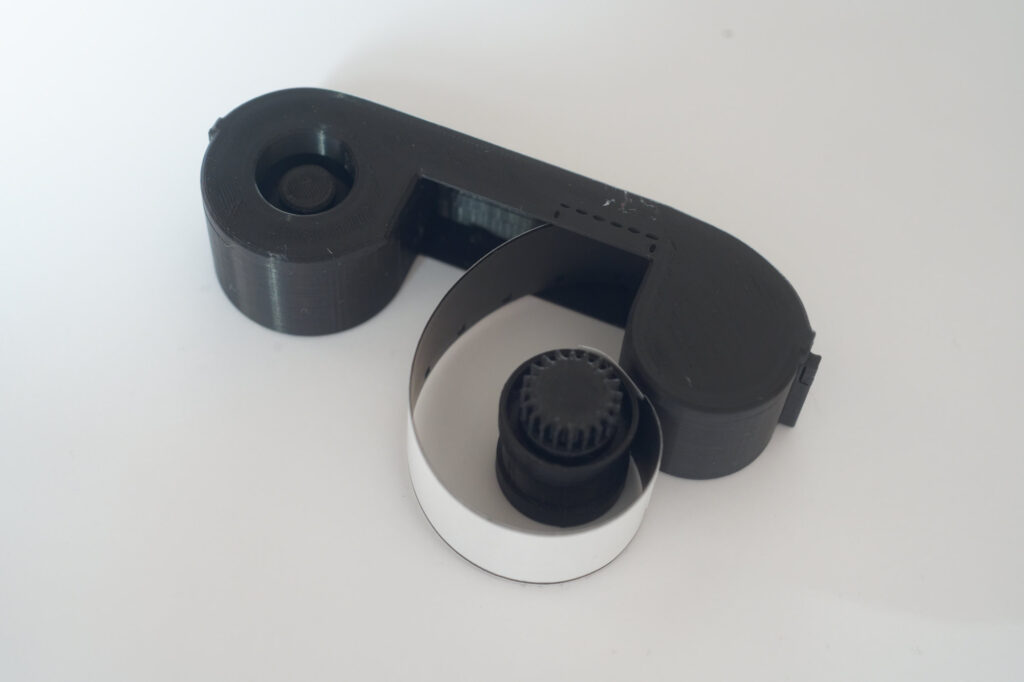
The 110 cartridge is a complex piece of engineering, originally designed by Kodak to be a drop-in, foolproof system. Ausgeknipst offers two versions of their 3D-printed cartridges: a "windowed" version for use with backing paper and a "windowless" version for maximum film capacity.
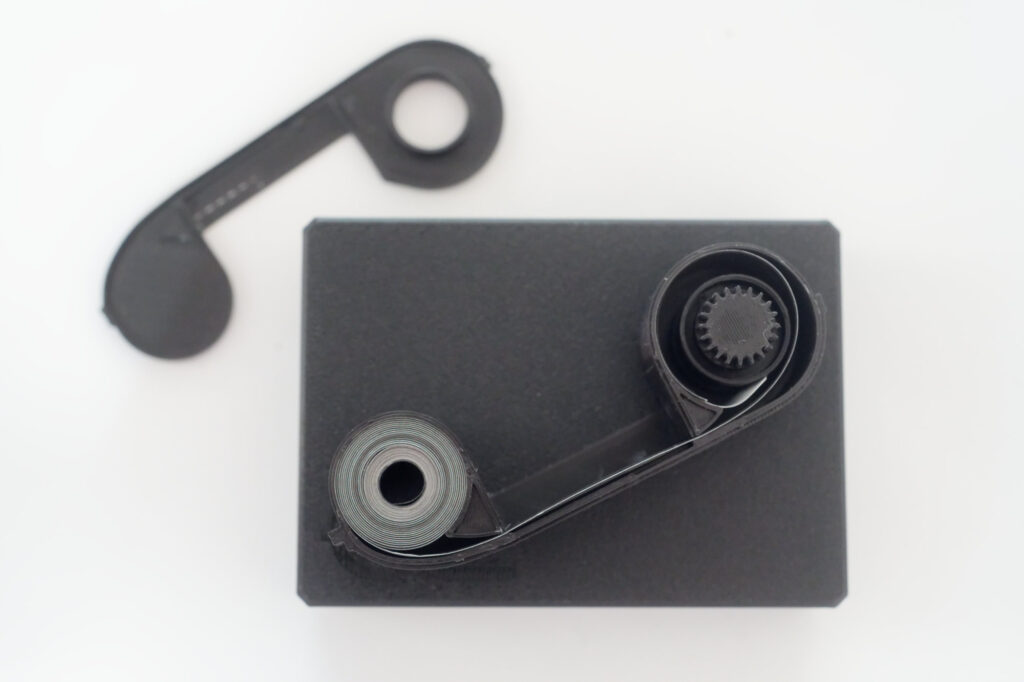
A significant advancement in these cartridges is the inclusion of a "break-away" film speed bar. In the original 110 specification, the physical dimensions of the cartridge signaled the camera’s light meter to set the ISO (typically between "Low" at ISO 64-100 and "High" at ISO 400). The Ausgeknipst design allows users to physically snap off a section of the cartridge to toggle between these settings, ensuring compatibility with sophisticated 110 cameras like the Pentax Auto 110 or the Minolta 110 Zoom SLR.
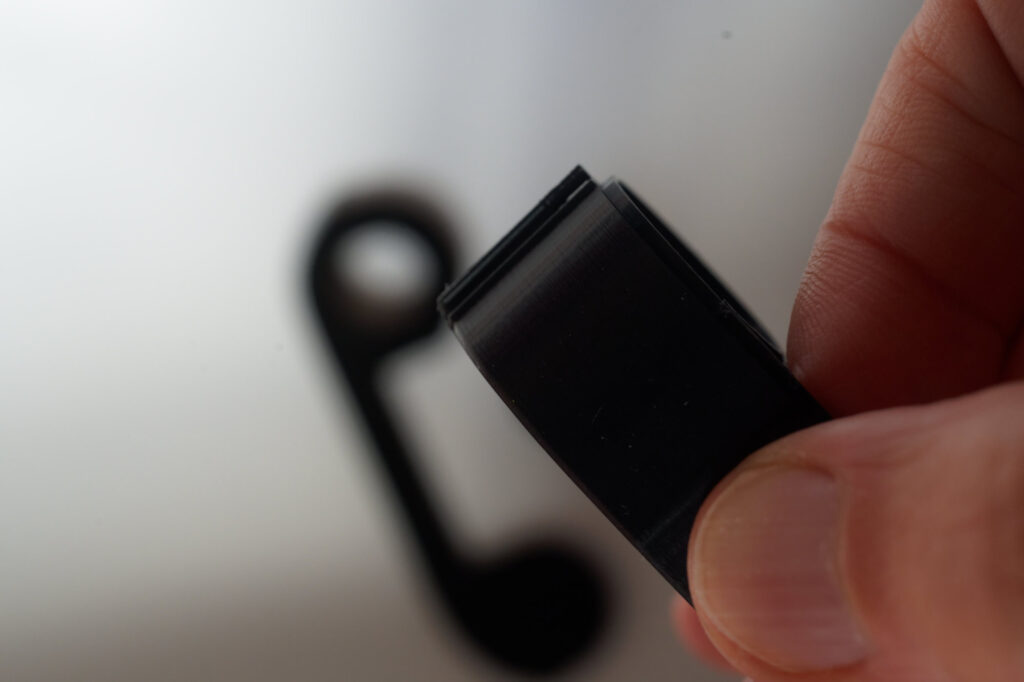
The cartridges are manufactured from PLA, a common 3D-printing polymer. While the material provides a secure, light-tight environment, the tolerances are notably tight. Testing with the Rollei A110, a "push-pull" camera design, revealed that the cartridge’s snug fit can make extraction difficult, sometimes requiring the addition of a pull-tab made from adhesive tape. However, for most cameras, the "click-fit" lid provides a reliable seal that is easier to manage than the glued or taped closures often used in DIY reloads.
Optimizing the Darkroom: 16mm Developing Reels
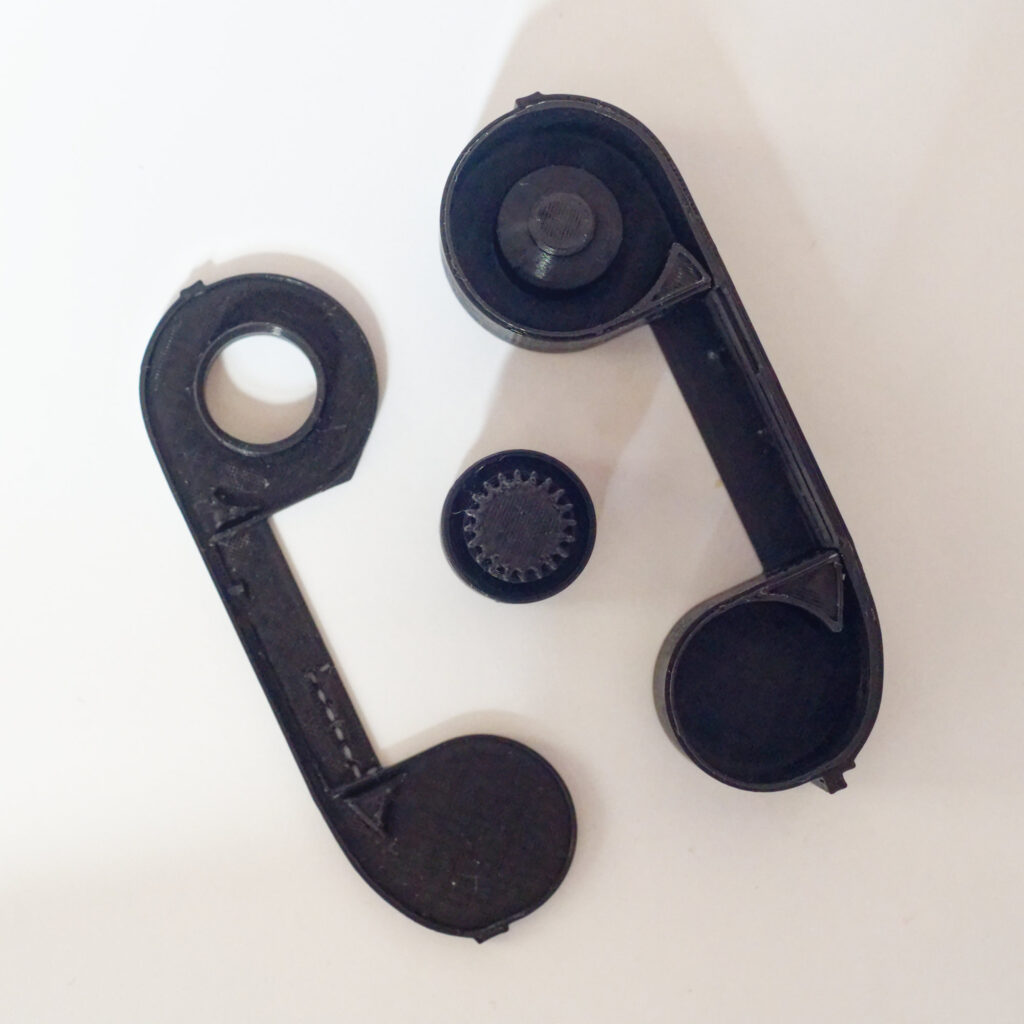
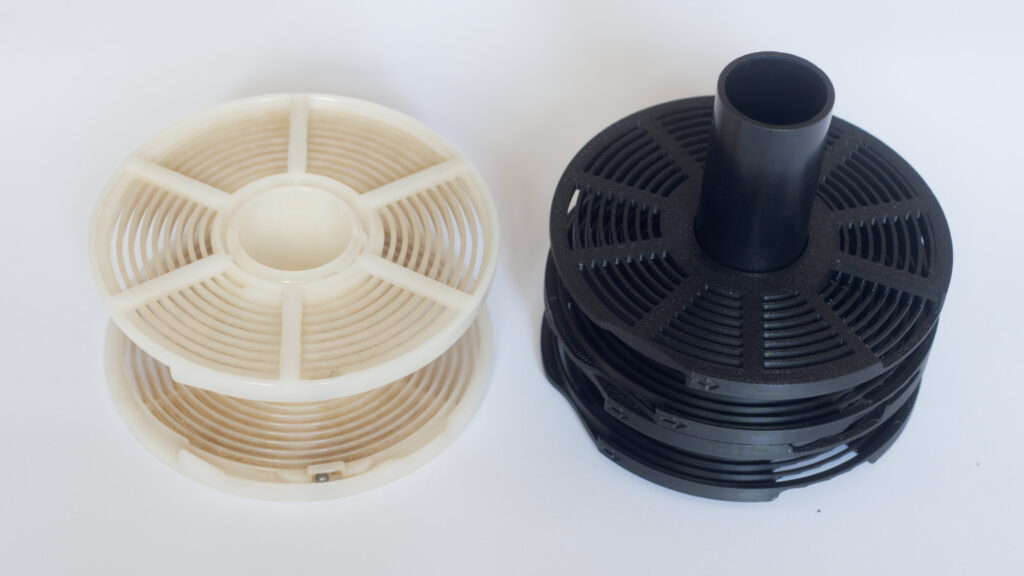
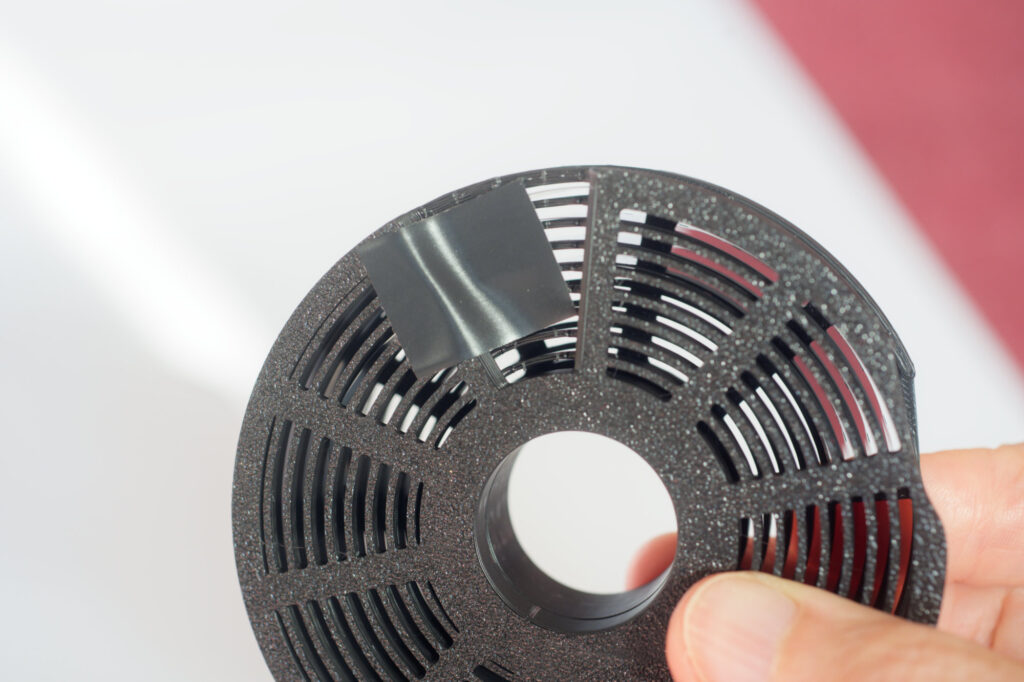
Once the film is exposed, the challenge shifts to chemical processing. Most standard developing tanks are designed for 35mm or 120 film widths. Ausgeknipst has addressed this by creating 16mm reels that fit the center spindle of a standard Paterson tank. Two of these 16mm reels occupy the same vertical space as a single 35mm reel, allowing for high-volume processing in a compact footprint.
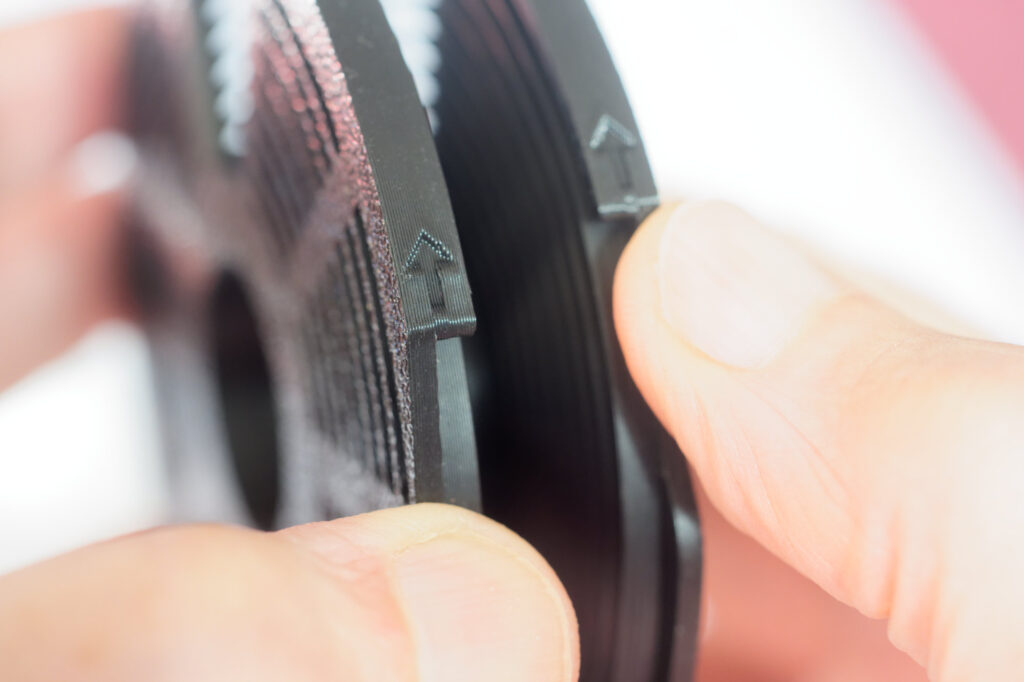
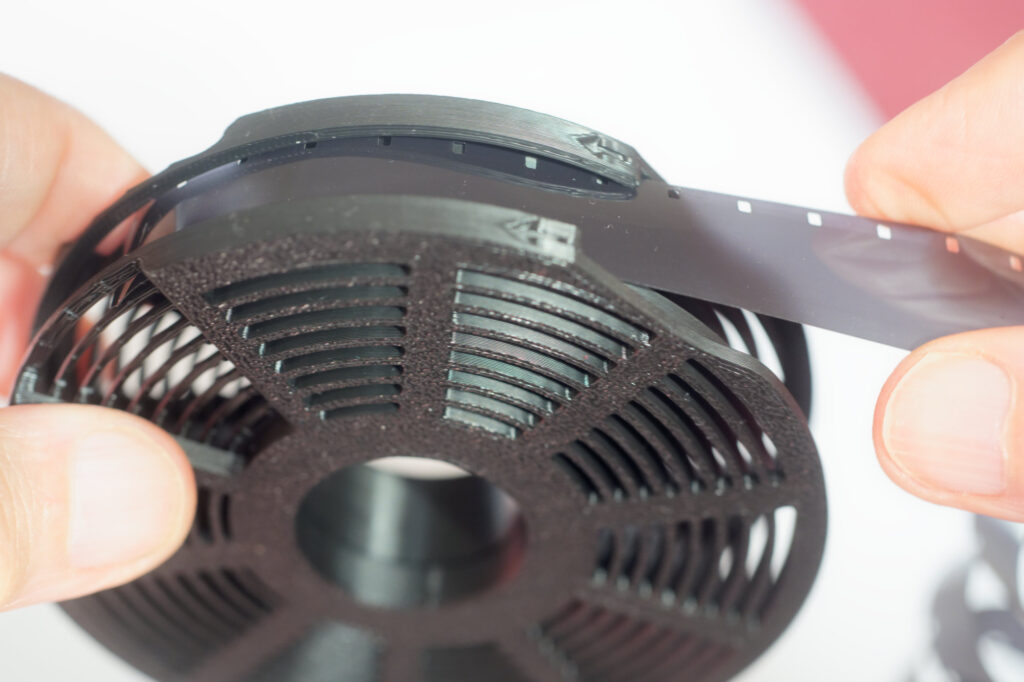
The reels feature an "open-gate" design, which allows the photographer to guide the film by its edges during the loading process. This is a critical ergonomic feature, as unperforated 16mm film can be notoriously difficult to "walk" into a reel using the traditional twisting motion. The use of PLA for these reels necessitates a caution regarding temperature; while perfectly stable at standard C-41 processing temperatures (39°C), the material can warp if exposed to boiling water or extreme direct sunlight during the drying phase.
Digital Integration: The Modular Film Holder
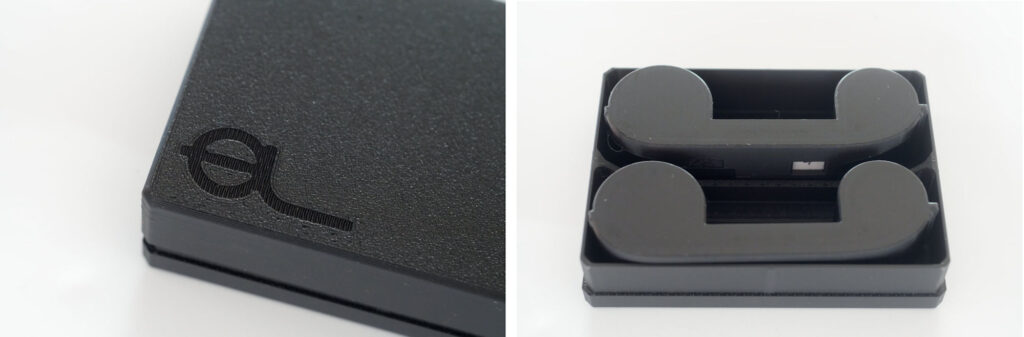
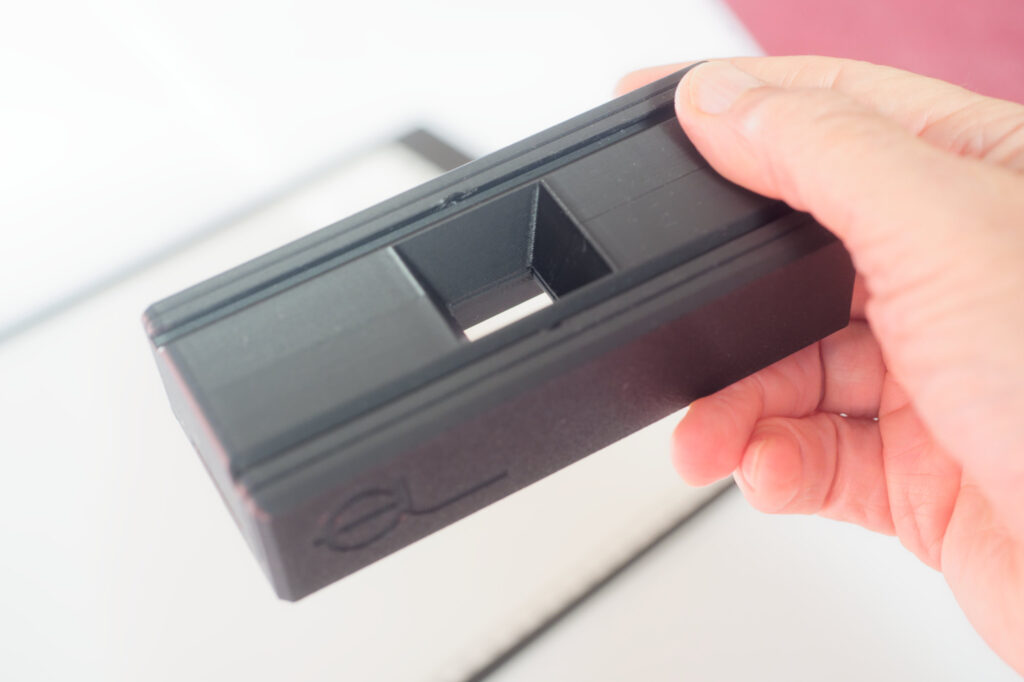
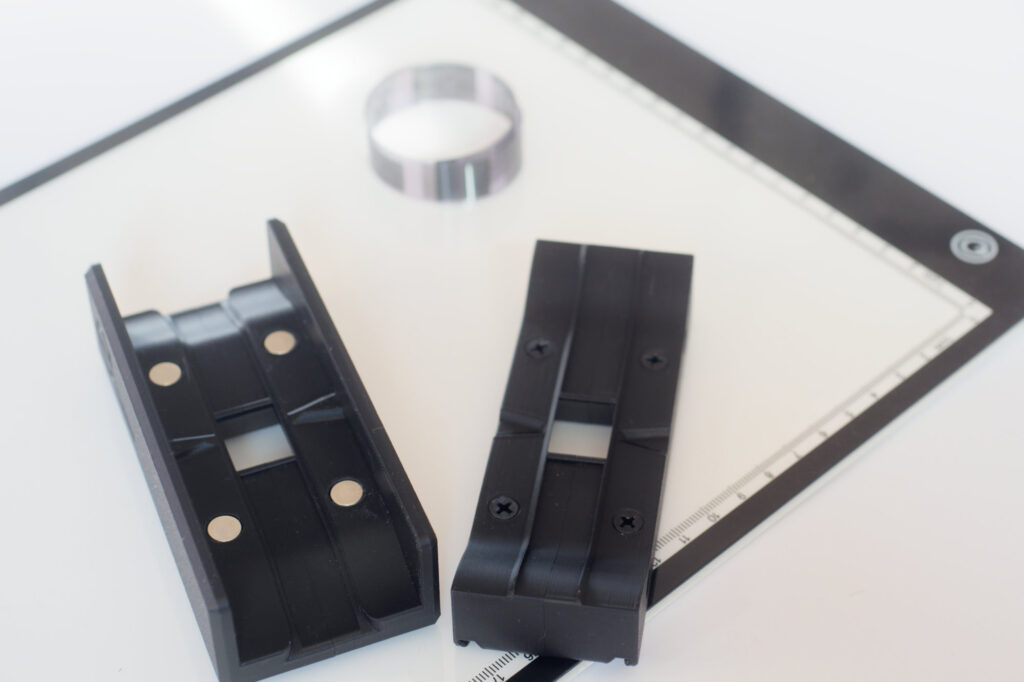
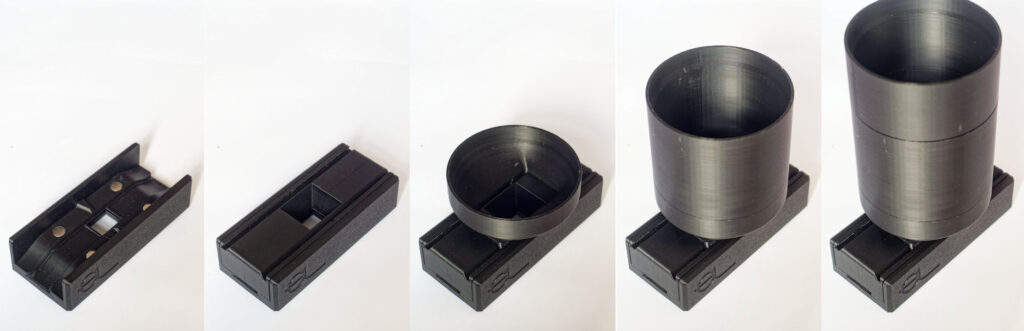
The final stage of the modern analogue workflow is the transition to digital. Ausgeknipst’s "110 Base Plate" system is a modular solution for photographers who use a digital camera to "scan" their negatives. The system utilizes a magnetic "sandwich" design to hold the 16mm film flat against a curved path.
The decision to use a curved film path is a point of technical debate. The manufacturer asserts that the curve helps tension the thin 16mm acetate, ensuring better edge-to-edge sharpness. While some users remain skeptical of the necessity of this feature for such a small format, the integrated "shading tubes" provide a clear advantage. These tubes shield the negative from extraneous ambient light, significantly reducing lens flare and improving the contrast of the resulting digital copy.
Responding to user feedback, Ausgeknipst recently updated the aperture of the gate from 18.5x15mm to 21×14.5mm. This change allows for the capture of the "over-scanned" area produced by cameras like the Pentax Auto 110, which exposes a larger image area than the standard 110 frame masking found on commercial film.
Chronology and Market Context
The development of these tools coincides with a broader "Sub-min Revival" timeline:
- 2012: Lomography introduces the first new 110 film in years (Orca B&W), sparking renewed interest in the format.
- 2020-2023: Rising costs of 35mm film lead enthusiasts to experiment with reloading 110 cartridges as a cost-saving measure.
- February 2026: Ausgeknipst initiates a collaboration with the analogue community via the 35mmc platform to refine their 3D-printed prototypes.
- March 2026: Final production versions of the cutters, reels, and holders are released to the international market.
Financial Analysis and Economic Impact
The pricing structure for these accessories reflects their status as specialized engineering tools rather than mass-market consumer goods. With cutters priced between £25 and £33 and cartridges at approximately £12-£14, the initial investment is higher than traditional photography supplies. However, an economic analysis of the "cost-per-exposure" reveals a rapid return on investment.
A single roll of 120 HP5+ film, currently retailing for approximately £8-£10, can produce three strips of 16mm film. When loaded into Ausgeknipst cartridges, this yields approximately 60 to 70 exposures. Compared to the price of three fresh rolls of Lomography 110 film (which can exceed £25-£30 plus shipping), the Ausgeknipst system allows a high-volume shooter to break even after processing fewer than ten rolls of film.
Broader Implications for the Analogue Industry
The success of Ausgeknipst highlights a shift in the analogue industry’s supply chain. As traditional manufacturing infrastructure for film cameras and accessories continues to age or disappear, decentralized 3D-printing hubs are filling the void. This "on-demand" manufacturing model allows for rapid iteration based on customer feedback—as seen with the adjustment of the film holder aperture—and ensures that niche formats remain viable for future generations.
Furthermore, by making the reloading process safer and more accessible, these tools lower the barrier to entry for sub-miniature photography. This, in turn, sustains the market for used 110 cameras, preventing high-quality optics like the Minolta 110 Zoom or the Canon 110ED from becoming "shelf queens" or landfill.
In conclusion, the Ausgeknipst 110 and 16mm ecosystem represents a sophisticated marriage of modern manufacturing and vintage hobbyism. While the 110 format will likely always remain a niche within the broader photography world, the availability of professional-grade reloading and processing tools ensures that its unique "sub-miniature experience" remains a functional reality for the foreseeable future. For the dedicated enthusiast, these tools are not merely accessories but essential infrastructure for the preservation of a unique era of photographic history.