The Evolution of Vehicle Branding: A Chronological Perspective
The journey toward the current state of digital vehicle templates began in the late 20th century, transitioning through several distinct technological eras. In the 1980s and early 1990s, vehicle branding was largely limited to hand-painted lettering or simple vinyl decals. Measurements were taken manually with tape measures, and designs were sketched on paper, leaving significant room for human error.
By the late 1990s, the introduction of wide-format digital printing revolutionized the industry, allowing for full-color photographic wraps. However, the software and template infrastructure lagged behind the hardware. Designers often relied on low-resolution side-profile photographs, which failed to account for the curvature of fenders, the placement of door handles, or the deep recesses of van panels. The early 2000s saw the rise of specialized CAD (Computer-Aided Design) software, but these tools were often prohibitively expensive for small-to-medium-sized sign shops.
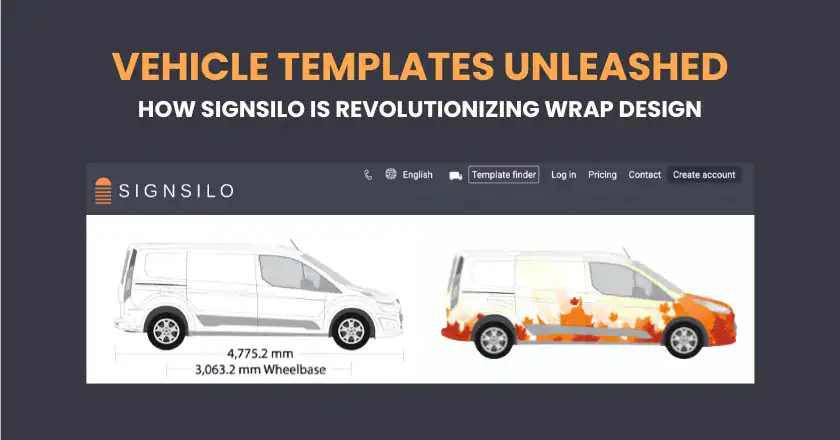
The mid-2010s marked the "democratization phase," where cloud-based repositories began to offer standardized templates. SignSilo entered this space by recognizing that a template is only as valuable as its accuracy and accessibility. Today, the industry has moved into an era of "Unleashed Design," where high-fidelity vector files allow for millimetric precision, enabling designers to visualize a finished product before a single inch of vinyl is printed.
Technical Specifications and the Necessity of Vector Precision
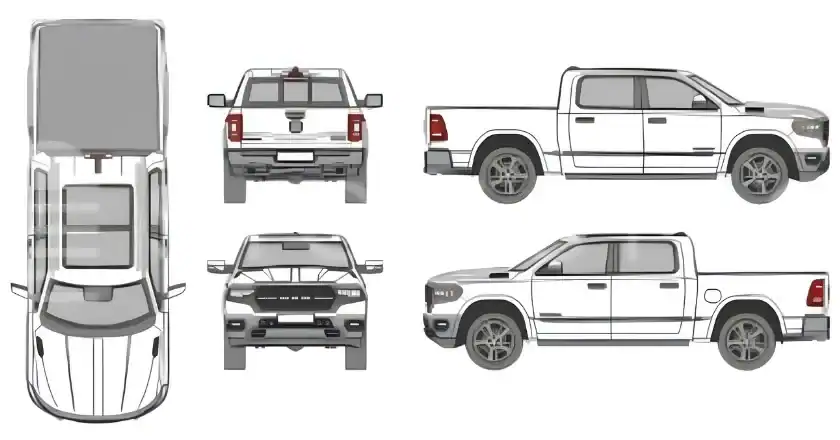
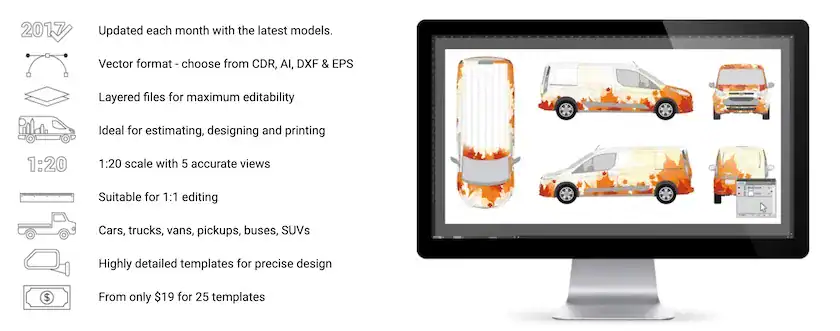
At the core of SignSilo’s impact is the use of vector graphics rather than raster images. For the uninitiated, raster images (like JPEGs or PNGs) are composed of pixels; when scaled up to fit a 20-foot commercial van, they lose clarity and become "pixelated." Vector graphics, conversely, are based on mathematical paths. This allows a design created on a standard monitor to be scaled to the size of a semi-truck without any loss in resolution.
SignSilo’s templates are built at a 1:10 scale. This specific ratio is the industry standard because it balances file size with detail. A designer working at 1:10 can easily multiply their dimensions by ten during the printing phase, ensuring that every contour, window line, and trim piece aligns perfectly with the physical vehicle. This precision is vital for "complex wraps," where graphics must flow seamlessly from a side panel onto a curved bumper or over a roofline.
Economic Implications of Design Accuracy
The financial stakes in the vehicle wrap industry are remarkably high. A professional full-wrap for a commercial van can cost between $3,000 and $6,000, depending on the material quality and design complexity. High-performance cast vinyl, such as those manufactured by 3M or Avery Dennison, is a significant investment.
Industry data suggests that design errors—such as placing a company’s phone number over a door handle or miscalculating the bleed on a rear door—account for approximately 15% of material waste in shops that do not utilize precision templates. By using a verified template from SignSilo, shops can virtually eliminate these "re-dos."

Furthermore, the "Time-to-Proof" metric is a key performance indicator for sign shops. In a traditional workflow, creating a mockup for a client might take four to six hours of manual measuring and sketching. With an "unleashed" template system, this process is reduced to under an hour. For a shop managing twenty projects a month, this efficiency gain represents nearly 100 hours of reclaimed labor, which can be redirected toward sales or installation.
The SignSilo Ecosystem: Beyond the Template
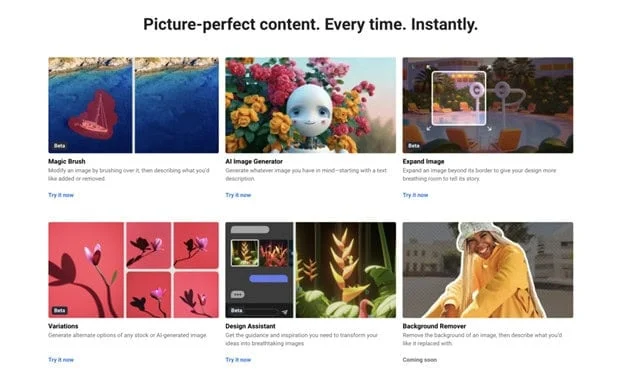
While vehicle outlines are the flagship offering, the platform functions as a holistic resource for the sign-making profession. The integration of high-resolution stock photography, specialized fonts, and wrap-specific textures (such as carbon fiber or metallic finishes) allows for a unified workflow.
- Vector Graphics Library: Thousands of "wrap elements"—flames, splashes, geometric patterns, and industrial textures—that are pre-optimized for large-scale printing.
- High-Resolution Photography: Images curated specifically for their ability to be enlarged to billboard or vehicle sizes without losing sharpness.
- Font Management: A library of typefaces selected for legibility on moving vehicles, a critical factor in mobile advertising effectiveness.
This ecosystem approach addresses a common pain point in the industry: "Asset Fragmentation." Designers often lose time jumping between different stock photo sites, font foundries, and template providers. SignSilo’s model centralizes these needs, providing a specialized environment that general-purpose stock sites cannot match.
Industry Reactions and Professional Perspectives
Professional installers and shop owners have noted that the availability of accurate templates has changed the client relationship. In the past, clients often struggled to visualize how a flat logo would look on a contoured vehicle.
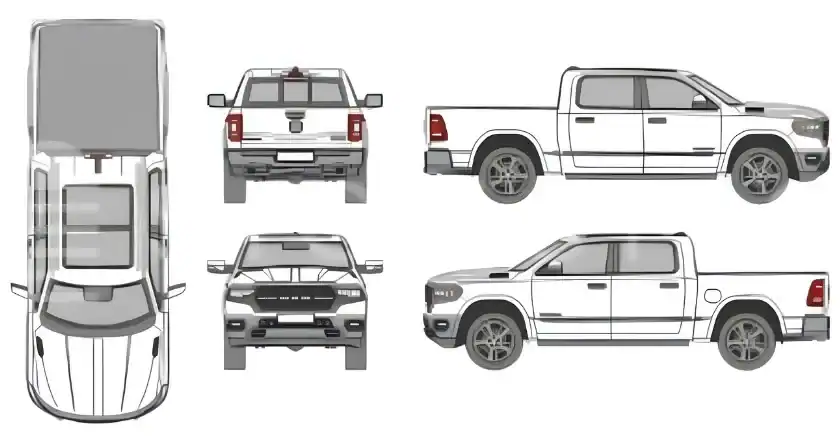
"The ability to provide a high-fidelity 3D-style mockup using a precise vector template has transformed our closing rate," states one industry consultant specializing in fleet branding. "When a client sees their brand perfectly mapped to the specific make and model of their fleet, the perceived value of the service increases. It moves the conversation from ‘what will this look like?’ to ‘when can we start?’"
Additionally, fleet managers for large corporations—who may oversee hundreds of vehicles across different geographic regions—rely on these templates to ensure brand consistency. A template ensures that a van wrapped in New York looks identical to one wrapped in California, regardless of the local installer’s individual measuring techniques.
Broader Impact on the Mobile Advertising Market
The rise of platforms like SignSilo is intrinsically linked to the growing effectiveness of "Out-of-Home" (OOH) advertising. According to the Outdoor Advertising Association of America (OAAA), a single vehicle wrap can generate between 30,000 and 70,000 impressions per day. Unlike digital ads, which can be skipped or blocked, or billboards, which are stationary, vehicle wraps offer a mobile, high-impact medium with one of the lowest costs-per-thousand (CPM) in the advertising industry.
By lowering the barrier to entry for high-quality wrap design, SignSilo is effectively fueling the growth of small business marketing. Local service providers—plumbers, electricians, and landscapers—can now access the same level of design precision that was once reserved for national brands with massive marketing budgets.
Future Trends: AI, 3D Modeling, and Augmented Reality
As SignSilo continues to "unleash" its vehicle templates, the next frontier involves the integration of emerging technologies. The industry is currently seeing a shift toward 3D rendering engines where vector templates are "draped" over 3D models in a virtual environment. This allows designers to rotate the vehicle and check for distortions in real-time.
There is also an increasing role for Artificial Intelligence in the design process. AI tools are beginning to assist in "auto-tiling" large designs, suggesting the most efficient way to cut vinyl rolls to minimize waste. While SignSilo remains focused on the foundational accuracy of the vector template, these files serve as the essential data source for these advanced AI and AR applications.
Conclusion: The New Standard for Sign Professionals
The revolution spearheaded by SignSilo is not merely about providing digital drawings; it is about establishing a professional standard that prioritizes accuracy, efficiency, and economic viability. In an industry where a fraction of an inch determines the success or failure of a project, the "unleashing" of precision templates has moved from a luxury to a logistical necessity.
As vehicle designs become more aerodynamic and complex—with the rise of electric vehicles featuring unique body panels and sensor placements—the role of specialized template providers will only grow. SignSilo’s commitment to maintaining an updated, high-fidelity library ensures that sign makers are equipped to handle the automotive innovations of tomorrow, turning every vehicle on the road into a potential masterpiece of mobile branding. Through the combination of technical excellence and an accessible subscription model, the platform has effectively bridged the gap between creative vision and physical reality in the world of wrap design.