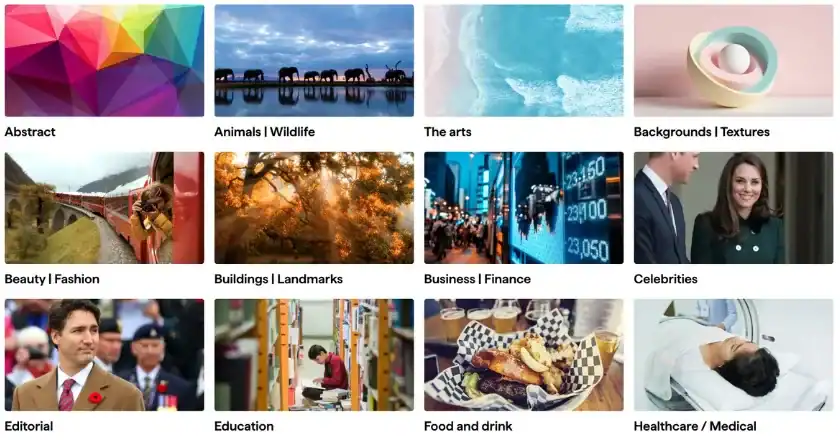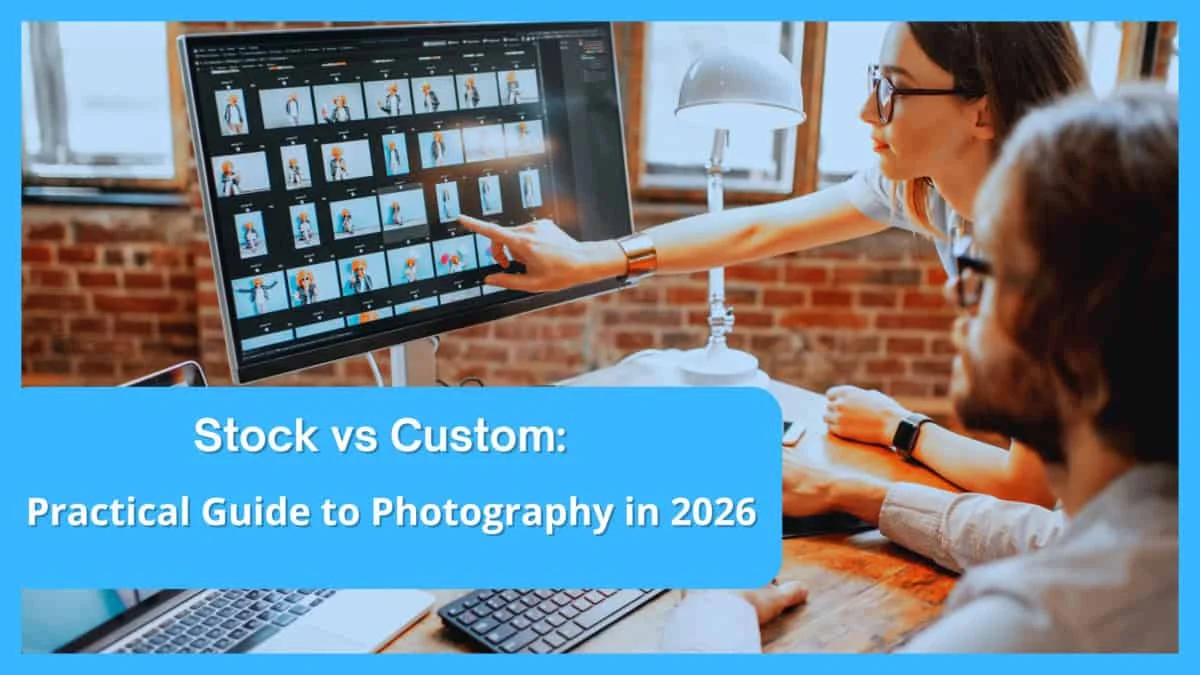
The current landscape is characterized by a "content hunger" driven by AI-augmented social algorithms and the expansion of the metaverse and augmented reality interfaces. For marketing departments, this means that the traditional binary choice—stock or custom—has evolved into a sophisticated hybrid strategy. While stock platforms like Shutterstock provide the necessary infrastructure for scale, custom photography remains the gold standard for establishing core brand identity and consumer trust in an era where digital authenticity is increasingly scrutinized.
The Financial Architecture of Modern Imagery
The economic disparity between stock and custom photography remains the primary driver for budget allocation. In 2026, the cost of a single stock image on major platforms has been optimized through subscription models and bulk-purchasing agreements. On average, a stock photo can cost as little as $0.20 when part of a high-volume subscription or up to $350 for specialized, high-resolution editorial content.
Conversely, the production of custom photography involves a multi-layered cost structure. A single professional session in 2026 typically starts at a baseline of $1,000 for local, small-scale productions and can exceed $50,000 for high-tier commercial campaigns. These costs are distributed across several variables:
- Talent and Licensing: Model fees, hair and makeup artists, and wardrobe stylists.
- Logistics: Studio rentals, location permits, and equipment insurance.
- Post-Production: Advanced color grading, retouching, and AI-assisted compositing.
- Administrative Overheads: Creative direction, project management, and catering.
Data from industry benchmarks indicates that while custom photography requires a significant upfront capital expenditure, its value is often amortized over longer periods for "hero" assets—images that serve as the face of a brand for a year or more. Stock photography, however, offers a superior "cost-per-use" ratio for high-frequency touchpoints like daily social media updates, email newsletters, and blog headers.
Chronology of the Visual Shift: 2020–2026
To understand the current state of the industry, one must look at the timeline of visual content evolution over the last six years.
- 2020–2022: The Remote Pivot. The global pandemic accelerated the reliance on stock photography as physical shoots became logistically impossible. During this period, stock agencies saw a 40% increase in demand for "authentic-style" imagery that mirrored real-life, unpolished settings.
- 2023–2024: The AI Disruption. The entry of generative AI tools initially threatened the stock industry. However, legal uncertainties regarding copyright and the "uncanny valley" effect of AI-generated humans led to a resurgence in demand for verified, human-captured stock photography.
- 2025: The Authenticity Mandate. Consumers began exhibiting "AI fatigue," leading to a market correction where brands prioritized images with "Proof of Human" metadata.
- 2026: The Integrated Era. The current market is defined by the seamless integration of high-end custom assets with ethically sourced, AI-enhanced stock imagery.
Speed as a Competitive Advantage in Reactive Marketing
In 2026, the window of relevance for marketing content has shrunk from weeks to hours. Reactive marketing—the ability of a brand to respond to a viral trend or a breaking news event—requires near-instantaneous access to visual assets.
Stock photography provides an unparalleled turnaround time. A marketing team can identify, license, and deploy a professional-grade image in less than ten minutes. This agility is vital for platforms like TikTok, X (formerly Twitter), and Instagram, where being "first to the conversation" often dictates the level of organic reach.

Custom photography, by contrast, remains a slow-moving asset. The lifecycle of a custom shoot—from creative brief and talent casting to the actual shoot and final retouching—generally spans two to six weeks. While the result is a bespoke asset that no competitor can replicate, the lack of speed makes it unsuitable for the daily churn of modern social engagement.
Scalability and the Multi-Channel Mandate
Modern brands no longer operate on a single platform. A standard campaign in 2026 must be formatted for vertical mobile video, desktop banners, ultra-wide digital billboards, and even wearable tech displays. This creates a "scalability gap" that custom photography struggle to fill alone.
Stock libraries, such as Shutterstock, offer millions of searchable assets that allow for visual consistency across these diverse formats. For instance, a brand can find a series of images from the same contributor that feature the same models or settings, providing a "custom feel" at a fraction of the cost. This allows marketing teams to iterate on concepts and test multiple visual themes simultaneously without the financial risk of a failed custom shoot.
The Trust Factor: Human Authenticity in the AI Age
A significant implication for 2026 is the erosion of consumer trust due to the saturation of synthetic media. Industry analysts report that 68% of consumers are more likely to trust a brand that uses "real" photography over clearly generated AI visuals.

Custom photography excels here by providing "hyper-localization." A brand can use models that specifically represent their local demographic and settings that are recognizable to their community. This level of specificity is difficult to achieve with stock photography, which is designed for broad, global appeal.
However, stock agencies have responded to this need by diversifying their contributors. Platforms now feature "custom-stock" hybrids where agencies can be commissioned to produce semi-exclusive libraries for brands, bridging the gap between the two mediums.
Analyzing the Return on Investment (ROI)
The ROI of visual content is no longer measured solely by aesthetic quality but by performance metrics such as Click-Through Rate (CTR), Conversion Rate (CVR), and Customer Acquisition Cost (CAC).
Stock Photography ROI Strengths:

- Concept Testing: Brands use stock images to A/B test different visual directions. The low cost allows for high-volume testing to see which concepts resonate before committing to a custom shoot.
- Lower CAC: By reducing production costs for top-of-funnel ads, stock photography helps maintain a lower acquisition cost for new leads.
Custom Photography ROI Strengths:
- Brand Equity: High-quality, unique images contribute to long-term brand recognition, which can lead to higher customer lifetime value (LTV).
- Conversion on Landing Pages: Data shows that "hero" images on product pages that feature actual product use-cases result in a 25-30% higher conversion rate than generic stock images.
The Hybrid Model: The Strategy of Choice for 2026
The consensus among top-tier marketing agencies is that the most effective strategy is a 70/30 or 80/20 split. In this hybrid model, 80% of a brand’s total visual output—social posts, blog content, and background assets—is sourced from high-quality stock libraries. The remaining 20% consists of high-impact custom photography used for core brand identity, product launches, and major advertising campaigns.
Shutterstock has positioned itself as a key facilitator of this hybrid model. By offering advanced search tools and AI-driven customization features, the platform allows users to take a standard stock image and modify it to fit their brand’s specific color palette or composition needs. This "modified stock" approach provides a middle ground, offering more uniqueness than standard stock without the logistical burden of a full production.
Broader Impact and Future Implications
As we move further into 2026, the distinction between "taking a photo" and "creating an image" continues to blur. The integration of 3D rendering, AI-assisted editing, and traditional photography means that the source of the image—whether it started in a studio or a stock library—is becoming less important than its final impact and ethical provenance.

For businesses, the primary takeaway is that visual strategy must be data-driven. The choice between stock and custom should be dictated by the specific goals of the campaign: speed and scale favor stock, while depth and differentiation favor custom. In an increasingly visual world, the ability to balance these two resources will define the market leaders of the late 2020s.
Ultimately, the goal is to create a cohesive visual narrative. Whether through a $50,000 custom shoot or a $0.20 stock download, the image must speak to the brand’s values and the consumer’s needs. In 2026, the most successful brands are those that don’t choose between stock and custom, but rather master the strategic deployment of both.