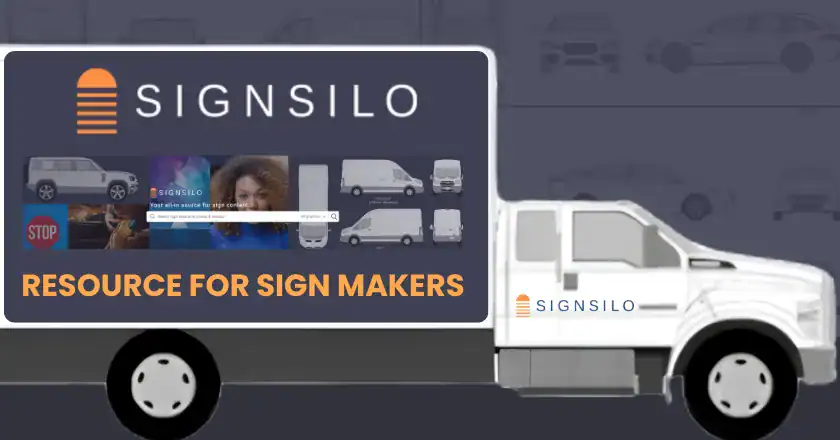
The vehicle graphics and fleet branding industry has transitioned from a niche service into a multi-billion-dollar global market, driven by the increasing demand for mobile advertising and personalized vehicle aesthetics. As businesses seek more efficient ways to convert their fleets into high-impact "mobile billboards," the technical requirements for precision in design have reached an all-time high. Within this professional landscape, SignSilo has emerged as a critical infrastructure provider, offering a comprehensive suite of tools that address the most persistent pain points in the wrap design process: accuracy, speed, and cost-effectiveness.
The Economic Landscape of Vehicle Branding
The global vehicle wrap market was valued at approximately $5.8 billion in 2022 and is projected to expand at a compound annual growth rate (CAGR) of 22.2% through 2030. This growth is fueled by the superior return on investment (ROI) offered by vehicle graphics compared to traditional outdoor signage. A single intra-city truck can generate between 30,000 and 70,000 impressions daily, making the precision of the design and installation paramount for brand consistency.
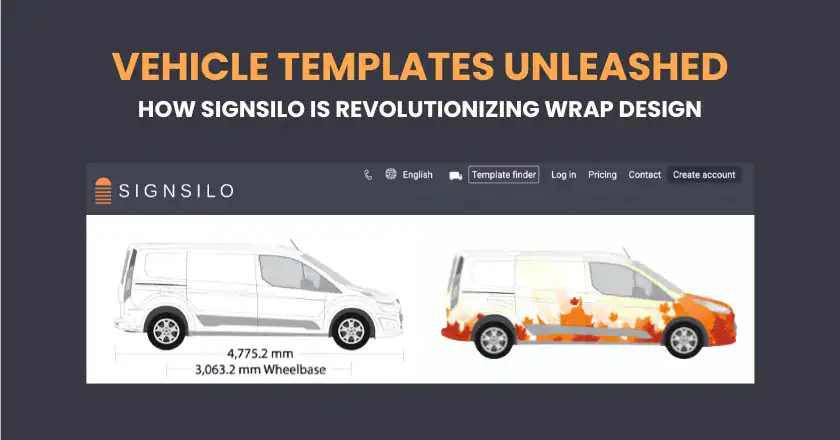
However, the financial risks associated with design errors are substantial. In a professional shop, a full vehicle wrap can cost between $2,500 and $6,000 depending on the complexity and material. An error in measurement as small as five millimeters can lead to a misalignment of graphics across door handles, fuel caps, or body panels. Such mistakes necessitate the re-printing of entire vinyl panels, leading to wasted materials, lost labor hours, and delayed delivery schedules. SignSilo’s entry into the market provides a standardized solution to these technical challenges through its "Vehicle Templates Unleashed" initiative.
Technical Precision: The 1:10 Scale Standard
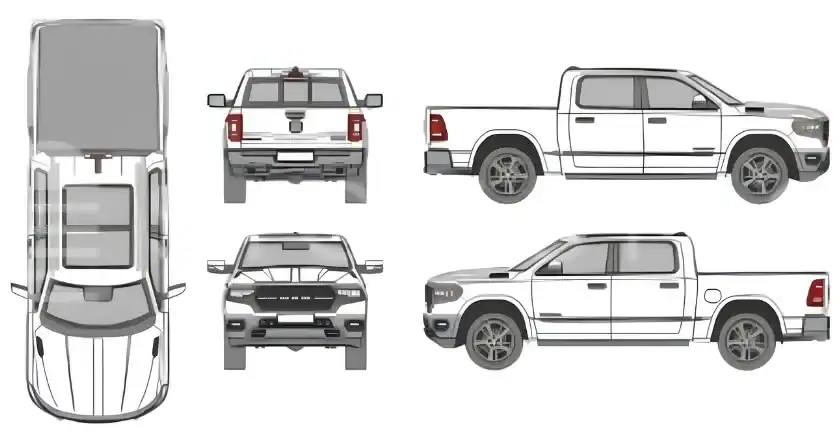
The core of SignSilo’s value proposition lies in its library of precise vector templates. Designing for a three-dimensional object on a two-dimensional computer screen requires a sophisticated understanding of spatial geometry. SignSilo addresses this by providing templates at a 1:10 scale, which has become the industry standard for high-resolution wrap files.
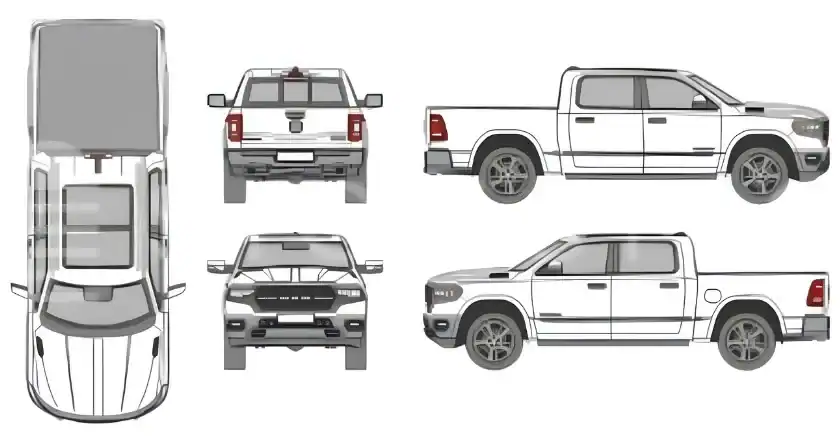
These templates are not merely sketches; they are detailed vector outlines that include every contour, light, handle, and trim piece of a specific vehicle make and model. By utilizing vector graphics (typically in AI, EPS, or CDR formats), designers can scale their artwork infinitely without losing resolution. This ensures that when a 1:10 scale design is enlarged by 1000% for the final print, the edges remain crisp and the alignment remains true to the vehicle’s physical dimensions.
A Chronology of Wrap Design Evolution
To understand the impact of SignSilo, one must examine the evolution of the sign-making industry over the last four decades:

- The Manual Era (1980s – Early 1990s): Sign shops relied on hand-painting and manual measurements. Applying graphics to a vehicle involved physical tracing and "rub-on" lettering. Accuracy was entirely dependent on the individual installer’s skill.
- The Early Digital Era (Mid-1990s – 2005): The introduction of vinyl cutters allowed for computer-aided design (CAD). However, designers often had to take their own physical measurements of every vehicle that entered the shop, a time-consuming process prone to human error.
- The Template Revolution (2006 – 2018): Third-party template libraries began to emerge, but they were often expensive, sold individually, or lacked updates for the newest vehicle models.
- The Integrated Platform Era (2019 – Present): SignSilo represents the current pinnacle of this evolution, offering an all-in-one subscription model. It combines a massive, frequently updated template database with stock photography, fonts, and textures, allowing for a holistic design workflow.
Comprehensive Resource Library and Features
SignSilo distinguishes itself by functioning as more than a simple template repository. Its platform is specifically tailored to the unique workflows of sign shops and print professionals.
- Extensive Database: The platform hosts over 24,000 vehicle templates, covering passenger cars, commercial vans, heavy-duty trucks, and specialty vehicles. This depth allows shops to bid on diverse contracts, from local florist vans to international logistics fleets.
- High-Resolution Assets: Beyond outlines, the platform provides high-resolution stock photos and graphics designed for large-format printing. This is crucial because standard web-resolution images pixelate when expanded to the size of a vehicle panel.
- Workflow Integration: The templates are compatible with major design software, including Adobe Illustrator, CorelDRAW, and Flexi. This ensures that designers do not need to change their existing software ecosystem to utilize the assets.
- Affordability for Small Businesses: With subscription tiers at approximately $39 per month or an annual plan at $199, SignSilo has democratized access to professional-grade tools. For many small shops, the cost of an annual subscription is recouped by the time and material saved on a single job.
Operational Efficiency and Client Presentation
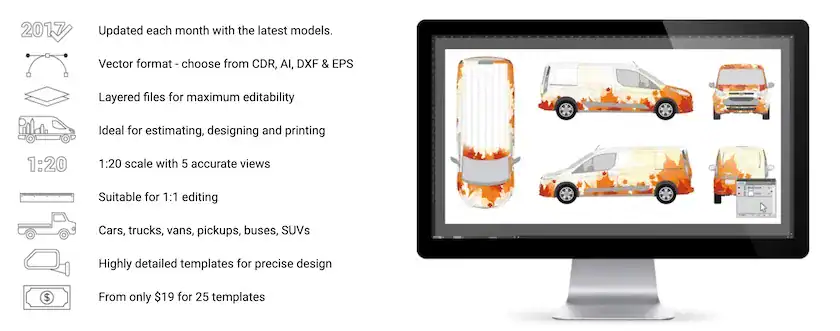
In the modern sign shop, the speed of the "proof-to-approval" cycle is a key performance indicator. SignSilo’s templates allow designers to create realistic mockups quickly. When a client can see a 3D-style representation of their brand on a precise model of their specific vehicle, the approval process is significantly shortened.
Industry experts note that using professional templates reduces the "design-to-print" time by up to 60%. Instead of spending two hours measuring a vehicle and another three hours creating a custom outline, a designer can download a SignSilo template in seconds and begin the creative process immediately. This efficiency allows shops to increase their throughput without increasing headcount.
Sustainability and Material Waste Reduction
The environmental impact of the printing industry is an increasing concern for corporate clients. Polyvinyl chloride (PVC), the primary material in vehicle wraps, is resource-intensive to produce. By ensuring "first-time-right" printing through accurate templates, SignSilo helps shops drastically reduce their vinyl waste.
When a wrap is misaligned due to poor templates, the discarded vinyl usually ends up in landfills. Precision design tools are therefore not only an economic asset but also a component of a more sustainable manufacturing process within the graphics industry.
Broader Industry Impact and Future Implications
The "unleashing" of vehicle templates via SignSilo is indicative of a broader trend toward the "Digital Twin" concept in manufacturing and advertising. As the industry moves forward, we can expect these templates to integrate further with 3D rendering engines and augmented reality (AR) tools.
For instance, future iterations of SignSilo’s service may allow designers to project their vector designs onto a 3D model that the client can view through an AR headset, providing a virtual "walk-around" of the vehicle before a single inch of vinyl is printed.
Conclusion: The Strategic Necessity of Precision
SignSilo’s platform represents a shift from "craft-based" sign making to "precision-engineered" branding. In an era where fleet managers are looking to maximize every asset, the ability to deliver flawless, high-impact vehicle graphics is a competitive necessity. By providing a reliable, affordable, and comprehensive database of vehicle templates, SignSilo has effectively removed the technical barriers that once hindered small and medium-sized print shops.
As the vehicle wrap industry continues its upward trajectory, the reliance on high-fidelity digital assets will only grow. SignSilo has positioned itself at the center of this transition, ensuring that the next generation of vehicle graphics is defined by accuracy, efficiency, and professional excellence. For the designer, the sign shop owner, and the fleet manager, the "unleashing" of these templates marks the end of the era of guesswork and the beginning of a new standard in automotive branding.