The Economic Landscape of Mobile Advertising
The global vehicle wrap market has seen a meteoric rise over the last decade, with industry analysts valuing the sector at approximately $4.76 billion in 2021, and projecting a compound annual growth rate (CAGR) of over 22% through 2030. This growth is driven largely by the unmatched cost-per-impression (CPM) offered by vehicle graphics. According to data from the Outdoor Advertising Association of America (OAAA), a single intra-city truck wrap can generate between 30,000 and 70,000 impressions daily.
When compared to traditional media, the financial argument for vehicle wraps is compelling. While a primetime television spot or a prominent billboard may require recurring monthly payments and offer a high CPM, a vehicle wrap represents a one-time investment with a lifespan of five to seven years. The foundation of this investment’s success, however, rests entirely on the accuracy of the initial design template. If the 2D blueprint does not perfectly mirror the 3D reality of the vehicle, the resulting installation can lead to distorted logos, misaligned contact information, and significant material waste.
The Evolution of Vehicle Graphic Design: A Chronology
The transition from hand-painted signage to digital vehicle templates reflects the broader technological revolution within the graphic arts.
- The Pre-Digital Era (1950s–1980s): Branding was primarily achieved through hand-lettering or basic adhesive decals. Measurements were taken manually with tape measures, and designs were sketched by hand, leaving significant room for human error.
- The Rise of Vinyl (1990s): The introduction of high-performance pressure-sensitive vinyl films, pioneered by companies like 3M and Avery Dennison, allowed for full-body coverage. The first "full wrap" is widely attributed to a Pepsi Co. campaign in 1993, which transformed a bus into a mobile billboard.
- Digital Standardization (2000s–2010s): As wide-format digital printing became affordable, the need for precise digital blueprints grew. Early templates were often simple line drawings.
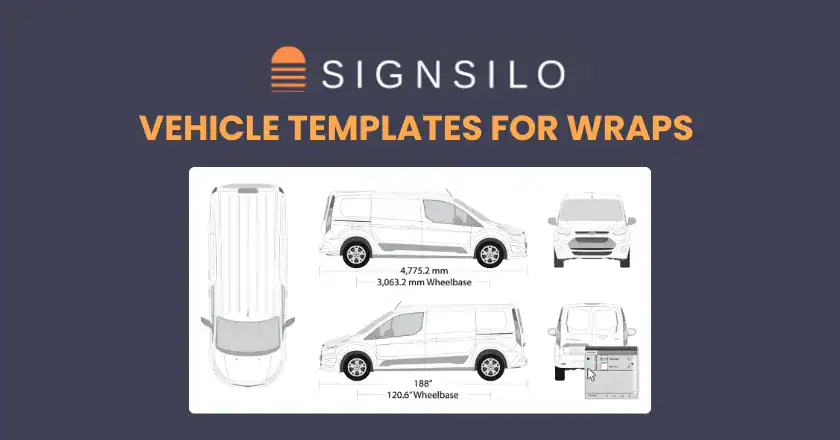
- The Modern Era (2020–Present): Today’s professional templates, such as those provided by SignSilo, offer multi-view, vector-based files scaled to exact manufacturer specifications. These templates account for complex curves, rivets, door handles, and sensors that define modern automotive design.
Technical Precision: Designing in 2D for a 3D World
Designing for a vehicle is fundamentally different from designing for a flat substrate like a poster or a digital screen. Modern vehicles are characterized by compound curves and intricate aerodynamic features that can distort a design once the vinyl is heated and stretched over the surface.
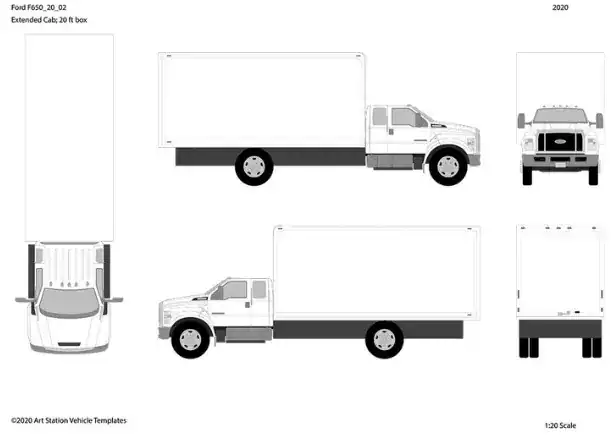
Professional templates solve this by providing multiple perspectives—typically the front, rear, driver side, passenger side, and roof. These files are usually provided in vector formats such as AI (Adobe Illustrator), CDR (CorelDRAW), or EPS. Vectors are essential because they allow the designer to scale the artwork infinitely without losing resolution.

A critical technical detail in this workflow is the scale ratio. Most industry-standard templates are built at a 1:20 or 1:30 scale. This allows designers to work on manageable file sizes that do not tax computer hardware. For example, to convert a 1:20 scale template to the actual size (1:1) for printing, a designer simply increases the file size by 2000% at the output stage. This ensures that the final print matches the physical dimensions of the van, truck, or car with millimeter precision.
SignSilo: Addressing the Fragmentation of Creative Assets
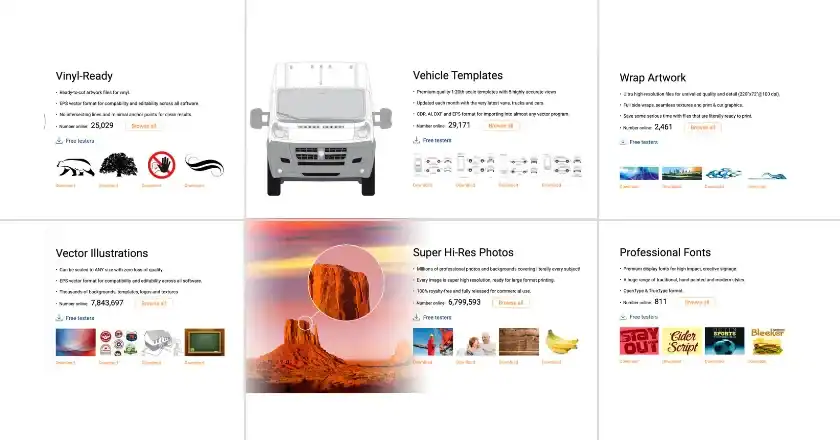
For many years, the sign-making industry was fragmented. A professional would often need one subscription for vehicle templates, another for high-resolution stock photography, and a third for vinyl-ready vector illustrations. SignSilo has emerged as a disruptive force in this space by consolidating these requirements into a single, specialized platform.
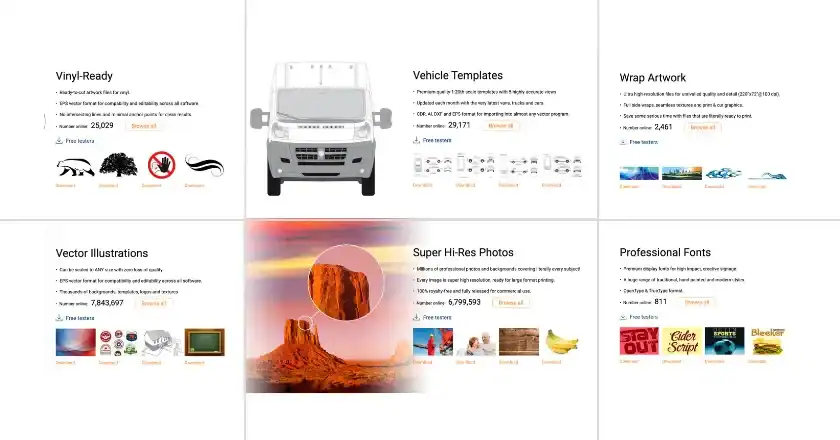
The SignSilo library currently offers:

- Thousands of Vehicle Templates: Covering a vast array of makes, models, and years, including commercial vans, heavy-duty trucks, and passenger cars.
- High-Resolution Photography: Over 5 million images optimized for large-format printing.
- Vinyl-Ready Vectors: Over 600,000 vector graphics designed specifically for cutting plotters and wrap overlays.
- 3D Mockup Tools: Enabling designers to present realistic renderings to clients before a single inch of vinyl is printed.
By providing "wrap-specific" content, the platform addresses the unique needs of the industry, such as ensuring images have high enough DPI (dots per inch) for massive enlargements and that vector paths are "closed" and "clean" for vinyl cutters.
Operational Efficiency and ROI for Sign Shops
From a business operations perspective, the use of high-quality templates is a matter of risk management. A single error in the placement of a logo over a door handle or a fuel door can require the re-printing and re-installation of an entire vehicle panel. In a commercial setting, this not only doubles the material cost but also consumes valuable "bay time"—the hours a vehicle spends in the installation shop.
Industry professionals emphasize that the "discovery phase" of a project is where templates provide the most value. "Accuracy in the template phase is the difference between a profitable job and a loss," notes a veteran wrap installer. "When you use a verified blueprint, you can account for the ‘safety zones’ where text shouldn’t go, and ‘bleed areas’ where the vinyl needs to wrap around the edges of the door."
Furthermore, the ability to provide a 3D mockup using these templates serves as a powerful sales tool. Clients are more likely to approve a design when they can see a photographic representation of how the finished fleet will look on the road. This reduces the "proof-to-production" timeline, allowing shops to increase their monthly throughput.
Pricing Structures in a Competitive Market
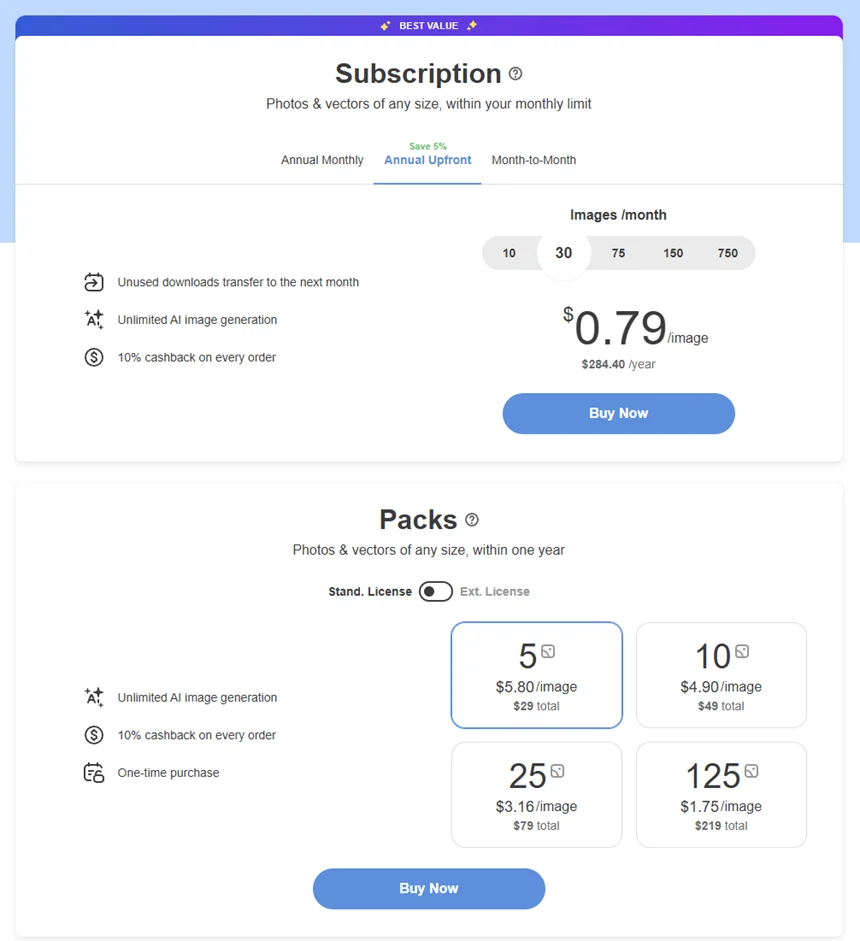
The democratization of these professional tools is reflected in the shift toward flexible subscription models. SignSilo, for instance, offers tiered pricing designed to accommodate both boutique design studios and high-volume print franchises.
- Monthly Access: Positioned at approximately $39 per month, this tier allows smaller shops to access 25 downloads monthly, providing a low-risk entry point for occasional wrap projects.
- Annual Professional Tier: At $199 per year, this plan increases the download limit to 200 assets, significantly lowering the per-template cost for established businesses.
This subscription-based approach has largely replaced the older model of purchasing expensive, "once-a-year" DVD libraries of templates, which quickly became obsolete as manufacturers released new vehicle models.
Future Implications: Technology and Sustainability
As the vehicle wrap industry moves forward, several trends are expected to shape the use of templates. The integration of Augmented Reality (AR) is already beginning to surface, allowing clients to view a 3D wrap mockup on their own driveway via a smartphone app. These AR experiences are built directly upon the vector data found in high-quality templates.
Additionally, there is a growing movement toward sustainability within the industry. Eco-friendly, PVC-free films are becoming more common. Because these materials often have different stretch characteristics than traditional vinyl, the precision of the initial design template becomes even more vital to ensure the material is not over-stressed during application.
Conclusion
Vehicle Templates for Wraps: The Foundation of Professional Vehicle Graphics represents the intersection of automotive engineering and visual marketing. By providing the precision required to navigate the complex geometry of modern vehicles, these templates empower designers to transform ordinary transportation into extraordinary branding assets. As platforms like SignSilo continue to streamline access to these blueprints and their accompanying creative assets, the barrier to entry for professional-grade vehicle branding continues to lower, fostering a more vibrant and efficient mobile advertising market. For the sign maker and the fleet owner alike, the template is no longer just a drawing—it is the blueprint for commercial success on the open road.