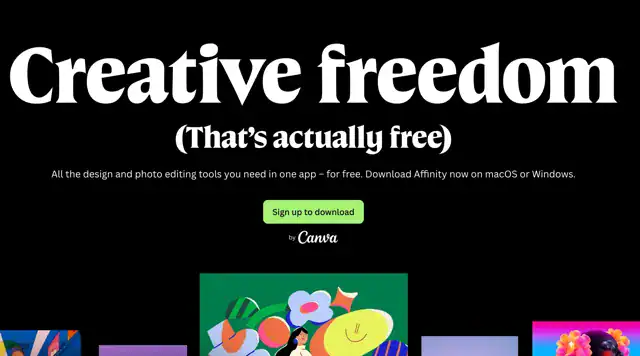
In a strategic move that significantly alters the competitive landscape of professional design software, Canva has officially released a unified, all-in-one version of the Affinity suite, making it entirely free for all users. This launch marks a pivotal moment in the industry, as Canva integrates the high-end creative tools acquired from Serif into its broader ecosystem, effectively bridging the gap between accessible, template-based design and professional-grade creative production. By consolidating Affinity Designer, Affinity Photo, and Affinity Publisher into a single environment and removing the traditional price barrier, Canva is directly challenging the long-standing market dominance of Adobe’s Creative Cloud subscription model.
The new Affinity (by Canva) provides a seamless interface where users can pivot between vector illustration, advanced photo retouching, and complex desktop publishing without switching applications. This integration is designed to eliminate the friction inherent in traditional creative workflows, where designers often jump between disparate programs to complete a single project. The suite is currently available for Mac and Windows, with an iPad version expected to follow shortly. Access requires only a standard Canva account, and notably, the software does not currently require a paid Canva Pro subscription for its core professional features.
The Evolution of Affinity and the Path to Integration
The journey toward a unified Affinity app began in March 2024, when Canva announced its acquisition of Serif, the United Kingdom-based developer behind the Affinity suite. Prior to the acquisition, Serif had positioned Affinity as the primary alternative to Adobe, offering a "perpetual license" model that resonated with creatives who were disillusioned by the industry’s shift toward mandatory monthly subscriptions.

Serif’s history dates back to the 1980s, but the modern Affinity era began in 2014 with the launch of Affinity Designer for macOS. This was followed by Affinity Photo in 2015 and Affinity Publisher in 2019. Unlike older software that had been updated over decades, Affinity was built from the ground up for modern hardware, featuring 64-bit multi-core optimization and hardware acceleration. This technical foundation allowed the suite to handle massive files and complex operations with significantly less lag than its competitors.
The acquisition by Canva was initially met with skepticism by the professional design community, many of whom feared that the "pro" features of Affinity would be diluted or forced into a subscription-only model. However, Canva’s latest move—making the tools free and unified—suggests a different strategy: aggressive market share acquisition. By lowering the entry barrier to zero, Canva is positioning Affinity as the default starting point for the next generation of digital artists and corporate design teams.
Technical Capabilities and the Unified Workspace
The unified Affinity application introduces a workflow centered on "Personas." This architectural choice allows the software to house three distinct professional toolsets within one window. The Vector Persona provides the precision tools found in the former Affinity Designer, including advanced pen tools, node editing, and non-destructive live shapes. The Pixel Persona brings the power of Affinity Photo, offering high-end retouching, frequency separation, and complex layer masking. Finally, the Layout Persona integrates the publishing capabilities of Affinity Publisher, enabling users to manage multi-page documents, master pages, and professional typography.
The software maintains its robust support for industry-standard file formats. Users can open and export PSD, AI, PDF, SVG, and EPS files, ensuring that the transition from Adobe-centric workflows remains frictionless. Furthermore, the proprietary .af format used by the suite is now fully cross-compatible across all personas, ensuring that data is never lost when moving from a logo design phase to a magazine layout phase.

Key technical features preserved in this unified version include:
- Real-time Performance: The software supports 60fps zooming and panning even on complex documents with thousands of layers.
- Non-destructive Editing: All adjustments, filters, and effects are applied live and can be modified or removed at any point in the creative process.
- Advanced Typography: Full OpenType support, including ligatures, stylistic sets, and character-level control.
- Batch Processing: The ability to automate repetitive tasks across hundreds of images, a feature previously exclusive to the standalone Photo application.
Strategic Market Implications and Subscription Fatigue
Canva’s decision to offer professional-grade software for free is a direct response to "subscription fatigue" within the creative industry. For over a decade, professional design has been gated by monthly fees that can exceed $600 annually for a full suite. While Adobe remains the industry standard for large-scale agencies, Canva is targeting the massive middle market: freelancers, small-to-medium-sized studios, and in-house marketing teams.
Market data suggests that the "prosumer" segment of the design market is the fastest-growing. By providing a free professional alternative, Canva is creating a powerful funnel into its ecosystem. While the core Affinity tools are free, Canva likely intends to monetize the platform through its "Magic Studio" AI features and cloud-based collaboration tools, which remain tied to its paid tiers. This "freemium" approach at the professional level is unprecedented and could force competitors to re-evaluate their pricing structures.
Industry analysts note that this move also protects Canva’s flank. While Canva’s web-based tool is dominant for social media graphics and simple presentations, it lacked the "heavy lifting" capabilities required for high-end print production or complex vector work. With Affinity integrated, Canva now offers a "cradle-to-grave" creative solution, where a user can start a concept on a smartphone using the Canva app and finish a 300-page professional book using Affinity on a desktop.

Integration of Generative AI and Data Privacy
A significant component of the new Affinity launch is the integration of Canva’s AI capabilities. Users with a Canva Pro, Teams, or Education subscription can access "Canva AI Studio" directly within the Affinity environment. This brings generative AI tools—such as generative fill, background removal, and text-to-image synthesis—into a professional desktop workspace.
This integration is strategically designed to compete with Adobe’s Firefly AI, which is deeply embedded in Photoshop and Illustrator. However, Canva has taken a distinct stance on data privacy to appease professional concerns. The company has explicitly stated that user data generated within Affinity will not be used to train its generative AI models without explicit consent. This address a major point of contention in the creative community, where many artists fear that their work is being used to develop the very tools that might eventually automate their roles.
Industry Reactions and Expert Analysis
The reaction from the creative community has been a mix of enthusiasm and cautious observation. Freelance designers have largely praised the move, noting that the removal of software costs significantly lowers their overhead. Small business owners have also expressed interest, as the unified app allows them to handle diverse marketing needs—from photo editing to brochure design—in one place.
However, some industry veterans remain skeptical about the "free forever" promise. Historical precedents in the tech industry suggest that "free" is often a temporary state used to gain market dominance before introducing monetization. In response to these concerns, Canva has emphasized its commitment to the creative community, though the company’s long-term financial goals as a private entity valued at billions of dollars suggest that some form of high-level monetization is inevitable.

"What we are seeing is the democratization of professional tools," says digital media analyst Marcus Thorne. "For years, the ‘pro’ label was used to justify high prices. Canva is arguing that professional tools should be accessible to everyone, and they are betting that the increased volume of users will eventually lead to more corporate subscriptions for their collaborative features."
Timeline of the Canva-Affinity Integration
- 2014: Serif launches Affinity Designer, challenging the vector software market.
- 2015-2019: Affinity Photo and Publisher are released, completing the "Affinity Trinity."
- November 2022: Serif releases Version 2 of the Affinity suite, introducing a universal license.
- March 2024: Canva acquires Serif in a deal estimated to be worth several hundred million dollars.
- October 2024: Canva announces the unification of the apps into a single interface.
- Present: The all-in-one Affinity app is released for free to all Canva users globally.
Future Outlook and Platform Expansion
Looking ahead, the design world is waiting for the release of the iPad version of the unified Affinity app. The iPad has become a primary device for many digital illustrators, and a free, professional-grade unified app could potentially dominate the tablet market, where Adobe’s offerings have seen mixed reviews regarding feature parity with desktop versions.
Furthermore, Canva is expected to continue deepening the synchronization between its web platform and the Affinity desktop apps. Future updates may include real-time co-editing features, allowing a professional designer in Affinity to collaborate live with a non-designer using the Canva web interface.
As the lines between "amateur" and "professional" design continue to blur, Canva’s release of a free, unified Affinity suite represents a bold experiment in software distribution. Whether this move will successfully unseat established incumbents remains to be seen, but for the global community of creators, the immediate result is unprecedented access to high-performance creative technology.