TF-12D remains one of the most enigmatic emulsions in the contemporary analog photography landscape, occupying a niche category known as technical or "industrial" film. Originally engineered for the precision-heavy task of recording optical soundtracks for motion pictures, this stock has recently gained traction among experimental photographers seeking to bypass the limitations of conventional pictorial films. Unlike standard consumer films produced by industry giants like Kodak or Fujifilm, TF-12D was never intended to capture the nuances of a landscape or a portrait. Instead, its chemical architecture was designed for a singular, high-stakes purpose: the reproduction of sound waveforms with near-perfect fidelity. As the cost of traditional silver halide films continues to rise, the repurposing of these industrial stocks represents a growing movement within the analog community, blending archival chemical processes with modern aesthetic experimentation.

The Architecture of Sound: Understanding Optical Audio Emulsions
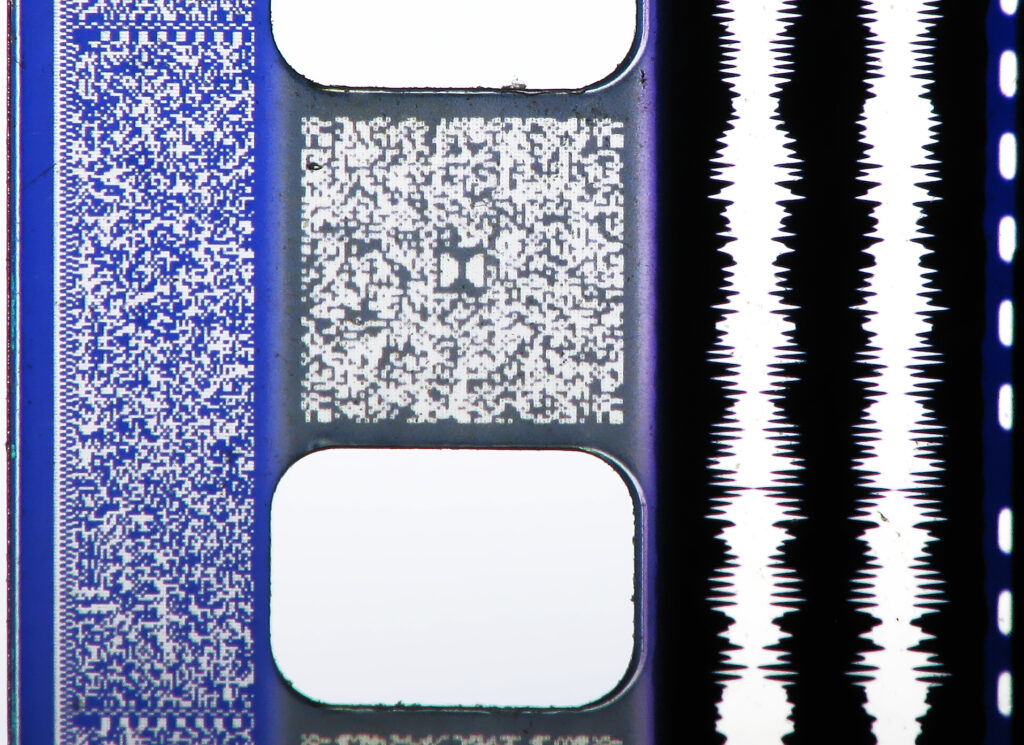
To appreciate the challenges and rewards of using TF-12D for still photography, one must first understand its primary industrial function. Since the late 1920s, the motion picture industry has utilized optical soundtracks—visible patterns printed alongside the image frames on a 35mm film strip. These tracks are read by a photodetector in the projector, which converts the light fluctuations back into electrical audio signals.
TF-12D belongs to a class of films designed to record "Variable Area" soundtracks. In this format, audio is represented as a jagged, oscillating waveform where the width of the clear area determines the volume and frequency. For this system to function without introducing "noise" or distortion, the film must possess two critical characteristics: extreme resolution and absolute contrast. There can be no middle ground or "gray" in a soundtrack; the film must be either perfectly transparent or perfectly opaque. Consequently, TF-12D is engineered with an incredibly fine grain structure and a steep gamma curve, making it one of the most contrasty emulsions available to the modern darkroom enthusiast.
Historical Context and the Evolution of Technical Stocks
The lineage of TF-12D is tied to the broader history of Eastern European and Soviet-era film manufacturing. Much of the current supply of TF-12D is associated with Astrum, a company operating out of the remnants of the Svema factory in Shostka, Ukraine. Historically, these factories produced a wide array of specialized films for the Soviet military, scientific community, and cinema industry.
While Western equivalents like Kodak 5278 (often sold to photographers as "Sonic 25") or Agfa-Gevaert’s sound stocks have served similar roles, TF-12D occupies a unique space due to its relative obscurity and the scarcity of its technical data sheets. In recent years, companies such as Film Washi in France have popularized the use of sound films by rebranding them (e.g., "Washi S") for the consumer market, but the raw TF-12D stock remains a "wildcard" for those who source it directly from industrial suppliers. This lack of standardized documentation has forced a grassroots effort among photographers to reverse-engineer development times and exposure indexes (EI).

The Contrast Dilemma: From Binary Sound to Pictorial Gradation
When a photographer loads TF-12D into a standard 35mm camera, the immediate hurdle is the film’s inherent "lithographic" nature. In standard developers like Kodak D-76 or HC-110 at typical dilutions, the film behaves like a binary medium. Shadows fall into deep, ink-black voids, and highlights blow out into featureless white, leaving almost no mid-tone detail. This "soot and whitewash" effect, while aesthetically striking for graphic arts, often obscures the fine detail that the film is technically capable of recording.
The high resolution of TF-12D is a byproduct of its slow speed and fine grain. Because it was designed to record minute oscillations in sound waves, it can resolve hundreds of lines per millimeter—far exceeding the capabilities of standard ISO 400 films. However, unlocking this resolution for pictorial use requires "taming" the contrast through specialized chemistry. This has led to a resurgence of interest in low-contrast developing techniques that were originally popularized in the 1970s for use with microfilms like Kodak Technical Pan.

The Chemistry of Control: POTA and H&W Formulations
The search for a "normal" image on TF-12D has led researchers to explore ultra-low contrast developers. Two primary contenders have emerged in the analog community: POTA and H&W Control.
The POTA Standard
POTA (Phenidone, 1.5g; Sodium Sulfite, 30g; Water to 1 liter) was originally developed for the U.S. military to record high-contrast events, such as nuclear explosions, while retaining shadow and highlight detail. While effective at reducing the gamma of technical films, POTA is notoriously unstable. Once mixed, the developer begins to oxidize rapidly, often losing its potency within an hour. This makes it a difficult choice for home darkroom users who require consistency.

The H&W Control Legacy
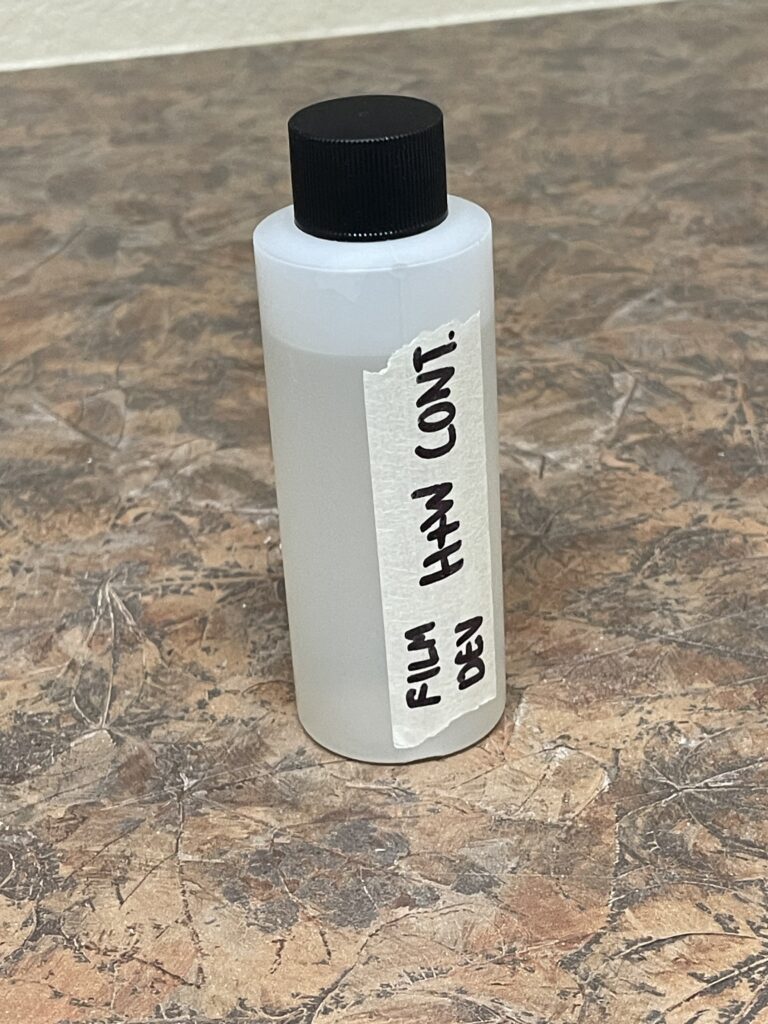
A more robust alternative is the H&W Control developer. Originally a proprietary formula sold by the H&W Company to accompany their specialized microfilms, the recipe eventually entered the public domain. Unlike POTA, H&W Control offers a more stable platform for achieving manageable contrast. Experimental data suggests that when TF-12D is exposed at an effective speed of EI 80 and processed in H&W Control, the film undergoes a radical transformation. The steep "S-curve" of the film’s response is flattened, allowing for a full range of tonal values that mimic the look of traditional pictorial films while maintaining the extreme sharpness of an industrial emulsion.
Technical Analysis of Spectral Sensitivity
Another factor that distinguishes TF-12D from modern consumer films is its spectral sensitivity. Most modern black-and-white films are "panchromatic," meaning they are sensitive to all colors of the visible spectrum in a way that approximates human vision. TF-12D is often described as having an "early panchromatic" or "orthopanchromatic" response.
Technical analysis reveals that the film is heavily sensitive to blue and green light but has a truncated response in the deep red end of the spectrum. In practical photography, this results in unique rendering: reds and oranges appear much darker than they would on a standard roll of Tri-X or HP5. Blue skies may appear brighter, and skin tones can take on a porcelain-like quality. This spectral shift, combined with the absence of a traditional anti-halation layer in many technical stocks, can produce a slight "glow" or "halation" around bright light sources, further contributing to its "cinematic" aesthetic.
Industry Implications and the Rise of "Slow Photography"
The adoption of films like TF-12D reflects a broader shift in the analog industry. As traditional film stocks become more expensive and occasionally prone to supply chain disruptions, photographers are increasingly turning to "bulk loading" industrial rolls. A 1,000-foot roll of sound recording film can be significantly more cost-effective than buying individual cartridges of consumer film.

Furthermore, the "Slow Photography" movement prizes the deliberate, technical nature of using these films. The requirement to use a tripod (due to the low ISO), the necessity of mixing raw chemicals for specialized developers, and the precision required in metering all appeal to a segment of the market that views photography as a craft as much as an art form. The use of TF-12D is not merely about taking a photo; it is about managing a complex chemical system to produce an image that cannot be replicated by digital sensors or standard commercial films.
Conclusion: The Future of Repurposed Emulsions
The successful adaptation of TF-12D for pictorial use serves as a proof of concept for the versatility of silver halide technology. It demonstrates that with the correct application of chemical theory, even the most rigid industrial tools can be repurposed for creative expression.

For the broader analog community, the "discovery" of TF-12D’s potential at EI 80 in developers like H&W Control opens a new door. It provides a high-resolution, fine-grain alternative that rivals the quality of medium-format photography on a 35mm frame. As long as industrial films are produced for the dwindling motion picture print market, experimental photographers will likely continue to scavenge these stocks, ensuring that the unique visual language of sound-recording film lives on—not as audio, but as high-fidelity visual art. The transition from the "binary" world of sound to the "analog" world of gray-scale tonality represents a triumph of darkroom experimentation over intended use, proving that in the world of film, the limits are often defined only by the chemistry one is willing to mix.