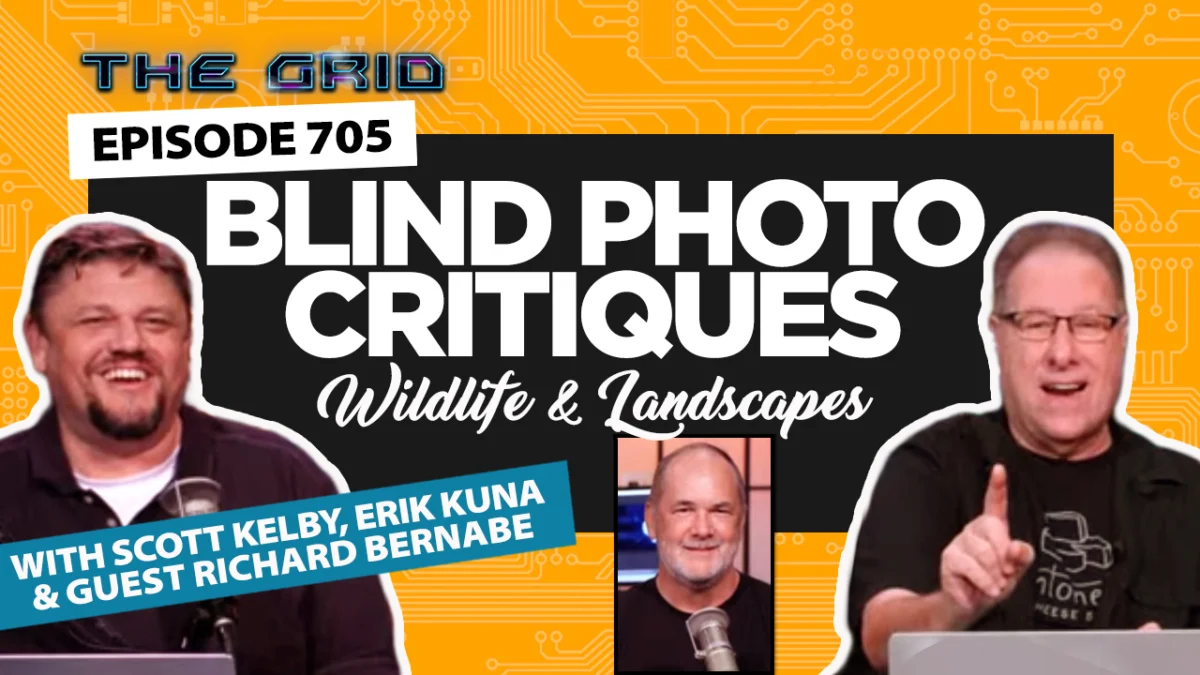
This week, the critically acclaimed photography education program, The Grid, a flagship production of KelbyOne, hosted a pivotal episode featuring esteemed wildlife and landscape photographer Richard Bernabe. In a special "Blind Photo Critique" session, Bernabe, alongside series hosts Scott Kelby and Erik Kuna, meticulously analyzed submitted images, providing invaluable insights into elevating photographic technique from initial capture to final post-processing. The episode, which aired on [insert assumed air date, e.g., October 26, 2023], served as a comprehensive masterclass for photographers aiming to refine their craft in two of photography’s most challenging and rewarding genres.
The Grid: A Beacon in Photography Education
The Grid, established as a cornerstone of KelbyOne’s extensive educational offerings, has consistently provided weekly, accessible, and high-quality photography instruction since its inception. Founded by Scott Kelby, a towering figure in the photography world known for his prolific authorship and educational initiatives, KelbyOne has grown into a premier online platform for creative professionals. The show’s format typically includes discussions on current industry trends, Q&A sessions, interviews with leading photographers, and, notably, its popular blind photo critiques. This particular format is highly valued within the photographic community as it ensures an unbiased evaluation of submitted work, focusing solely on the visual merits and technical execution of the images themselves, rather than the photographer’s reputation.
The decision to dedicate an entire episode to wildlife and landscape photography underscores the immense popularity and unique demands of these genres. Capturing the fleeting beauty of nature and the raw power of the wild requires a blend of technical prowess, artistic vision, and often, profound patience and resilience. These fields frequently present photographers with unpredictable conditions, from challenging lighting scenarios to fast-moving subjects and remote locations, making expert guidance particularly pertinent.
A Deep Dive into Photographic Fundamentals and Finesse
The critique session itself was a testament to the breadth and depth of photographic challenges encountered in nature photography. Bernabe, Kelby, and Kuna navigated a diverse portfolio of images, ranging from majestic bald eagles and elusive wolves caught in their natural habitats to serene waterfalls, vibrant autumn vistas, and dramatic, sweeping landscapes. Each image presented a unique learning opportunity, allowing the experts to dissect common pitfalls and highlight best practices that can dramatically transform an ordinary photograph into an extraordinary one.
Central to the discussions were fundamental elements of photographic theory and practical application. The panel meticulously addressed issues such as:
- White Balance: The critical importance of accurately rendering colors to convey the true mood and natural appearance of a scene. Incorrect white balance can drastically alter the perception of time of day, weather conditions, and overall atmosphere. The experts demonstrated how subtle adjustments can bring an image back to life, whether it requires warming a cold landscape or cooling an overly warm portrait of an animal.
- Cropping for Impact: Beyond merely trimming edges, cropping was discussed as a powerful compositional tool. Strategic cropping can eliminate distracting elements, reinforce the rule of thirds or other compositional guidelines, and most importantly, direct the viewer’s eye precisely where the photographer intends. This process often involves making difficult decisions about what to exclude to enhance the subject’s prominence and the narrative’s clarity.
- Mitigating Distracting Backgrounds: A pervasive challenge in both wildlife and landscape photography. The panel offered strategies for minimizing background clutter, whether through careful repositioning, utilizing a shallow depth of field to isolate the subject, or employing post-processing techniques to soften or desaturate competing elements.
- Managing Harsh Highlights: Direct sunlight or reflective surfaces can lead to blown-out highlights, losing critical detail. The discussion covered in-camera exposure compensation, bracketing, and the judicious use of highlight recovery tools in post-processing software like Adobe Lightroom, emphasizing the importance of preserving dynamic range.
- Shutter Speed as a Creative Tool: For wildlife, the ability to freeze fast-moving action requires precise shutter speed selection, while for landscapes, especially those involving water or clouds, slower shutter speeds can create ethereal motion blur, adding artistic flair. The experts illustrated how shutter speed directly influences the perceived energy and mood of an image.
- Utilizing Light for Subject Separation: Perhaps one of the most sophisticated techniques discussed, the masterful use of light to separate a subject from its surroundings was a recurring theme. Whether employing rim lighting, backlighting, or carefully observing the direction and quality of natural light, understanding how light sculpts form and creates contrast is paramount to making a subject "pop" from the background.
The Power of Post-Processing: Small Adjustments, Monumental Impact
While technical proficiency in-camera was heavily emphasized, the episode also delved into the transformative power of post-processing. The hosts and Bernabe showcased how relatively minor adjustments in editing software can yield significant improvements. This segment highlighted:
- Highlight and Shadow Recovery: Carefully pulling back overly bright areas and lifting underexposed shadows to reveal hidden details and improve overall image balance.
- Distraction Removal: Utilizing tools like spot healing and content-aware fill to subtly remove unwanted elements that detract from the main subject, a critical step in refining the composition.
- White Balance Refinement: Fine-tuning color temperature and tint to achieve a more natural, pleasing, or emotionally resonant look.
- Strategic Cropping for Enhanced Focus: Re-evaluating the initial crop to achieve a tighter, more impactful composition that eliminates extraneous information and strengthens the narrative.
These post-processing discussions served as a practical demonstration of how modern digital darkroom techniques can enhance, rather than fundamentally alter, the captured image, reinforcing the idea that editing is an extension of the creative vision rather than a substitute for good photographic practice.
Richard Bernabe’s Enduring Wisdom: The Pre-Capture Imperative
One of the most profound takeaways from the episode came from Richard Bernabe, who underscored a fundamental truth for all landscape and wildlife photographers: the best editing decisions often originate long before an image ever reaches Lightroom. Bernabe’s philosophy centers on the critical importance of in-field decision-making and pre-visualization, a concept he has championed throughout his distinguished career. He reminded viewers of the invaluable skill in knowing:
- When the Light Isn’t Working: Recognizing suboptimal lighting conditions, such as harsh midday sun that creates strong contrasts and unflattering shadows, or flat, overcast light that lacks dimension. Rather than forcing a shot, a skilled photographer understands when to wait for better light or move to a different location.
- When to Change Your Position: Often, a slight shift in perspective, angle, or elevation can dramatically alter a composition, eliminate distractions, or capture light more effectively. This involves actively scouting and exploring the environment rather than passively accepting the first vantage point.
- When to Simply Wait: Patience is arguably the most critical virtue in wildlife photography. Waiting for the animal to move into a better position, for the light to soften, or for a particular behavioral moment can make the difference between a snapshot and a truly captivating image. In landscape photography, this might mean waiting for clouds to clear, for the golden hour light to peak, or for a passing storm to create dramatic skies.
This emphasis on the "pre-capture imperative" serves as a powerful reminder that while post-processing tools are powerful, they cannot salvage a fundamentally flawed image. Mastering the art of observation, anticipation, and strategic positioning in the field remains paramount to achieving photographic excellence.
Implications for the Photography Community
The latest episode of The Grid is more than just a critique session; it’s a vital contribution to the ongoing education and empowerment of the global photography community. By bringing together seasoned experts like Scott Kelby, Erik Kuna, and Richard Bernabe, KelbyOne continues to reinforce its commitment to practical, actionable learning. The blind critique format, in particular, fosters a culture of objective self-assessment and continuous improvement, allowing photographers to learn from a diverse array of submitted work without the influence of personal bias.
The focus on wildlife and landscape photography also carries broader implications. As these genres increasingly intersect with conservation efforts, empowering photographers to create more compelling and impactful images can indirectly contribute to greater public awareness and appreciation for the natural world. A beautifully captured image of a bald eagle or a pristine mountain range can evoke powerful emotions, inspiring action and fostering a deeper connection to nature.
In an era where photographic technology is rapidly advancing, and image-making tools are more accessible than ever, platforms like The Grid play a crucial role in ensuring that fundamental principles of composition, light, and storytelling are not lost amidst technological wizardry. The episode serves as a powerful testament to the enduring truth that while cameras and software evolve, the timeless principles of photographic artistry remain constant. It encourages photographers to move beyond mere technical proficiency towards a more thoughtful, intentional, and ultimately, more rewarding creative practice.
Photographers worldwide are encouraged to watch the replay of this insightful episode on KelbyOne.com or the associated YouTube channel. The comprehensive critiques and expert advice offered by Bernabe, Kelby, and Kuna provide an invaluable resource for anyone seeking to elevate their wildlife and landscape photography, transforming their passion into truly masterful visual narratives.