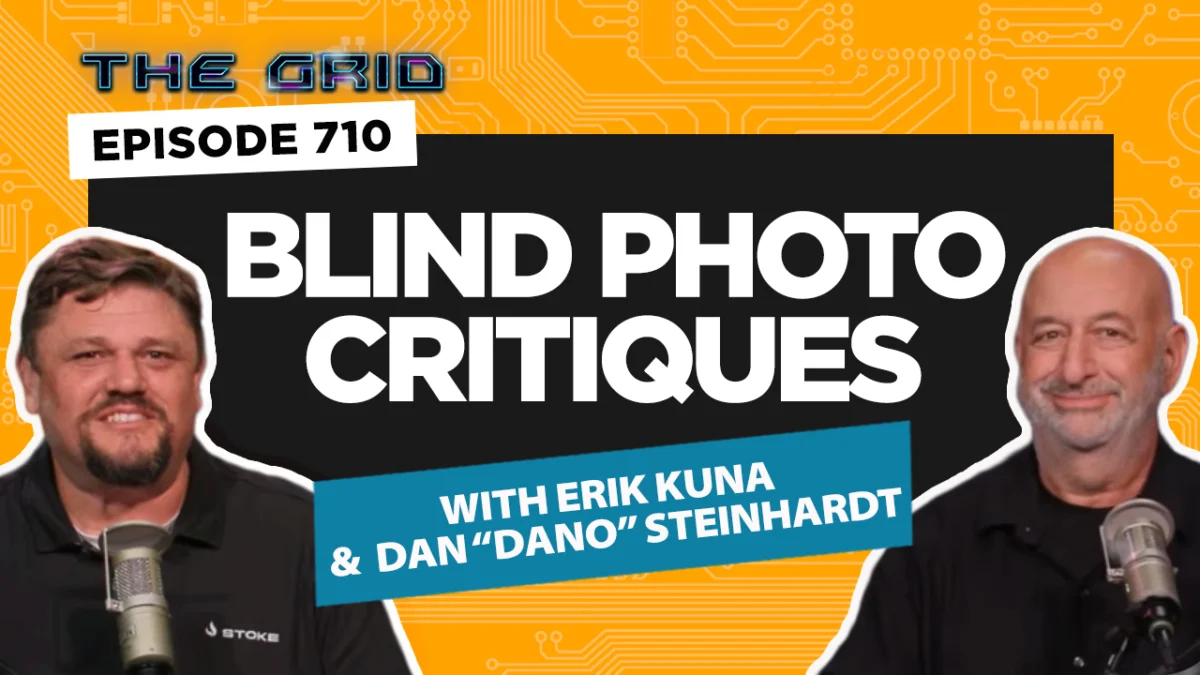
This week, The Grid, KelbyOne’s flagship online photography program, presented a pivotal episode titled "Blind Photo Critiques," featuring host Erik Kuna and acclaimed photographer and educator Dan "Dano" Steinhardt. The session, episode 710 in the series, delved deep into the nuances of post-processing, offering invaluable insights into how strategic editing can profoundly influence a viewer’s perception and engagement with an image. The critique covered an expansive array of photographic genres, from the candid narratives of street photography and the intricate details of astrophotography to the dynamic captures of wildlife, the evocative scenes of travel, the intensity of sports, the intimacy of portraits, and the grand scale of architectural compositions, among others. The central tenet that emerged repeatedly throughout the critiques was the fundamental principle that a well-executed edit serves as a powerful tool to control and direct where the viewer’s gaze ultimately settles within a photograph.
The Enduring Value of Critiques and Post-Processing in Modern Photography
The concept of "Blind Photo Critiques" holds significant educational weight within the photography community. By presenting images without attribution, the focus shifts entirely to the technical and artistic merits of the photograph itself, removing any potential bias associated with a photographer’s reputation or personal connection. This format, championed by platforms like The Grid, fosters an environment of objective learning, allowing participants and viewers alike to dissect images purely on their compositional strength, lighting, and post-processing execution. In an era where digital photography has democratized image creation, the ability to effectively critique and refine one’s work has become more critical than ever.
Erik Kuna, a respected figure in the photography education landscape known for his expertise in lighting and post-production, alongside Dan Steinhardt, whose extensive background in diverse photographic disciplines provides a comprehensive perspective, form a formidable duo for such an undertaking. Their combined experience offers a multi-faceted view on how subtle adjustments can dramatically alter an image’s impact. The session underscored that beyond the initial capture, the "after" picture—the final edited version—is often where the true artistry of a photographer is revealed. This emphasis on post-processing reflects a broader industry trend where digital darkroom skills are considered as vital as, if not more than, in-camera proficiency.
A Deep Dive into Editing Techniques: Guiding the Viewer’s Gaze
A recurring theme during the critique session was the profound impact of intentional editing on guiding the viewer’s eye. Kuna and Steinhardt meticulously demonstrated how various techniques contribute to this objective, offering actionable tips for photographers at all skill levels. One primary area of focus was cropping out distractions. In many submitted images, extraneous elements at the edges of the frame or in the background were found to detract from the main subject. The experts illustrated how a strategic crop not only removes these unwanted elements but can also dramatically improve the overall composition, creating a more focused and impactful image. This aligns with fundamental principles of visual design, where simplicity often equates to clarity and stronger communication of the photographic message.
Beyond simple cropping, the discussion extended to working with light. While natural light is paramount during capture, post-processing allows for sophisticated manipulation of existing light, or even the simulation of light sources, to emphasize key areas. Techniques discussed included adjusting exposure, highlights, and shadows to sculpt the scene, drawing attention to the subject by enhancing its luminosity or creating contrast with its surroundings. This meticulous approach to light control in the digital darkroom can transform a flat image into one with depth and dimension, effectively directing where the viewer’s eye travels.
Another critical piece of advice centered on finding stronger shooting angles. While this is primarily a pre-capture decision, the critiques often highlighted how a different perspective during shooting could have pre-emptively solved compositional issues that post-processing then had to address. However, for existing images, the concept of "finding a much better photo within the photo" emerged as a powerful editing strategy. This involves identifying a compelling segment of a larger, perhaps less successful, image and cropping it aggressively to create an entirely new, more potent photograph. This technique is particularly valuable for photographers reviewing their archives, suggesting that many hidden gems might exist within seemingly unremarkable captures, waiting to be unearthed through thoughtful post-processing.
Mastering the Digital Darkroom: Specific Tools and Applications
The "Blind Photo Critiques" session also served as a practical workshop, unveiling a suite of specific editing techniques that empower photographers to achieve professional-grade results. Among these, selective sharpening was highlighted as a crucial tool. Instead of applying a blanket sharpening across the entire image, which can introduce noise or artifacting in less critical areas, selective sharpening allows photographers to enhance detail precisely where it matters most—typically on the main subject’s eyes in a portrait, or the texture of fur in a wildlife shot. This precision ensures that the viewer’s attention is drawn to the intended focal points.
Dodging and burning, time-honored darkroom techniques translated seamlessly into the digital realm, were extensively covered. Dodging involves selectively lightening areas of an image, while burning involves darkening them. These techniques are indispensable for sculpting light and shadow, adding depth, and creating a sense of three-dimensionality. By subtly manipulating local brightness, photographers can emphasize contours, create leading lines with light, and effectively guide the viewer’s eye through the composition, enhancing drama and mood. The mastery of dodging and burning often distinguishes amateur work from professional output, providing a painterly control over the final image.
Gradients and vignettes also received significant attention. Gradients, whether linear or radial, are powerful for making localized adjustments to exposure, color, or clarity, often used to balance uneven lighting in landscapes (e.g., brightening a dark foreground or darkening an overly bright sky) or to subtly direct attention. Vignettes, which involve darkening or lightening the edges of an image, serve a similar purpose: by subtly drawing the eye inward towards the center of the frame, they can create a sense of focus and intimacy, effectively isolating the main subject from its periphery.
One particularly compelling live edit demonstrated the transformative power of a simple yet strategic application of these techniques. The example showed how a basic crop, combined with a carefully placed vignette, could drastically alter the composition, pulling the viewer’s attention unequivocally back to the subject. This practical illustration underscored a key takeaway from the episode: complex, multi-layered edits are not always necessary. Often, a few thoughtful adjustments, especially within accessible software like Adobe Lightroom, are all it takes to elevate an image from good to captivating.
The Simplicity of Impact: Less is Often More
The recurring emphasis on the effectiveness of simple edits is a vital message for the photography community. In an age saturated with advanced software features and intricate editing tutorials, it can be overwhelming for photographers to navigate the myriad possibilities. The "Blind Photo Critiques" served as a powerful reminder that fundamental principles of composition, light, and focus often yield the most significant improvements. By prioritizing clear intent and understanding the psychological impact of visual elements, photographers can achieve profound results without resorting to overly complicated processes. This approach not only saves time but also encourages a deeper understanding of photographic artistry, moving beyond mere technical execution to genuine visual storytelling.
Adobe Lightroom, often highlighted by educators like Kuna and Steinhardt, embodies this philosophy of accessible yet powerful editing. Its intuitive interface and robust toolset make it an ideal platform for applying these thoughtful adjustments, empowering photographers to refine their vision without getting lost in overly technical workflows. The ubiquity of such software has further democratized the art of post-processing, making professional-level refinement achievable for a broader audience.
The Evolution of Photographic Education: The Grid and KelbyOne
The Grid has been a cornerstone of online photography education for many years, produced by KelbyOne, a leading platform dedicated to providing comprehensive training for photographers and creatives. Launched over a decade ago, The Grid quickly established itself as a go-to resource for practical, real-world photography advice, interviews with industry leaders, and live demonstrations. Its consistent delivery of high-quality content, ranging from gear reviews and shooting tips to advanced post-processing techniques and business strategies, has cemented its position as an invaluable educational asset.
KelbyOne’s broader mission aligns perfectly with the content of "Blind Photo Critiques." The platform aims to demystify complex photographic concepts, making professional techniques accessible to a global audience. Through a subscription model, KelbyOne provides an extensive library of courses, tutorials, and live shows, fostering a continuous learning environment for photographers seeking to hone their craft. The collaborative and interactive nature of shows like The Grid encourages engagement and practical application of learned skills, demonstrating a commitment to hands-on education that transcends theoretical instruction.
Perspectives from the Experts
While direct quotes were not provided in the original summary, the essence of Erik Kuna’s and Dan Steinhardt’s contributions can be inferred from the critique’s focus. Kuna, with his background in studio lighting and digital workflow, implicitly advocates for precision and efficiency in editing. His approach likely emphasizes how even minor adjustments, when applied with intent, can dramatically enhance an image’s overall appeal and clarity. Steinhardt, known for his diverse photographic expertise, would likely underscore the importance of understanding the unique demands of each genre—how a portrait requires different post-processing considerations than an astrophotography shot, for instance—while maintaining a consistent artistic vision. Both educators would undoubtedly agree that the ultimate goal of post-processing is not to create an artificial reality, but to enhance and clarify the photographer’s original intent, guiding the viewer to experience the image as envisioned. Their shared philosophy likely revolves around empowering photographers to tell more compelling stories through their images, ensuring that technical prowess serves artistic expression.
The Broader Implications for the Photography Community
The insights shared in "Blind Photo Critiques" have far-reaching implications for the entire photography community. For amateur photographers, the episode offers a clear roadmap for improving their work without needing to invest in complex software or years of training. It demystifies the editing process, proving that foundational principles are often the most impactful. This accessibility fosters growth and confidence, encouraging more individuals to pursue photography seriously.
For professional photographers, the session serves as a valuable refresher and a benchmark for best practices. Even seasoned veterans can benefit from revisiting fundamental concepts and seeing how others approach common challenges. In a competitive market, maintaining a sharp eye for detail and mastering efficient editing workflows are crucial for delivering consistent, high-quality work. The emphasis on guiding the viewer’s eye is particularly pertinent for professionals whose livelihoods depend on creating images that resonate and communicate effectively.
Furthermore, the episode highlights the continuous evolution of photography as an art form and a technical discipline. As camera technology advances, so too do the possibilities within post-processing. Educational platforms like KelbyOne play a critical role in bridging the gap between technological innovation and practical application, ensuring that photographers can leverage new tools to achieve their creative visions. The enduring relevance of shows like The Grid underscores the photography community’s insatiable appetite for learning, refinement, and connection.
Looking Ahead: The Future of Photographic Storytelling
The principles discussed by Erik Kuna and Dan Steinhardt—cropping out distractions, working with light, finding better angles, and leveraging specific editing techniques—are timeless. They transcend fleeting trends in photography and remain fundamental to creating impactful images. As photography continues to evolve with AI integration, computational photography, and new display technologies, the core human element of visual storytelling, and the careful curation of what a viewer sees and feels, will only become more pronounced. The ability to direct attention, evoke emotion, and communicate a clear message through an image will always be paramount. Episodes like "Blind Photo Critiques" ensure that photographers are equipped with the foundational knowledge to navigate this exciting future, continually honing their craft to produce compelling visual narratives.
For those seeking to refine their post-processing skills and gain a deeper understanding of how to control the visual flow within their photographs, the replay of "Blind Photo Critiques" with Erik Kuna and Dan Steinhardt on The Grid offers an indispensable educational resource. It serves as a potent reminder that often, the most significant transformations in photography occur not just behind the lens, but in the thoughtful and intentional adjustments made within the digital darkroom.