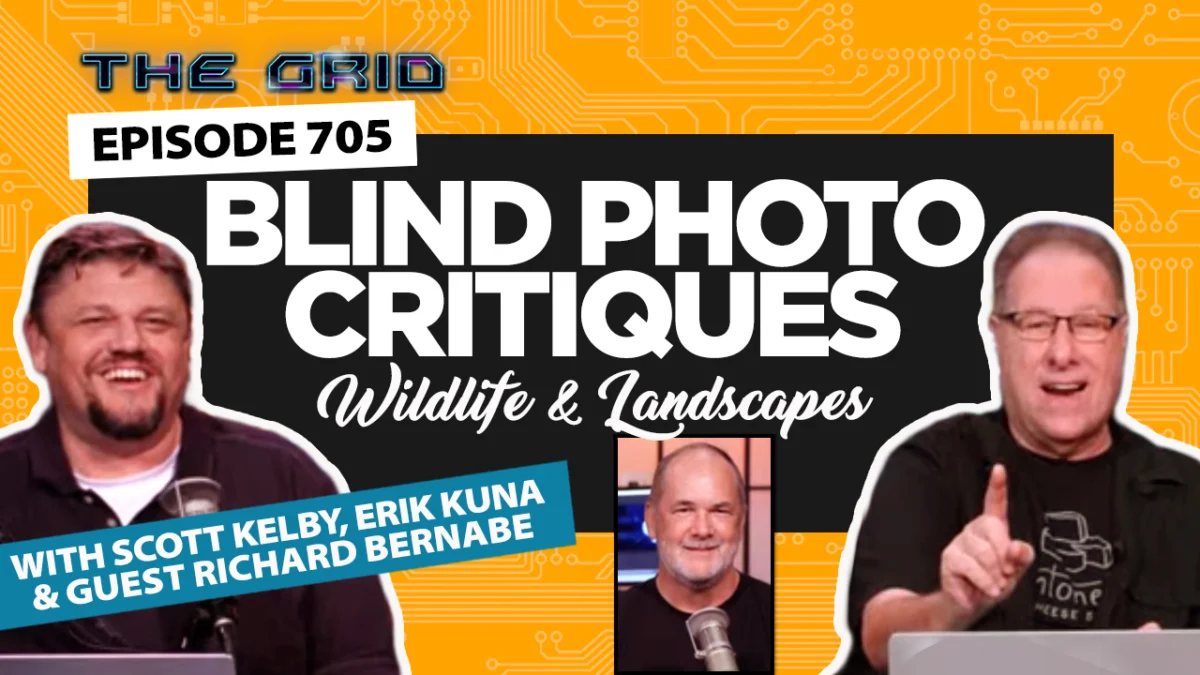
This week, The Grid, a prominent online platform for photography education and discussion, presented a highly anticipated episode featuring hosts Scott Kelby and Erik Kuna alongside acclaimed wildlife and landscape photographer Richard Bernabe. The session, titled "Wildlife & Landscape Blind Photo Critique," offered an in-depth analysis of submitted photographs, providing invaluable insights into both in-camera techniques and post-processing strategies using tools like Adobe Lightroom. The episode systematically addressed common challenges and advanced considerations in capturing and refining images of the natural world, ranging from majestic bald eagles and elusive wolves to serene waterfalls and dramatic autumnal vistas.
The Grid: A Beacon in Photographic Education
The Grid, an integral part of the KelbyOne ecosystem, has long served as a cornerstone for photographers seeking to enhance their skills and stay abreast of industry trends. Launched as an interactive online talk show, it has evolved into a weekly institution, attracting a global audience of enthusiasts and professionals alike. Co-hosted by Scott Kelby, a best-selling author, publisher, and CEO of KelbyOne, and Erik Kuna, a seasoned photographer, educator, and Vice President of Operations for KelbyOne, the program is renowned for its blend of practical instruction, expert interviews, and engaging discussions. Kelby, with his extensive background in Photoshop and Lightroom training, brings a direct, results-oriented approach, while Kuna complements this with his expertise in diverse photographic genres and a keen eye for technical detail. Together, they create an environment conducive to learning and critical thinking, making complex photographic concepts accessible to a wide audience. The show’s format often includes segments on gear reviews, workflow tips, and, crucially, photo critiques, which have proven to be among its most popular and impactful offerings. The "blind critique" format, specifically, encourages objective evaluation by removing the identity of the photographer, ensuring that feedback focuses purely on the merits and areas for improvement within the image itself.
Richard Bernabe: A Master of the Natural Frame
The inclusion of Richard Bernabe as a guest expert underscored the episode’s specialized focus. Bernabe is widely recognized as one of the most accomplished and respected photographers in the wildlife and landscape genres. His work, characterized by breathtaking compositions, masterful use of light, and a profound connection to the natural world, has graced countless publications, exhibitions, and educational platforms. With decades of experience traversing continents to capture iconic scenes, Bernabe brings a wealth of practical knowledge and artistic vision. His approach emphasizes not just technical proficiency but also the importance of patience, observation, and an understanding of natural behavior and environmental conditions. His presence on The Grid provided attendees with a rare opportunity to gain perspective from a photographer who has consistently demonstrated excellence in these challenging fields. His insights are particularly valuable given the inherent unpredictability of wildlife photography and the dynamic variables of landscape imaging, where light, weather, and time of day play critical roles.
Dissecting the Critiques: Key Technical and Artistic Principles
The core of the episode revolved around the blind critiques, which meticulously deconstructed a diverse portfolio of submitted images. The discussions spanned a comprehensive array of photographic principles, demonstrating how seemingly minor adjustments can yield significant improvements.
1. Composition and Cropping for Impact:
A recurring theme was the strategic use of cropping. The experts emphasized how a tighter crop can eliminate distracting elements, draw the viewer’s eye more effectively to the main subject, and enhance the overall narrative of an image. For instance, in a wildlife shot, removing excess negative space around an animal might amplify its presence, while in a landscape, a slight adjustment to the horizon line or the inclusion/exclusion of foreground elements can dramatically alter the sense of depth and scale. This principle aligns with established compositional guidelines such as the rule of thirds, leading lines, and framing, all of which aim to guide the viewer’s gaze and create a visually pleasing balance. The critiques illustrated that while the initial capture is vital, thoughtful cropping in post-production is often the final touch that transforms a good photograph into a compelling one.
2. Mastering Light and Exposure: White Balance and Highlights:
The intricate relationship between light, exposure, and white balance received considerable attention. Harsh highlights, often an issue in high-contrast scenes, were identified as potential image destroyers. Techniques for pulling back these bright areas, either through careful exposure in-camera or selective adjustments in Lightroom, were discussed. This prevents "blown-out" areas where detail is irretrievably lost. Equally crucial was the discussion of white balance. The experts demonstrated how warming or cooling the white balance can dramatically alter the mood and atmosphere of an image. A cooler tone might evoke a sense of calm or solitude in a winter landscape, while a warmer tone could enhance the golden hour glow or the vibrancy of autumn foliage. Understanding how to interpret and correct color temperature is fundamental to rendering scenes accurately and artistically.
3. Shutter Speed: Capturing Motion and Stillness:
The choice of shutter speed was highlighted as a critical factor, particularly in wildlife and landscape photography, where capturing or conveying motion is often paramount. For wildlife, a fast shutter speed is typically essential to freeze fast-moving subjects, ensuring sharp detail in a bird in flight or an animal in action. The critiques showcased instances where insufficient shutter speed led to motion blur, detracting from the subject’s clarity. Conversely, in landscape photography, a slower shutter speed can be intentionally employed to create artistic effects, such as the silky smooth appearance of flowing water in a waterfall or the streaking of clouds across a sky, adding a sense of dynamism and ethereal quality. The experts underscored the importance of balancing shutter speed with aperture and ISO to achieve the desired effect while maintaining proper exposure.
4. Eliminating Distractions and Separating Subjects:
A common pitfall identified in many submissions was the presence of distracting backgrounds or elements that competed with the main subject. The discussion emphasized techniques for minimizing these distractions, both in-camera and during post-processing. This could involve changing the camera position, adjusting depth of field to blur the background (achieving "bokeh"), or using tools in Lightroom to selectively remove or tone down distracting objects. For wildlife, using light to help separate the animal from its surroundings was a key piece of advice. Backlighting or side lighting can create a rim light effect, making the subject pop against the background, adding depth and dimension to the image. This meticulous attention to detail ensures that the viewer’s focus remains squarely on the intended subject.
The Power of Post-Processing: Small Adjustments, Big Impact
Beyond the initial capture, the editing discussions underscored the transformative power of post-processing. The panel repeatedly demonstrated how relatively small adjustments within Lightroom or similar software could make a monumental difference. These adjustments included:
- Global vs. Local Adjustments: Understanding when to apply changes across the entire image versus targeting specific areas (e.g., brightening shadows in one corner, desaturating a distracting color).
- Contrast and Clarity: Enhancing textures and adding visual punch without over-processing.
- Color Grading: Fine-tuning hues and saturation to evoke specific moods or correct color casts.
- Noise Reduction and Sharpening: Balancing the removal of digital noise with the enhancement of fine details.
The key takeaway was that post-processing is not about altering reality but about refining the initial vision, correcting imperfections, and guiding the viewer’s experience. It’s an iterative process, where each minor tweak contributes to the overall coherence and impact of the final image.
Pre-Visualization and Field Decisions: The Foundation of Great Photography
Perhaps one of the most crucial reminders shared by Richard Bernabe, and echoed by Kelby and Kuna, pertained to decisions made before the camera even leaves the bag, or at least before the shutter is pressed. Bernabe articulated a fundamental truth for landscape and wildlife photographers: sometimes the best editing decision starts long before ever opening Lightroom. This encompasses several critical aspects:
- Knowing When the Light Isn’t Working: Recognizing suboptimal lighting conditions (e.g., harsh midday sun, flat overcast skies) and understanding that no amount of post-processing can truly salvage an image captured in poor light. Patience to wait for the "golden hour" or a dramatic sky is often more valuable than shooting indiscriminately.
- Strategic Positioning: Actively seeking out the best vantage point, considering background elements, foreground interest, and the angle of light. Moving a few feet in any direction can completely change the composition and impact of an image.
- The Art of Waiting: Especially in wildlife photography, patience is not just a virtue but a necessity. Waiting for the animal to move into a better position, for eye contact, or for a specific behavior can mean the difference between an average snapshot and an extraordinary portrait. Similarly, for landscapes, waiting for the perfect cloud formation, a break in the weather, or a particular quality of light is paramount.
This emphasis on "pre-visualization" and informed field decisions reinforces the idea that true photographic mastery extends beyond technical skills to include environmental awareness, foresight, and a deep understanding of natural phenomena. It underscores that while post-processing is a powerful tool, it is ultimately an enhancement of a strong initial capture, not a substitute for it.
Broader Implications for the Photographic Community
The "Wildlife & Landscape Blind Photo Critique" episode on The Grid serves as a powerful testament to the ongoing evolution of photography education and the enduring value of expert feedback. In an era saturated with images, the ability to discern quality, understand underlying principles, and continually refine one’s craft is more important than ever. Episodes like this provide:
- Accessible Learning: Democratizing access to high-level photographic instruction from industry leaders.
- Practical Application: Offering tangible examples of how theoretical concepts translate into practical improvements.
- Community Engagement: Fostering a sense of shared learning and encouraging photographers to critically evaluate their own work and that of others.
- Continuous Improvement: Reinforcing the idea that photography is a journey of continuous learning and refinement, where every critique, every adjustment, and every new insight contributes to growth.
By breaking down complex photographic challenges into actionable advice, The Grid continues to empower photographers at all levels. The replay of this specific episode is an invaluable resource for anyone looking to elevate their wildlife and landscape photography, offering a masterclass in seeing, capturing, and refining the beauty of the natural world. The principles discussed are universal, applicable not just to the specific images critiqued but to the vast and varied landscape of photographic endeavors.