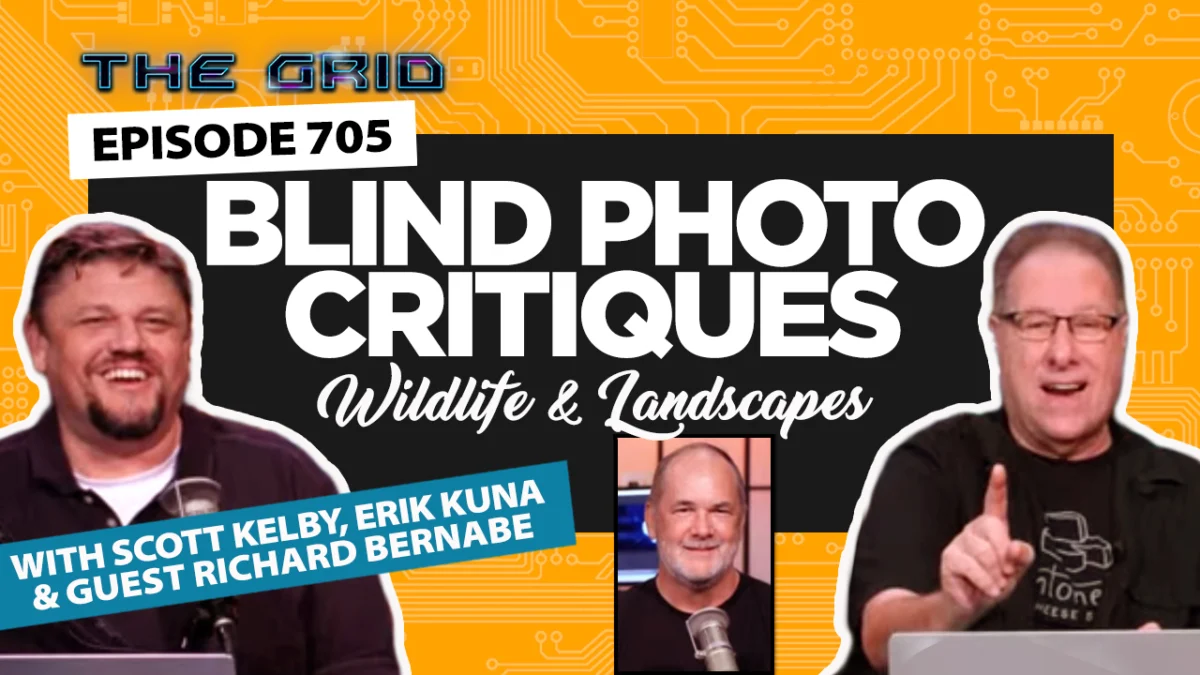
This week, the popular photography webcast The Grid, hosted by industry stalwarts Scott Kelby and Erik Kuna, delivered an insightful and highly anticipated episode featuring acclaimed wildlife and landscape photographer Richard Bernabe. Titled "Wildlife & Landscape Blind Photo Critique," the session offered an unparalleled opportunity for viewers to delve into the intricate world of nature photography, dissecting submitted images with a focus on both in-camera decision-making and post-processing refinement within Adobe Lightroom. The episode, numbered 705 in the series, quickly garnered attention for its practical advice and expert analysis, reinforcing The Grid‘s reputation as a cornerstone of online photography education.
A Deep Dive into the Critique Format
The "Blind Photo Critique" format, a staple on The Grid and other KelbyOne educational programs, is meticulously designed to foster objective learning. In this methodology, images are submitted anonymously by photographers, shielding the identities of the creators from the critique panel. This anonymity is crucial; it ensures that the feedback provided by experts like Kelby, Kuna, and Bernabe is based solely on the visual merits and technical execution of the photograph, free from any personal bias or preconceived notions about the photographer’s skill level or reputation. For the audience, this translates into a purer form of educational content, as they witness genuine, unvarnished assessments that highlight universal principles of good photography.
The episode showcased a diverse portfolio of images, ranging from dynamic wildlife encounters with bald eagles and wolves to serene natural vistas encompassing waterfalls, vibrant autumn foliage, and dramatic geological formations. This breadth allowed the panel to address a wide spectrum of challenges inherent in nature photography, a genre known for its unpredictable subjects and often demanding environmental conditions. The critiques were not merely about pointing out flaws but were framed as constructive conversations aimed at illustrating concrete pathways to improvement, both in the field and in the digital darkroom.
The Esteemed Panel: Expertise in Focus
Scott Kelby, co-founder of KelbyOne, editor and publisher of Photoshop User magazine, and author of numerous best-selling photography books, brings decades of experience in both photography and digital imaging to The Grid. His ability to distill complex concepts into understandable advice has made him a leading voice in photography education globally. Erik Kuna, a renowned photographer and educator himself, co-hosts The Grid and contributes a sharp eye for composition and a deep understanding of modern photographic workflows. Together, their dynamic interaction provides a balanced perspective that resonates with a broad audience, from beginners to seasoned professionals.
Richard Bernabe, the special guest for this episode, is an internationally recognized professional wildlife and landscape photographer, author, and educator. His work is celebrated for its evocative portrayal of the natural world, characterized by masterful use of light, compelling composition, and an innate understanding of his subjects. Bernabe’s extensive travels and experiences in diverse ecosystems worldwide lend significant authority to his insights, particularly when discussing the nuances of capturing fleeting moments in wildlife and the grandeur of expansive landscapes. His presence on The Grid provided a unique opportunity for viewers to learn directly from a practitioner at the pinnacle of his craft, offering perspectives honed through countless hours in the field.
Key Themes and Technical Deep Dives
The critique session systematically addressed several critical areas of photography, underscoring how relatively minor adjustments can yield significant improvements in an image’s impact and storytelling ability.
1. Mastering White Balance:
A recurring theme was the importance of white balance. The panel demonstrated how subtle shifts in temperature (warming or cooling) can drastically alter the mood and accuracy of a photograph. In landscape photography, correct white balance ensures that the colors of a sunrise, sunset, or a verdant forest are rendered faithfully, reflecting the ambient light conditions. For wildlife, accurate white balance is crucial for depicting the true coloration of an animal’s fur or feathers, which can be vital for species identification or simply for conveying realism. An incorrect white balance can cast an unnatural hue over an entire scene, detracting from its authenticity and visual appeal. The discussion highlighted the need for photographers to either set their white balance correctly in-camera or understand how to effectively correct it during post-processing to achieve the desired aesthetic.
2. The Art of Cropping and Composition:
Cropping was presented not just as a tool for resizing but as a powerful compositional device. The experts illustrated how a tighter crop could eliminate distracting elements, direct the viewer’s eye to the main subject, and enhance the overall impact of an image. They discussed how strategic cropping can improve the adherence to compositional rules like the Rule of Thirds or golden ratio, or conversely, break them intentionally for artistic effect. Distracting backgrounds, a common challenge in both wildlife and landscape photography, were a frequent point of discussion. The panel showed how careful framing in-camera, or judicious cropping later, could isolate the subject from busy or cluttered environments, ensuring the viewer’s focus remains where the photographer intended.
3. Navigating Harsh Highlights and Dynamic Range:
The challenge of harsh highlights, particularly prevalent in bright outdoor scenes or when shooting against the sun, was extensively covered. The panel offered advice on how to manage these in-camera through proper exposure techniques, such as exposing for the highlights to preserve detail, and in post-processing by utilizing tools in Lightroom to recover lost detail in overexposed areas. This discussion naturally extended to the broader concept of dynamic range—the ratio between the lightest and darkest areas of an image. Landscape photographers often grapple with scenes that exceed their camera’s dynamic range, necessitating techniques like bracketing or graduated neutral density filters to capture detail across the entire tonal spectrum.
4. Shutter Speed and Motion Control:
The critical role of shutter speed was explored in the context of both freezing fast-moving wildlife and rendering ethereal motion blur in elements like waterfalls. For wildlife photography, a sufficiently fast shutter speed (e.g., 1/1000th of a second or faster) is often essential to capture sharp images of animals in motion, preventing blur that can ruin an otherwise perfect shot. Conversely, landscape photographers frequently employ slow shutter speeds (several seconds or even minutes) to create a silky, painterly effect with flowing water or moving clouds, transforming dynamic elements into abstract forms. The panel emphasized that the choice of shutter speed is a deliberate artistic decision, directly influencing how motion is perceived in the final image.
5. Utilizing Light for Separation:
Perhaps one of the most profound insights shared was the strategic use of light to separate wildlife from its surroundings. Bernabe articulated how understanding the direction, quality, and intensity of light can create depth and dimension, making the subject "pop" against the background. Backlighting, side lighting, and rim lighting were discussed as techniques to create separation and add dramatic flair to wildlife portraits. This extends beyond mere exposure; it’s about recognizing how light sculpts forms and defines edges, guiding the viewer’s eye and enhancing the three-dimensionality of the subject within its environment.
The Pre-Capture Imperative: Bernabe’s Core Philosophy
A pivotal moment in the episode arrived when Richard Bernabe shared an important reminder that resonated deeply with the audience: "sometimes the best editing decision starts before you ever open Lightroom." This statement encapsulated a fundamental truth in nature photography – that field decisions often outweigh post-processing capabilities. Bernabe elaborated on the importance of knowing when the light isn’t working in your favor, when to change your position for a better angle or background, and crucially, when to simply wait for the opportune moment.
This philosophy champions patience, observation, and an intimate understanding of the environment. For a wildlife photographer, it means waiting for an animal to move into better light, or for a more compelling pose. For a landscape photographer, it means arriving at a location before sunrise and staying past sunset, waiting for that magical quality of light that transforms an ordinary scene into an extraordinary one. It’s about pre-visualization—envisioning the final image before the shutter is even pressed—and exercising the discipline to only capture images that have the potential to meet that vision. This approach not only yields stronger initial captures, reducing the burden on post-processing, but also fosters a deeper connection between the photographer and the natural world.
Implications for Photographers and the Industry
The "Wildlife & Landscape Blind Photo Critique" episode of The Grid serves as more than just a tutorial; it’s a testament to the enduring value of expert critique and continuous learning in photography. In an era where digital cameras and editing software have democratized image creation, the distinction between a snapshot and a compelling photograph often lies in the nuanced understanding of light, composition, and intentionality—precisely the areas illuminated by this critique.
For aspiring photographers, such episodes provide an invaluable educational resource, demystifying complex photographic principles and offering actionable advice that can be immediately applied. For seasoned professionals, they offer a fresh perspective and reinforce fundamental truths that can sometimes be overlooked amidst technical advancements. The accessibility of such high-caliber education through platforms like KelbyOne underscores a significant trend in the photography industry: the move towards online, on-demand learning that transcends geographical barriers.
The emphasis on both in-camera proficiency and thoughtful post-processing reflects the holistic nature of modern photography. While technology provides powerful tools, the human element—the photographer’s eye, patience, and decision-making—remains paramount. Richard Bernabe’s profound insight about pre-capture decisions acts as a guiding principle, encouraging photographers to slow down, observe, and truly engage with their subjects and environment. This approach not only leads to more impactful images but also cultivates a deeper appreciation for the craft itself.
In conclusion, the latest installment of The Grid with Scott Kelby, Erik Kuna, and Richard Bernabe was a masterclass in wildlife and landscape photography. It meticulously broke down the elements that elevate good photographs to great ones, providing a roadmap for improvement for anyone passionate about capturing the beauty of the natural world. The replay of this episode, available to a global audience, continues to offer a wealth of knowledge, promising to inspire and equip photographers with the skills needed to transform their photographic vision into stunning realities.