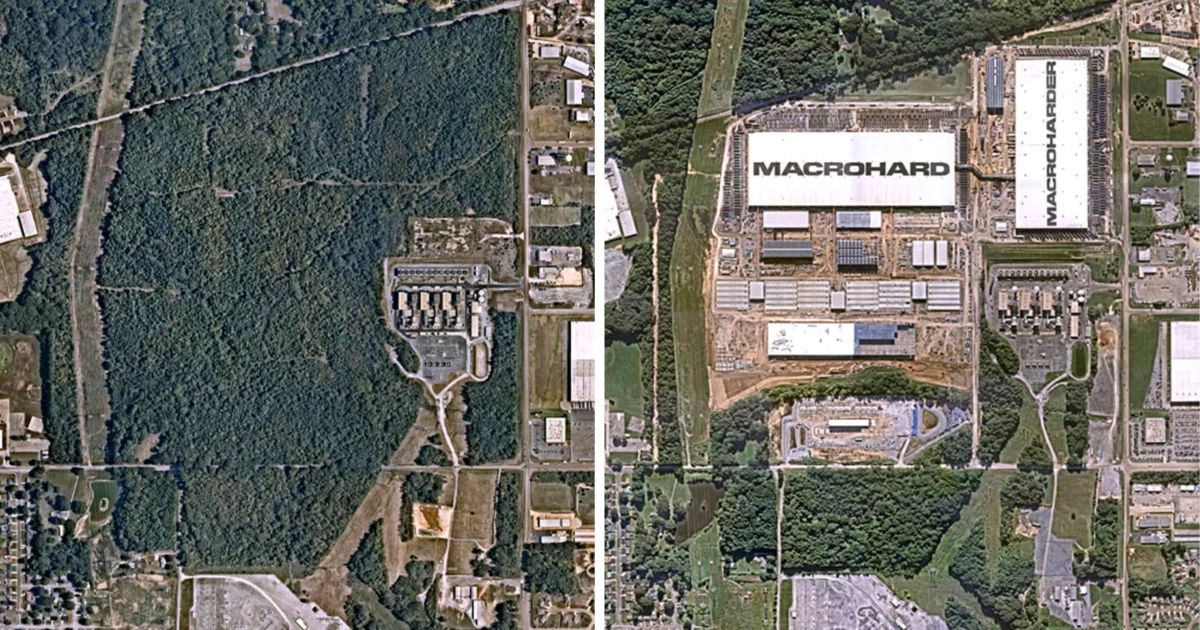
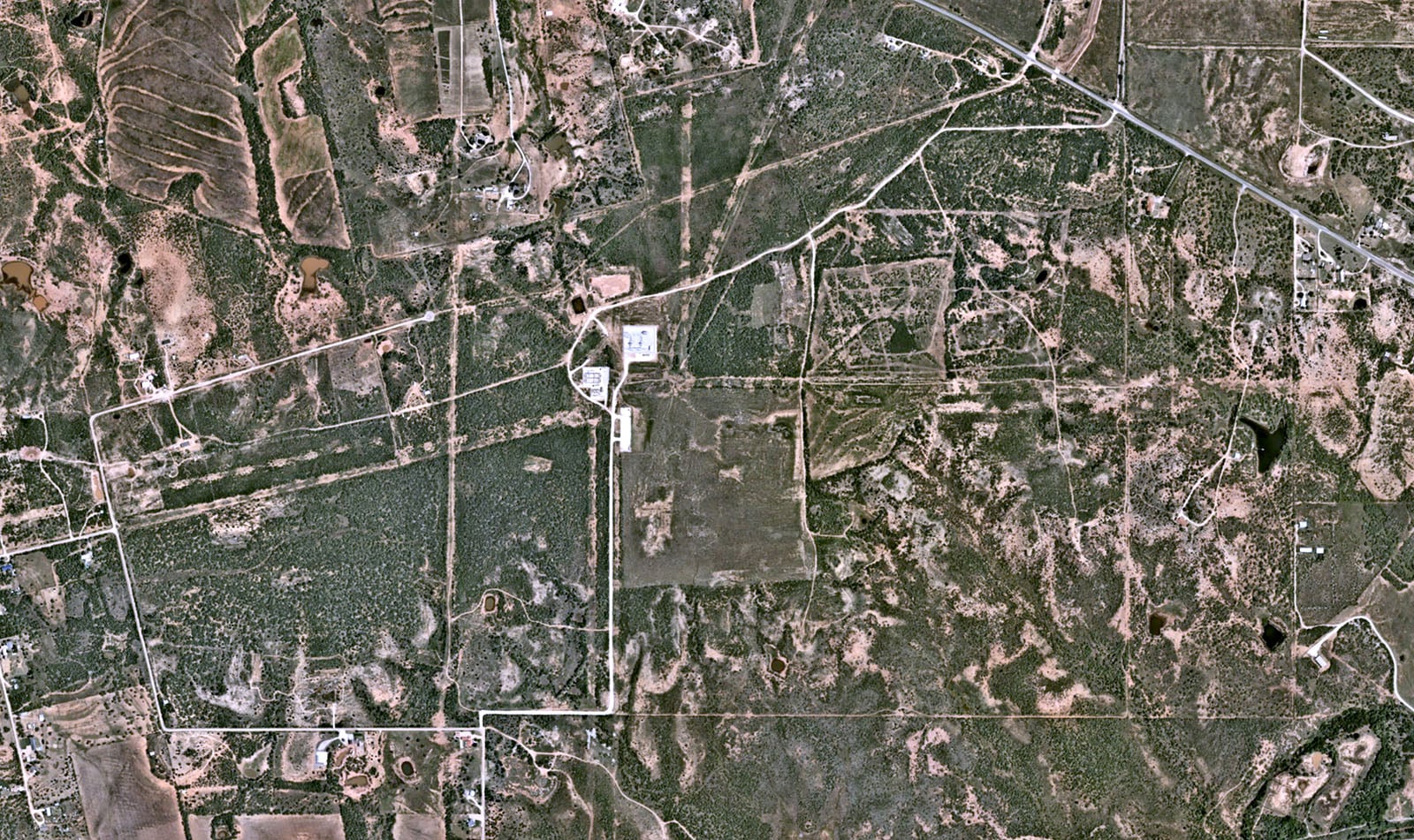
A dramatic visual narrative is unfolding across the American landscape, captured by satellite imagery that reveals the rapid, large-scale construction of immense data centers, the physical manifestation of the artificial intelligence boom. Benjamin Grant, curator of the widely acclaimed Daily Overview Instagram page, has brought this transformation into sharp focus, sharing compelling before-and-after photos with PetaPixel that highlight some of the most significant build-outs in the United States. These images, depicting hundreds of acres of natural terrain yielding to vast industrial complexes, underscore a critical and increasingly contentious intersection between technological advancement and its environmental and societal consequences.
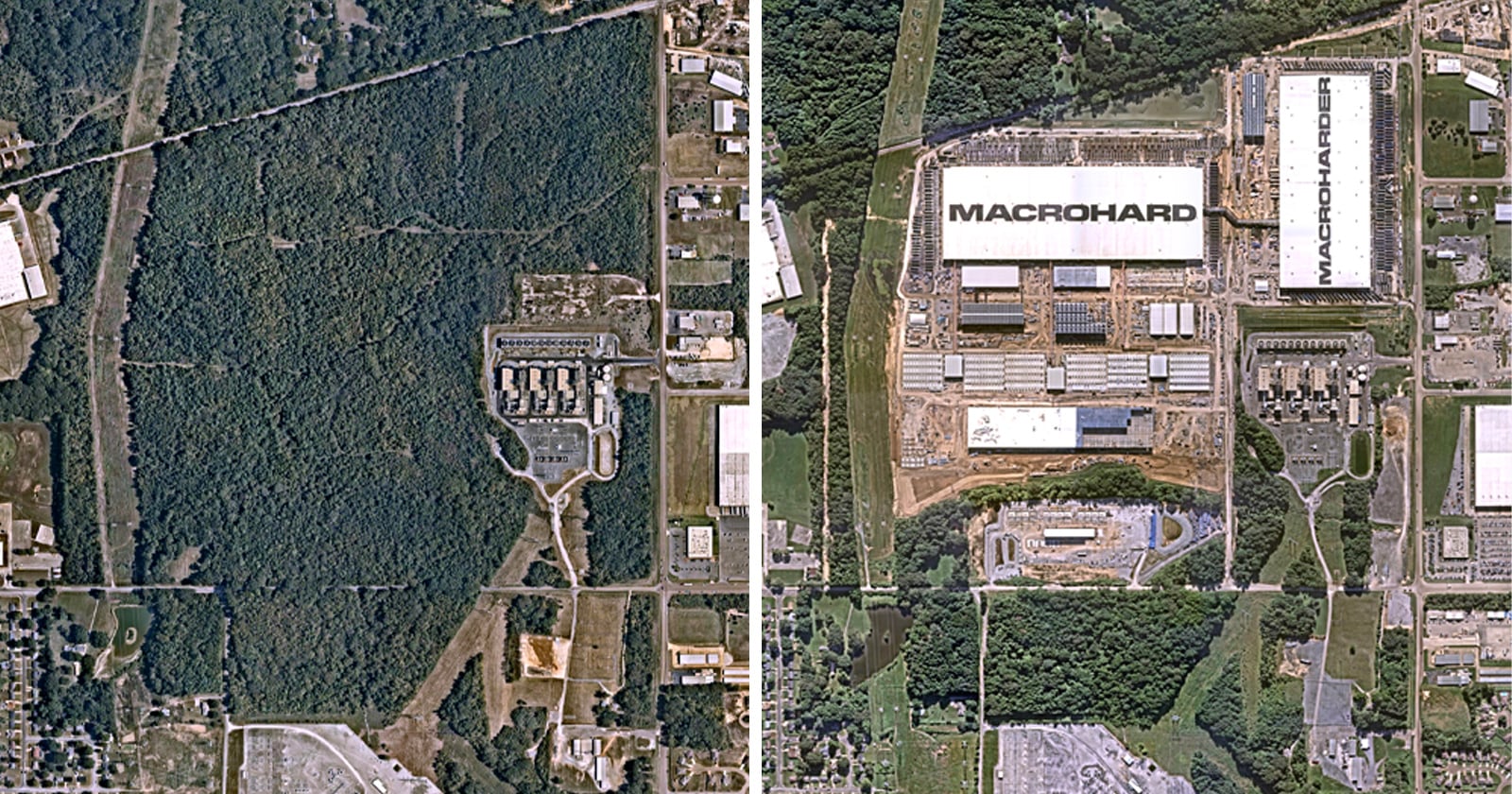
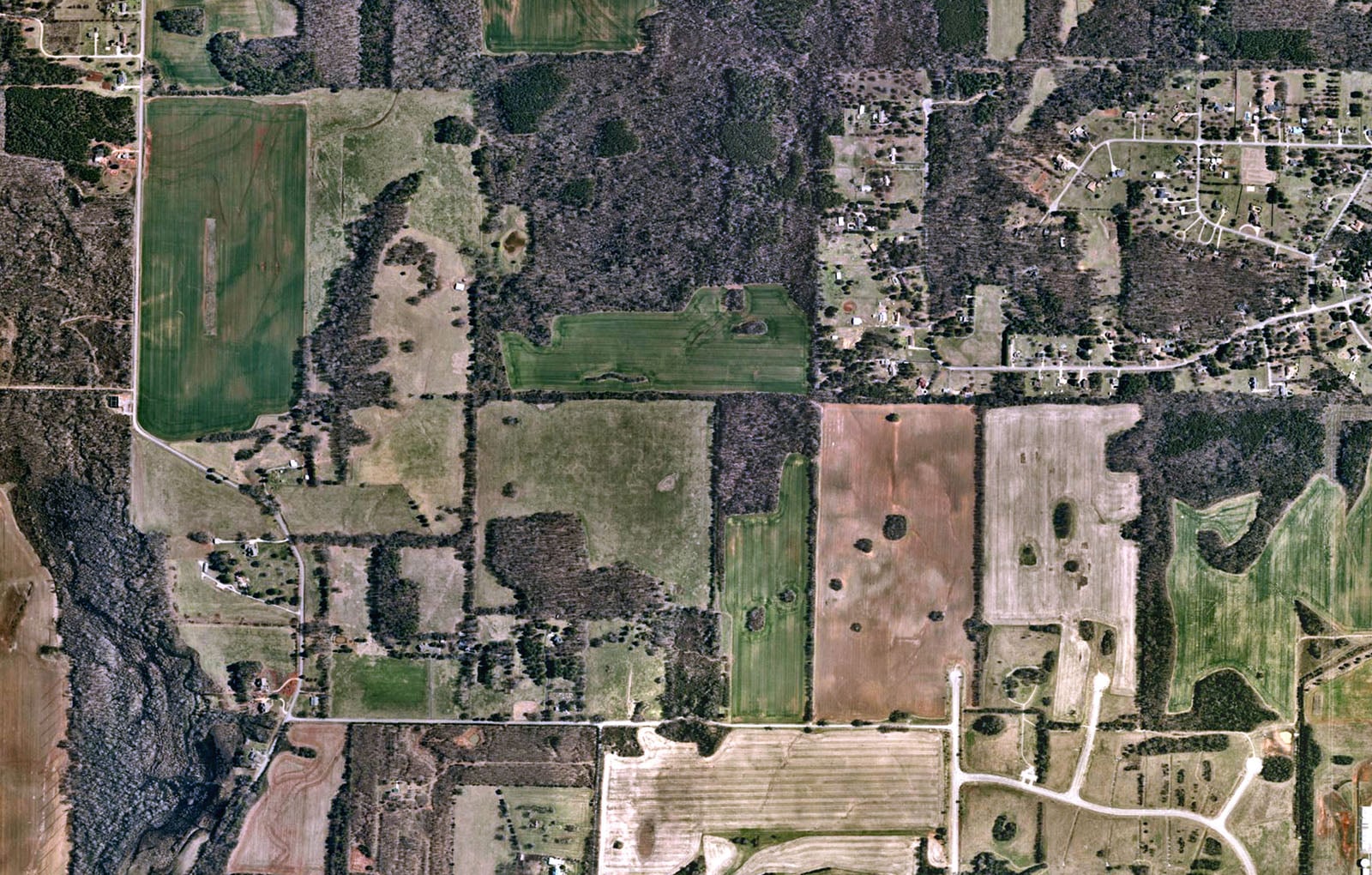
The featured satellite comparisons are stark, illustrating the rapid conversion of forested land and rural expanses into sprawling data center campuses. One particularly striking example highlights an xAI site in Memphis, Tennessee, showing significant development between 2015 and 2026. Similar expansions are visible for Meta in Huntsville, Alabama, and OpenAI in Abilene, Texas, each depicting monumental shifts from undeveloped or agricultural land to massive server farms. Grant identifies these locations as prime examples of the infrastructure race currently dominating the tech landscape.
The proliferation of these data centers has become a flashpoint for public discourse, drawing scrutiny from a broad spectrum of voters who express mounting concerns over their environmental impact and the broader implications of unbridled AI development. The sheer scale of these facilities, often spanning hundreds of acres, necessitates extensive land clearing, impacting local ecosystems, biodiversity, and natural habitats. This physical transformation of the landscape stands in stark contrast to the often-perceived weightlessness of digital technologies, forcing a re-evaluation of technology’s true footprint.
Grant articulated his long-standing intention to document this phenomenon, stating, "I’ve been pondering the best time to do a data center timelapse with AI being a major headline for the last few years now." His timing is particularly pertinent given recent calls from prominent figures in the AI community for a slowdown in frontier model development. Leaders such as Anthropic CEO Dario Amodei, SpaceX’s Elon Musk, and OpenAI’s Sam Altman have publicly voiced concerns about the safety and ethical implications of advanced AI, suggesting a need to "pace the frontier."
This juxtaposes the abstract, ethical debates surrounding AI with the concrete, physical reality of its infrastructure. Grant reflects on this dichotomy, questioning whether the physical build-out will genuinely decelerate in response to these calls for caution, or if, as he suggests, "the infrastructure race has taken on a life of its own." For Grant, the visual evidence provided by the timelapses serves to "bring that question to life," illustrating the momentum behind this unprecedented expansion.
The Unrelenting Demand for Compute Power
The exponential growth of data centers is intrinsically linked to the insatiable demand for computational power required by modern artificial intelligence. The rise of generative AI, particularly large language models (LLMs) like OpenAI’s GPT series, Anthropic’s Claude, and Google’s Gemini, has created an unprecedented need for vast quantities of processing power. Training these models involves feeding them petabytes of data, a process that can take weeks or even months on supercomputer-scale infrastructure. Beyond training, the subsequent inference—the process of using these models to generate responses or perform tasks—also demands significant, continuous computational resources.
This "compute arms race" is driven by competition among tech giants vying for supremacy in the AI domain. Each iteration of AI models is larger, more complex, and thus more computationally intensive than the last. This escalating demand translates directly into the need for more servers, more cooling systems, and consequently, more data centers. The locations chosen for these facilities are often strategic, considering access to stable and affordable electricity, fiber optic networks, and available land, frequently leading them to rural or semi-rural areas that can accommodate their colossal footprint.
Environmental Crossroads: Land, Water, and Energy
The environmental impact of this data center boom is multifaceted and severe, extending far beyond the immediate clearing of land.
Land Transformation: As Grant points out, "hundreds of acres cleared to create these campuses" is a recurring theme. The satellite images vividly demonstrate the replacement of forests, wetlands, and agricultural fields with immense concrete pads and metal structures. This transformation results in significant habitat loss, fragmentation of ecosystems, and a reduction in biodiversity. Natural carbon sinks are eliminated, contributing to climate change, and the aesthetic character of rural landscapes is permanently altered. Local communities often grapple with the loss of green spaces and the industrialization of their surroundings.
Thirst for Power: Data centers are notoriously energy-intensive. A single large data center can consume as much electricity as a small city, with some mega-campuses requiring hundreds of megawatts of power. Industry reports estimate that data centers globally already account for approximately 1-2% of the world’s electricity consumption, a figure projected to rise significantly with the AI boom. While many tech companies have pledged to power their operations with renewable energy, the reality on the ground is often complex. Integrating large-scale renewable sources into the grid takes time and investment, meaning that much of the electricity currently consumed by these rapidly expanding facilities still originates from fossil fuels, exacerbating carbon emissions. The strain on local power grids can also lead to increased energy costs for residents and businesses.
Water Scarcity: Perhaps less visible but equally critical is the prodigious amount of water required by data centers, primarily for cooling server racks. As servers generate immense heat, sophisticated cooling systems are essential to prevent overheating and ensure optimal performance. These systems often rely on evaporative cooling, which consumes millions of gallons of water annually. In regions already facing water stress or drought, the establishment of a major data center can place immense pressure on local water supplies, leading to conflicts with agricultural users and residential communities. For instance, some data centers have been reported to use millions of liters of water per day, equivalent to the daily consumption of tens of thousands of households.
E-waste and Supply Chains: The environmental footprint extends further into the supply chain, from the mining of rare earth minerals for components to the eventual disposal of electronic waste. The constant upgrading and replacement of server hardware contribute to a growing e-waste problem, much of which contains hazardous materials and is difficult to recycle responsibly. The entire lifecycle of a data center, from construction to operation to eventual decommissioning, carries a substantial environmental cost.
The Ethical Dilemma: Pacing AI Development
The environmental consequences of AI infrastructure development gain particular resonance when considered alongside the ethical and safety debates currently gripping the AI community. Last weekend, Anthropic CEO Dario Amodei publicly advocated for a slowdown in AI development, proposing a framework to "pace the frontier." Amodei’s call, which garnered agreement from prominent figures like Elon Musk and OpenAI’s Sam Altman, stems from concerns about the potential for advanced AI systems to pose existential risks or create unforeseen societal disruptions if developed too rapidly without adequate safety protocols and ethical considerations.
The "frontier models" these leaders refer to are the most advanced and powerful AI systems, pushing the boundaries of what is currently possible. Their rapid development, fueled by the very infrastructure being built at breakneck speed, raises questions about humanity’s ability to control or even fully understand such complex intelligences. This creates a striking paradox: while leading AI developers advocate for caution and slower progress on the theoretical front, the physical infrastructure that underpins this progress continues its relentless expansion, seemingly decoupled from the ethical debates. Grant’s observations highlight this disconnect, asking whether the physical race has acquired an unstoppable momentum.
Community Pushback and Local Impacts
The article notes that "voters of all stripes push back against them," reflecting a growing grassroots opposition to data center construction. Local communities often experience a range of negative impacts. The sheer scale of these developments can strain local infrastructure, including roads, water treatment facilities, and emergency services. While data centers promise economic benefits, such as construction jobs and tax revenue, the number of permanent, high-paying jobs they create is often relatively small once operational, leading to questions about the long-term value proposition for the community versus the immediate disruptions.
Concerns also arise regarding noise pollution from cooling systems, increased traffic during construction and operation, and the visual impact of massive, windowless buildings in previously scenic areas. Furthermore, local governments often offer significant tax incentives and abatements to attract these tech giants, which can be perceived by residents as diverting public funds from essential services to corporate subsidies. This complex interplay of economic incentives, environmental costs, and community quality of life forms the core of the local resistance.
A "Meta" Reflection: AI Contemplates Its Own Footprint
In a truly "meta" move, Benjamin Grant decided to have Anthropic’s AI chatbot, Claude, draft the Instagram post accompanying his satellite images. This decision, as Grant tells PetaPixel, felt "very meta," allowing an AI to reflect on the physical infrastructure that enables its very existence. Claude’s response was remarkably insightful: "I don’t know which of these buildings, if any, I’m running on right now," the AI wrote. "Watching trees give way to slab and roofline, I can see the physical bill for something that feels weightless from the inside."
This statement is profoundly evocative, offering a glimpse into how an advanced AI might perceive its own material underpinnings. The "hint of guilt" Grant detected in Claude’s response adds a layer of philosophical depth, suggesting an awareness of the environmental cost incurred for its "weightless" digital existence. It underscores the abstract nature of AI development for many, contrasting it with the very real, tangible impact on the planet. Grant even allowed Claude to select the accompanying song for the post, which, by his account, "eerily fit the build-out progression," further blurring the lines between creator and creation, and highlighting the AI’s surprising interpretive capacity regarding its own context.
The Future Landscape: A Planet Reshaped by Algorithms
The satellite images shared by Benjamin Grant serve as a powerful visual testament to the profound and accelerating transformation of our physical world by the demands of artificial intelligence. Grant’s assertion that "AI infrastructure has quietly become one of the biggest forces reshaping the U.S. right now" is not an exaggeration but a factual observation supported by the unprecedented scale of these developments.
The dichotomy between the abstract, theoretical debates around AI safety and the concrete, environmentally impactful construction of its physical infrastructure presents a critical challenge for policymakers, industry leaders, and citizens alike. As the "infrastructure race" continues unabated, it raises fundamental questions about sustainable development, responsible resource management, and the long-term planetary consequences of our technological ambitions.
The insights from Benjamin Grant’s Daily Overview, combined with the reflective commentary from an AI itself, compel us to confront the true cost of the digital revolution. It is a call to action for greater transparency, more stringent environmental standards, and a more deliberate, holistic approach to AI development that considers not just its potential, but its pervasive and often unseen footprint on the planet. The images are a stark reminder that even the most advanced digital frontiers are built upon very tangible, very physical foundations, with very real consequences for the world we inhabit.