The allure of vast, untamed landscapes has long captivated the human spirit, drawing explorers and artists alike to witness and document the planet’s most breathtaking vistas. For many, the photographic lens becomes an extension of the eye, striving to capture the essence of a place that often transcends mere visual representation. Such was the profound experience of a photographer who, while en route to Patagonia, found an unexpected artistic sanctuary in Brazil’s Lençóis Maranhenses National Park. What began as a brief interlude transformed into an immersive artistic exploration, revealing an ecosystem of unparalleled beauty and complexity, a testament to nature’s enduring artistry.
A World Heritage Site of Shifting Sands and Sapphire Waters
Lençóis Maranhenses National Park, a sprawling 600-square-mile expanse located in the northeastern corner of Brazil, stands as a testament to geological and ecological marvels. This recently designated UNESCO World Heritage Site is renowned for its unique topography: an undulating sea of brilliant white sand dunes that, with the seasonal arrival of rains, become dotted with thousands of crystal-clear lagoons. The park’s eastern edge is defined by over 40 miles of coastline, interspersed with traditional fishing villages, where the dunes dramatically slope into the vast expanse of the Atlantic Ocean.
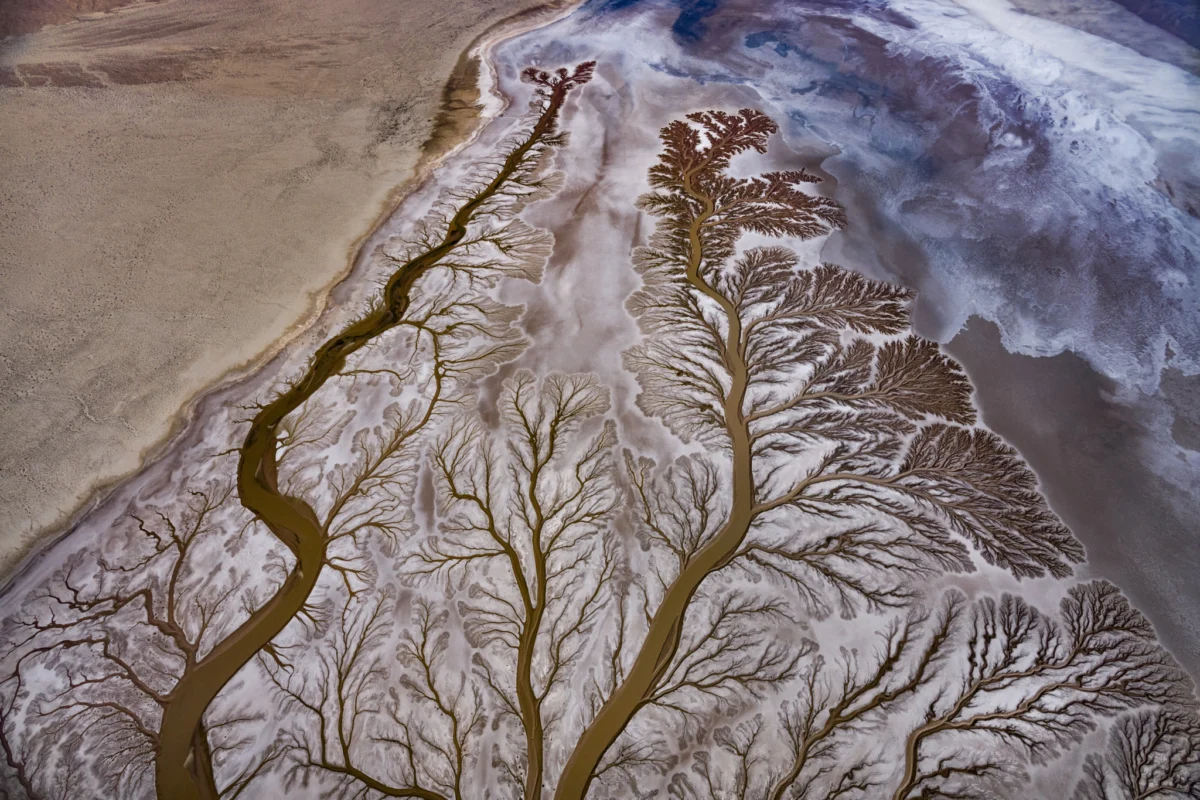
The landscape is a dynamic interplay of contrasting elements. Winding, tannin-colored rivers, originating from the decay of vegetation, snake their way through the stark white dunes, their inky waters a stark counterpoint to the surrounding sands before eventually merging with the Parnaíba River and flowing towards the sea. Scattered across this textured canvas are pools of water that shimmer in vibrant shades of turquoise and jade, offering a visual feast that changes with the light and the wind. To the west, the stark beauty of the desert and wetland transitions into the characteristic Brazilian cerrado (savanna grasslands) and dense forest, before ultimately giving way to agricultural lands, marking the park’s boundary with human settlements.
The Genesis of an Aerial Perspective
While the photographer’s typical work centers on intimate portraits of wildlife and their immediate habitats, the sheer scale and ethereal beauty of Lençóis Maranhenses presented an irresistible invitation to explore its grandeur from a new vantage point. The overwhelming immensity of the park’s natural artistry dictated a shift in perspective, necessitating an aerial approach to truly comprehend its sweeping panoramas.
Historically, capturing aerial imagery involved the somewhat precarious methods of ascending in cramped ultralight aircraft or Cessnas with doors removed, a practice that limited both comfort and creative flexibility. However, the advent of advanced drone technology and unmanned aerial vehicles (UAVs) has revolutionized aerial photography, opening up unprecedented creative possibilities. Armed with these modern tools, the photographer was able to maintain a drone at altitudes that allowed for the meticulous capture of fine details while simultaneously encompassing the full, breathtaking scope of the landscape unfolding below. This technological leap enabled a fluid and uninhibited exploration of the terrain, allowing the lens to trace the intricate patterns and sweeping forms of this unique environment.
Nature’s Brushstrokes: A Dynamic and Evolving Masterpiece
The experience of photographing Lençóis Maranhenses from above was akin to witnessing a living, breathing work of art, constantly being reshaped by the forces of nature. Each gust of wind played a crucial role in this perpetual transformation, sculpting the delicate peaks of the sand dunes and rippling the glassy surfaces of the lagoons. The visual narrative was one of constant flux, a testament to the ephemeral nature of this desert-meets-water ecosystem.
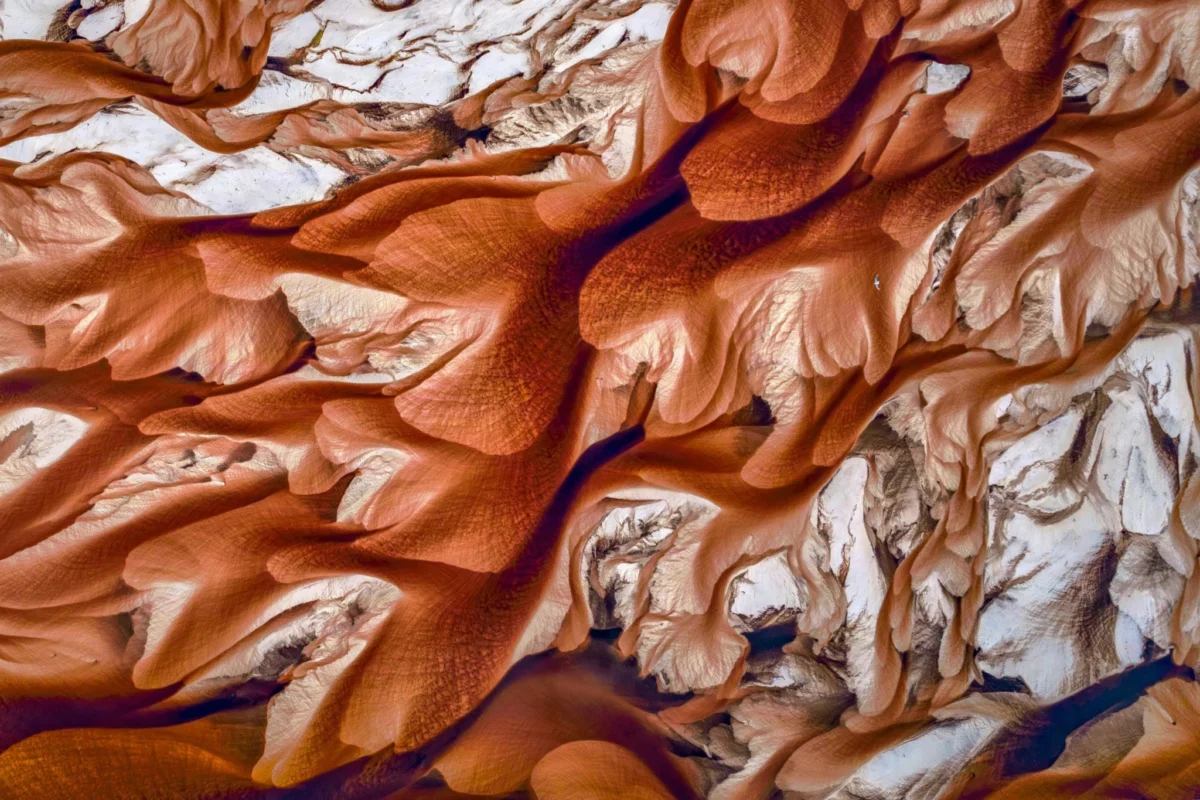
The interplay of colors was particularly striking. Veins of red, deep brown, and rust, derived from tannins leaching into the water from decaying vegetation, painted intricate patterns across the landscape. These natural dyes created a mesmerizing mosaic, a stark contrast to the pristine white sands and the jewel-toned waters. The Black River, a significant artery within the park, snaked like a colossal serpent through the coastal lowlands, its dark, inky waters carving a distinctive path through the dunes before eventually joining the Parnaíba River. The sheer beauty of these formations was almost overwhelming, a spectacle so profound that it defied direct, sustained observation. Every adjustment in angle or altitude revealed a new natural masterpiece, a celestial latticework etched across the Earth’s crust from horizon to horizon, leaving the photographer in a state of exhilaration and awe, challenged by the very effort of trying to encapsulate its immensity.
A Timeless Human Quest: Replicating Nature’s Artistry
For millennia, humanity has been driven by an innate desire to interpret and replicate the wonders of the natural world through various artistic mediums. The earliest evidence of this endeavor can be traced back to ancient cave paintings, such as those found in the Chauvet Cave in France, dating back approximately 30,000 years to the Aurignacian period, depicting vivid animal life. Throughout history, from the Upper Paleolithic era to the Renaissance and beyond, artists have dedicated their lives to the meticulous study of nature’s designs, striving to capture its intricate details with unparalleled accuracy.
Even with the sophisticated technology of modern digital cameras, the photographer acknowledges the inherent challenge in fully translating the profound beauty of nature into a static image. The question lingers: how can a two-dimensional photograph truly convey the multi-dimensional depth of a planet or the complex, microscopic architecture of a cell’s nucleus? This enduring quest to capture the essence of the natural world, despite its inherent limitations, has been a driving force for artists and scientists alike.

The Enduring Privilege of Witnessing and Documenting
The artistry that permeates all life on Earth is a phenomenon that may never be fully translated into a printed format. However, the pursuit of this translation, the dedicated effort to capture and share the awe-inspiring beauty of the natural world, has been described as the greatest privilege of the photographer’s life. This sentiment echoes the words of Vincent van Gogh, who profoundly stated, "…and then, I have nature and art and poetry, and if that is not enough, what is enough?"
The work undertaken in places like Lençóis Maranhenses National Park is not merely about creating aesthetically pleasing images; it is about fostering a deeper connection with the planet and highlighting the critical importance of conservation. The unique ecosystems, like the one found in this Brazilian national park, are fragile and face numerous threats, including climate change, unsustainable tourism, and habitat degradation.
Supporting Data and Broader Context
Lençóis Maranhenses National Park was established on June 2, 1981, and covers an area of approximately 1,500 square kilometers (580 square miles). The park’s distinctive dune formations are geologically recent, primarily composed of fine quartz sand. The formation of the lagoons is a direct result of the region’s distinct wet and dry seasons. During the rainy season, typically from January to June, rainfall accumulates in the depressions between the dunes, creating thousands of temporary freshwater lagoons. As the dry season progresses (from July to December), these lagoons gradually recede and can even disappear entirely.
The park’s biodiversity, while not as overtly abundant as in rainforest ecosystems, is notable for its specialized adaptations to this harsh environment. Certain fish species, such as the wolf fish (Hoplias malabaricus), are known to survive the dry season by burrowing into the mud at the bottom of the lagoons, entering a state of estivation until the waters return. Bird species, including migratory birds, also utilize the park as a vital stopover point.
Chronology of Discovery and Recognition
- Pre-Columbian Era: Indigenous communities have inhabited the region for centuries, with evidence of their presence in the area predating European arrival.
- 1970s-1980s: Growing awareness of the unique ecological significance of the area leads to efforts to protect it.
- June 2, 1981: Lençóis Maranhenses is officially designated as a National Park, safeguarding its natural beauty and ecological processes.
- Late 20th/Early 21st Century: The park gains international recognition for its stunning landscapes, attracting increased tourism and scientific interest.
- 2020: The Brazilian government officially submits a proposal to UNESCO for the inscription of Lençóis Maranhenses as a World Heritage Site, recognizing its "outstanding universal value."
- July 2023: Lençóis Maranhenses National Park is officially inscribed as a UNESCO World Heritage Site, solidifying its global importance.
Implications and Analysis
The designation of Lençóis Maranhenses as a UNESCO World Heritage Site carries significant implications. It not only elevates its global profile but also underscores the international community’s commitment to its preservation. This recognition is expected to boost ecotourism, providing economic opportunities for local communities. However, it also necessitates robust management strategies to mitigate the potential negative impacts of increased visitor numbers, such as environmental degradation and cultural disruption.
The photographer’s aerial perspective offers a critical tool for understanding the park’s vastness and the delicate balance of its ecosystems. The ability to document the dynamic changes in the landscape, from the formation and recession of lagoons to the subtle shifts in dune formations, provides invaluable data for scientific research and conservation efforts. The images serve as a powerful advocacy tool, illustrating the profound beauty that is at stake and the urgent need for continued protection.
The integration of advanced technologies like drones in documentary photography represents a significant evolution in how we perceive and interact with the natural world. It allows for a more comprehensive and immersive understanding of landscapes that might otherwise remain inaccessible or incompletely appreciated. The ongoing effort to capture and share these natural wonders, as exemplified by this photographic journey, is crucial for fostering a global appreciation for biodiversity and inspiring action towards a more sustainable future.
With gratitude and hope for the future,
[Photographer’s Signature]