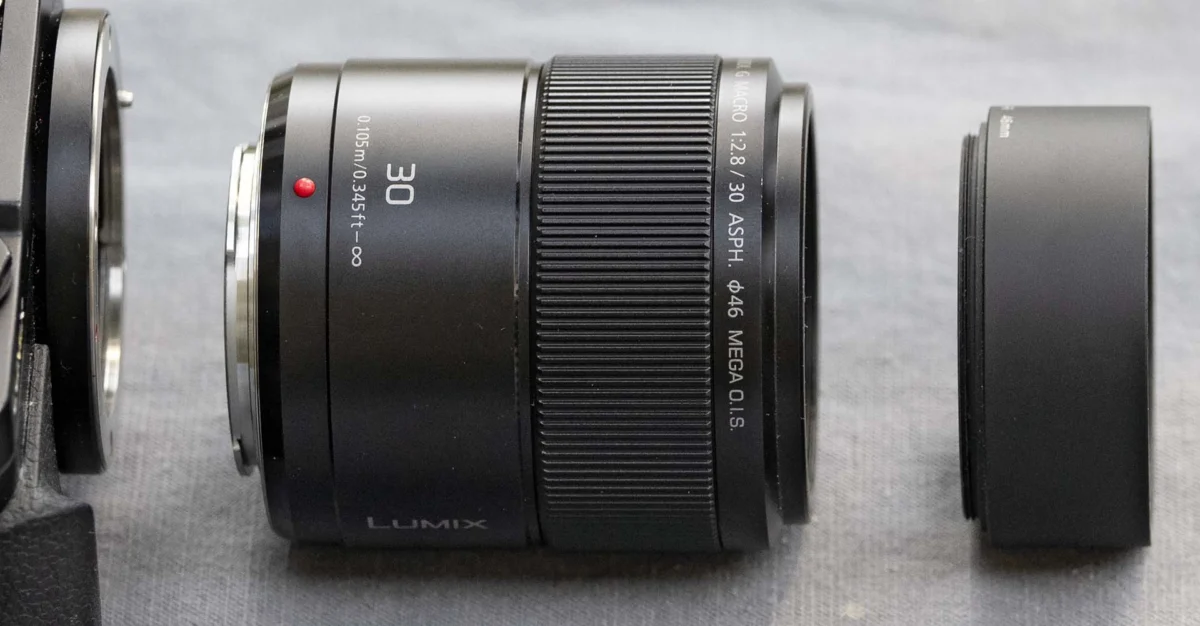
The Panasonic Lumix G Macro 30mm f/2.8 ASPH MEGA O.I.S. represents a specific intersection of portability and specialized optical performance within the Micro Four Thirds (MFT) lens catalog. Since its introduction, this lens has served as a critical tool for photographers who prioritize a reduced physical footprint without sacrificing the ability to capture high-magnification imagery. Designed for the MFT system—a standard jointly developed by Olympus (now OM System) and Panasonic—the lens benefits from the format’s inherent advantages, including a shorter back-flange distance and a sensor size that allows for significantly smaller lens elements compared to full-frame or APS-C counterparts. This technical profile makes the 30mm f/2.8 a staple for niche applications such as mountaineering, urban exploration, and travel photography, where every gram of equipment weight is scrutinized against its functional utility.
Technical Specifications and Optical Construction
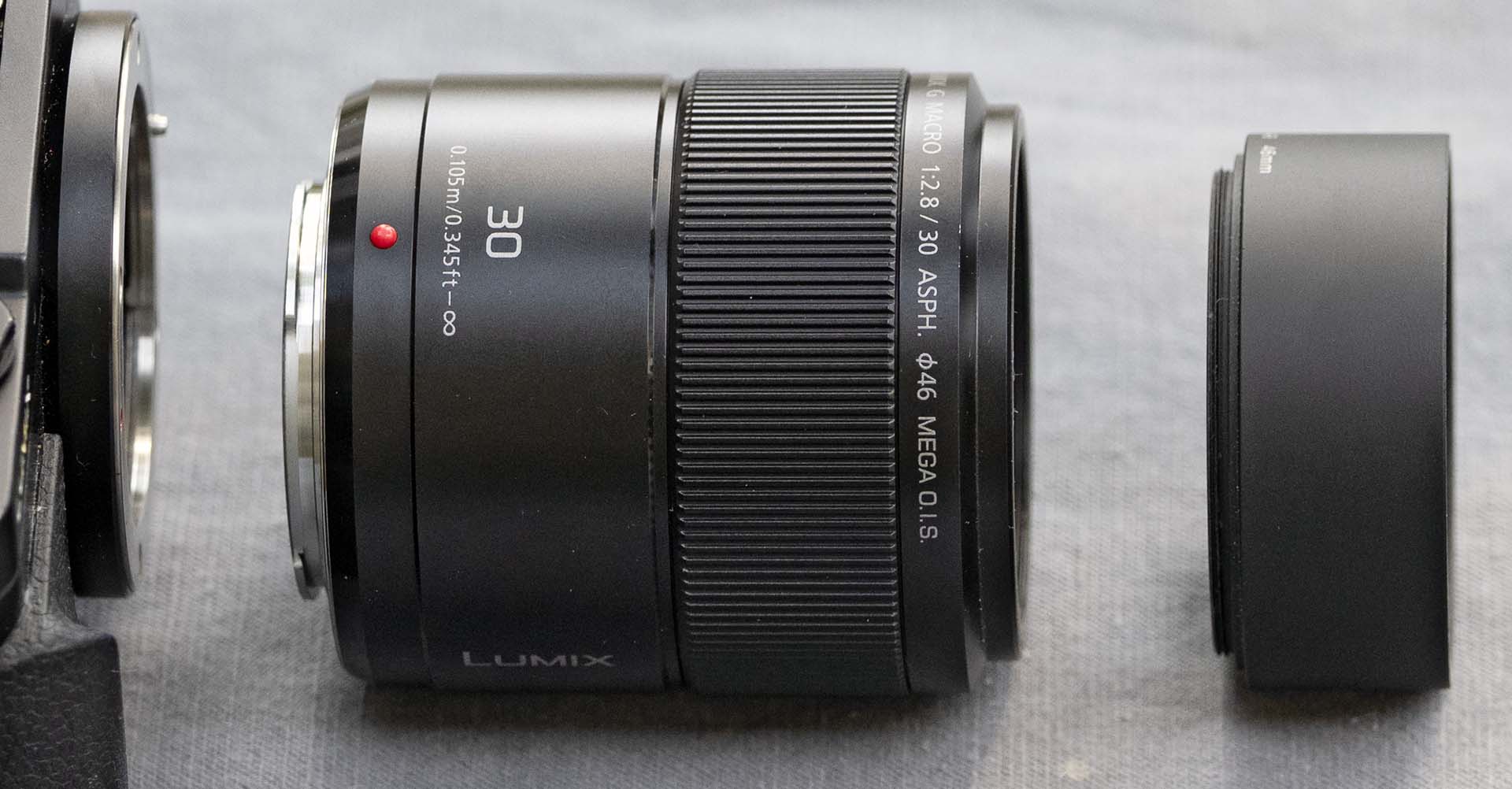
The Panasonic Lumix G Macro 30mm f/2.8 is engineered with a sophisticated optical formula consisting of nine elements arranged in nine groups. To combat chromatic aberration and ensure edge-to-edge sharpness, the design incorporates one aspherical lens element. This inclusion is vital for maintaining a compact form factor while correcting for spherical aberrations that often plague wider-aperture macro lenses. The lens achieves a true 1:1 magnification ratio, meaning the image projected onto the sensor is the same size as the physical subject being photographed. In the context of the MFT sensor, which has a 2x crop factor relative to 35mm film, this provides an effective "full-frame equivalent" magnification that feels even more significant to the end-user.
Physically, the lens is characterized by its minimalism. Weighing approximately 180 grams (6.35 ounces), it is one of the lightest dedicated macro lenses on the market. It features an electronic "focus-by-wire" ring, which is standard for modern MFT lenses, though it notably lacks external physical controls such as a focus limiter switch. This omission streamlines the exterior barrel but requires the photographer to rely on the camera’s autofocus algorithms or manual overrides to manage the focus hunt that can occur in macro distances. The lens utilizes a 46mm filter thread, a common size within the Panasonic "pancake" and small-prime lineup, allowing for easy sharing of filters and hoods across a compact kit.

Historical Context and Market Evolution
Launched in early 2015, the Lumix 30mm f/2.8 was positioned as an affordable and versatile alternative to the more expensive Leica DG Elmarit 45mm f/2.8 Macro. At the time of its release, the MFT system was entering a period of rapid diversification. Panasonic sought to provide a "normal" focal length (60mm equivalent in 35mm terms) that could pull double duty as a standard walk-around lens and a high-performance macro tool.
Over the subsequent decade, the lens has maintained its relevance despite the arrival of high-specification competitors like the OM System 90mm f/3.5 Macro IS PRO. While the newer "PRO" series lenses offer superior weather sealing and higher magnification ratios, the Panasonic 30mm remains a preferred choice for the "ultralight" photography community. Its market longevity is attributed to its balance of price and performance; in the current secondary and retail markets, it often represents one of the most cost-effective entries into true macro photography.

The Role of Image Stabilization in Compact Systems
A defining feature of the 30mm f/2.8 is the integration of MEGA O.I.S. (Optical Image Stabilizer). In the MFT ecosystem, stabilization is handled through two primary methods: in-body image stabilization (IBIS) and in-lens optical stabilization (O.I.S.). For users of older or smaller Panasonic bodies, such as the GM5 or the GF series, which lack IBIS, the lens-based stabilization is indispensable. It allows for sharp handheld shots at shutter speeds as low as 1/8th of a second, effectively compensating for the tremors associated with lightweight equipment.
Furthermore, when the lens is paired with modern Panasonic camera bodies equipped with "Dual I.S." technology, the lens and sensor stabilization systems work in tandem to provide up to 5 or 6 stops of compensation. However, a notable limitation exists for photographers who utilize a "mix-and-match" approach between brands. While the lens will function on Olympus/OM System bodies, the Panasonic O.I.S. cannot communicate with the Olympus IBIS to provide a coordinated stabilization effect. In such cases, the user must typically choose one system to remain active, as running both simultaneously without coordination can lead to conflicting adjustments and degraded image quality.

Performance Analysis in Alpine and Urban Environments
The practical utility of the 30mm macro is best demonstrated in challenging environments like the Japanese Alps. During field tests in locations such as Tsubakurodake in central Japan, the lens has demonstrated a high degree of resilience. Despite lacking an official IP weather-resistance rating, reports from the field indicate that the lens can survive operation in steady drizzle and high-humidity conditions, provided basic precautions are taken.
Analysis of 100% crops from images taken on 16-megapixel sensors—such as the one found in the Panasonic Lumix GM5—reveals that the lens is capable of resolving detail right into the corners of the frame. There is minimal field curvature, a critical attribute for macro photography where the subject may occupy the entire plane of focus. The "normal" focal length of 30mm (60mm equivalent) provides a perspective that is slightly longer than the traditional 50mm "nifty fifty," making it suitable for tight urban compositions and portraits where a bit more reach is desired.

One noted technical shortcoming is the quality of the "rear bokeh," or the aesthetic of the out-of-focus areas behind the subject. In complex backgrounds involving foliage or high-contrast light, the bokeh can appear "busy" or "nervous." This is a common trade-off in macro lenses that are optimized for high center-sharpness and contrast rather than soft background rendering.
The Synergy with "Unobtanium" Hardware: The Lumix GM5
The Panasonic 30mm macro is frequently paired with the Panasonic Lumix GM5, a camera that has achieved a legendary, almost "unobtanium" status among collectors and enthusiasts. Released in 2014 and subsequently discontinued, the GM5 remains one of the smallest interchangeable-lens cameras ever produced with a built-in electronic viewfinder (EVF).

The combination of the 180g lens and the 211g camera body creates a total system weight of under 400 grams. This kit is highly valued by mountaineers who require professional-grade optics but must adhere to strict weight limits for multi-day climbs. While the GM5’s EVF is often criticized for being too small for comfortable use, the synergy between the body’s portability and the lens’s versatility (1:1 macro to standard landscape) creates a unique value proposition that modern, larger mirrorless systems have struggled to replicate.
Broader Implications for the Photography Industry
The continued demand for lenses like the Panasonic 30mm f/2.8 highlights a significant trend in the photography industry: the divergence between "performance-first" and "portability-first" consumer segments. As smartphone cameras continue to dominate the casual market, dedicated camera manufacturers have largely shifted toward larger, more expensive full-frame sensors. However, the MFT system, represented by this 30mm lens, maintains a dedicated following among professionals and hobbyists who find that "good enough" resolution (16–25 megapixels) combined with extreme portability yields better results in the field than a heavy, high-resolution system that might be left at home.

The 30mm macro’s design philosophy is often compared to the historic Leica 50mm f/2.0 Dual-Range Summicron. Both lenses were designed to provide a standard field of view while offering an extended "near-focus" capability that expands the photographer’s creative envelope. In the modern context, the Panasonic 30mm serves as a "specialist-generalist" tool, proving that optical excellence does not always require massive glass elements or the latest sensor technology.
Conclusion and Future Outlook
The Panasonic Lumix G Macro 30mm f/2.8 ASPH MEGA O.I.S. remains a benchmark for compact lens design within the Micro Four Thirds standard. Its ability to wring high resolution out of older sensors, combined with its effective optical stabilization, ensures its place in the kits of travel and mountain photographers. While the industry trends toward larger sensors and more complex glass, the 30mm macro stands as a testament to the efficiency of the MFT format. For as long as there is a demand for lightweight, high-performance equipment that can survive the rigors of the trail and the subtlety of the street, this lens will likely remain a sought-after tool in the global photography market.