Northstowe, a burgeoning settlement situated between the city of Cambridge and the historic Fen edge, currently represents the most ambitious urban development project in the United Kingdom since the designation of Milton Keynes in 1967. As the town approaches the tenth anniversary of its first residents’ arrival, it remains a site of profound transition, characterized by a unique juxtaposition of finished residential architecture and the raw, skeletal remains of its military past. Built upon the former site of the RAF Oakington airfield, Northstowe is designed to eventually accommodate 10,000 homes and a population of approximately 25,000 people. However, for those living within its evolving borders, the experience is defined by a "landscape of the not quite yet," a state of perpetual becoming that has become the subject of a significant long-term photographic study titled "New Town, Old School."

The Historical Trajectory of RAF Oakington to Northstowe
The site of Northstowe carries a heavy historical weight that predates its current status as a residential hub. Originally opened in 1940 as a Bomber Command station during the Second World War, RAF Oakington played a vital role in British military history. After the war, it served as a flight training school and later as a barracks for the British Army before being decommissioned. The decision to transform this 500-hectare site into a sustainable new town was part of a strategic initiative to address the acute housing shortage in the Cambridgeshire region, one of the fastest-growing economic areas in the UK.
The planning process for Northstowe began in the early 2000s, but it was not until 2017 that the first residents moved into their homes in Phase 1. This decade-long gap between conception and inhabitation is a hallmark of large-scale "New Town" projects. Today, the town is divided into multiple phases, with Phase 1 largely complete and Phase 2 under active construction. This phased approach creates a surreal environment where modern primary schools and sleek community centers sit adjacent to derelict military structures and vast, empty fields where future neighborhoods are planned.

A Methodological Contrast: Capturing the Future with the Past
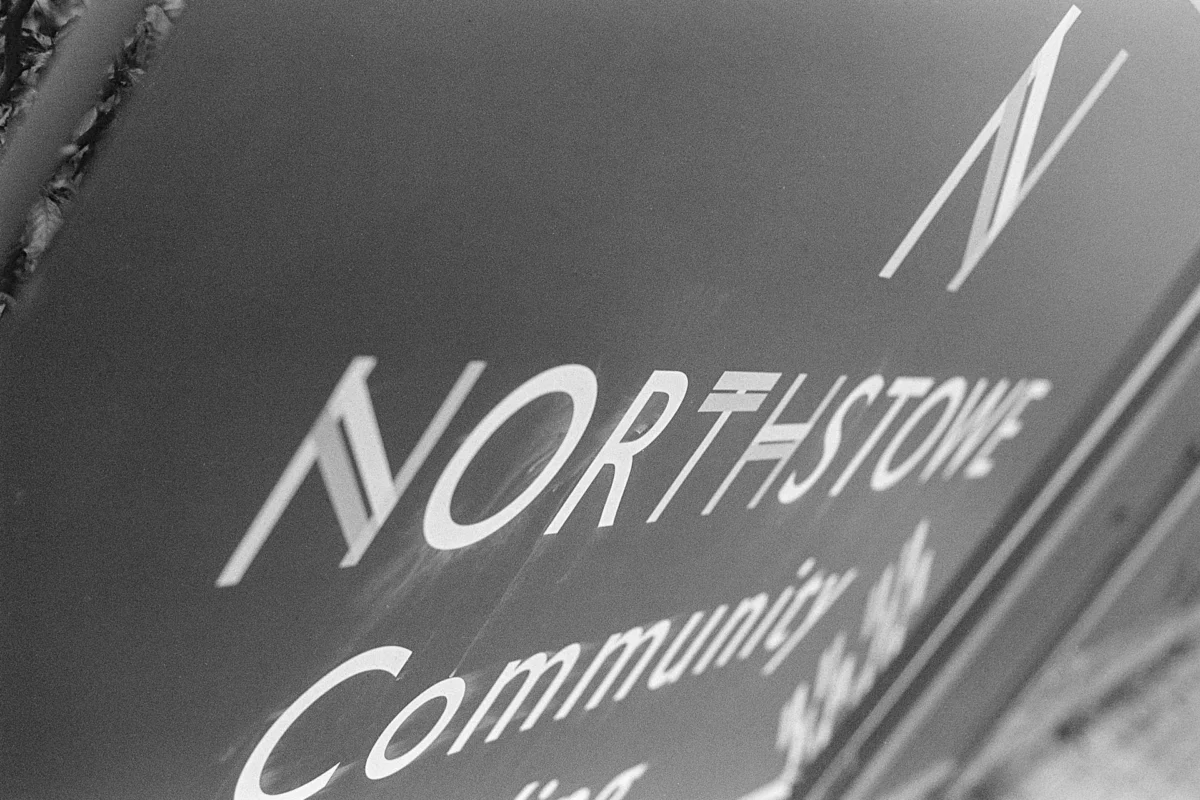
The "New Town, Old School" project, spearheaded by local resident and photographer Peter Cope, seeks to document this transition using techniques that stand in stark contrast to the high-tech, precision-engineered nature of the town itself. While Northstowe is a product of modern computer modeling, modular construction, and 21st-century urban planning, Cope utilizes a Pentax ME Super, a 35mm SLR camera from a previous generation. Limiting himself to a 50mm lens and black-and-white Fomapan film, Cope focuses on the "human scale" of the development.
The choice of medium is a deliberate rejection of the "pixel-perfect" immediacy of digital photography. By using film, the photographer is forced to slow down, considering each of the 36 exposures on a roll with a level of intentionality that digital platforms often discourage. Furthermore, the development process utilizes "Caffenol"—a homemade developer consisting of instant coffee, washing soda, and vitamin C. This unconventional, DIY approach introduces variables and imperfections into the negatives, mirroring the unpredictable and often "awkward" growth of the town itself. The resulting images are not merely architectural records but reflections on the interim states of a community in flux.

Data and Development: The Scale of the Northstowe Ambition
To understand the significance of Northstowe, one must look at the scale of the investment and the logistics involved. The project is a collaboration between Homes England—the government’s housing accelerator—and various private developers, including Keepmoat, Taylor Wimpey, and Linden Homes.
Key statistics regarding the development include:

- Target Capacity: 10,000 homes across three primary phases.
- Infrastructure Investment: Over £100 million has been allocated for the Northstowe Southern Access Link Road and the Guided Busway, which connects the town to Cambridge and Huntingdon.
- Environmental Commitments: The town is designed as a "Healthy New Town," an NHS England initiative promoting wellness through urban design, including 40% green space and extensive cycle paths.
- Economic Impact: The development is expected to generate thousands of local jobs in construction and, eventually, in the retail and commercial sectors planned for the town center.
Despite these impressive figures, the town has faced criticism regarding the pace of its social infrastructure. For several years, residents lived in Northstowe without a permanent shop, a pharmacy, or a GP surgery, leading some media outlets to label it a "ghost town." This delay in providing essential services is a common challenge in new town developments, where residential quotas are often met long before commercial incentives draw in retailers.
Chronology of Modern Challenges and the Modular Housing Crisis
A significant chapter in Northstowe’s recent history involves the rise and fall of modular housing. In an effort to embrace innovative construction techniques, a portion of the town was designated for factory-built homes. The "House by Urban Splash" project was intended to demonstrate a faster, more sustainable way of building. However, in 2022, the company went into administration, leaving a sales center and several half-finished modular buildings as temporary monuments to a stalled future.

This event, captured in Cope’s photography, highlights the volatility of modern urban development. What was intended to be the cutting edge of 21st-century living became, almost overnight, a piece of the town’s history. The chronology of Northstowe is thus not a straight line toward completion but a series of starts, stops, and pivots.
Timeline of Key Milestones:

- 1940-2004: Military activity at RAF Oakington.
- 2007: Initial planning application submitted for Northstowe.
- 2014: Phase 1 planning approval granted.
- 2017: First residents arrive in the "Longstanton" end of the development.
- 2019: Northstowe Secondary College opens.
- 2022: Urban Splash enters administration; Phase 2 residential construction accelerates.
- 2024: Commencement of work on the town center and permanent retail units.
Social Implications: The Paradox of Invitation and Exclusion
From a sociological perspective, the development of Northstowe presents a paradox of invitation and exclusion. The photography of the "New Town, Old School" project frequently highlights fenced-off parks and finished roads that remain inaccessible to the public. These images capture the tension between the town’s designed purpose—to be a vibrant community—and the legal and safety-related prohibitions that define a construction site.
Residents of Northstowe often find themselves in a state of "waiting." They wait for the grass to grow, for the shops to open, and for the "newness" of their environment to settle into a familiar history. This period of waiting creates a unique community bond, as early adopters navigate the challenges of living in a town that is still being defined. The "foundations" of the town are not just concrete and steel; they are the shared experiences of those who moved in when there was nothing but a vision and a former airfield.

Analysis of Broader Impacts and the Role of Documentation
The significance of Northstowe extends beyond the borders of Cambridgeshire. It serves as a test case for the UK government’s ability to deliver large-scale housing projects in the face of economic fluctuations and changing environmental standards. The town’s success or failure will likely influence urban planning policy for the next several decades.
Photographic projects like "New Town, Old School" play a vital role in this evolution. While official marketing materials provide a polished, aspirational view of the future, independent documentation captures the "fragments and reflections" of the journey. These photographs preserve the temporary arrangements—the piles of drainage pipes, the COVID-19 social distancing signs, and the stacks of bricks—that would otherwise be forgotten once the town reaches maturity.

As Northstowe matures, the "awkwardness" of its youth will eventually vanish. The streets will acquire names that carry weight, the trees will grow to provide shade, and the military remnants will be fully integrated or removed. At that point, the value of documenting the "landscape of the not quite yet" becomes clear. These records will serve as the primary evidence of what was there before the town became itself, offering future generations a window into the complex, messy, and hopeful process of building a community from the ground up.