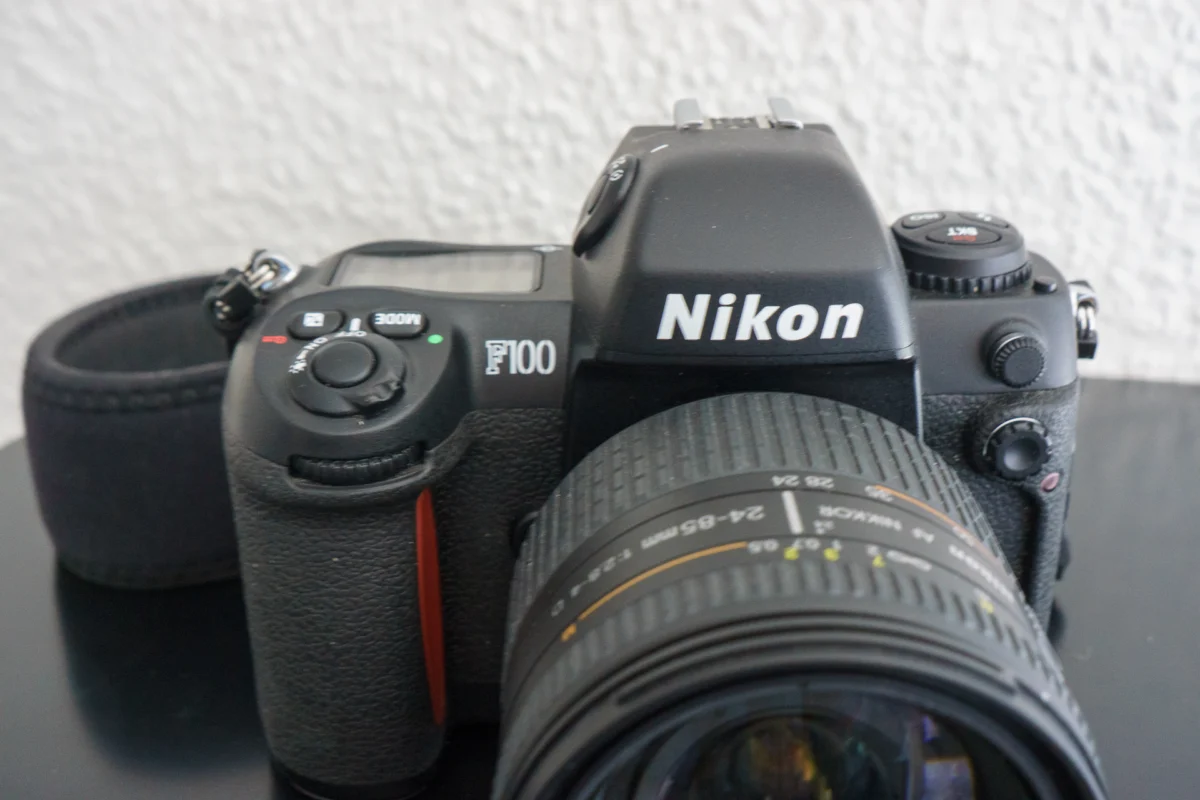
The Nikon F100, a high-performance 35mm SLR produced between 1999 and 2006, remains a cornerstone of the analog photography market, often cited as the most balanced alternative to the flagship Nikon F5. Positioned as a "prosumer" bridge between the consumer-grade F90X and the heavy-duty F5, the F100 offered a magnesium alloy chassis, advanced weather sealing, and the Multi-CAM 1300 autofocus system. Recent field evaluations and long-term ownership reports confirm that the camera’s ergonomic design—specifically its departure from the fixed battery grips found on larger professional bodies—continues to make it a preferred choice for mobile photographers, including those integrating photography into cycling and outdoor excursions.
Technical Evolution: The Nikon F100 in Context
When Nikon introduced the F100 in late 1998, it was designed to distill the essential features of the F5 into a more compact and manageable form factor. The F5, while revolutionary, was often criticized for its weight and the requirement of eight AA batteries, which made it cumbersome for travel. The F100 addressed these concerns by utilizing four AA batteries and offering a detachable power grip (the MB-15), allowing photographers to scale the camera’s size based on their specific needs.
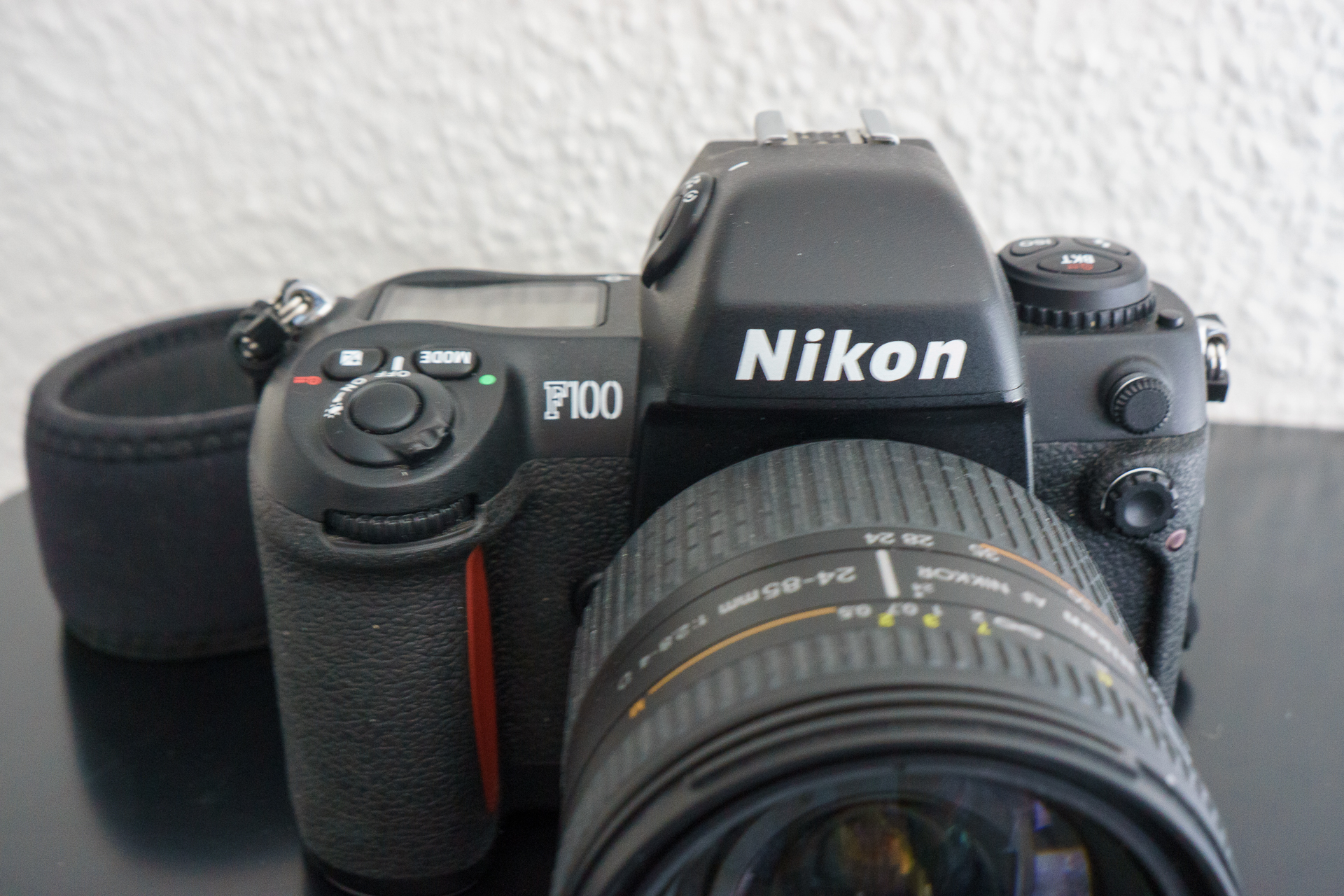
The camera features a 10-segment 3D Matrix Meter, which remains one of the most accurate exposure systems in film photography history. This system, coupled with five-point autofocus and a shutter tested to 100,000 cycles, provided a level of reliability that has allowed many units to remain fully functional two decades after production ceased. In contemporary use, the F100’s interface is noted for its similarity to modern Nikon DSLRs, such as the D750 and D850, facilitating a seamless transition for photographers who operate in both analog and digital mediums.
Lens Compatibility and the AF Nikkor 24-85mm f/2.8-4 D
A critical component of the F100’s longevity is its compatibility with a vast range of F-mount lenses. A prominent example is the AF Nikkor 24-85mm f/2.8-4 D IF, a versatile zoom lens that features an internal focusing (IF) mechanism and a "D" designation, which communicates distance information to the camera’s matrix metering system.
Despite some industry debates regarding the compatibility of older "D-type" lenses with modern digital sensors, empirical testing confirms that this lens remains highly effective on both the F100 and modern DSLRs like the Nikon D750. The lens includes a dedicated macro switch, allowing for a reproduction ratio of 1:2 at the 85mm focal length. This versatility makes it an ideal "one-lens solution" for field photography where weight and bag space are at a premium. When paired with the F100, the combination provides a professional-grade imaging platform that fits comfortably into compact transport solutions, such as standard cycling waist bags.
The State of the Color Negative Film Market: Kodak Ultramax 400
The choice of film stock is increasingly dictated by market availability and regional pricing. In the European market, particularly in Germany, Kodak Ultramax 400 has emerged as a primary mid-range option following the discontinuation and supply chain instability of competitors like Fujifilm’s Fujicolor Superia X-TRA 400.
Kodak Ultramax 400 is an ISO 400 daylight-balanced color negative film known for its wide exposure latitude and proprietary "Grain Optimization" technology. Technical data sheets indicate that the film is designed to provide consistent results under varied lighting conditions, from bright sunlight to low-light environments.
Photographic analysis suggests two primary methods for utilizing Ultramax 400:
- Box Speed Exposure: Shooting at ISO 400 yields saturated colors and realistic contrast, suitable for documentary and landscape work.
- Controlled Overexposure: Overexposing the film by one stop (shooting at ISO 200) results in "pastel-like" color palettes and reduced grain in the shadow areas, a popular aesthetic choice in contemporary film photography.
The film is processed using the standard C-41 chemistry. In professional lab settings, the use of Fuji-standard chemicals and high-resolution 4K scanning ensures that the analog data is captured with sufficient detail for modern digital post-processing in applications like Adobe Lightroom Classic (LrC).
Field Report: A 16-Kilometer Technical Evaluation in North Rhine-Westphalia
A recent photographic survey conducted on a 16-kilometer cycling route near Mönchengladbach, Germany, provided a practical demonstration of the F100’s capabilities. The route encompasses diverse environments, including urban outskirts, dense woodlands, and historical architectural sites, offering a comprehensive test of the camera’s metering and the film’s dynamic range.
Chronology of the Photographic Survey:
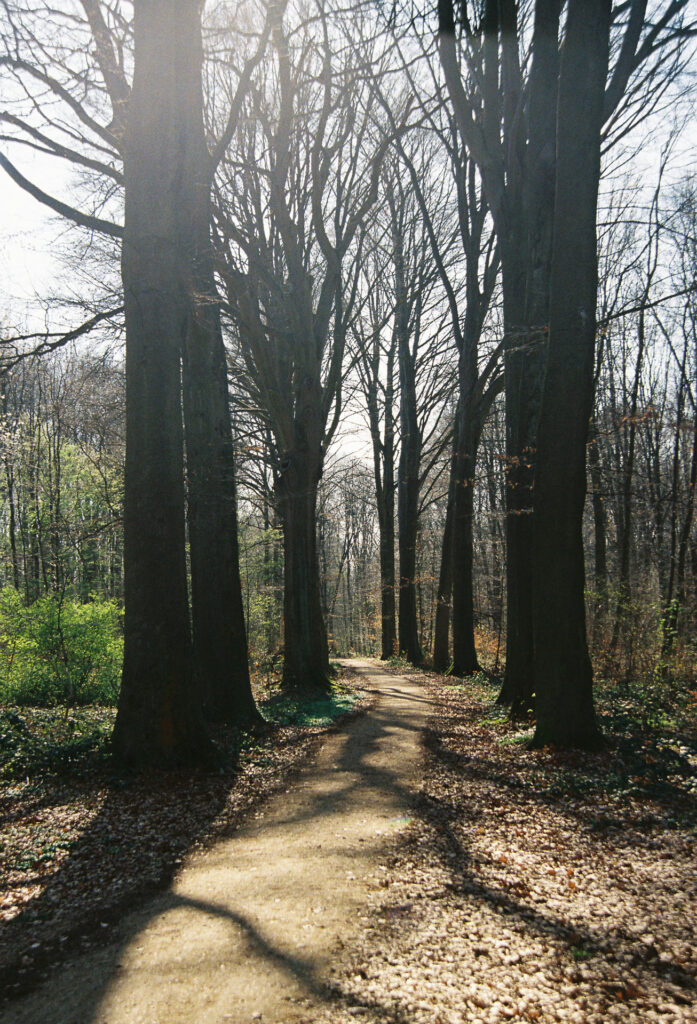
- 0.3 km – Urban Fringe: Initial frames were captured in the immediate wooded areas bordering the city. The F100’s 3D Matrix Metering was tested against challenging backlighting conditions and complex shadow patterns cast by the forest canopy.
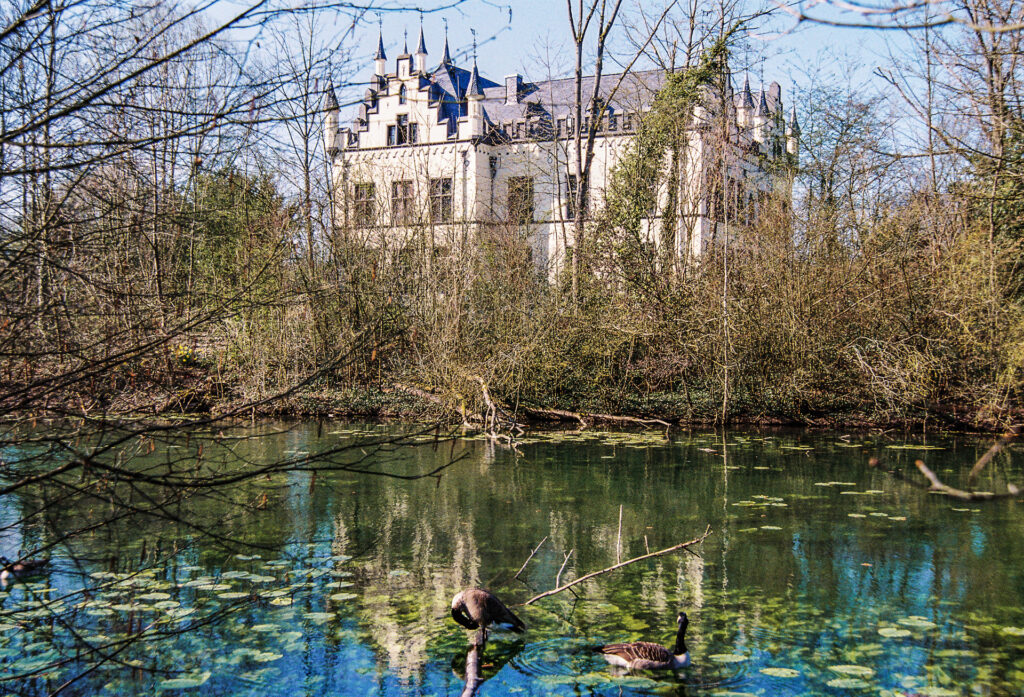
- Haus Horst: The survey continued to this historic manor house, which currently serves as a specialized medical facility (a sleep clinic). The surrounding pond and waterfowl provided subjects for testing the AF Nikkor 24-85mm’s autofocus speed and tracking accuracy.
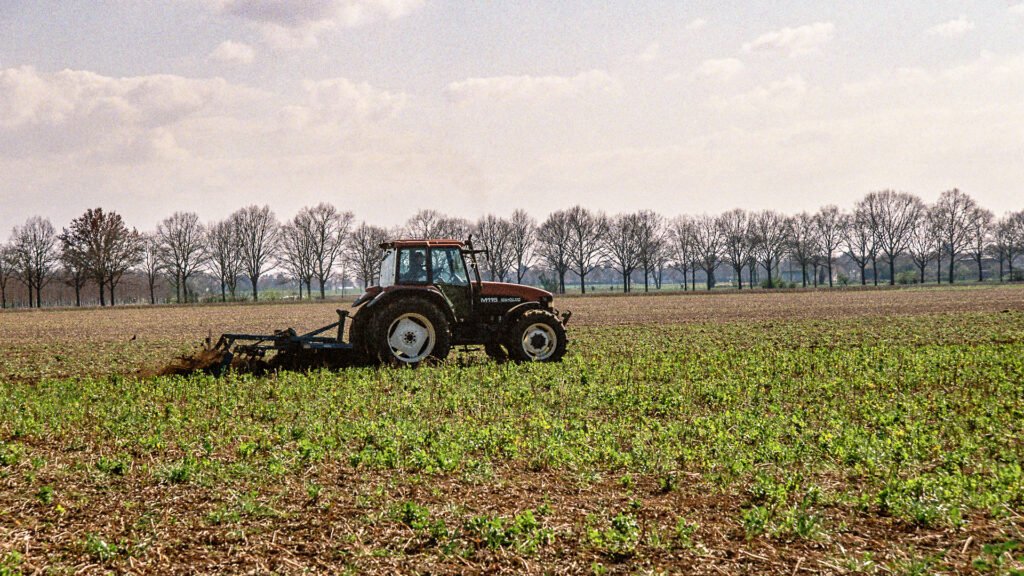
- Agricultural Fields: Transitioning out of the woodland, the photographer documented spring agricultural activity. A front-side perspective of a working tractor served as a test for the film’s ability to render mechanical textures and vibrant greens.
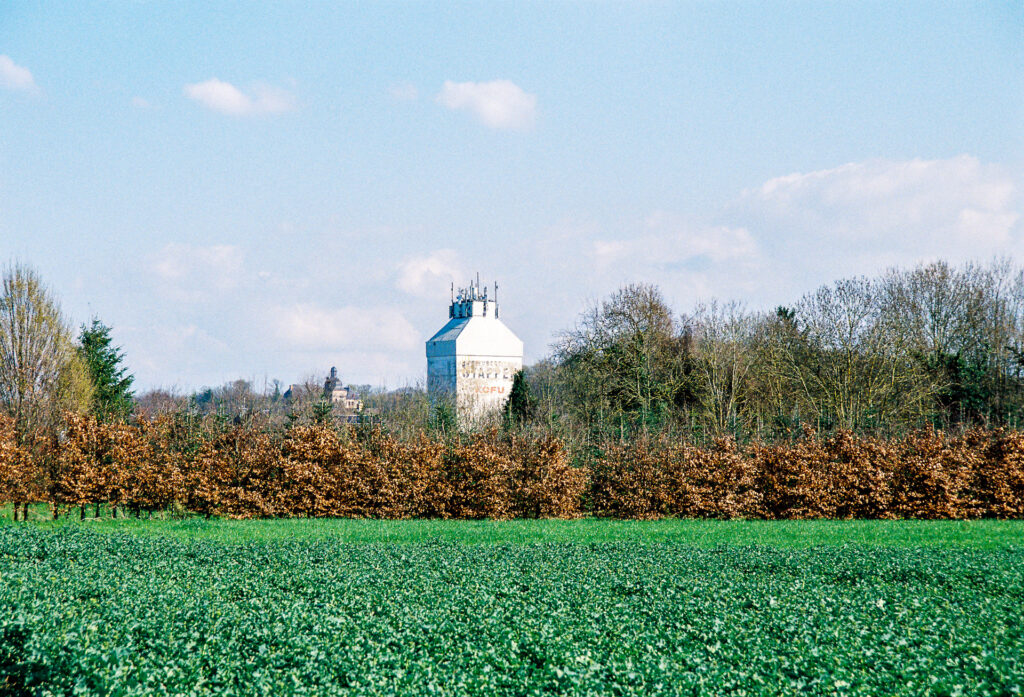
- Liedberg-Steinhausen: This segment involved architectural photography focusing on a grain silo and the privately-owned Liedberg Castle. The castle, which has undergone significant restoration in recent years, provided a backdrop for evaluating long-distance sharpness and atmospheric perspective.
- Nature Conservation Area: The route passed through a landscape undergoing active forest management. Observations noted the removal of trees damaged by the bark beetle (Scolytinae) and the replanting of more resilient species, providing a narrative of environmental adaptation.
- Myllendonk Castle: The final major stop was at this moated castle located on the outskirts of Mönchengladbach. The site includes an 18-hole golf course. Photography here required navigating physical barriers, such as ball-catcher nets, which highlighted the "honest" nature of analog photography, where elements like netting are often left unedited to preserve the authenticity of the moment.
Regional Context: Historical and Environmental Significance
The locations featured in this survey are integral to the cultural landscape of the Lower Rhine. Haus Horst and Myllendonk Castle represent the "Wasserburg" (moated castle) tradition common in this flat, water-rich region. These structures have transitioned from feudal estates to modern-day utility—one as a medical center and the other as a center for leisure and sport.
From an environmental perspective, the region is currently grappling with the impact of climate change on its forests. The presence of the bark beetle has necessitated large-scale clearing operations. Local environmental agencies have responded by diversifying the tree population, moving away from monoculture toward mixed forests that can better withstand pest infestations and rising temperatures. These efforts were documented as part of the photographic survey, illustrating the role of the photographer as a witness to environmental change.
Broader Implications for the Analog Photography Industry
The continued use of equipment like the Nikon F100 and films like Kodak Ultramax 400 signals a stabilization in the analog market. While digital photography remains the standard for speed and commercial output, the "hybrid workflow"—shooting film, developing it chemically, and scanning it for digital refinement—has carved out a permanent niche.
Industry analysts note that the demand for high-quality used film cameras has led to a significant increase in the market value of the F100. In 2010, an F100 could often be purchased for less than $150; by 2024, prices for units in excellent condition have surged, reflecting a new generation of photographers who value the tactile experience and "look" of film.
Furthermore, the reliance on specialized labs for C-41 development and 4K scanning supports a micro-economy of photographic services that has survived the digital revolution. The integration of modern rechargeable battery technology, such as Panasonic Eneloop cells, into vintage bodies like the F100 further bridges the gap between 20th-century mechanics and 21st-century sustainability.
Conclusion
The Nikon F100 remains a formidable tool for the serious photographer, offering a level of precision and durability that few modern consumer products can match. When paired with versatile optics and reliable film stocks, it provides a medium for documenting both the permanence of historical architecture and the transience of the natural environment. As demonstrated by the 16-kilometer survey through the Lower Rhine, the synergy between a well-engineered camera, a capable lens, and high-latitude film allows for a nuanced exploration of one’s local geography, proving that the analog tradition is not merely a relic of the past, but a living, evolving practice.