The frigid, twilight world of Norway’s northern coast can be a demanding arena for wildlife photography, a place where patience is tested and fleeting moments of breathtaking spectacle are earned through persistent observation. For weeks, a team, including renowned wildlife photographer Paul Nicklen, had navigated these challenging conditions, their search for the region’s resident orcas yielding sparse results. The days were characterized by a pervasive darkness, the sun a mere whisper of pink on the horizon even at midday, and the sea often churned by formidable weather. Against this somber backdrop, the occasional glimpse of a black dorsal fin slicing through the turbulent waters was a rare and often brief encounter. Yet, the allure of witnessing these apex predators in their natural habitat, particularly the less acrobatic Norwegian populations, fueled their unwavering dedication.
The culmination of this arduous expedition arrived not with fanfare, but with a sudden, electrifying surge of activity from a distant pod of orcas. Initially, the group appeared quiescent, a cluster of dark forms against the grey expanse. The stark contrast between these Norwegian orcas and their counterparts in British Columbia, known for their frequent and spectacular breaches, was a constant point of awareness for the observers. Norwegian orcas, while powerful hunters, are typically observed engaging in less flamboyant behaviors, making the ensuing events all the more remarkable.
A Sudden Awakening: The Feeding Frenzy Unfolds
As the team meticulously tracked the pod, a palpable shift occurred. The distant orcas, previously almost indistinguishable from the brooding seascape, erupted into a frenzy of motion. The trigger for this sudden animation remained unclear, but the visual evidence was undeniable: the orcas were engaged in a feeding event, a primal display of predatory prowess. This transformation instantly galvanized the observers. "We came alive, our senses suddenly alert and active, as if flicked on by a switch," the account details, underscoring the profound impact of the sudden shift in the orcas’ behavior.
The vessel carrying the observers accelerated, a calculated maneuver to maintain a respectful distance while keeping pace with the athletic spectacle. Traveling at approximately 20 knots, they aimed to synchronize with the orcas’ dynamic movements. Crucially, for once, the elements seemed to cooperate. The sea, which had been their adversary for weeks, softened into a more manageable state, the water providing a calmer canvas for the unfolding drama. This rare confluence of favorable conditions, coupled with the orcas’ unexpected exuberance, created an unprecedented opportunity for documentation.
Capturing the Uncapturable: The Challenge of Low Light and High Speed

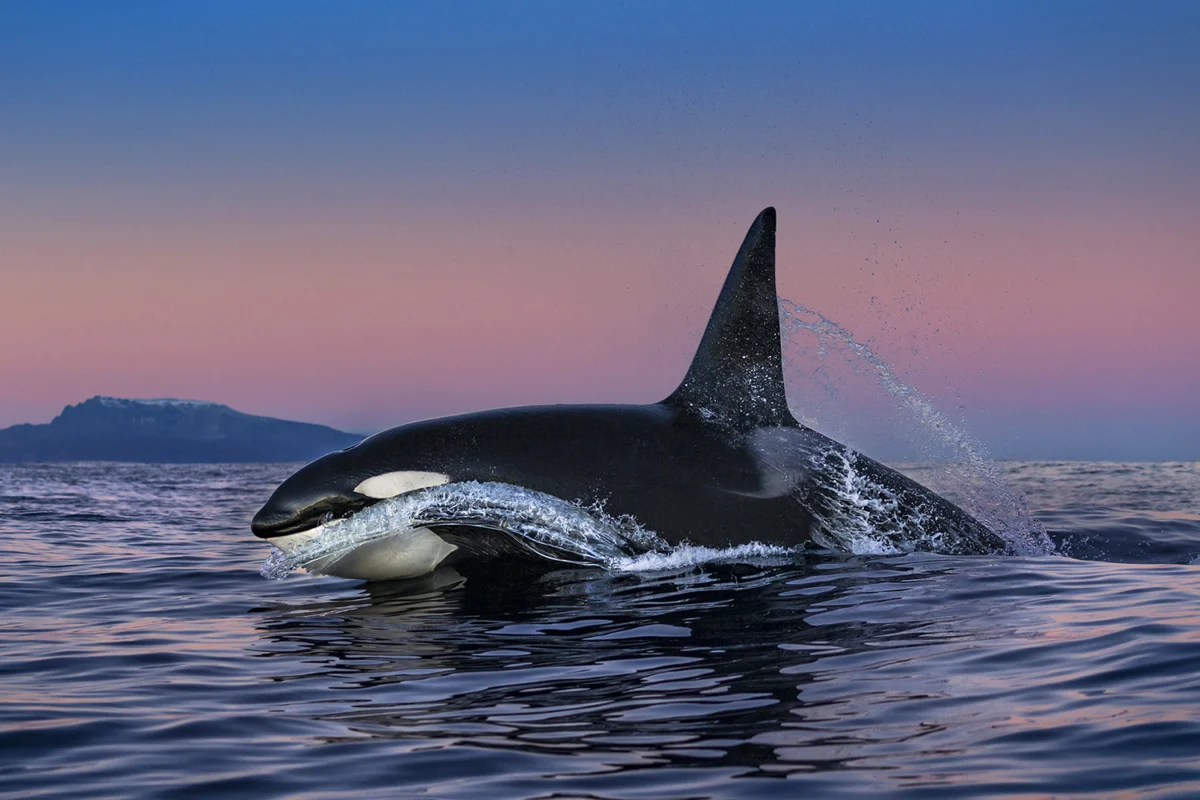
The low-angled, diffused light characteristic of the Arctic during this season presented a significant technical hurdle for photography. Capturing the explosive energy of the orcas required a delicate balance: a shutter speed fast enough to freeze the action without blurring, yet slow enough to allow sufficient light to register on the sensor. The photographer recounted the critical decision-making process, emphasizing the need for a rapid assessment of the available light and the desired outcome. Fortunately, a fleeting period of soft, diffused light, with hues of pink and orange painting the sky above the mountainous horizon, provided a window of opportunity.
It was during this period that a particularly massive male orca, estimated to weigh around 12,000 pounds and measure 25 feet in length, launched into a series of powerful leaps. The description of its dorsal fin, six feet tall, and pectoral fins comparable in size to a car hood, paints a vivid picture of its immense scale. Each porpoising movement sent torrents of water cascading from its body, creating a dynamic and awe-inspiring display. The sheer force and speed of these leaps made it a challenge to maintain a comprehensive view through the camera’s viewfinder.
The technical demands of shooting with single-lens reflex cameras in such conditions were particularly acute. The act of taking a photograph—the mirror lifting, the shutter opening and closing—rendered the photographer temporarily "blind" to the scene for a fraction of a second. This meant that even with a burst of ten frames per second, there was an inherent uncertainty about whether the perfect shot had been captured. The photographer described this period as one of intense focus, followed by a period of anxious anticipation.
The Moment of Truth: A Perfect Image Emerges
Following the intense burst of activity, a sense of quiet contemplation settled over the observers. The photographer recounted the experience of reviewing the captured images on the boat’s LCD screen. The initial concern was that the combination of low light and high-speed motion would result in a blurry, unsatisfactory image. However, as the images began to appear, a profound sense of relief and elation washed over them.
The photograph, later titled "Dawn Patrol," depicted the massive male orca in mid-leap, its body a powerful silhouette against the subdued Arctic light. The detail captured was extraordinary, from the water droplets streaming off its sleek body to the intensity in its eye. The photographer marveled at the clarity and sharpness of the image, a testament to both the skill of the photographer and the precise coordination with the boat’s captain, Goran. "My friend Goran, who was driving the boat that day, had paced us perfectly," the account notes, highlighting the symbiotic relationship between the visual artist and the navigator.
The review of the images continued, with the photographer meticulously scrolling through the frames, almost expecting to find a flaw that would betray the success of the shot. "I scrolled down and up, up and down, just waiting for that mistake that told me I had failed somehow. It never came," the narrative conveys. The realization that the perfect image, a "bottle of light and time," had been successfully preserved was a moment of profound epiphany.

Broader Context and Implications
The sighting of this particular orca pod in Norway underscores the complex migratory patterns and feeding behaviors of these intelligent marine mammals. Orcas, also known as killer whales, are found in every ocean on Earth, but their populations exhibit distinct ecotypes with specialized diets and behaviors. The Norwegian orcas, often referred to as "midsund" orcas, are known to follow herring migrations into the fjords during the winter months, providing a crucial food source.
Supporting Data:
- Orca Size: Adult male orcas can reach lengths of up to 32 feet and weigh over 12,000 pounds.
- Norwegian Orca Behavior: While known for their efficiency in hunting herring, Norwegian orcas are generally less prone to breaching compared to populations in the Pacific Northwest. This makes displays of energetic activity, such as porpoising, particularly noteworthy.
- Herring Migrations: The annual migration of herring into Norwegian fjords is a critical ecological event, attracting various marine predators, including orcas, humpback whales, and fin whales. The abundance and timing of these migrations directly influence the presence and feeding success of these animals.
- Arctic Light Conditions: During the winter months in the Arctic, daylight hours are significantly reduced, and the sun remains low on the horizon, resulting in diffused and often dim light conditions. This presents a considerable challenge for photographers and filmmakers.
Chronology of the Event (Inferred):
- Weeks Prior: The observation team spends weeks searching for orcas in Norway, facing challenging weather and limited sightings.
- Early Morning: The team is tracking a distant pod of orcas.
- Sudden Activity: The orcas engage in a feeding frenzy, characterized by rapid movement and leaping.
- Boat Maneuvers: The observation vessel accelerates to maintain pace with the pod.
- Optimal Conditions: The sea calms, and the light conditions improve slightly, with a pink and orange sky.
- Spectacular Leap: A large male orca performs a series of powerful porpoising leaps.
- Photography in Action: The photographer captures images using high-speed bursts, navigating the challenges of low light and fast action.
- Post-Event Review: The photographer reviews the captured images, discovering the remarkable clarity and detail of the photographs.
Inferred Reactions and Analysis:
While direct quotes from other parties are not available in the original text, it can be inferred that the entire team shared in the excitement and awe of the experience. The successful capture of such a dynamic and rare event would have been a significant achievement for all involved. The photographer’s detailed account highlights the culmination of skill, patience, and favorable circumstances.
The incident serves as a powerful reminder of the raw beauty and untamed power of nature. It also underscores the dedication required to document such fleeting moments. The "Dawn Patrol" photograph, as described, transcends a mere image; it represents a preserved instant of natural history, a testament to the resilience of wildlife and the artistry of those who strive to share their stories with the world. The implications of such encounters extend beyond the realm of photography, contributing to a broader understanding and appreciation of marine ecosystems and the majestic creatures that inhabit them. The success of this particular photographic endeavor, despite the inherent difficulties, provides valuable insights into the techniques and perseverance required for wildlife photography in extreme environments. It also reinforces the importance of conservation efforts to protect these magnificent animals and their habitats for future generations to witness and admire.