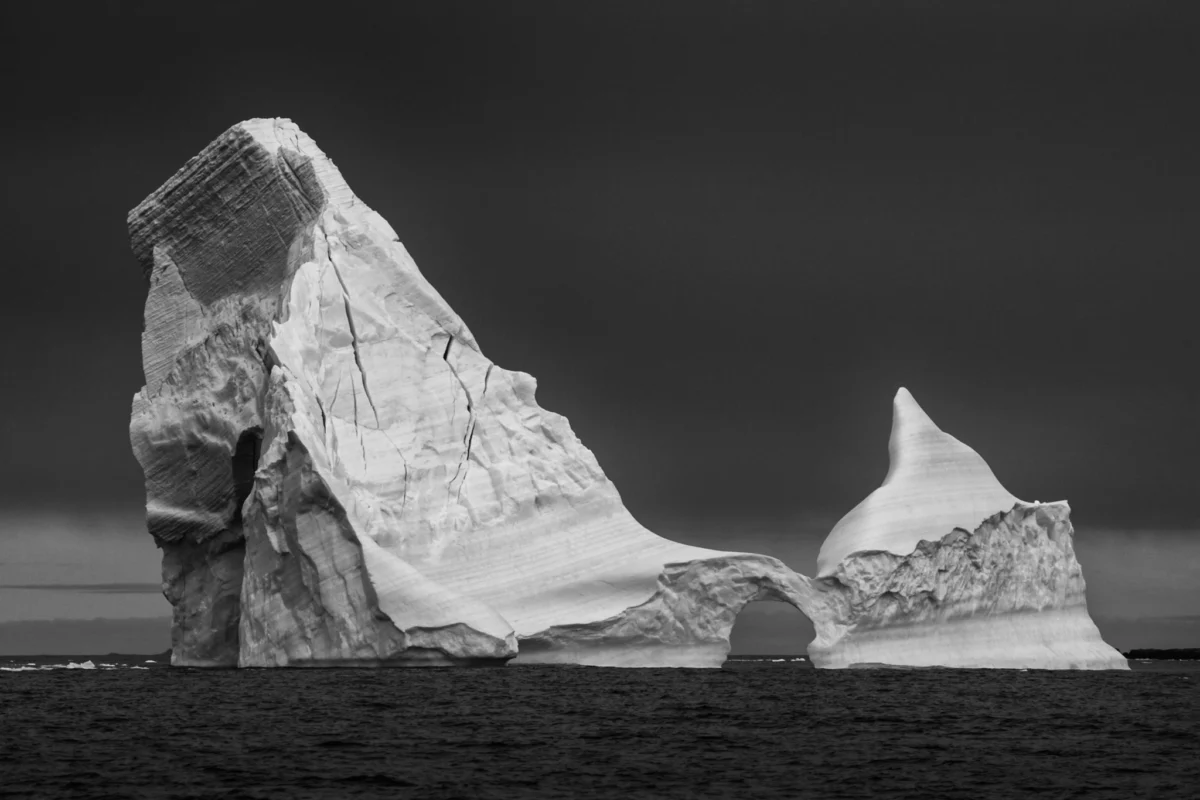
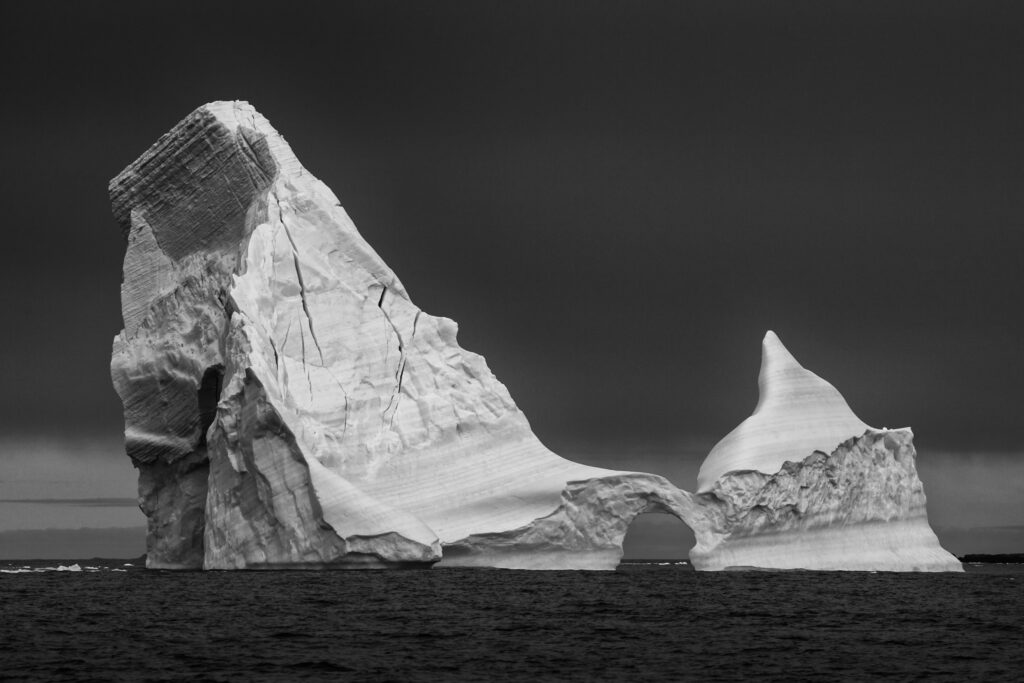
A land of ice is a realm of constant transformation, with new patterns and structures emerging through the clash of natural forces. During one of my earlier expeditions to the remote shores of the last continent, I observed a particularly delicate ice arch and diligently adjusted my camera. After finally settling on a composition, framing the delicate arch between two towering spires of ice, a rumble echoed across the water. Within seconds, the entire structure gave way and plunged into the sea, crackling like thunder and generating a cascade of waves. One of the most spectacular displays of nature’s artistry, carved by tumultuous seas, long winters, and raging winds, vanished before my eyes.
For those of you who have been sharing in my journey, you are probably already aware of (and likely share) my deep fascination with our planet’s polar regions. My love for the icy landscapes of the far north and south took root at the age of four when my family moved to Baffin Island. That was when I first began to see the world through the ever-changing lens of ice. Despite our remoteness, I felt intimately connected to the vast, untamed world surrounding me. Ours was one of the few non-Inuit households in our community, and those formative years were spent navigating a frozen realm. Guided by the elders, I learned to track animals through the snow, avoid treacherous ice, and endure extreme cold—skills that would ultimately lead to my role as a National Geographic photographer. My life’s trajectory has been irreversibly shaped by ice and the warmth of Inuit culture, which is why places like the Arctic and Antarctic regions will always be a favourite subject of mine.
When photographing ice, the creative possibilities are limitless. Light bends, refracts, and scatters through frozen crystals in surprising ways, crafting intricate patterns and textures. You could be photographing the same iceberg from the same vantage point, yet every click of the shutter yields a different image. These ever-shifting conditions present their challenges; an overcast sky, for example, can obscure details, turning a looming iceberg into a featureless mass against a dull horizon. Nonetheless, I’ve always found a peculiar sense of freedom within the environmental constraints of our planet’s icy kingdoms. They urge us to explore creative paths we might never have traversed otherwise, resulting in more compelling images and often a better story behind the frame.
The Ephemeral Majesty of Polar Landscapes
The observation of ephemeral ice formations, such as the arch that dramatically collapsed into the Antarctic sea, underscores the dynamic and transient nature of polar environments. These dramatic events, while fleeting, offer a profound glimpse into the raw power of natural forces at play in Earth’s most extreme latitudes. The photographer’s experience, capturing the final moments of this natural sculpture, highlights the critical importance of documenting these scenes before they are irrevocably altered or disappear entirely. Such events are not isolated incidents but are increasingly becoming emblematic of the broader changes occurring within these sensitive ecosystems.
The arch’s demise, described as a spectacle of "nature’s artistry, carved by tumultuous seas, long winters, and raging winds," serves as a potent metaphor for the larger environmental shifts impacting the polar regions. These landscapes are sculpted by millennia of geological and climatic processes, but the accelerated pace of current environmental change is introducing new variables that threaten their long-term stability. The sounds of its collapse—"crackling like thunder"—and the resulting waves are not merely auditory phenomena but indicators of significant energy release and the reshaping of the coastal environment.
A Childhood Rooted in Ice: The Genesis of a Conservationist
The photographer’s personal narrative traces his deep connection to the polar regions back to his childhood on Baffin Island. This early immersion in an Arctic environment, characterized by its ever-changing ice, provided a foundational understanding of the delicate balance of life in these extreme settings. Living within an Inuit community offered invaluable lessons in survival, environmental awareness, and a profound respect for the natural world. The skills acquired—tracking wildlife, navigating treacherous ice, and enduring extreme cold—are not merely anecdotal but represent a deep-seated knowledge of an ecosystem that is now under unprecedented threat.
This upbringing instilled a unique perspective, emphasizing the interconnectedness of life and the environment. The Inuit culture, deeply intertwined with the rhythms of the Arctic, provided a model for sustainable living and adaptation. The photographer’s assertion that his "life’s trajectory has been irreversibly shaped by ice and the warmth of Inuit culture" emphasizes the profound influence of these formative experiences on his professional and personal commitment to polar conservation. The Arctic and Antarctic, therefore, are not just geographical locations but are imbued with personal significance, making their protection a deeply felt imperative.
The Visual Language of Ice: Artistry and Impermanence
The photographic process itself, as described, reveals the inherent artistic qualities of ice. The way light interacts with frozen water creates a constantly evolving visual tapestry, offering photographers an endless source of inspiration and challenge. Each iceberg, each ice formation, presents a unique subject, its appearance dictated by the precise angle of the sun, atmospheric conditions, and its own geological history. This variability means that even familiar scenes can yield entirely new images with each encounter, demanding a keen eye and an adaptive approach from the photographer.
However, this inherent dynamism also highlights the vulnerability of these environments. The very factors that make polar landscapes visually captivating—their delicate structures, their interaction with light—also make them susceptible to rapid change. An overcast sky, for instance, can render a majestic iceberg featureless, a stark reminder of how environmental conditions can alter perception and reveal the fragility beneath the surface. This constant interplay between beauty and impermanence drives the photographer to seek out and capture these moments, recognizing their significance in a world undergoing rapid transformation. The "peculiar sense of freedom" found within these constraints is, in essence, the freedom to bear witness to a world that is both magnificent and under duress.
"Ice Waterfall": A Symbol of a Vanishing Arctic
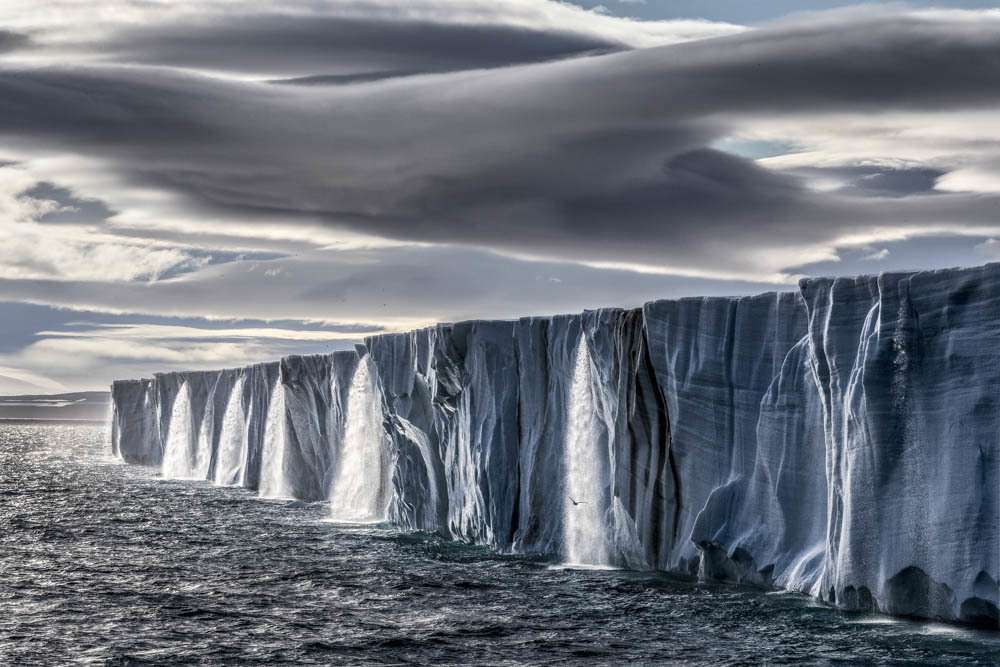
The photograph titled "Ice Waterfall," featured prominently, has transcended its status as a mere image to become a powerful emblem of the Arctic’s ecological crisis. Its aesthetic appeal, characterized by "dark clouds, ice falls, and the vast Nordaustlandet ice cap," evokes the dramatic and awe-inspiring nature of polar landscapes. However, the caption reveals a deeper narrative: "The dark clouds, ice falls, and the vast Nordaustlandet ice cap tell the story of a vanishing Arctic." This juxtaposition of visual grandeur with an urgent ecological message is central to its impact.
The widespread recognition and adoption of "Ice Waterfall" underscore its significance. Its inclusion in the homes of individuals worldwide, its endorsement by prominent figures like Al Gore, and its pivotal role in publications like National Geographic’s "Cool It" Issue in 2015, all attest to its power as a communication tool. Furthermore, its appearance on the cover of Pearl Jam’s "Gigaton" album signifies its resonance within popular culture, amplifying its conservation message to a broader audience. The enduring impact of the photograph, whether viewed on a small screen or as a large-format print, lies in its ability to encapsulate both the sublime beauty of the Arctic and the urgent need for its protection. It serves as a timeless piece with an "urgent call to action," a visual plea for preservation in the face of accelerating climate change.
"The Last Stand": Antarctica’s Fragile Beauty
Another striking image, "The Last Stand," captures a similar theme of fragility within the Antarctic context. The photograph depicts a delicate ice arch, a testament to the intricate sculptural processes at work in Antarctica. The photographer’s urgency in capturing this fleeting moment before its inevitable collapse ("I hurried to capture the delicate arch before it plunged into the sea below") mirrors the precarious state of many polar formations. The caption succinctly articulates the core message: "The beauty of Antarctica is as fragile as it is captivating."
This artwork serves as a poignant reminder of the delicate equilibrium that defines polar ecosystems. The geological formations, sculpted over immense timescales, are now increasingly vulnerable to the rapid changes brought about by global warming. The sheer beauty of these landscapes belies their inherent fragility, making them particularly susceptible to environmental disturbances. The title "The Last Stand" itself evokes a sense of urgency and finality, suggesting that these iconic ice formations may be facing their ultimate decline.
The Unseen Life of Polar Regions: Adaptation and Vulnerability
Despite the harshness of their environment, polar regions teem with life, a testament to the remarkable adaptive capabilities of species that inhabit these extreme zones. Animals such as seals, polar bears, and various seabirds have evolved intricate strategies for survival, relying on the cyclical nature of ice for essential life processes. Their existence is intrinsically linked to the ebb and flow of the frozen seas—for breeding, foraging, and reproduction. This deep evolutionary connection means that any significant alteration to their icy habitats poses a direct threat to their survival.
The photographer’s observation that "Somewhere in their evolutionary journey, the harshest aspects of their habitat became the source of their survival and resilience" highlights a critical paradox. The very conditions that have allowed these species to thrive are now being undermined by external forces. The "diminishing ice in the Arctic and Antarctic seas" directly impacts the availability of hunting grounds, denning sites, and migratory routes, casting a shadow of uncertainty over the future of many iconic polar species.
Data and Analysis: The Tangible Impacts of Climate Change
Scientific data unequivocally demonstrate the accelerated warming of the Arctic and Antarctic regions. The Arctic, in particular, is warming at a rate approximately twice the global average. This phenomenon, known as Arctic amplification, is driven by feedback loops, such as the reduction of reflective sea ice, which leads to increased absorption of solar radiation by the darker ocean waters.
Key Data Points and Trends:
- Arctic Sea Ice Extent: Satellite records dating back to 1979 show a significant decline in Arctic sea ice extent, particularly during the summer months. The lowest minimum extent on record was observed in September 2012, and subsequent years have consistently shown below-average ice coverage. The National Snow and Ice Data Center (NSIDC) reports that the Arctic sea ice extent has been decreasing at a rate of about 13% per decade relative to the 1981-2010 average.
- Antarctic Ice Sheet Mass Loss: While the Arctic is experiencing more rapid warming, the Antarctic ice sheet is also losing mass. The Intergovernmental Panel on Climate Change (IPCC) reports indicate that both the Greenland and Antarctic ice sheets are contributing to global sea-level rise. Recent studies suggest that ice loss from parts of West Antarctica is accelerating.
- Permafrost Thaw: Warming temperatures are leading to the thawing of permafrost in Arctic regions, releasing significant amounts of greenhouse gases, such as carbon dioxide and methane, into the atmosphere. This creates a positive feedback loop that further exacerbates global warming.
- Impact on Wildlife: Studies have documented the impacts of sea ice loss on polar bears, walruses, and seals, affecting their hunting success, reproductive rates, and overall survival. For instance, polar bears rely on sea ice as a platform for hunting seals, and reduced ice cover forces them to swim longer distances and spend more time on land, where food sources are scarce.
Broader Implications and the Path Forward
The continued degradation of polar environments has far-reaching implications that extend beyond the immediate regions. Melting ice sheets contribute to global sea-level rise, threatening coastal communities worldwide. Changes in polar ocean currents can influence weather patterns across the globe. Furthermore, the loss of unique biodiversity in these regions represents an irreplaceable loss to the planet’s natural heritage.
The photographer’s plea, "Despite the growing pressures of a warming world, I still feel we can change our course and protect our fellow wildlife," carries a message of cautious optimism. This sentiment is echoed by many scientists and conservationists who emphasize the urgent need for global action to mitigate climate change.
Inferred Responses and Scientific Consensus:
- Scientific Community: The overwhelming consensus among climate scientists is that human activities, primarily the emission of greenhouse gases, are driving global warming and its associated impacts on polar regions. Organizations like the IPCC regularly publish comprehensive assessments detailing these findings and projecting future scenarios.
- International Policy: Global agreements, such as the Paris Agreement, aim to limit global warming to well below 2 degrees Celsius, preferably to 1.5 degrees Celsius, compared to pre-industrial levels. However, the effectiveness of these agreements depends on the commitment and actions of individual nations.
- Conservation Efforts: Numerous organizations and initiatives are dedicated to polar conservation, advocating for policy changes, supporting research, and implementing on-the-ground conservation projects. These efforts often involve collaborations with local communities, including Indigenous populations, who possess invaluable traditional knowledge.
The photographer’s concluding statement, "We are in this together, and we will solve this together," encapsulates the collaborative spirit required to address the complex challenges posed by climate change. The preservation of polar regions is not merely an environmental issue but a shared responsibility that demands collective action, informed by scientific understanding and guided by a deep respect for the natural world. The art of capturing vanishing ice, therefore, becomes more than just a visual record; it is a vital component of a global movement towards a sustainable future.