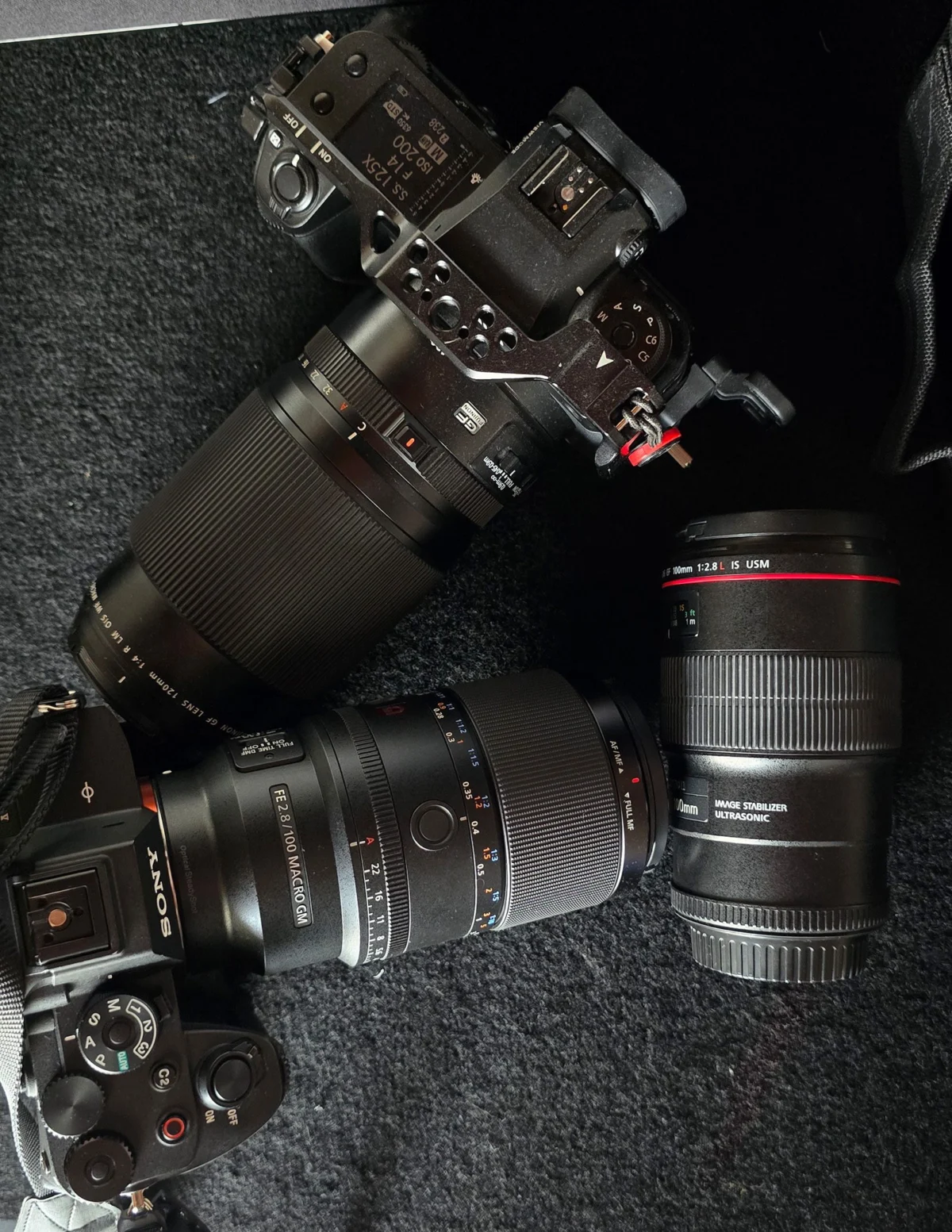
Sony has officially announced the release of its new FE 100mm f/2.8 Macro GM lens, a development poised to significantly impact the professional photography market, particularly within the specialized field of macro imaging. This highly anticipated lens, which has been under wraps through non-disclosure agreements with select industry professionals, distinguishes itself not merely as another addition to the macro lens category but as a potential benchmark for optical performance, magnification capabilities, and autofocus speed. Early assessments from seasoned macro photographers suggest that the lens offers a compelling blend of features that could set new standards for sharpness and operational efficiency.
The unveiling of the Sony FE 100mm f/2.8 Macro GM follows a period of heightened anticipation within the photographic community. Industry insiders and professional reviewers, accustomed to evaluating numerous macro lenses over the past decade, were approached by Sony’s PR team under strict NDAs to preview an unannounced optic. Given the prevailing trends in lens development and Sony’s focus on high-performance optics, it was widely speculated among these experts that the forthcoming release would be a macro lens. Upon the formal lifting of the NDA, the identity of the lens was confirmed, revealing the Sony FE 100mm f/2.8 Macro GM, an addition that aims to extend Sony’s leadership in the full-frame mirrorless ecosystem. The lens is expected to be available for preorder immediately, with an official market release slated for the coming weeks, providing professional and enthusiast photographers with a powerful new tool.
The Enduring Significance of Macro Lenses in Photography
Macro lenses hold a unique and often underappreciated position in the photographic arsenal. While commonly associated with capturing extreme close-ups of subjects like insects, flora, and intricate details of the human eye, their utility extends far beyond specialized macro photography. Historically, macro lenses are engineered for exceptional precision, making them paragons of optical design within any manufacturer’s lineup. This inherent design philosophy dictates that macro lenses must deliver unparalleled sharpness, resolve minute details, and maintain image integrity across a wide range of focusing distances, from infinity down to their minimum focus limit.
The meticulous construction required for macro capabilities often results in lenses that are among the sharpest available, exhibiting minimal chromatic aberration, distortion, and vignetting. This precision is not solely beneficial for extreme close-ups; it also translates into superior performance for general photography, portraiture, product photography, and even landscape work where intricate detail is paramount. Furthermore, the autofocus systems in macro lenses, while sometimes prioritizing accuracy over sheer speed in previous generations, are designed for pinpoint precision, crucial for maintaining critical focus on subjects with shallow depths of field at close working distances. The added benefit of a typically very short minimum focusing distance expands creative possibilities, allowing photographers to isolate subjects and explore perspectives unattainable with standard lenses. Therefore, a new macro lens, especially one from a leading manufacturer like Sony, is often seen as a bellwether for advancements in optical engineering across the broader lens market.
Distinguishing Features of the Sony FE 100mm f/2.8 Macro GM
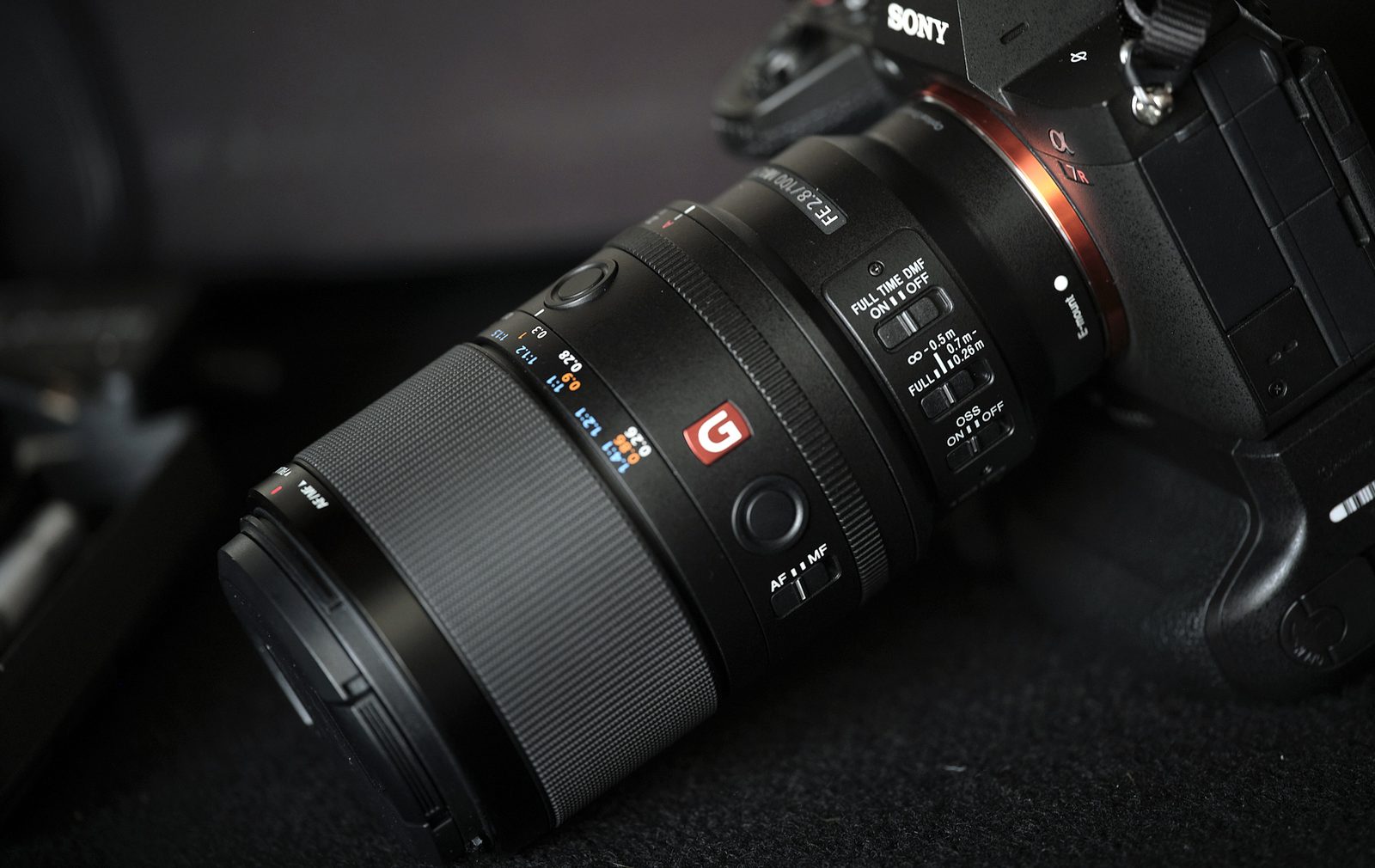
At first glance, the Sony FE 100mm f/2.8 Macro GM might appear to conform to the established archetype of a 100mm f/2.8 macro lens, a focal length and aperture combination popular across various brands. Many competing lenses in this category offer a 1:1 magnification ratio, which means the subject is reproduced at life-size on the camera sensor. However, Sony’s new offering pushes these boundaries significantly. The FE 100mm f/2.8 Macro GM boasts an impressive 1.4x magnification level, surpassing the 1:1 standard and allowing photographers to capture subjects at 1.4 times life-size on the sensor. This enhanced magnification provides an immediate advantage for intricate detail capture, making small subjects appear even larger and more impactful in the final image.
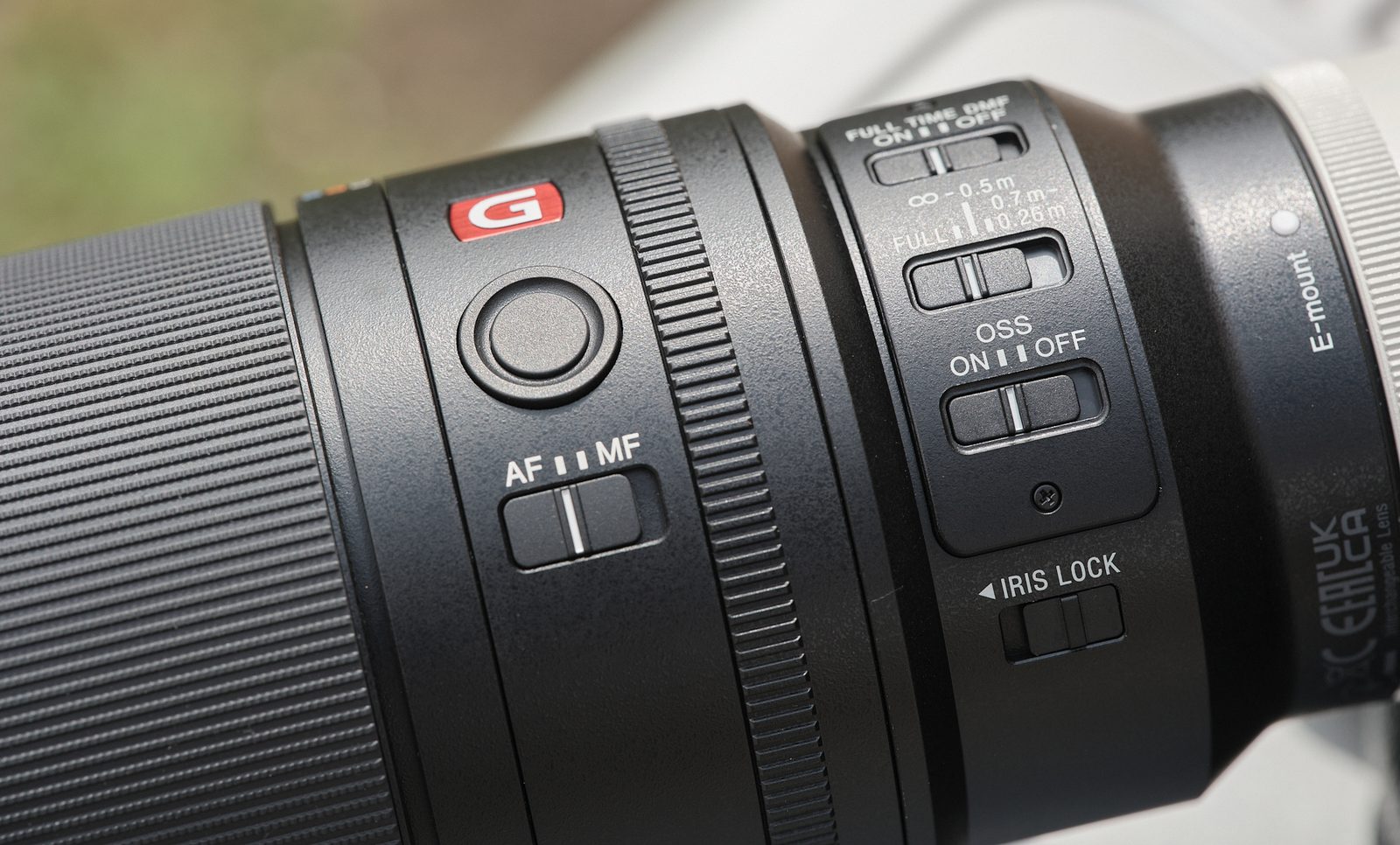
The optical prowess of the lens is underpinned by its sophisticated 17-element, 13-group optical design. This complex arrangement incorporates specialized elements aimed at correcting aberrations and ensuring maximum resolution from edge to edge. The inclusion of Sony’s advanced Nano AR coating further contributes to superior image quality by effectively suppressing internal reflections, ghosting, and flare, even in challenging lighting conditions. This optical blueprint positions the lens firmly in the "best-in-class" category for resolving power, a critical attribute for high-megapixel cameras. Furthermore, the lens features a robust five-stop image stabilization system, a crucial addition for macro photography where even the slightest camera movement can lead to blur, especially when shooting handheld or in low light.
Strategic Magnification and Teleconverter Synergy

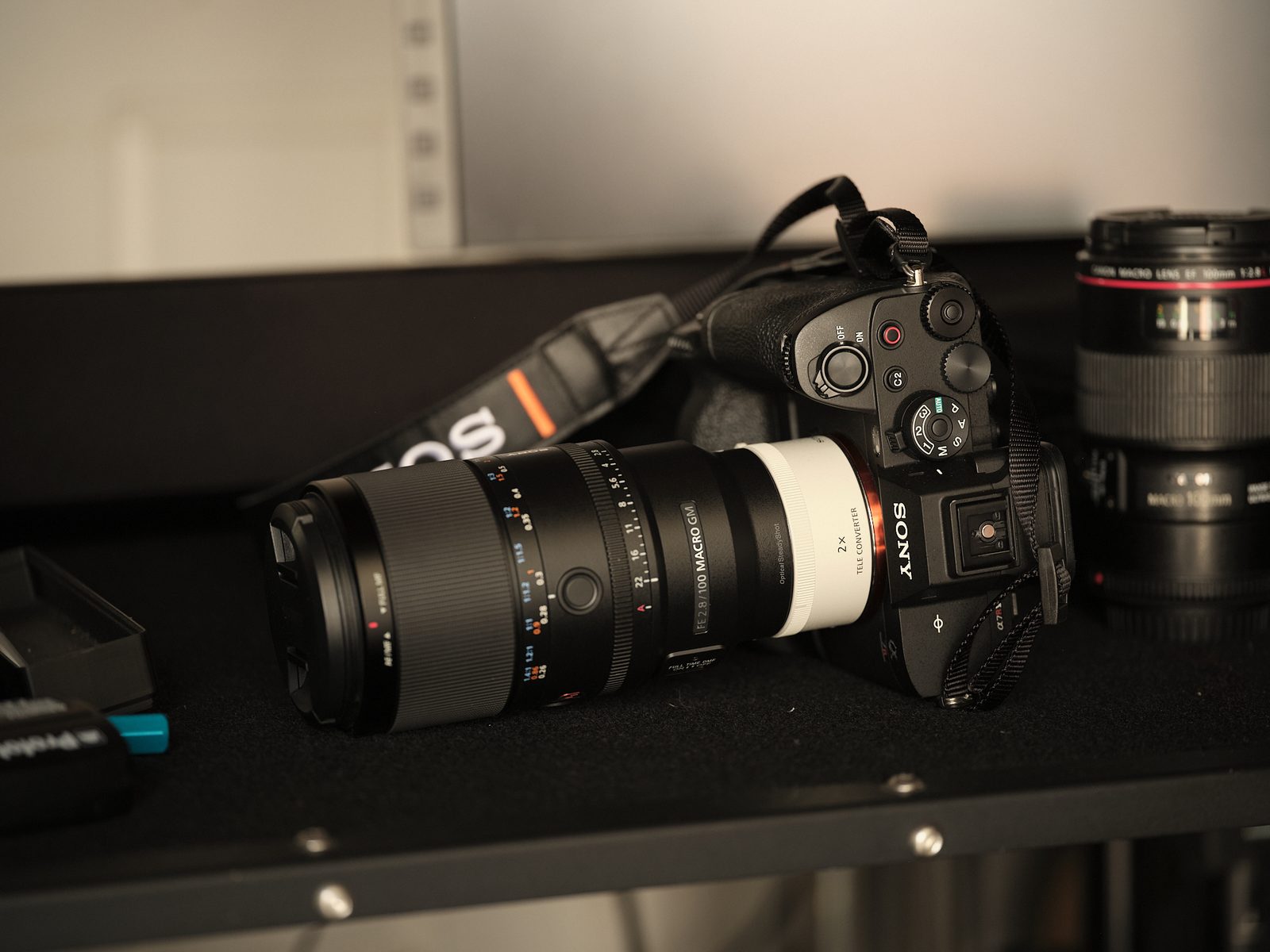
One of the most exciting and strategically advantageous features of the Sony FE 100mm f/2.8 Macro GM is its compatibility with Sony’s FE 2.0x teleconverter. This compatibility opens up a new realm of possibilities for macro photographers, particularly those working in fields like beauty macro, scientific imaging, or botanical photography, where maintaining a greater working distance from the subject is often desirable.
When the Sony FE 2.0x teleconverter is attached, the lens’s effective focal length doubles to 200mm, providing a more comfortable working distance and enabling tighter compositions without physically moving closer to the subject. Crucially, the teleconverter also doubles the lens’s magnification level, elevating it to an extraordinary 2.8x magnification. This capability allows for unprecedented levels of detail capture, reproducing subjects at nearly three times life-size on the sensor. For photographers who frequently struggle with casting shadows on their subjects or disturbing delicate flora and fauna due to proximity, this extended reach combined with extreme magnification offers a significant operational advantage. The ability to achieve such high magnification without resorting to specialized macro bellows or extension tubes, while retaining autofocus and exposure control, represents a notable engineering achievement and a practical benefit for field photographers.

Revolutionizing Autofocus Speed in Macro Photography
Historically, one of the trade-offs associated with the precision of macro lenses has been a comparatively slower autofocus speed. While accuracy was paramount, the motors often lacked the rapid response found in sports or portrait prime lenses. Sony has directly addressed this long-standing challenge with the FE 100mm f/2.8 Macro GM by integrating four advanced XD (Extreme Dynamic) linear motors.

These motors represent a significant leap forward in autofocus technology for macro applications. XD linear motors are renowned for their high thrust and precise control, enabling remarkably fast, quiet, and accurate focusing performance. In the context of a macro lens, this translates to an autofocus system that not only maintains the characteristic accuracy expected of macro optics but also delivers speeds previously unseen in this category. For photographers, this means quicker acquisition of focus, even on moving subjects, and a more responsive shooting experience overall. This innovation is particularly valuable in dynamic macro scenarios, such as capturing insects in motion or working quickly in a studio environment where precise focus needs to be achieved rapidly to meet production schedules. The integration of such an advanced autofocus system without compromising the optical integrity or magnification capabilities underscores Sony’s commitment to pushing technological boundaries in lens design.
Early Professional Testing and Comparative Analysis

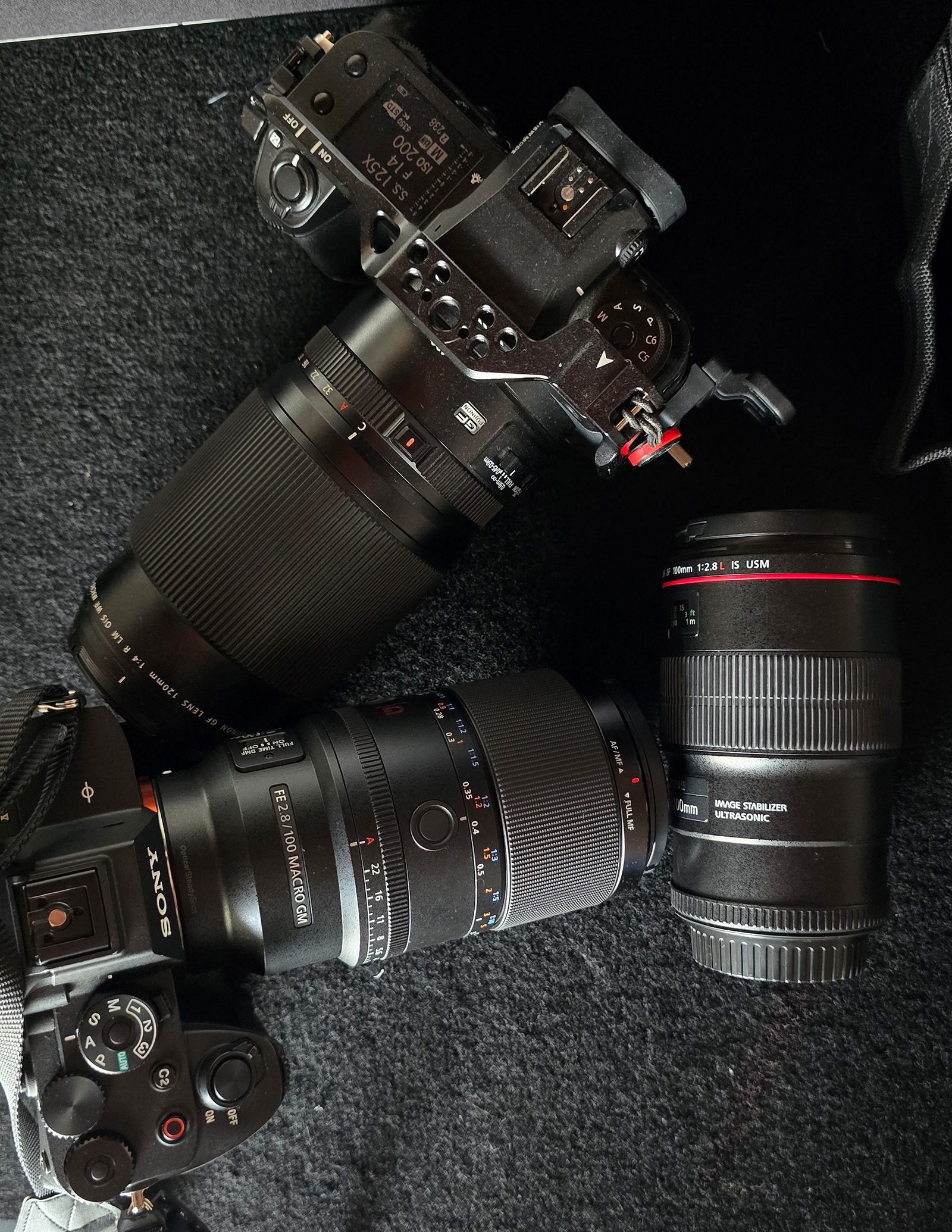
Initial professional testing of the Sony FE 100mm f/2.8 Macro GM has yielded highly favorable results, indicating that the lens performs exceptionally well even when pitted against established industry benchmarks. One notable comparison involved pitting the new Sony lens, mounted on a Sony a7R V, against a renowned medium-format setup: the Fujifilm GFX 100s paired with the Fujifilm GF 120mm f/4 Macro lens. The Fujifilm system, known for its high-resolution sensor and the optical quality of its GF lenses, represents a formidable competitor, particularly in terms of sheer sensor resolution.
Despite the Fujifilm GF 120mm f/4 Macro lens offering a more modest 0.5x magnification and a longer minimum focusing distance of 0.45m, it is celebrated for its unparalleled sharpness and close-focusing capabilities within the medium format space. However, early reports from testers indicate that the Sony FE 100mm f/2.8 Macro GM, especially when paired with the Sony FE 2.0x teleconverter to achieve a 200mm focal length and 2.8x magnification, demonstrably outperformed the Fujifilm setup in terms of both autofocus speed and perceived sharpness in 100% crops. The Sony system exhibited faster focus acquisition and produced images with superior micro-contrast and fine detail rendition, even when accounting for the resolution differences between the full-frame Sony a7R V and the medium-format GFX 100s. This comparison highlights the Sony lens’s remarkable optical design and the efficacy of its advanced autofocus system.
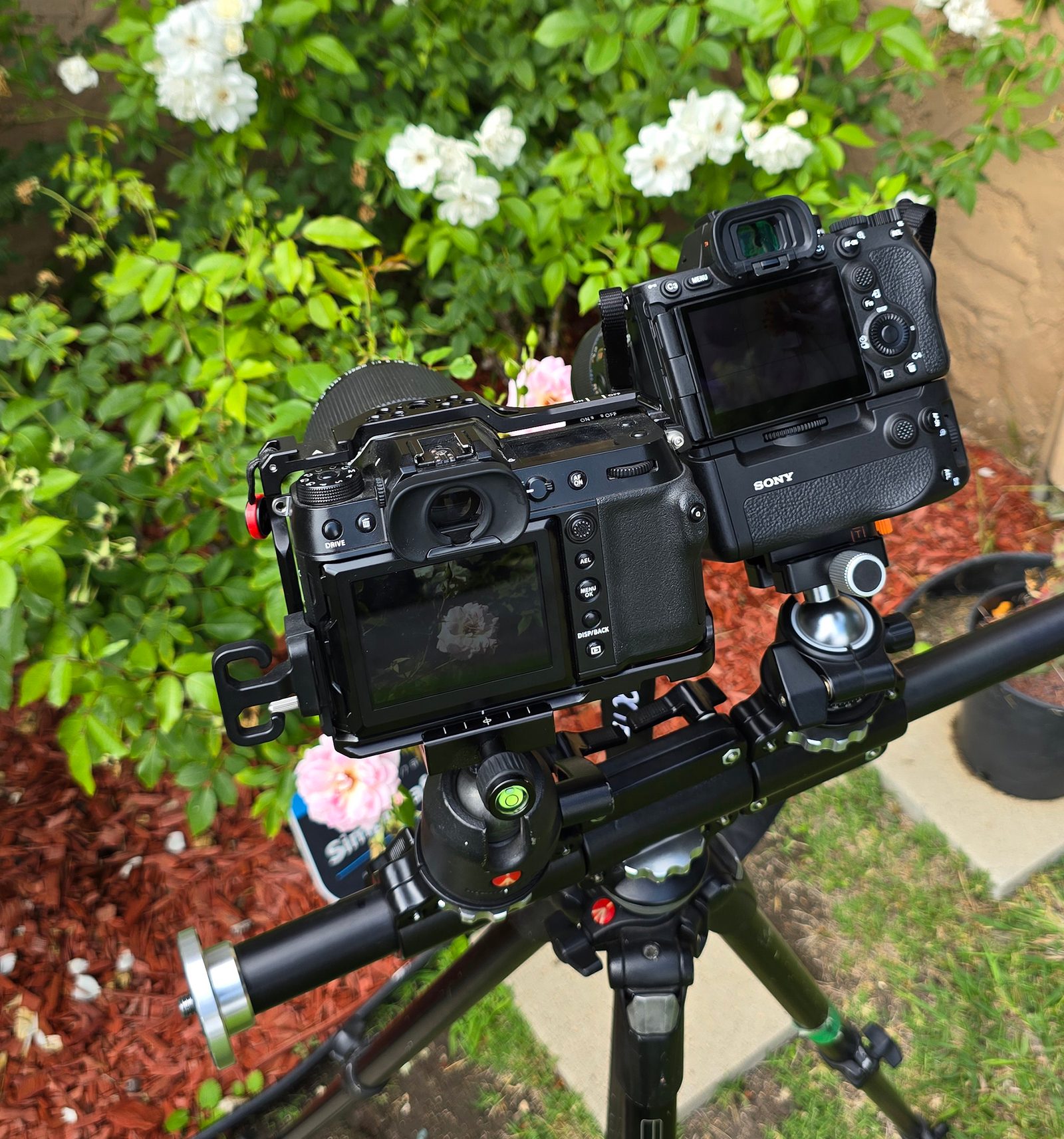
A comprehensive comparison table further elucidates the competitive advantages of the Sony FE 100mm f/2.8 GM Macro:
| Feature | Sony FE 100mm f/2.8 GM | Fujifilm GF 120mm f/4 | Canon EF 100mm f/2.8L IS | Canon RF 100mm f/2.8L IS |
|---|---|---|---|---|
| Lens Design | 17 Elements in 13 Groups | 14 Elements in 9 Groups | 15 Elements in 12 Groups | 17 Elements in 13 Groups |
| Stabilization | Yes, five-stop | Yes, five-stop | Yes, two-stop | Yes, five-stop |
| Magnification Level | 1.4x Magnification | 0.5x Magnification | 1x Magnification | 1.4x Magnification |
| Minimum Focus Distance | 0.26m | 0.45m | 0.30m | 0.26m |
| Size Dimensions | 81.4 x L: 147.6 mm | 89.2 x L: 152.5 mm | 77.7 x L: 123 mm | 81.5 x L: 148 mm |
| Weight | 646 g | 980 g | 625 g | 730 g |
| Price (Estimated) | $1399 – $1,699 | $3,099 | $1,399 | $1,199 |
The data clearly illustrates several key differentiators for the Sony FE 100mm f/2.8 GM. Its 1.4x native magnification level is matched only by the Canon RF 100mm f/2.8L IS, surpassing the 1:1 standard of many competitors and significantly outperforming the Fujifilm GF 120mm f/4. The minimal focus distance of 0.26m is also class-leading, allowing for extremely close working distances. Furthermore, despite its advanced optical design and five-stop stabilization, its weight of 646g makes it a relatively portable option, lighter than the Fujifilm counterpart and comparable to other full-frame offerings. While the Fujifilm lens operates on a larger sensor format, the Sony lens with its teleconverter option offers a compelling alternative for those prioritizing extreme magnification and fast autofocus within a full-frame system, often at a significantly lower overall system cost.

Market Positioning and Broader Implications
The introduction of the Sony FE 100mm f/2.8 Macro GM marks a strategic move by Sony to solidify its position in the high-end lens market. By offering a macro lens that combines advanced magnification, rapid autofocus, and top-tier optical performance, Sony aims to attract a wide range of professionals, from scientific and industrial photographers to commercial and fine-art macro enthusiasts. Its compatibility with the 2x teleconverter further enhances its versatility, making it a highly adaptable tool for various demanding applications.

The competitive pricing, estimated between $1399 and $1699, positions it competitively against existing full-frame macro lenses, offering superior features at a price point that could disrupt the market. For instance, while the Canon RF 100mm f/2.8L IS offers similar magnification, the Sony lens’s reported autofocus speed and optical resolution, coupled with its teleconverter option, present a compelling alternative. For photographers currently invested in the Sony Alpha ecosystem, this lens provides an upgrade path that promises unparalleled performance without necessitating a switch to a different camera system.
The success of the Sony FE 100mm f/2.8 Macro GM could also spur further innovation across the industry. As manufacturers strive to differentiate their products, the emphasis on faster autofocus in macro lenses and higher native magnification ratios might become more prevalent. This lens represents not just an incremental improvement but a significant advancement in what a macro lens can achieve, blending the traditional strengths of macro optics with cutting-edge motor technology and enhanced magnification capabilities. Its arrival is a testament to Sony’s continuous investment in advanced optical engineering and its commitment to delivering tools that empower photographers to push creative boundaries.