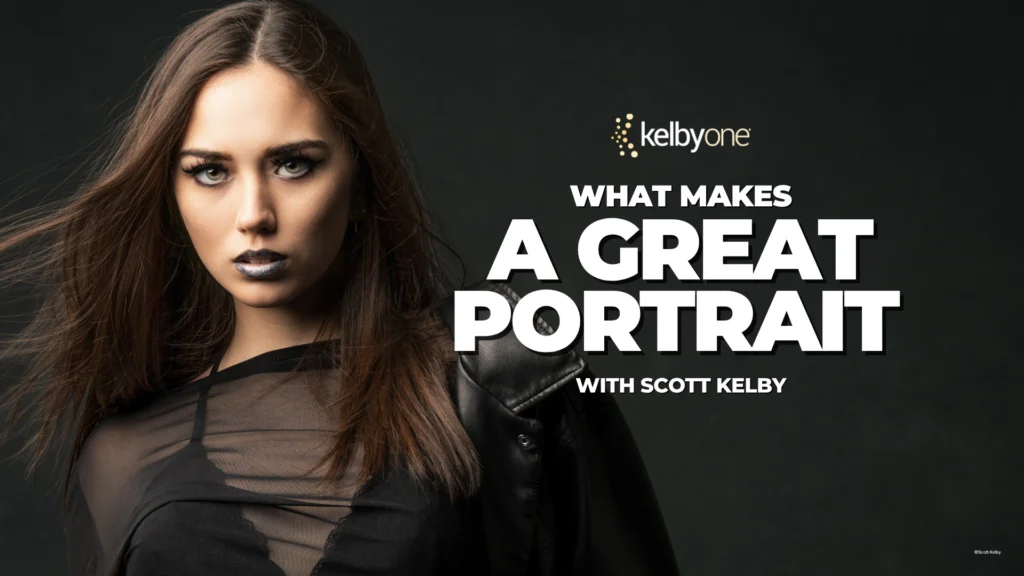
A significant development in online photography education has emerged with the launch of a new, comprehensive masterclass by acclaimed photographer and educator Scott Kelby, specifically designed to elevate the craft of portraiture. Titled "What Makes a Great Portrait," the course aims to guide photographers beyond merely capturing images, focusing instead on the deliberate creation of impactful, memorable portraits that resonate deeply with viewers and subjects alike. This initiative underscores the growing demand for specialized, high-quality instruction in a field increasingly saturated with casual imagery, offering a structured pathway for both aspiring and experienced photographers to refine their skills.
The newly introduced class, hosted on the KelbyOne platform, addresses a fundamental question central to the art of photography: what distinguishes a fleeting snapshot from a truly enduring portrait? Kelby, known for his ability to demystify complex photographic concepts, breaks down this distinction into 10 core principles. These principles encompass a blend of technical mastery and crucial interpersonal skills, reflecting a holistic approach to portrait creation. The curriculum promises an exploration into various facets, including the nuanced art of building genuine connections with subjects, the strategic application of flattering light, techniques for achieving natural skin tones, making informed lens and composition choices, and understanding the judicious role of retouching without over-processing.
The Instructor’s Vision and Philosophy
Scott Kelby, often dubbed "the world’s most prolific photography instructor," brings decades of experience to this latest offering. His teaching philosophy, evident across his extensive body of work—including numerous bestselling books, magazines, and online courses—consistently emphasizes practical, actionable advice. For Kelby, the essence of a great portrait extends far beyond merely pressing the shutter button. "Many photographers can capture a technically sound image," Kelby is often quoted as saying in various educational contexts, "but fewer consistently create portraits that truly ‘stick with you.’ That’s the gap we’re trying to bridge." His approach prioritizes the human element, believing that the interaction between photographer and subject is as critical, if not more so, than the camera settings.
In discussing the impetus behind this new class, Kelby has articulated a desire to distill his cumulative knowledge into a concise, impactful framework. He states that these "10 things" represent the ideas he consistently returns to, regardless of whether he is photographing family members, professional clients, or personal friends. This suggests a universal applicability of the principles, transcending specific genres or professional contexts within portrait photography. The class, therefore, positions itself not just as a technical guide but as a mentorship in the art of seeing, connecting, and storytelling through portraiture.
Curriculum Deep Dive: Unpacking the 10 Principles
While the full list of 10 principles is expanded upon within the course, the promotional material highlights several key areas, indicating a balanced curriculum that addresses both the artistic and technical dimensions of portrait photography.
-
Building Genuine Connection: This is arguably the most critical non-technical aspect. Kelby’s emphasis here reflects a broader trend in contemporary portraiture towards authenticity and emotional depth. Techniques for rapport-building, effective communication, and creating a comfortable environment for subjects are expected to be central. Research in psychology and communication supports the notion that a genuine connection can significantly alter a subject’s demeanor, leading to more natural and expressive portraits. Studies on human interaction show that non-verbal cues and active listening can build trust rapidly, directly impacting the quality of captured expressions.
-
Choosing Flattering Light: Mastery of light is fundamental to photography, and particularly crucial in portraiture where it shapes features, creates mood, and adds dimensionality. The class is expected to cover natural light scenarios, artificial lighting setups, and the interplay between light direction, quality, and intensity. Understanding how light interacts with different facial structures and skin tones is a core skill for any portrait photographer, often differentiating amateur work from professional output. Data from industry surveys consistently ranks "lighting" as one of the top areas photographers seek to improve.
-
Getting Natural Skin Tones: Achieving accurate and pleasing skin tones is a hallmark of professional portraiture. This involves proper exposure, white balance, and post-processing techniques. The course will likely delve into color theory relevant to skin, strategies for avoiding color casts, and subtle retouching methods that preserve natural texture while enhancing appearance. The rise of diverse representation in media has further underscored the importance of rendering all skin tones accurately and beautifully, moving away from a ‘one-size-fits-all’ approach.
-
Making Smart Lens Choices: The selection of a lens profoundly impacts perspective, depth of field, and the overall aesthetic of a portrait. Kelby’s instruction will likely cover the characteristics of various focal lengths—from wide-angle lenses that incorporate environmental context to telephoto lenses ideal for isolating subjects and creating flattering compression. Understanding how different lenses can subtly alter facial features and spatial relationships is a key technical skill that separates intentional composition from accidental capture.
-
Composition Choices: Beyond lens selection, effective composition guides the viewer’s eye and adds artistic merit to an image. This segment will likely explore classic compositional rules (e.g., rule of thirds, leading lines, framing) as well as more contemporary approaches to creating dynamic and engaging portraits. The arrangement of elements within the frame, including the subject’s pose and interaction with their environment, is vital for creating a cohesive and compelling visual narrative.
-
Judicious Retouching: In the digital age, post-processing is an integral part of portrait photography. However, the line between enhancement and over-processing can be delicate. Kelby’s emphasis on "knowing when a little retouching helps without going too far" suggests a focus on ethical and tasteful editing—aiming to refine and enhance, rather than distort or fundamentally alter. This approach aligns with a growing industry movement towards more authentic and less airbrushed imagery, a trend partly fueled by public demand for realism and body positivity.
Background Context: KelbyOne and Scott Kelby’s Legacy
The launch of "What Makes a Great Portrait" is not an isolated event but rather a continuation of Scott Kelby’s extensive and influential career in photography and digital imaging education. Kelby’s journey began with a passion for graphic design and technology, leading him to co-found the National Association of Photoshop Professionals (NAPP) in 1993, an organization that quickly became a cornerstone for Adobe Photoshop users seeking structured learning. This evolved into KelbyOne, a comprehensive online educational platform offering thousands of courses on photography, Photoshop, Lightroom, and graphic design.
Over the decades, Kelby has authored more than 100 books, translated into numerous languages, cementing his status as one of the world’s bestselling authors on technology and photography. His publications, such as "The Digital Photography Book" series and "Photoshop User Magazine," have educated millions. He is also the founder and editor-in-chief of Photoshop User and Lightroom Magazine, and the host of The Grid, an award-winning photography talk show. Furthermore, Kelby is the technical chair and conference host for Photoshop World, one of the largest annual conferences for Adobe creative applications. This rich background provides immense credibility to any educational offering bearing his name, particularly one as foundational as portrait photography.
The KelbyOne platform itself has become a significant player in the online learning landscape for creatives. With a subscription model, it provides access to a vast library of courses from industry experts, catering to a global audience. The platform’s success reflects a broader trend towards accessible, on-demand learning, enabling individuals to acquire professional-level skills from anywhere in the world. The addition of a new flagship course from its founder and lead instructor reaffirms KelbyOne’s commitment to delivering cutting-edge, relevant content to its subscriber base.
Market Trends and Demand for Quality Portraiture
The timing of this masterclass aligns with several prevailing trends in the photography market. Despite the ubiquity of smartphone cameras and social media, which have democratized image capture, there remains a robust demand for high-quality, professional portraiture.
- Personal Branding: In an increasingly digital world, individuals and entrepreneurs seek professional headshots and branding images for LinkedIn, websites, and social media profiles.
- Family Photography: Capturing milestones and family memories remains a perennial need, with many seeking elevated artistry beyond casual snapshots.
- Artistic Expression: A significant segment of hobbyist photographers aspire to move beyond technical proficiency to create images with emotional depth and artistic merit.
- Social Media Influence: While social media platforms are filled with snapshots, there’s also a clear aspiration among users to present polished, professional-looking self-portraits and lifestyle images, driving interest in improving photographic skills.
According to market research, the global photography services market was valued at over $30 billion in recent years and is projected to grow, with portrait photography being a substantial segment. Online photography education, specifically, has seen significant growth, driven by its flexibility and accessibility. Platforms like KelbyOne cater directly to this market, offering specialized knowledge that cannot be easily replicated through free online tutorials. The emphasis on "genuine connection" and "flattering light" in Kelby’s class directly addresses the current industry demand for authentic yet polished imagery.
Anticipated Impact and Implications
The launch of "What Makes a Great Portrait" is expected to have several positive implications for the photography community and the broader industry:
- For Aspiring Photographers: The structured, principle-based approach offers a clear roadmap for individuals struggling to move beyond basic photography. It provides foundational knowledge that can accelerate their learning curve and equip them with the skills to confidently approach portrait subjects.
- For Established Professionals: Even seasoned photographers can benefit from a fresh perspective or a reinforcement of core principles. Kelby’s unique insights into client interaction and subtle refinement techniques could serve as a valuable refresher or a source of new inspiration.
- Elevating Industry Standards: By focusing on the nuances of connection and ethical retouching, the class contributes to a broader movement towards more thoughtful and authentic portraiture. As more photographers adopt these principles, the overall quality and integrity of professional and amateur portrait work could see a measurable improvement.
- Strengthening KelbyOne’s Position: As a premier online education platform, the addition of such a foundational course from its namesake instructor reinforces KelbyOne’s commitment to comprehensive, expert-led content. This can attract new subscribers and retain existing ones by offering highly relevant and actionable training.
- Influence on Future Education: The class’s emphasis on a balanced blend of technical and interpersonal skills may influence how other educators structure their portrait photography courses, promoting a more holistic approach to the craft.
Enrollment Details and Accessibility
The course is available through the KelbyOne platform, typically accessible via a subscription model. Prospective students are encouraged to watch a short promotional video providing further insights into the class content and Kelby’s teaching style. The digital format ensures global accessibility, allowing photographers from diverse backgrounds and locations to learn at their own pace. This aligns with modern educational paradigms that prioritize flexibility and convenience without compromising on instructional quality. The inclusion of a direct link to "get more info and watch the class here" streamlines the enrollment process, reflecting KelbyOne’s user-friendly approach to online learning.
In conclusion, Scott Kelby’s new masterclass on portrait photography represents a timely and significant contribution to the field of online creative education. By distilling decades of expertise into 10 actionable principles, the course provides a robust framework for transforming casual snapshots into truly memorable portraits. Its emphasis on human connection alongside technical proficiency addresses the evolving demands of the photography market, promising to empower a new generation of photographers to create work that is not only technically excellent but also deeply resonant and authentic. This initiative solidifies Kelby’s enduring legacy as a pivotal figure in making complex photographic concepts accessible and inspiring to a global audience.