Raja Ampat, an archipelago located off the northwest tip of West Papua’s Bird’s Head Peninsula, has long been revered globally as the premier destination for underwater photography. This remote Indonesian region presents an extraordinary spectacle of over 1,500 jungle-clad islands, intricate limestone karsts, and some of the world’s most vibrant coral reefs, teeming with marine life. Its unparalleled biodiversity solidifies its reputation as "The Last Paradise" for marine enthusiasts and professional photographers alike.
Geographical and Ecological Significance
The Raja Ampat archipelago is strategically positioned at the heart of the Coral Triangle, a marine region recognized as the global epicentre of marine biodiversity. This designation is not merely anecdotal; scientific studies confirm that the Coral Triangle harbors more than 75% of the world’s known coral species, along with an astonishing array of fish and other marine organisms. Raja Ampat, specifically, contributes significantly to these figures, boasting over 540 different strains of coral, more than 1,000 species of fish, and 700 types of mollusks. This makes it an indispensable site for marine research and a critical area for global conservation efforts.

The four main islands — Waigeo, Batanta, Salawati, and Misool — form the core of this vast marine protected area. The complex interplay of currents, particularly the Indonesian Throughflow, brings nutrient-rich waters to the region, fostering an explosion of life from microscopic plankton to megafauna. This consistent nutrient supply is the primary driver behind the region’s extraordinary productivity and species diversity, making it a natural laboratory for evolutionary biology and a visual feast for underwater photographers.
The Allure for Underwater Photographers

For underwater photographers, Raja Ampat offers an unmatched canvas. The sheer density and variety of marine subjects mean that photographers can pursue a wide range of specialties, from intricate macro photography to expansive wide-angle reefscapes. The healthy and extensive reef systems, characterized by colossal coral plates and vibrant soft corals, provide a dynamic backdrop for capturing schooling fish, majestic manta rays, elusive wobbegong sharks, and various species of sea turtles.
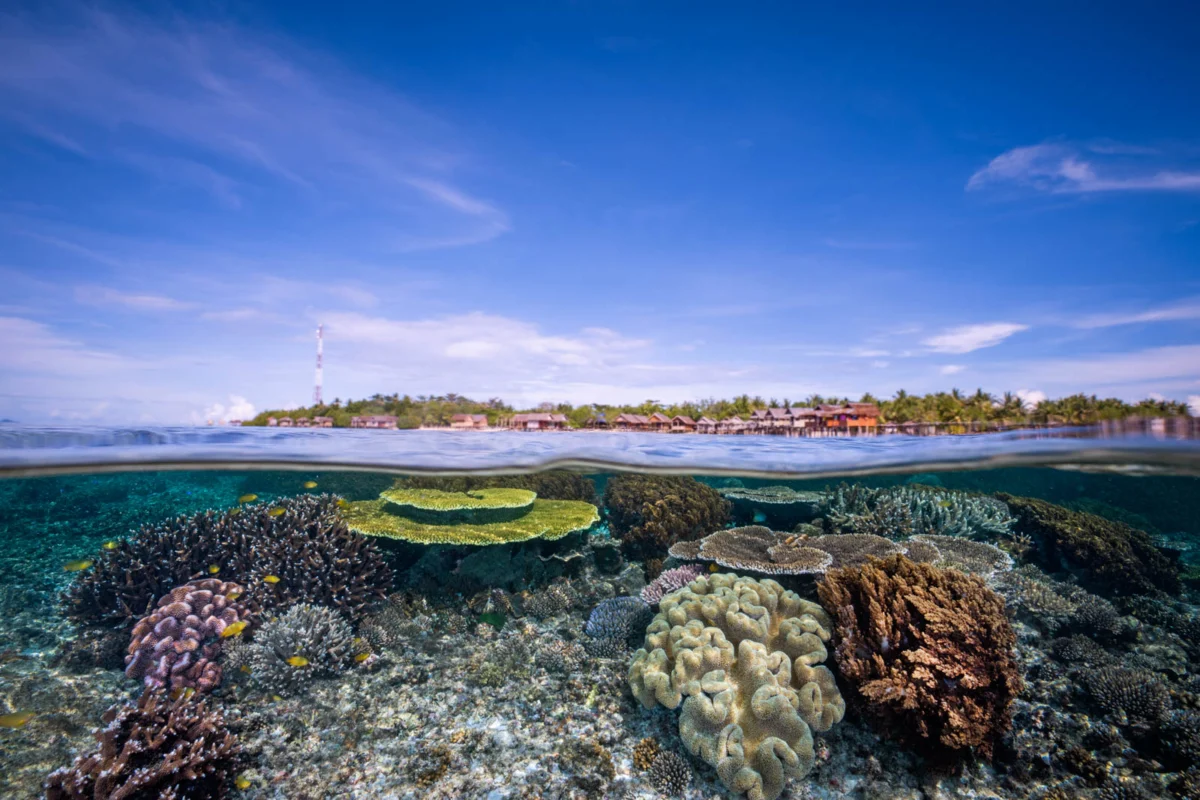
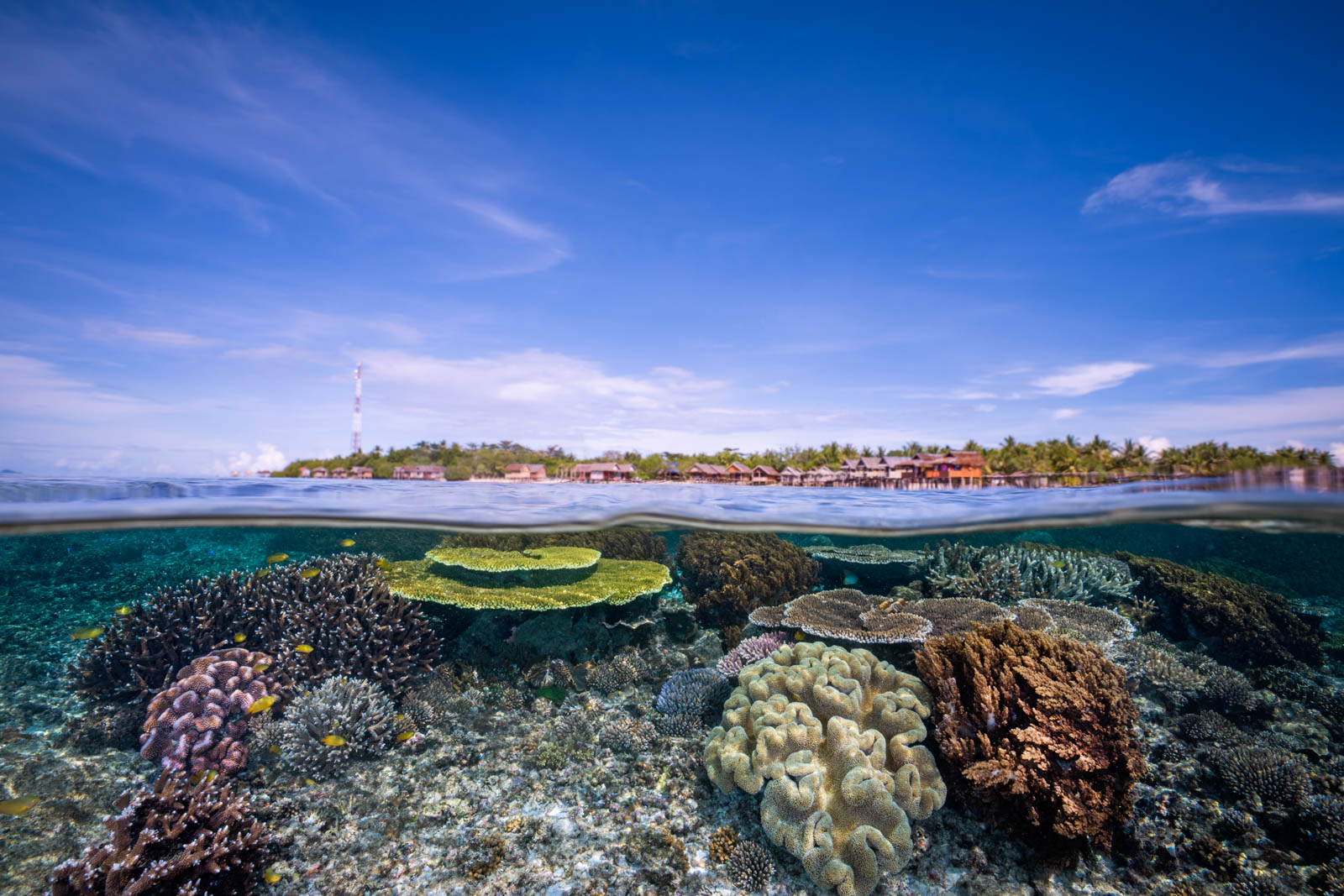
Wide-angle photography thrives here, with opportunities to frame vast coral gardens, dramatic rock formations, and large aggregations of pelagic species. Lenses in the 16-35mm range are often recommended to capture the grandeur of these underwater vistas. Moreover, the serene and often shallow house reefs surrounding many islands offer ideal conditions for split shots, capturing both the vibrant underwater world and the stunning topside scenery, particularly during the region’s breathtaking sunrises and sunsets.

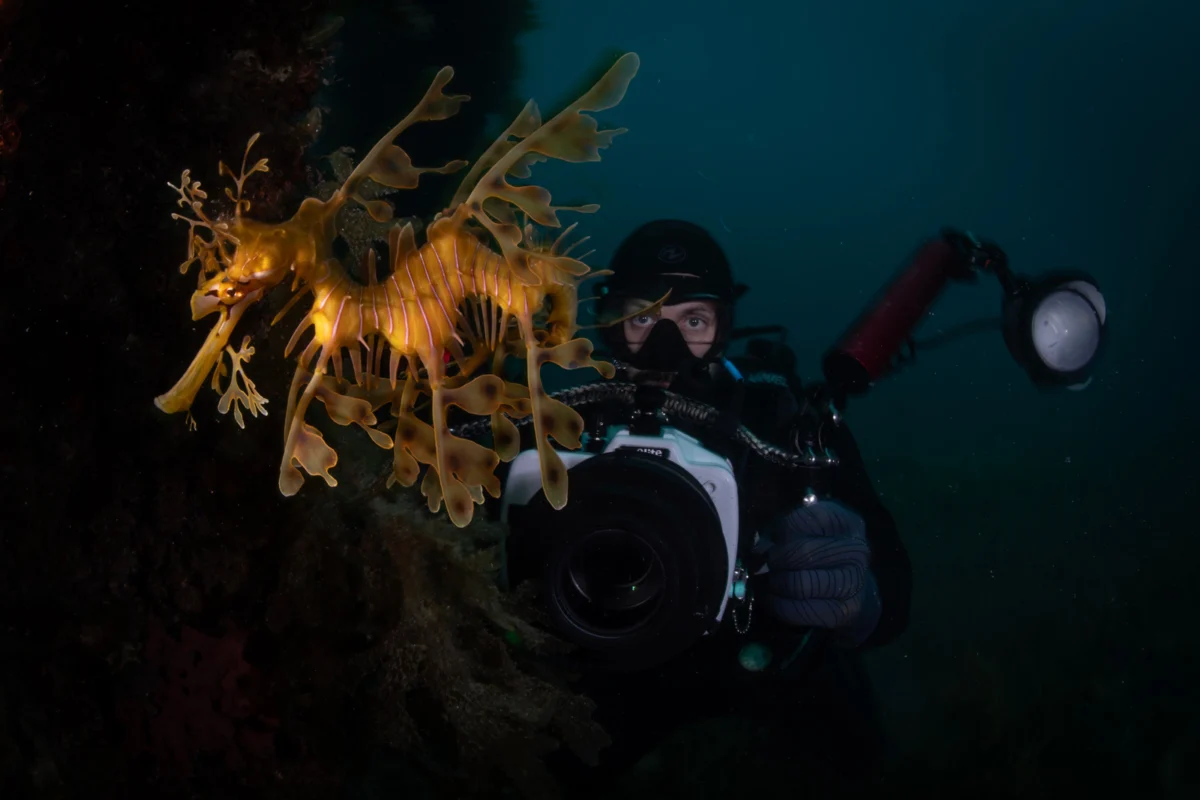
Conversely, Raja Ampat is equally celebrated for its micro-critters, making it a macro photographer’s dream. The reefs’ cracks and crevices conceal a multitude of tiny, camouflaged creatures. Photographers are advised to carry macro lenses such as 60mm, 90mm, or even 120mm, often supplemented with external diopters, to capture the intricate details of pygmy pipehorses, mantis shrimps, leaf scorpionfish, frogfish, various cephalopods, ghost pipefish, eels, blennies, and a myriad of nudibranchs. The guidance of an experienced dive guide is crucial for locating these often-hidden subjects.
Planning an Expedition to Raja Ampat

Reaching this remote natural wonder requires meticulous planning. International travelers typically fly into major Indonesian hubs like Jakarta or Bali, then connect to Sorong (Dominique Edward Osok Airport, SOQ) in West Papua. From Sorong, the journey continues with a ferry ride to Waisai, the capital of Raja Ampat, which can take approximately two hours. The final leg often involves local transport or speedboat transfers to chosen accommodations or liveaboard departure points. For travelers from Australia, the journey can involve multiple flight segments and significant layovers, underscoring the region’s pristine and relatively untouched nature due to its remoteness.
Experienced divers and photographers frequently recommend liveaboard cruises as the optimal way to explore Raja Ampat. Liveaboards provide access to a wider range of dive sites across the expansive archipelago, maximizing dive time and photographic opportunities. A particularly sought-after itinerary includes Misool, an area globally recognized for its remarkably thriving biodiversity, which has shown an improvement rather than a decline in marine health due to strong local conservation initiatives. For those preferring land-based stays, selecting a homestay with an accessible and healthy house reef offers prolonged access to photographic subjects, especially for mastering split shots or night dives.

Navigating the Challenges of Underwater Photography
While Raja Ampat offers unparalleled opportunities, photographers must be prepared for specific environmental challenges. The same nutrient-rich currents that fuel the region’s incredible biodiversity can also lead to reduced visibility at times. This necessitates careful strobe positioning and lighting techniques to cut through particulate matter and ensure sharp, vibrant wide-angle shots.

Furthermore, the strong currents, particularly in the Dampier Straits, can pose significant challenges for divers, especially those handling heavy and cumbersome underwater photography equipment. Divers may find themselves needing to hold onto rocks for stability, limiting their ability to operate cameras effectively. Dive guides often provide warnings about current strength, and it is prudent to heed such advice. On days with exceptionally strong currents, prioritizing safety and observation over photography might be necessary. Ensuring cameras are securely tethered and having reliable equipment insurance are essential precautions.
Iconic Dive Sites for Photographers

Raja Ampat boasts numerous dive sites, each offering unique photographic prospects. Here are some of the most celebrated:
-
Melissa’s Garden: A wide-angle photographer’s paradise, this site is renowned for its vast, pristine coral gardens, featuring expansive plate corals and vibrant soft corals that stretch as far as the eye can see. Schooling batfish, barracuda, snappers, and various reef fish like lionfish and angelfish frequently patrol these majestic underwater landscapes, offering endless opportunities for grand, sweeping shots. The topographical elegance of the site provides a perfect natural composition.

-
Batu Rufus: This hidden gem near the Fam Islands is distinguished by a crystal-clear emerald lagoon enclosed by towering limestone formations. While the outer reefs offer encounters with mantas and sharks at depths up to 25 meters, the true photographic magic unfolds in the shallow lagoon. A dramatic swim-through, adorned with colossal coral fans, leads into a natural pool where visibility is often exceptional. Here, photographers can spend hours in shallow waters (around 5 meters) capturing flourishing reef systems using natural light, making it an ideal location for stunning split shots that showcase both the dramatic limestone karsts and the vibrant marine life below the surface.
-
Cape Kri: Perhaps Raja Ampat’s most famous dive site, Cape Kri once held a world record for the highest number of fish species identified on a single dive, underscoring its extraordinary biodiversity. Its popularity means photographers often have multiple opportunities to explore it. With sloping reefs extending to 40 meters and strong, intersecting currents, it offers fantastic wide-angle opportunities for capturing schooling barracuda, turtles, mantas, and a variety of pelagic species. Simultaneously, Cape Kri is a macro hotspot, saturated with exotic tiny critters. The abundance of Muricella gorgonian fans makes it a prime location for spotting pygmy seahorses, masters of camouflage. Other macro subjects include various species of octopus, flatworms, nudibranchs, and shrimps.

-
Manta Ridge: Located between Mansuar and Airborei Islands, Manta Ridge is a cleaning station frequently visited by schooling manta rays. While encounters can be unpredictable, successful dives here offer unparalleled wide-angle opportunities to photograph these graceful giants. Divers must be mindful of strong currents and potential down currents, prioritizing safety and maintaining a respectful distance from the mantas to avoid disturbing their natural behavior at the cleaning station.
-
Citrus Ridge: Near the Gam Islands, Citrus Ridge is celebrated for its exceptionally colorful reef systems. Its T-shaped profile and vibrant soft corals make it an excellent site for wide-angle experimentation, capturing the riot of hues. However, it is also a biodiversity hotspot for macro life, presenting a treasure trove for underwater detective work. The colorful backdrop enhances macro images of wobbegongs, various sharks, turtles, schooling pelagics, and an astonishing array of smaller invertebrates and fish, making every dive an opportunity for discovery.

Conservation Efforts and Sustainable Tourism
The designation of Raja Ampat as a marine protected area is a testament to its ecological importance and the concerted efforts of local communities, non-governmental organizations, and the Indonesian government. Conservation initiatives focus on combating illegal fishing, promoting sustainable tourism practices, and educating local populations on marine stewardship. The success of areas like Misool, where biodiversity is actively improving, highlights the effectiveness of community-based conservation and robust enforcement.

Sustainable tourism plays a crucial role in funding these efforts while minimizing environmental impact. Visitors are encouraged to choose eco-friendly operators, respect local customs, and adhere to responsible diving practices, such as maintaining buoyancy control and avoiding contact with marine life. The economic benefits derived from tourism, when managed properly, provide strong incentives for local communities to protect their natural heritage.
The Future of Raja Ampat

Raja Ampat’s status as "The Last Paradise" is not merely a poetic description but a recognition of its critical role in global marine ecosystems. Its extraordinary biodiversity serves as a vital genetic reservoir and a benchmark for marine health worldwide. For underwater photographers, it represents the pinnacle of their craft, offering a chance to capture the planet’s most vibrant and diverse underwater landscapes.
As global environmental challenges intensify, the preservation of places like Raja Ampat becomes ever more critical. The ongoing efforts to balance conservation with tourism will determine its future. For those privileged to visit, the experience is a profound immersion in nature’s masterpiece, demanding respect for its fragile ecosystems and an appreciation for its boundless photographic possibilities. The ultimate challenge for photographers here often lies not in finding subjects, but in choosing between the endless opportunities for wide-angle grandeur and the intricate wonders of the macro world, while always remembering to respect the powerful ocean and its delicate inhabitants.