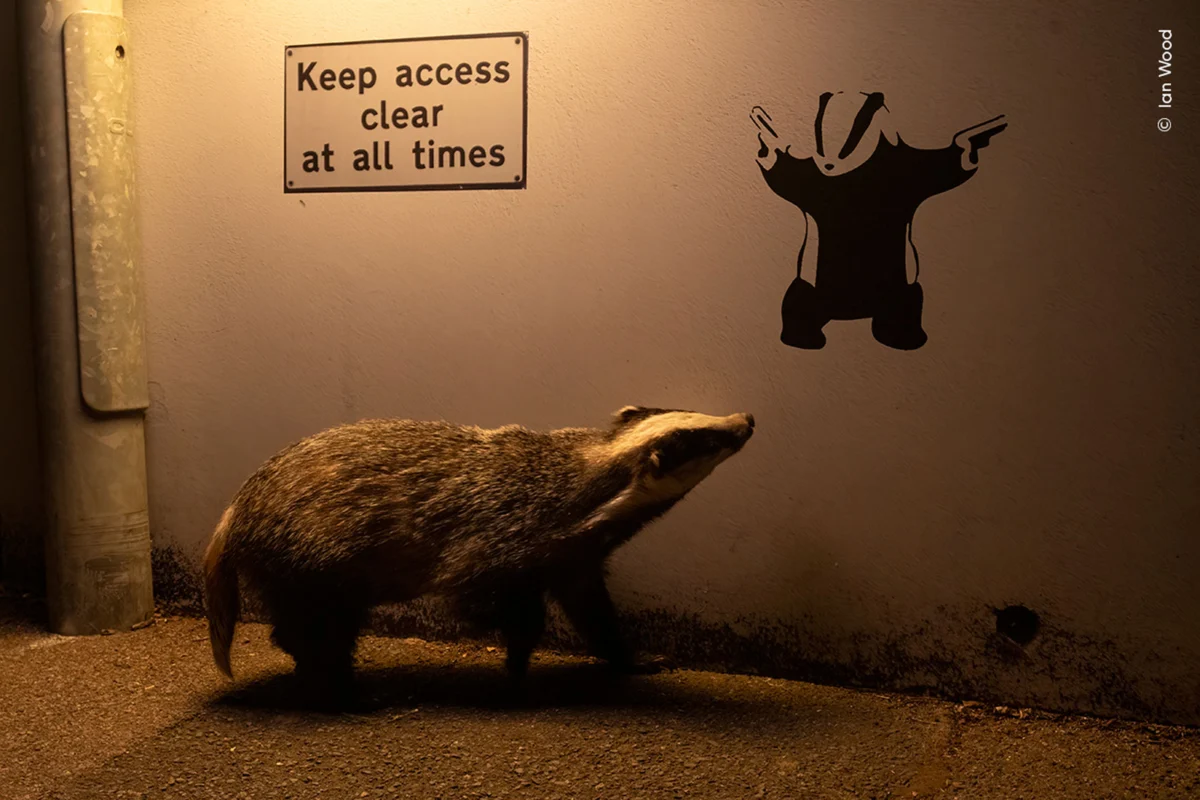
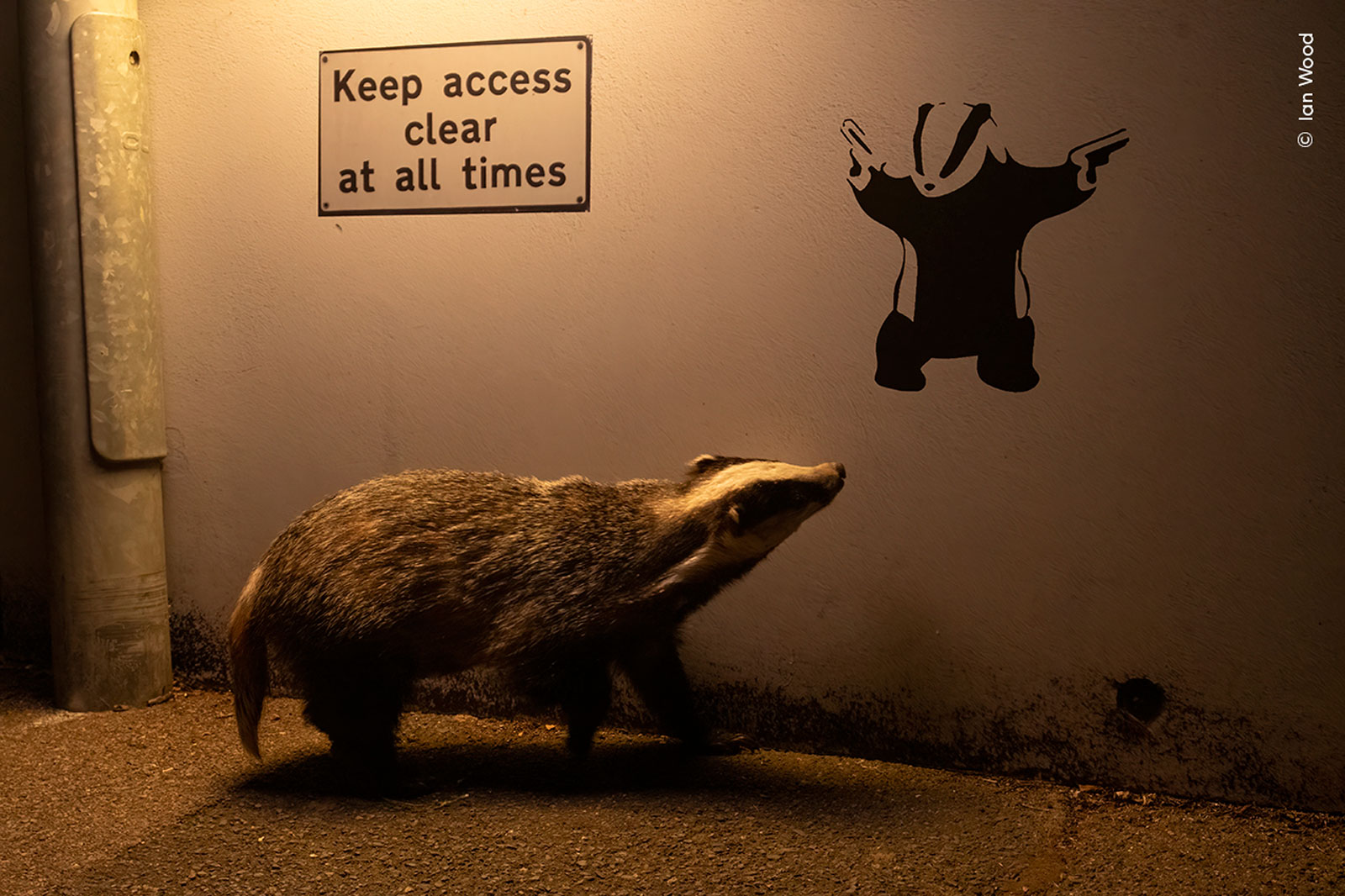
British photographer Ian Wood has been crowned the winner of the tenth edition of the Wildlife Photographer of the Year People’s Choice Award 2024 for his poignant image, ‘No Access’. The photograph, a perfectly timed capture of a Eurasian badger pausing beneath a graffiti-marked wall in St Leonards-on-Sea, England, has resonated deeply with a global audience, securing the top spot in a competition that saw record-breaking public engagement. This image not only celebrates a charming moment of urban wildlife but also subtly underscores the pressing issues of habitat encroachment and the controversial badger cull in the UK.
The Captivating Image: "No Access"
Wood’s winning photograph depicts a solitary Eurasian badger, illuminated by the ambient glow of a lamppost, as it ambles along a pavement. Its gaze, directed upwards, seems to acknowledge the familiar graffiti on the wall above, which starkly reads "No Access." The contrast between the wild creature, a symbol of rural British landscapes, and its urban backdrop, complete with human markings, creates a compelling narrative. The image is a testament to Wood’s patience and keen observational skills, capturing a fleeting interaction that speaks volumes about the delicate coexistence of wildlife and humanity in increasingly shared environments. The nocturnal setting, characteristic of badgers, adds to the mystique, casting the creature in a soft, ethereal light against the grittier urban canvas.
The genesis of the photograph lies in Wood’s observations in St Leonards-on-Sea, a coastal town in East Sussex. Residents had reportedly been leaving food scraps for foxes, an unintended consequence of which was attracting badgers from a nearby sett into the urban fringes. Noticing a badger frequenting the very stretch of pavement where the graffiti adorned the wall, Wood decided to capture this unique interaction. He meticulously set up a small hide at the roadside, patiently waiting for the opportune moment. The minimal light source, a lone lamppost, became a crucial element, naturally sculpting the badger’s form and enhancing the atmospheric quality of the shot. This dedication to capturing authentic wildlife moments, often requiring hours of quiet observation, is a hallmark of exceptional wildlife photography.
A Photographer’s Vision and a Call to Action
Upon learning of his victory, Ian Wood expressed a profound sense of humility, stating, "The outpouring of badger love since my photo was nominated for the People’s Choice Award has been beautifully overwhelming. Finding out that it has won is truly humbling." However, Wood quickly pivoted from celebration to a more somber reflection, revealing what he termed "a darker side to this image." He used his platform to draw attention to the ongoing badger cull in England, a policy he believes is devastating badger populations.
Wood, who resides in rural Dorset and is actively involved in re-wilding efforts to enhance local habitats, voiced serious concerns about the long-term impact of the cull. "The badger cull — which is still ongoing — has decimated their numbers, and I fear that unless the cull is stopped, we’ll only see badgers in urban settings in several parts of England," he warned. His hope is that ‘No Access’ will serve as a powerful catalyst, raising public awareness about the damaging effects of the cull and galvanizing support for policy change. The photograph, therefore, transcends its aesthetic appeal, transforming into a potent piece of environmental advocacy.
Understanding the Badger Cull: A Contentious Policy
The badger cull, primarily implemented in parts of England, is a highly controversial government policy aimed at controlling the spread of bovine tuberculosis (bTB) in cattle. Badgers (Meles meles) are believed to be a reservoir for the disease, and the cull involves the licensed shooting or trapping of badgers in designated areas. The policy began in 2013 and has been met with significant opposition from wildlife conservation groups, scientists, and the public.
Critics of the cull argue that its effectiveness in reducing bTB is questionable, citing conflicting scientific evidence and the potential for badgers to disperse from culled areas, possibly spreading the disease further. They also highlight the ethical implications of culling a protected species (badgers are protected under the Protection of Badgers Act 1992 in the UK) and advocate for alternative strategies such as badger vaccination, cattle vaccination, and improved biosecurity on farms. Conservationists point to the ecological importance of badgers within the ecosystem and the severe impact of sustained culling on local populations, which could lead to localized extinctions in some areas. Wood’s concern that badgers might increasingly be confined to urban environments due to rural culling underlines a potential long-term consequence of the policy – a fragmentation of badger populations and a shift in their distribution, forcing them into closer contact with human settlements where they might forage more easily. This dynamic makes his ‘No Access’ image even more prescient, capturing a glimpse of a potential future reality for these iconic animals.

The Wildlife Photographer of the Year People’s Choice Award: A Decade of Public Engagement
The People’s Choice Award is a unique facet of the prestigious Wildlife Photographer of the Year competition, offering the global public a direct voice in celebrating wildlife photography. Marking its tenth anniversary in 2024, this award has consistently demonstrated the power of public participation in conservation narratives. Each year, a shortlist of 25 images, curated by the Natural History Museum, London, and an international judging panel from the main competition entries, is put to a public vote.
The 2024 edition saw unprecedented engagement, with over 76,000 wildlife photography and nature enthusiasts from around the world casting their votes. This record number underscores the growing global interest in wildlife and conservation, as well as the broad appeal of photography as a medium for storytelling. The People’s Choice Award serves as a vital bridge, connecting professional and amateur photographers with a vast audience, fostering appreciation for the natural world, and inspiring action. Dr. Douglas Gurr, Director of the Natural History Museum, aptly summarized its impact: "Ian’s flawlessly timed image offers a unique glimpse of nature’s interaction with the human world, underscoring the importance of understanding urban wildlife. His exceptional photograph serves as a powerful reminder that local nature and wildlife, often just outside our homes, can inspire and captivate us."
Behind the Lens: The Rigorous Selection Process
The Wildlife Photographer of the Year competition, now in its sixtieth year, is globally recognized as one of the most prestigious showcases for wildlife photography. Organised and produced by the Natural History Museum, London, it receives tens of thousands of submissions annually from photographers of all ages and experience levels across the globe. For the 60th competition, nearly 60,000 images were submitted, from which the expert international judging panel meticulously selected the main competition winners and a distinguished shortlist.
From this extensive pool, a smaller, highly curated selection of 25 images is then put forward for the People’s Choice Award. This rigorous process ensures that only photographs of exceptional technical skill, artistic merit, and compelling narrative are presented to the public. The criteria for selection often include not just the aesthetic quality of the image but also its ability to convey a story, evoke emotion, or highlight a significant aspect of the natural world, whether it’s a rare species, a dramatic natural event, or a crucial conservation issue. The fact that ‘No Access’ emerged victorious from such a competitive and highly scrutinised field speaks volumes about its immediate impact and deeper resonance.
Honorable Mentions: Four Highly Commended Works
While ‘No Access’ captured the public’s heart, four other images were also highly commended, each demonstrating extraordinary talent and a unique perspective on the natural world. These photographs collectively illustrate the diverse beauty and challenges of wildlife photography:
-
‘Earth and Sky’ by Francisco Negroni: This breathtaking image is an unforgettable capture of a double lenticular cloud, dramatically illuminated at nightfall by lava erupting from the Villarrica volcano in Chile. Negroni’s photograph masterfully blends the raw power of geology with celestial beauty, showcasing a rare and awe-inspiring natural spectacle. The interplay of fiery earth and an otherworldly sky creates a scene of immense drama and grandeur, reminding viewers of the planet’s dynamic forces.
-
‘Edge of Night’ by Jess Findlay: An action shot of remarkable precision, Findlay’s image features a ghostly barn owl in mid-flight, exiting through the hayloft window of a derelict barn to embark on its nightly hunt. The image perfectly captures the swift, silent grace of the owl, a master nocturnal predator, against the backdrop of its decaying human-made shelter. It’s a powerful portrayal of adaptation and survival, highlighting the often-hidden lives of creatures that thrive at the margins of human activity.
-
‘Whiteout’ by Michel d’Oultremont: This image depicts a stoat, perfectly camouflaged, sitting up to observe its snow-covered territory in Belgium. D’Oultremont’s photograph is a masterclass in subtlety and environmental integration. The stoat’s pristine white winter coat blends seamlessly with the snowy landscape, making it almost indistinguishable from its surroundings. This shot celebrates the intricate adaptations of wildlife to their habitats and the quiet vigilance of a small predator.
-
‘Spiked’ by David Northall: A visceral and intriguing capture, Northall’s image shows a bloodied yet determined honey badger returning to finish off a Cape porcupine. The porcupine had evidently tried to defend itself earlier, leaving the honey badger marked by the encounter. This photograph offers a raw, unvarnished glimpse into the harsh realities of the wild, showcasing the tenacity and ferocity of nature’s battles for survival. It’s a powerful reminder of the relentless struggle that defines life in the animal kingdom, far removed from romanticized notions.
These highly commended images, alongside the winning photograph, demonstrate the extraordinary skill and dedication of wildlife photographers worldwide, whose work continues to educate, inspire, and provoke thought.
Official Acclaim and Broader Implications
Dr. Douglas Gurr’s commendation of Ian Wood’s image as "flawlessly timed" and offering "a unique glimpse of nature’s interaction with the human world" encapsulates the broader mission of the Wildlife Photographer of the Year competition. The Natural History Museum, as the developer and producer of the event, aims to leverage photography’s unique emotive power to connect people with nature and, crucially, to foster advocacy for the planet. Gurr’s statement that "local nature and wildlife, often just outside our homes, can inspire and captivate us" directly reinforces the message embedded in ‘No Access’. It highlights the importance of recognizing and protecting urban wildlife, which often faces overlooked challenges in adapting to human-dominated landscapes.
The success of such images on a global platform carries significant implications. They serve not only as artistic achievements but also as powerful tools for environmental education and conservation. By bringing the beauty and fragility of the natural world into the public consciousness, these photographs can influence public opinion, inspire personal actions, and even inform policy decisions. In a world grappling with biodiversity loss and climate change, the role of compelling visual storytelling in galvanizing support for conservation has never been more critical.

The Exhibition and Future of Wildlife Photography
Ian Wood’s ‘No Access’ and the four highly commended images are currently on display, both online and on interactive voting screens, as part of the flagship Wildlife Photographer of the Year exhibition at the Natural History Museum, London. The exhibition offers visitors an immersive experience, allowing them to engage with these powerful photographs in person. It will run until June 29, 2025, providing ample opportunity for a wide audience to witness these inspiring works.
Looking ahead, the Natural History Museum continues its commitment to celebrating and promoting wildlife photography. Images submitted for the sixty-first Wildlife Photographer of the Year competition are currently undergoing judging by an international panel of experts. The winners of this main competition, which covers a broader range of categories and offers distinct accolades, are eagerly anticipated and will be announced at the next annual awards ceremony, scheduled to take place at the Natural History Museum, London, in October 2025. These ongoing cycles of the competition ensure a continuous flow of fresh perspectives and urgent stories from the natural world, solidifying the event’s status as a beacon for wildlife conservation through the lens of photography.
Conclusion: Photography as a Catalyst for Change
Ian Wood’s ‘No Access’ is more than just a winning photograph; it is a profound commentary on the state of wildlife in a human-dominated world. It skillfully balances the charming appeal of a badger with an underlying, urgent conservation message regarding the controversial badger cull and the increasing urbanization of wildlife habitats. The record-breaking public engagement in the People’s Choice Award underscores a global appetite for such stories and a collective desire to connect with and protect the natural world.
Through the powerful medium of photography, the Wildlife Photographer of the Year competition continues to shine a light on both the breathtaking beauty and the critical challenges facing our planet. Images like ‘No Access’ serve as vital reminders that wildlife exists not just in remote wildernesses but often right on our doorsteps, necessitating a greater understanding, respect, and advocacy for all creatures, great and small. Wood’s hope that his image will "raise awareness… and help push for change" is a testament to the enduring power of art to inspire action and foster a deeper connection between humanity and the natural world it inhabits.