Raja Ampat has long been celebrated as the ultimate dive destination for underwater photography, a reputation meticulously built on its unparalleled marine biodiversity and breathtaking landscapes. Located off the northwest tip of Bird’s Head Peninsula in West Papua, Indonesia, this remote archipelago presents an almost unbelievable spectacle of jungle-covered karst islands rising dramatically from turquoise waters, juxtaposed with incredibly rich coral reefs teeming with more wildlife than one could hope to embrace in an entire lifetime. This region, often dubbed ‘The Last Paradise,’ represents a critical global benchmark for marine conservation and ecological richness, drawing scientists, conservationists, and photographers alike to witness its vibrant ecosystems.
The Ecological Significance of Raja Ampat
Raja Ampat is an expansive archipelago comprising over 1,500 islands, cays, and shoals surrounding the four main islands of Waigeo, Batanta, Salawati, and Misool. Its geographical placement is crucial: it lies at the heart of the Coral Triangle, a marine region recognized as the global epicenter of marine biodiversity. This designation is not merely anecdotal; scientific research consistently places Raja Ampat as having the highest known diversity of marine life on Earth. Studies conducted by conservation organizations, notably Conservation International, indicate that this area alone hosts over 75% of the world’s known coral species, an astonishing figure that underscores its irreplaceable value.

The rich waters here are home to an impressive repertoire of over 1,500 species of reef fish, far exceeding the diversity found in many other renowned dive locations. Beyond fish, the region boasts approximately 540 different strains of hard and soft corals, alongside more than 700 types of mollusks. Divers and photographers frequently encounter charismatic megafauna such as reef sharks, schooling manta rays, dugongs, and even saltwater crocodiles in specific areas, though the latter are generally elusive and found in brackish river systems rather than typical dive sites. This extraordinary concentration of marine life, coupled with pristine reef systems, brands Raja Ampat as the undisputed mecca for scuba diving and underwater photography, offering subjects for every photographic discipline, from expansive wide-angle reefscapes to intricate macro life.
Planning an Expedition to the ‘Four Kings’

Reaching Raja Ampat, like many of the world’s most pristine and remote natural wonders, requires a committed journey. For international travelers, the typical route involves flying into major Indonesian hubs such as Jakarta (CGK) or Makassar (UPG), followed by a connecting flight to Sorong (SOQ) in West Papua. From Sorong, the final leg often includes a slow and scenic two-hour public ferry ride to Waisai, the capital of Raja Ampat, on Waigeo Island, or a direct transfer to a liveaboard vessel. For those opting for land-based accommodations, a further speedboat or local transport might be necessary to reach their chosen island or resort.
Photographers planning a trip must consider the logistical implications of transporting delicate and heavy underwater camera equipment. Airlines often have specific policies regarding oversized luggage and lithium batteries, necessitating careful packing and adherence to regulations. A robust travel checklist for camera gear, including waterproof cases, spare parts, and adequate insurance, is crucial.

Having visited Raja Ampat multiple times, experienced photographers often recommend booking onto a liveaboard expedition. These vessels provide unparalleled access to the most remote and biodiverse dive sites across the entire archipelago, allowing for a comprehensive exploration of this vast region without the daily commute. A liveaboard itinerary that includes the Misool area is particularly sought after, as this southern sector is renowned for its vibrant soft coral gardens and is one of the few places globally where marine biodiversity is reported to be improving rather than declining, thanks to robust local conservation efforts. For those seeking a more relaxed pace after a liveaboard, or preferring a different experience, selecting a land-based resort or local homestay offers the chance to decompress and explore pristine house reefs at leisure, often with 24-hour access to shallow, calm waters ideal for practicing specific photography techniques.
The Diverse Photographic Tapestry

Raja Ampat’s underwater realm holds something for every underwater photographer. The majestic reef systems, continuing to grow and flourish with unimaginable size and vibrant colors, are a true natural masterpiece. These expansive coral cosmoses set the perfect scene for wide-angle photography, capturing schooling batfish, barracuda, snappers, lionfish, angelfish, and encounters with larger species like manta rays, wobbegong sharks, and sea turtles. A wide-angle lens, typically in the 16-35mm range, is essential for these shots, with opportunities also abundant for close-focus wide-angle (CFWA) compositions that highlight both the foreground subject and the expansive reef.
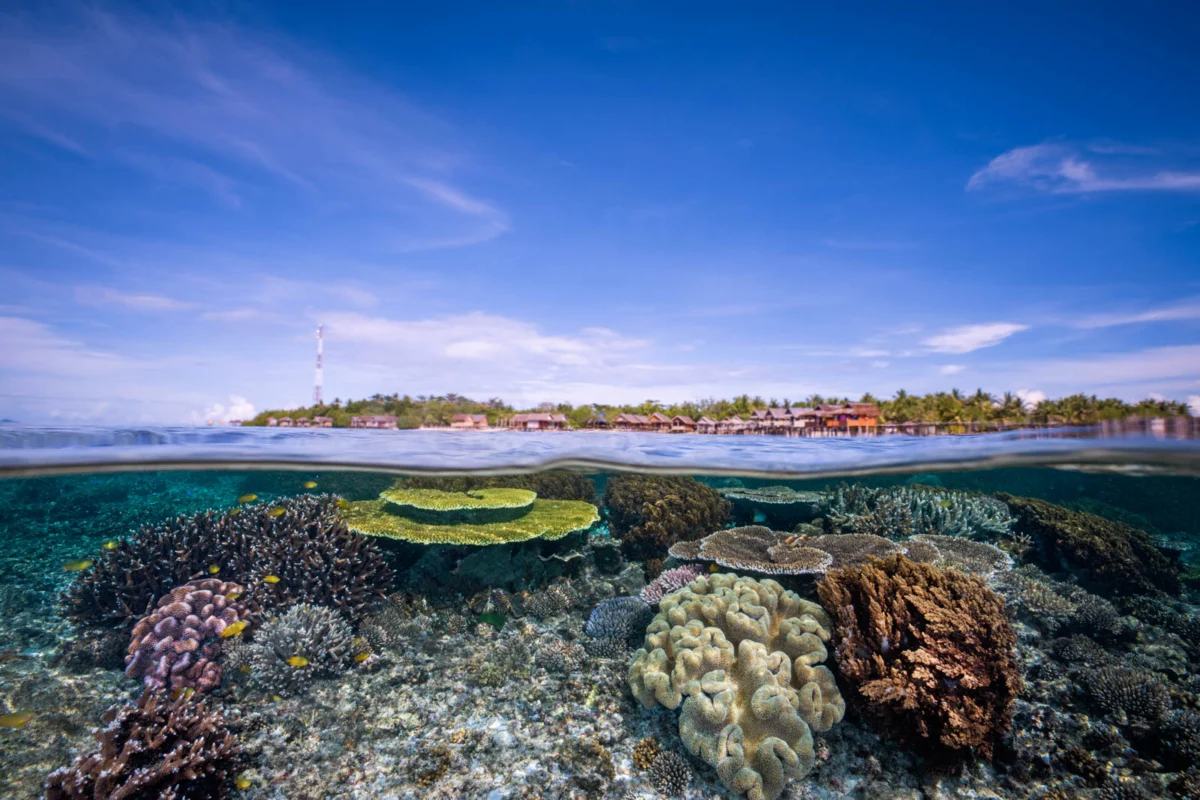
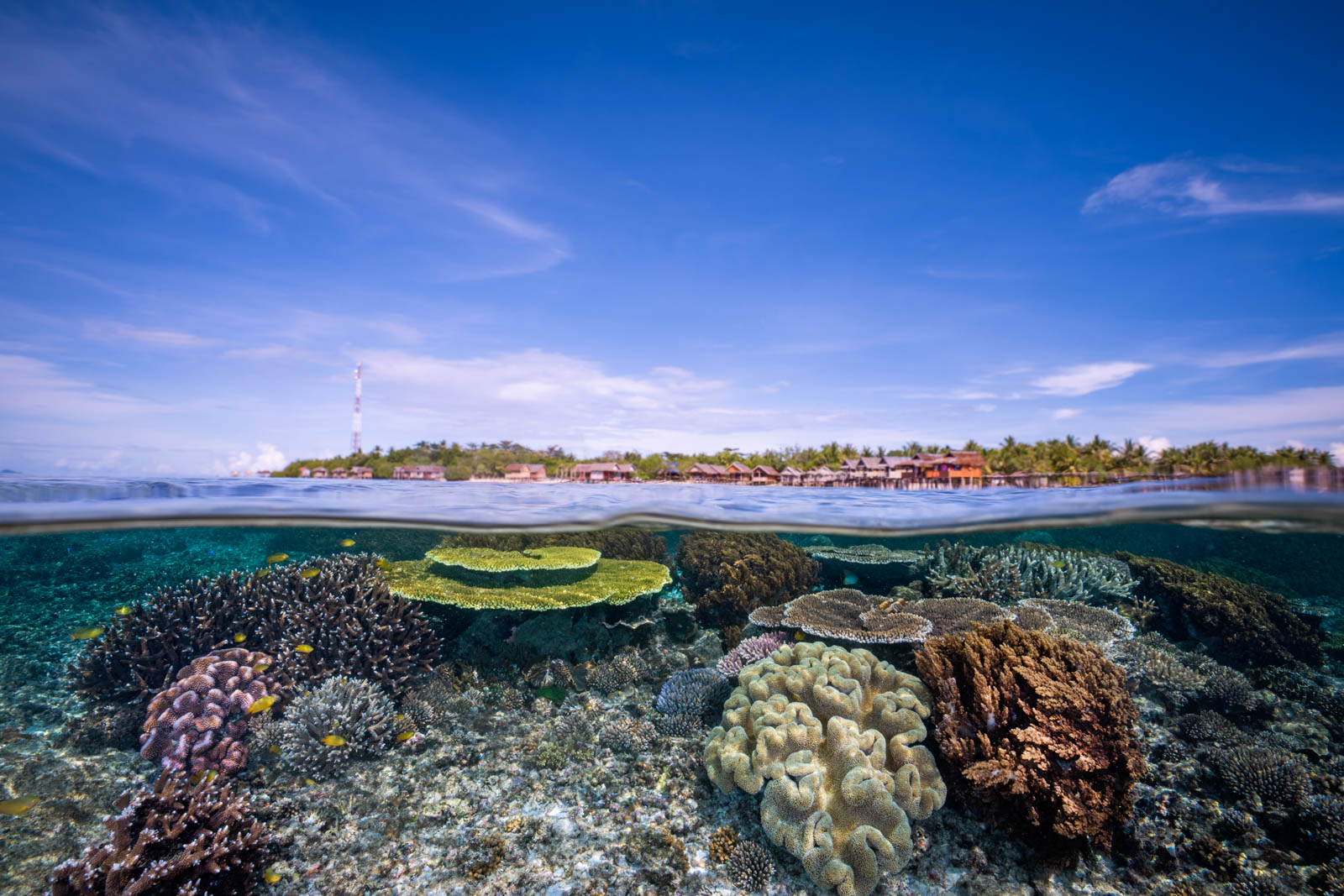
Beyond the grandeur of the reefs, Raja Ampat is also an ideal setting for capturing stunning over-under or split shots, where the underwater scene is juxtaposed with the dramatic karst islands and lush jungle canopy above the surface. Many island house reefs offer calm, shallow conditions perfect for these compositions, especially during the breathtaking sunrises and sunsets that paint the sky in spectacular hues. When selecting a homestay, prioritizing one with a pristine house reef is a strategic move for photographers aiming to maximize their time in the water for these unique shots.

However, the major draw for many photographers gravitates towards the weird and wonderful macro critters hiding in the cracks and crevices of these breathtaking reef systems. Raja Ampat is a macro photographer’s dream, offering an endless array of tiny, camouflaged subjects. While a mid-range macro lens (e.g., 60mm) is versatile, packing a lens with more magnification (e.g., 90mm or 120mm) is essential for the smallest subjects. An external diopter further enhances magnification for capturing minute details. Photographers can expect multiple encounters with elusive pygmy pipehorses, flamboyant mantis shrimps, expertly camouflaged leaf scorpionfish, various species of frogfish, a dazzling array of cephalopods (octopuses, cuttlefish), ghost pipefish, eels, blennies, and countless other soft coral denizens. A crucial tip for photographers here is to engage with their dive guide before each dive, inquiring about expected sightings to ensure the appropriate camera setup is chosen, optimizing chances for a successful shoot.
Navigating the Challenges: Currents and Visibility

The very attributes that make Raja Ampat so incredibly diverse also present unique challenges for underwater photographers. The nutrient-rich waters, driven by intricate systems of strong currents, are the lifeblood of the region’s marine abundance. However, these same currents can sometimes lead to less-than-desirable visibility, particularly for wide-angle photography. In such conditions, mastering strobe positioning becomes paramount to cut through particulate matter and illuminate subjects effectively without excessive backscatter.
The strong currents, particularly those flowing through the Dampier Strait, are a double-edged sword. While they bring the plankton that feeds the vast schools of fish and filter feeders, they can also make handling heavy underwater photography equipment a formidable task. Divers must be prepared for dives where the primary focus shifts from photography to maintaining position, often requiring holding onto stable rock formations. If a dive guide warns of "strong" currents, it may be advisable for photographers, especially those less experienced with currents or carrying cumbersome setups, to leave their camera behind. Safety must always take precedence. For those who do venture in, ensuring the camera is securely attached to a D-ring or having reliable camera insurance is non-negotiable.

Iconic Dive Sites for Photographers
Raja Ampat boasts an extensive list of world-class dive sites, each offering unique photographic opportunities. Here are some of the most celebrated:

-
Melissa’s Garden: A wide-angle photographer’s paradise, this site is a sprawling expanse of pristine coral plates, stretching as far as the eye can see. The sheer elegance and refined beauty of its topography, dominated by enormous, healthy hard coral formations, create a perfect backdrop for capturing wide-angle shots of schooling batfish, barracuda, snappers, lionfish, and angelfish. The vibrant colors and immense scale of the coral make it an unforgettable experience for reef enthusiasts.
-
Batu Rufus: This hidden gem near the Fam Islands is a truly unique site. The dive often begins on the outer skirts of a crystal-clear emerald lagoon, where sloping reefs descend to about 25 meters, offering opportunities for encounters with mantas and sharks. However, the true photographic magic unfolds in the shallows of the lagoon itself. Divers navigate through a large swim-through, lined with towering coral fans and majestic rock structures, akin to an underwater red carpet. Emerging into the lagoon, photographers find themselves in a natural pool with startling visibility, allowing for hours of shooting flourishing reef systems at depths of just 5 meters. This shallow environment is ideal for capturing natural light photographs and stunning split shots that incorporate the dramatic limestone formations above the surface. Freediving is also an excellent option here to maximize interaction with the environment and utilize ambient light.

-
Cape Kri: Perhaps the most renowned dive site in the region, Cape Kri once held the world record for the highest number of species spotted on a single dive, a testament to its incredible biodiversity. This site guarantees an overwhelming choice of marine life opportunities. Given its popularity and richness, it’s common for divers to visit Cape Kri more than once. For photographers, this offers the flexibility to dedicate one dive to wide-angle photography, focusing on schooling barracuda, turtles, mantas, and various pelagic species along its sloping reefs that drop to 40 meters, while another dive can be dedicated to a macro setup. Cape Kri is saturated with exotic tiny critters, notably the pygmy seahorse, often found camouflaged within the numerous Muricella gorgonian fans. Other macro subjects include octopus, flatworms, nudibranchs, and a plethora of shrimps.
-
Manta Ridge: Located between Mansuar and Airborei Islands, Manta Ridge is a prime hotspot for schooling manta rays. While encounters can sometimes be hit-or-miss, when the ocean gods are favorable, photographers can experience mantas gracefully gliding from every direction, often necessitating a wide-angle lens to capture the spectacle. However, divers must remain highly aware of the incredibly strong currents often present at this site and respect the potential presence of dangerous down currents, prioritizing safety and responsible diving practices.

-
Citrus Ridge: Another serious favorite for underwater photography, Citrus Ridge, a T-shaped dive near the Gam Islands, is celebrated for having one of the most colorful reef systems in the region. Its vibrant hues naturally invite wide-angle experimentation. However, this site is also a biodiversity hotspot for macro life. Photographers can spend hours immersed in "underwater detective work," peering through every rock and crevice to find unique bottom dwellers. The colorful reef system provides a stunning backdrop for macro subjects. Beyond the tiny inhabitants, Citrus Ridge also offers encounters with wobbegongs, sharks, turtles, and schooling pelagics, showcasing the full spectrum of Raja Ampat’s marine life.
Conservation and Future Implications

Raja Ampat’s status as a marine biodiversity hotspot is not a stroke of luck but the result of concerted conservation efforts. In 2007, the region was officially designated as a Marine Protected Area (MPA) by the Indonesian government, a move that has been instrumental in preserving its pristine ecosystems. Local communities, often working in partnership with international conservation organizations like Conservation International and the World Wide Fund for Nature (WWF), play a vital role in surveillance, enforcement, and sustainable resource management. The implementation of a marine park entry fee, known as the Raja Ampat Marine Park Fee, directly contributes to these conservation initiatives and supports local livelihoods, fostering a sense of ownership and responsibility among the indigenous populations.
However, challenges persist. While tourism brings economic benefits, it also exerts pressure on delicate ecosystems. Climate change, illegal fishing, and plastic pollution remain ongoing threats. The continued commitment to sustainable tourism practices, strict adherence to diving regulations, and ongoing scientific research are crucial for safeguarding "The Last Paradise" for future generations.

In conclusion, Raja Ampat offers an unparalleled array of photographic possibilities for eager and devoted ocean lovers. The diversity of marine life is simply breathtaking, from the grand coral reefscapes to the tiniest, most elusive macro critters. Photographers will become completely immersed in the true definition of island life, enjoying perfectly manicured reefs, an abundance of ocean creatures, and infinite archipelago structures during surface intervals. The hardest part of any trip here will undoubtedly be deciding between a wide-angle or macro setup for each dive, as opportunities for both are equally compelling. But with careful planning, respect for the strong ocean currents and fragile underwater ecosystems, and a deep appreciation for its natural beauty, Raja Ampat promises an unforgettable photographic journey into one of Earth’s most precious marine environments.