Raja Ampat, an archipelago renowned globally as the ultimate destination for underwater photography, continues to captivate enthusiasts and scientists alike with its unparalleled marine biodiversity and breathtaking landscapes. Situated off the northwest tip of Bird’s Head Peninsula in West Papua, Indonesia, this remote region presents an almost unbelievable spectacle of jungle-clad islands rising dramatically from turquoise waters, concealing a vibrant underwater realm teeming with rich coral reefs and a profusion of marine wildlife unmatched almost anywhere else on Earth.
The Heart of the Coral Triangle: A Biodiversity Hotspot
Often referred to as "The Last Paradise," Raja Ampat is more than just a picturesque locale; it is a critical ecological cornerstone. The archipelago comprises over 1,500 islands, cays, and shoals, clustered around the four main islands of Waigeo, Batanta, Salawati, and Misool. Its strategic location at the epicenter of the Coral Triangle, a vast marine area spanning six countries in the Indo-Pacific, is the primary reason for its extraordinary ecological significance. The Coral Triangle, often likened to the "Amazon of the Seas," boasts the highest diversity of marine life on the planet. Within this precious zone, Raja Ampat alone is reported to harbor over 75% of the world’s known coral species, making it an indispensable mecca for scuba diving, marine research, and underwater photography.

Scientific surveys consistently highlight Raja Ampat’s prolific biodiversity. The region is home to an astonishing repertoire of over 1,000 species of reef fish, 540 distinct strains of coral—ranging from intricate hard corals forming vast plateaus to kaleidoscopic soft corals swaying in the currents—and more than 700 types of mollusks. Beyond these foundational species, the waters host charismatic megafauna including oceanic manta rays, reef manta rays, dugongs, and even saltwater crocodiles in certain brackish areas. Divers frequently encounter schooling barracuda, various species of sharks (including the endemic wobbegong shark), and numerous sea turtle species, creating an immersive experience that consistently exceeds expectations.
Planning an Expedition to "The Last Paradise"

Accessing Raja Ampat, while rewarding, requires meticulous planning due to its remote nature. The typical journey for international visitors involves flying into Sorong’s Domine Eduard Osok Airport (SOQ) in West Papua. From Sorong, the next leg usually involves a two-hour public ferry ride or private speedboat transfer to Waisai, the capital of Raja Ampat regency on Waigeo Island. From Waisai, travelers can arrange day trips to nearby dive sites, embark on a multi-day liveaboard cruise, or transfer via speedboat to their chosen island resort or homestay.
For photographers aiming to maximize their coverage of this vast and expansive region, a liveaboard vessel is often the preferred choice. These floating hotels allow access to more remote dive sites, including those around the southern island of Misool, an area particularly lauded for its exceptionally healthy and biodiverse reefs where conservation efforts have yielded noticeable improvements in marine ecosystems. Post-liveaboard, or for those preferring a more grounded experience, opting for a homestay on one of the many islands offers a unique cultural immersion and the opportunity to explore pristine house reefs at leisure, perfect for spontaneous photography sessions.

A crucial aspect of planning is securing the Raja Ampat Marine Park Entry Tag (PIN), a mandatory fee that contributes directly to the conservation efforts and community development within the protected area. The best time to visit for optimal diving conditions and visibility is generally from October to April, avoiding the monsoon season.
Underwater Photography: A Spectrum of Opportunities

Raja Ampat offers a diverse palette for underwater photographers, catering to every specialization. The incredibly majestic reef systems, characterized by their immense size, vibrant colours, and intricate structures, provide an unparalleled backdrop for wide-angle photography. These coral cosmoses set the perfect scene for capturing sweeping panoramas of schooling fish, elegant manta rays gliding overhead, wobbegong sharks camouflaged on the seabed, and graceful sea turtles. A wide-angle lens, such as a 16-35mm, is ideal for these shots, allowing photographers to encapsulate the grandeur of the reef. Close-focus wide-angle (CFWA) opportunities are also abundant, enabling dramatic shots of smaller subjects against a wide, colorful background.
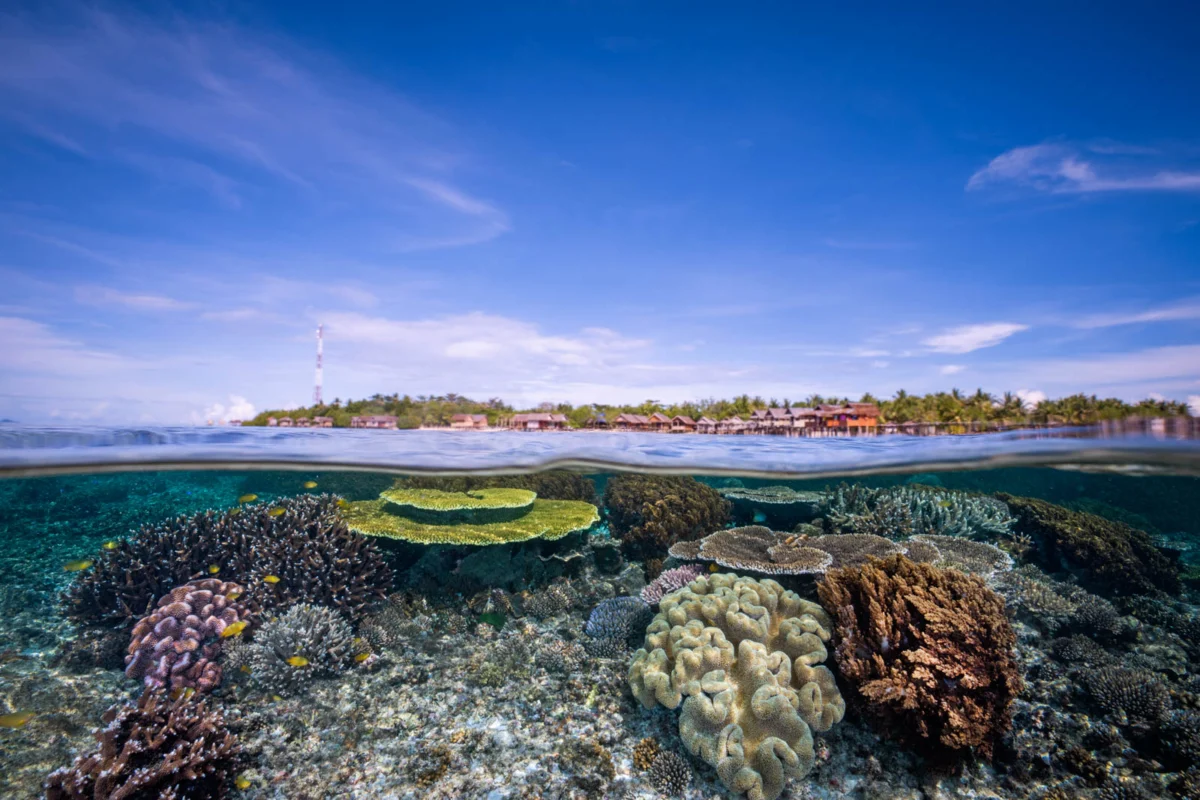
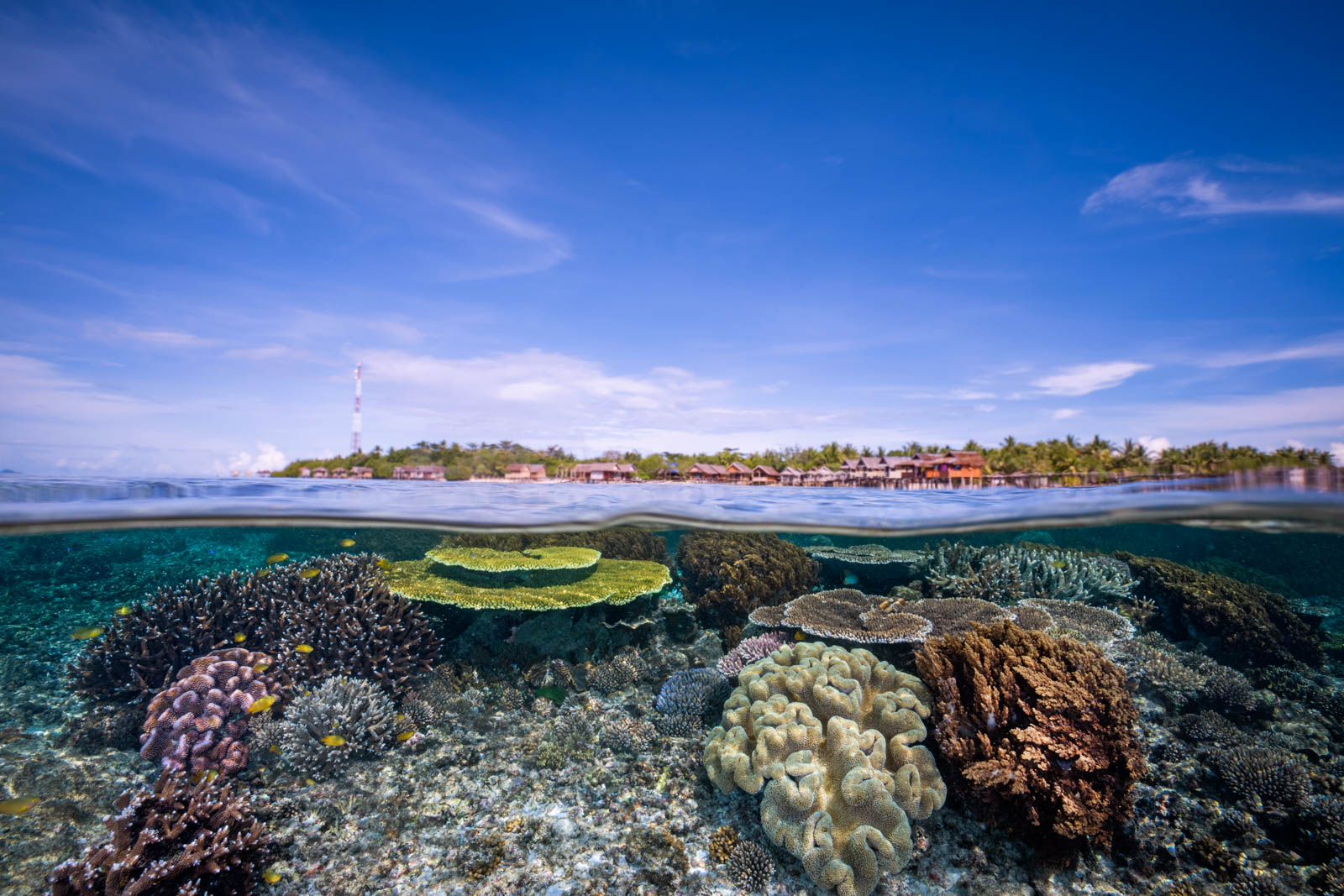
Beyond the deep reefscapes, Raja Ampat’s unique topography creates exceptional conditions for split shots (over-under photography). Many island house reefs provide easy access to shallow, calm waters where the lush jungle meets the vibrant coral, offering stunning compositions that blend the terrestrial and aquatic worlds. Timing these shots with the region’s breathtaking sunrises and sunsets can yield truly magical results, with the natural light playing a crucial role in illuminating both the surface and submerged elements.

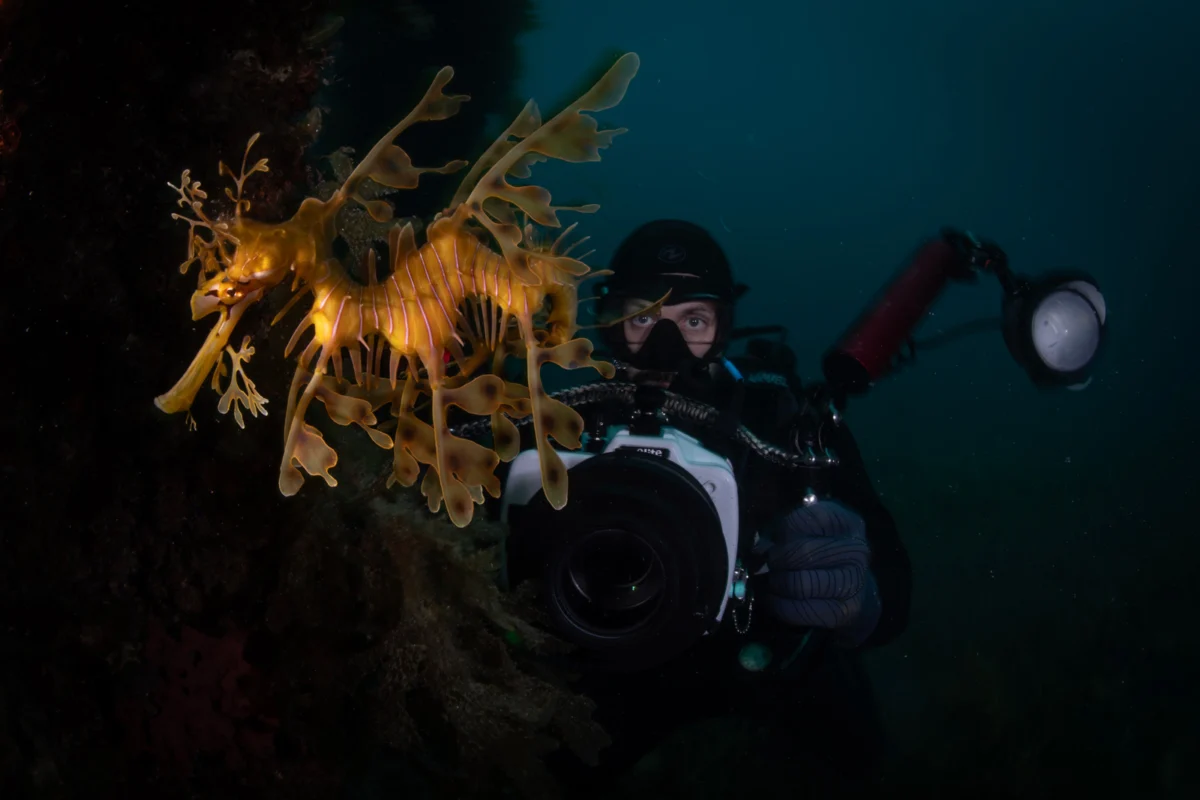
However, a significant draw for many photographers is the region’s rich offering for macro photography. The cracks and crevices of these vibrant reef systems conceal an extraordinary array of small, often camouflaged, marine creatures. Photographers are advised to pack a versatile macro lens, such as a 60mm for mid-range subjects, complemented by a longer lens like a 90mm or 120mm for more elusive or minute critters. An external diopter can further enhance magnification for capturing the tiniest subjects with exquisite detail. Encounters are common with pygmy pipehorses nestled in gorgonian corals, the iridescent mantis shrimp, cleverly disguised leaf scorpionfish and frogfish, various species of cephalopods including octopuses and cuttlefish, ghost pipefish, garden eels, blennies, and a myriad of soft coral denizens. Engaging with dive guides beforehand to ascertain potential sightings for each dive is crucial for selecting the optimal camera setup.
Navigating the Challenges: Currents and Visibility

While Raja Ampat’s abundant marine life is a photographer’s dream, the very conditions that foster this diversity also present unique challenges. The nutrient-rich waters, a consequence of the intricate system of strong currents flowing through passages like the Dampier Strait, can sometimes lead to less-than-desirable visibility. This can make capturing crystal-clear wide-angle shots challenging, requiring precise strobe positioning to cut through backscatter and illuminate subjects effectively.
These powerful currents, while vital for the ecosystem, also demand significant diver skill and caution, especially when handling heavy underwater photography equipment. Divers must be prepared for dives where the primary focus shifts from photography to maintaining position, often requiring holding onto boulders or reef structures (with utmost care to avoid damage to corals). Experienced dive guides are essential for navigating these conditions safely. If a dive guide signals "strong" currents before a jump, it may be prudent for photographers to consider leaving their cameras behind to prioritize safety and avoid potential equipment damage or loss. Securing camera gear with reliable lanyards and ensuring comprehensive camera insurance are non-negotiable precautions in this dynamic environment.

Iconic Dive Sites for Photographers
Several dive sites in Raja Ampat stand out for their photographic potential:

-
Melissa’s Garden: A jewel for wide-angle enthusiasts, this site near the Fam Islands is an expansive coral garden where thousands of pristine plate corals stretch across the seabed, creating a visually stunning topography. Divers are often engulfed by swirling schools of batfish, barracuda, snappers, and angelfish, offering endless opportunities for grand, sweeping underwater landscapes.
-
Batu Rufus: This hidden gem near the Fam Islands is a unique crystalline emerald lagoon encircled by towering limestone karst formations. While its outer reefs offer encounters with mantas and sharks, the true photographic magic unfolds in its shallow lagoon. The entrance through a grand swim-through, adorned with colossal coral fans, leads into a natural pool with startling visibility. Here, photographers can spend hours in shallow water, utilizing natural light to capture flourishing reef systems and creating breathtaking split shots that integrate the dramatic limestone structures above the water with the vibrant life below. Freediving here is a popular option to maximize natural light and capture the serene beauty of the lagoon.

-
Cape Kri: Arguably the most famous dive site in Raja Ampat, Cape Kri once held the world record for the highest number of fish species recorded on a single dive (374 species). Its sloping reefs plunge to over 40 meters, fed by strong, intersecting currents that bring in an incredible density of marine life. This site offers exceptional opportunities for both wide-angle and macro photography. Wide-angle shots can feature schooling barracuda, turtles, mantas, and various pelagic species. For macro photographers, Cape Kri is a treasure trove, saturated with exotic tiny critters. The site is particularly known for its pygmy seahorses, often found clinging to the branches of Muricella gorgonians, alongside octopus, flatworms, nudibranchs, and diverse shrimp species.
-
Manta Ridge: Located between Mansuar and Airborei Islands, Manta Ridge is a renowned cleaning station and feeding ground for reef manta rays and oceanic mantas. While encounters can be hit-or-miss depending on tidal conditions, when the ocean gods are favorable, photographers can witness dozens of mantas circling and feeding, offering extraordinary wide-angle opportunities. The site’s strong currents necessitate careful positioning and adherence to dive guide instructions, particularly regarding potentially dangerous down currents.

-
Citrus Ridge: Near the Gam Islands, Citrus Ridge is celebrated as one of the most colorful reef systems in the region, named for its vivid orange and yellow soft corals. While its vibrant reefscapes lend themselves to experimental wide-angle photography, it is a significant hotspot for macro life. Photographers can immerse themselves in "underwater detective work," discovering a vast array of bottom dwellers and cryptic creatures, from wobbegongs and sharks to an unimaginable density of macro subjects, all set against a stunning, colorful coral backdrop.
Conclusion: A Sanctuary for Marine Life and Photographers

Raja Ampat represents the pinnacle of marine biodiversity and offers an unparalleled experience for dedicated underwater photographers. The sheer abundance of ocean creatures, the pristine and perfectly manicured reefs, and the dramatic archipelago structures provide endless photographic possibilities both above and below the surface. The greatest challenge often lies in deciding between a wide-angle or macro setup for a dive, as opportunities for both are equally compelling and diverse.
Beyond its aesthetic appeal, Raja Ampat stands as a testament to successful conservation. Its status as a Marine Protected Area, coupled with the collaborative efforts of local communities, government bodies, and international NGOs, has been instrumental in safeguarding its fragile ecosystems from threats such as illegal fishing and climate change. Sustainable tourism, particularly dive tourism, plays a vital role in supporting these conservation initiatives and the livelihoods of the local populace.

Visitors to Raja Ampat are not just photographers; they are witnesses to a global ecological marvel. The experience demands respect for the powerful ocean currents and the delicate underwater ecosystems. By embracing these elements and preparing diligently, photographers can capture truly extraordinary images while contributing to the preservation of this last remaining paradise, ensuring its wonders endure for future generations.