The captivating journey of Rowan Dear, a celebrated underwater photographer, epitomizes the transformation from a childhood fascination with nature to a distinguished professional career. Featured in our ongoing interview series "From Amateur to Professional," Dear’s narrative offers profound insights into the evolution of photographic practice, the challenges inherent in wildlife imaging, and the intrinsic motivation that drives artistic and professional growth in the specialized field of underwater photography. His story, rooted in a deep-seated appreciation for the natural world cultivated on a Welsh farm, took a pivotal turn when he confronted a personal fear, immersing himself in the aquatic realm that would ultimately define his professional calling.
From Pastoral Beginnings to Oceanic Depths: Rowan Dear’s Journey
Rowan Dear’s affinity for nature was forged amidst the verdant landscapes of a Welsh farm, a crucible where his early days were spent exploring fields teeming with native British wildlife. The sight of badgers, foxes, hedgehogs, and diverse birdlife ignited a lifelong passion, fostering a profound connection to the outdoors. Like many of his generation, Dear’s imagination was further captivated by the seminal BBC nature documentaries, particularly those narrated by the iconic Sir David Attenborough. These broadcasts, which showcased the planet’s most exotic and often unseen creatures, instilled in him a fervent desire to witness these wonders firsthand, especially the enigmatic underwater world.
His initial photographic endeavors were modest, confined to a disposable camera capturing images of family pets. Attempts to photograph wild animals proved largely unsuccessful, a common hurdle for aspiring nature photographers without specialized equipment or advanced techniques. At that nascent stage, the notion of becoming a professional wildlife photographer seemed an unattainable dream, a pursuit reserved for those with significant financial resources and privilege—a perception that many aspiring artists face when contemplating a career in highly specialized fields. This early recognition of perceived barriers underscores the economic realities and accessibility issues often encountered by emerging talents in the arts and sciences, highlighting the importance of passion and persistence in overcoming such initial impressions.

Conquering the Abyss: The Dive into Underwater Photography
A significant turning point in Dear’s life, and consequently his photographic trajectory, occurred in 2017 when he embarked on dive courses in Sydney, Australia. This decision was not merely an exploratory step but a courageous act to confront and overcome a deeply ingrained fear of water. This personal triumph laid the groundwork for his future professional path. The act of diving opened up an entirely new dimension of the natural world, one that had previously only existed in his childhood dreams and on television screens.
By 2020, Dear had fully embraced underwater photography, a relatively short span from his initial dive training, demonstrating a rapid progression in skill and dedication. This commitment quickly yielded tangible results, including multiple competition wins that brought his work to wider recognition and solidified his standing within the underwater photography community. These accolades provided the crucial confidence and external validation necessary for him to transition from an ardent amateur to a respected professional in this challenging and specialized niche.
The Genesis of a Vision: Early Forays and Foundational Lessons
Every master begins with a first stroke, and for Rowan Dear, his inaugural "proper" underwater image, taken with a dedicated dive camera rather than a basic GoPro, marked a critical learning experience. The subject was a giant cuttlefish, an animal he had long yearned to encounter and photograph, found at a dive site near Sydney. Despite his excitement and the investment in new, expensive equipment, the resulting photograph fell short of his mental image. He describes it as "flat, uninteresting, and not very colourful."

The Unvarnished Truth of Early Attempts
This initial outcome is a common challenge in underwater photography. Water acts as a filter, absorbing light and color, especially reds and oranges, at increasing depths. Without proper artificial lighting, such as strobes, or a sophisticated understanding of white balance and natural light dynamics, images often appear monochromatic and lacking vibrancy. Dear’s initial happiness with the image, followed by a later realization of its technical shortcomings when compared to professional work, illustrates a fundamental stage in any photographer’s development: the critical self-assessment that separates hobbyists from professionals. This process of comparison and reflection is vital for identifying areas for improvement, pushing one to master technical aspects such as lighting, composition, and post-processing, which are particularly complex in the underwater environment.
Mastering the Art: Capturing the Ocean’s Soul
Dear’s current portfolio stands in stark contrast to his early attempts, showcasing a mastery of light, color, and composition that brings the vibrant, dynamic life of the ocean to the surface. His favorite images are not just aesthetically pleasing but tell compelling stories of marine behavior and ecological significance.
The Drama of the Deep: Cuttlefish Dominance

Among his most cherished works is an image capturing two male giant cuttlefish engaged in a dominance battle for mating rights. This photograph, taken at Whyalla, South Australia, is a testament to Dear’s ability to capture not just subjects but narratives. He praises giant cuttlefish for their interactivity, intelligence, and stunning coloration. The image, rich in color and layered with behavioral detail, allows viewers to feel the intensity of the underwater encounter. It transcends mere documentation, evoking emotion and offering a window into the complex social dynamics of these cephalopods. The ability to convey such depth requires patience, an intimate understanding of animal behavior, and the technical prowess to freeze a fleeting moment with clarity and artistic impact. Such photographs contribute significantly to public awareness of marine life and can serve as powerful tools for conservation, illustrating the intricate beauty that lies beneath the waves.
The Elusive Elegance: A Leafy Seadragon Portrait
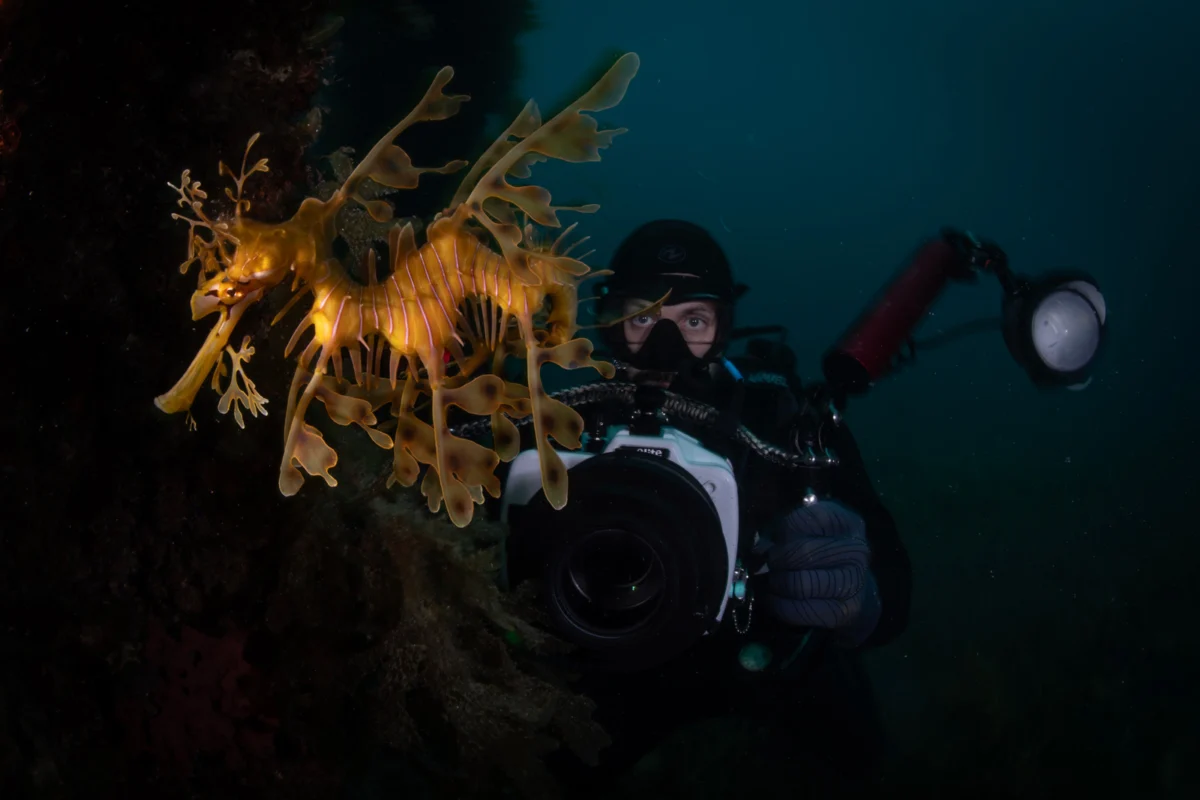
Another highlight is his portrait of a leafy seadragon. This image is lauded for its exquisite symmetry and the sheer difficulty involved in its capture. Shot at night, Dear employed a red focus light—a critical ethical consideration—to minimize disturbance to the delicate creature. The process demanded immense patience, waiting for the seadragon to orient itself perfectly, head tilted just so, to achieve a pristine, front-on headshot. This dedication to both photographic excellence and animal welfare exemplifies the principles of responsible wildlife photography. Leafy seadragons, masters of camouflage, are notoriously challenging subjects, making a symmetrical, well-lit portrait a significant achievement that speaks volumes about the photographer’s skill and commitment.
Strategic Returns: Unveiling Intricate Ecosystems
Rowan Dear emphasizes that truly understanding a species—its habitat, behaviors, and ecological context—is paramount to photographing it effectively. This philosophy drives his practice of revisiting specific locations, allowing him to deepen his knowledge and refine his approach, resulting in more impactful and comprehensive visual narratives.

Whyalla’s Cuttlefish Spectacle: A Photographer’s Annual Pilgrimage
His frequent returns to Whyalla in South Australia during the annual giant cuttlefish aggregation underscore this strategy. Each year, over 10,000 giant cuttlefish converge here to mate, transforming the shallow waters (approximately 5 meters deep) into a vibrant, bustling underwater arena. The accessibility of the site, allowing shore entry and multiple dives per day, enables Dear to spend extensive hours underwater, witnessing the full spectrum of cuttlefish behaviors and their spectacular color changes. This sustained immersion provides opportunities to experiment with various lighting conditions, from the ethereal glow of daylight filtering through the water column to the dramatic contrasts of twilight. By utilizing a range of lenses—wide-angle for expansive scenes, fisheye for immersive perspectives, and macro for intricate details—he captures a comprehensive visual story of this remarkable natural event. This annual spectacle is not only a photographic goldmine but also a critical ecological phenomenon, highlighting the importance of specific marine habitats for species survival and reproduction.
Byron Bay’s Leopard Sharks: Adapting to Dynamic Waters
Byron Bay, where large aggregations of leopard sharks gather each summer, is another favored location for Dear. This site presents diverse photographic opportunities and challenges, depending on prevailing conditions. On clear days, he captures stunning shallow shots, with sunrays piercing the water to illuminate the sharks. In contrast, varying depths and visibility allow for top-down shots, showcasing multiple sharks in their natural environment. The ability to adapt techniques and approaches to different conditions is a hallmark of an experienced professional, maximizing photographic potential even when faced with environmental variables. Leopard sharks, known for their distinctive spot patterns, are often found in sandy or muddy bottoms, requiring careful technique to avoid stirring up sediment and compromising visibility.
Heron Island: Witnessing Life’s Beginnings on the Great Barrier Reef

Heron Island, nestled within the iconic Great Barrier Reef, serves as a significant freediving destination for Dear, particularly during the turtle hatching season from February to April. This period offers unparalleled opportunities to photograph newly hatched turtles making their perilous journey to the ocean, alongside resident lemon sharks, numerous ray species, and adult turtles. Freediving, as opposed to scuba diving, allows for quieter, less intrusive interactions with marine life, a conscious choice reflecting Dear’s commitment to ethical photography. Timing dives around peak high tide enables extended underwater sessions, maximizing encounters with the diverse marine fauna. The Great Barrier Reef itself is a UNESCO World Heritage site, one of the most biodiverse ecosystems on Earth, making photographic endeavors there not just artistic pursuits but also vital contributions to conservation efforts by showcasing its immense value and fragility.
The Unplanned Professional Ascent: Passion as a Compass
Rowan Dear’s transition to professional photography was not a meticulously planned career move but rather an organic evolution driven by an unwavering passion for the ocean and the craft of photography. He describes it as a natural progression stemming from his desire to find and capture "magical underwater experiences," continuously striving to improve his skills for personal satisfaction, then for his immediate community, and eventually for a broader audience of animal and ocean lovers.
An Organic Evolution
This "organic" pathway highlights a common narrative among successful creatives: when passion and consistent effort converge, professional opportunities often emerge as a direct consequence. Dear’s intrinsic motivation to explore, learn, and perfect his craft ultimately led to a career that seamlessly blends his love for marine life with his photographic talents. This contrasts with a purely business-driven approach, suggesting that authenticity and dedication to the subject matter can be powerful catalysts for professional recognition and success.

Validation Beyond Social Media: The Power of Competition
A significant "eureka moment" or turning point for Dear was the validation received through winning major photography competitions. In the age of social media, where likes and followers can distort one’s perception of their own skill, formal recognition from esteemed panels of judges provided a crucial, objective benchmark. These wins instilled confidence, confirming that his images met or exceeded the standards of his peers and the wider photographic community. This external validation was instrumental in providing a realistic assessment of his capabilities, allowing him to discern genuine artistic merit from fleeting online popularity.
The Science of Opportunity: Meticulous Planning in Wildlife Photography
Beyond artistic talent, Dear underscores the pragmatic realities of wildlife photography, which involves meticulous planning and extensive research. Success hinges on making opportunities happen, ensuring that the time of year, specific locations, and prevailing weather conditions are optimally aligned to increase the chances of capturing desired images. This scientific approach to preparation, though not foolproof, significantly mitigates the inherent unpredictability of working with nature. Such planning includes researching migration patterns, breeding seasons, tidal charts, and even historical weather data for specific regions, transforming each photographic expedition into a carefully calculated endeavor.
Evolving Techniques: Precision and Authenticity in the Digital Age

As Dear’s career progressed, so too did his photographic process, particularly in the realm of post-processing. A notable shift has been a significant reduction in the time spent editing, a change he attributes directly to improved in-camera skills and knowledge.
The Philosophy of In-Camera Excellence
His current philosophy dictates that if an image requires excessive editing, it’s often a sign that a better photograph should have been taken in the first place. This commitment to "getting it right in-camera" is a hallmark of seasoned photographers. Mistakes such as overexposure or excessive backscatter—the particulate matter illuminated by strobes in underwater shots—are difficult, if not impossible, to perfectly correct in post-production without compromising the image’s integrity. The more one attempts to "edit out" these flaws, the more artificial the final image can appear. This disciplined approach underscores a deep understanding of photographic principles and a respect for the authenticity of the captured moment.
Striking a Balance: Natural Light and Minimal Post-Processing
Dear’s photographic style emphasizes natural light and strives for images that appear as true to life as possible. His editing process is now streamlined, typically requiring only a few minutes per image, focusing on subtle enhancements rather than drastic alterations. This minimalist approach ensures that the raw beauty and character of the marine subjects remain paramount, reflecting his dedication to presenting nature in its most genuine form. This also allows him to maximize his time in the field, knowing that his efforts will yield high-quality, authentic results with less dependency on digital manipulation.

Navigating Nature’s Caprice: Challenges in the Field
Wildlife photography, by its very definition, is an endeavor fraught with unpredictability, and Rowan Dear openly acknowledges these inherent challenges.
The Unpredictability of the Wild
The biggest hurdle remains being in the right place at the right time to capture desired images. Despite extensive planning and research, nature frequently has "other ideas." He recounts trips to photograph minke whales that were thwarted by adverse weather conditions and zero sightings. Such experiences are a humbling reminder that even the most meticulous preparation cannot guarantee success when working with wild, untamed subjects. This unpredictability necessitates resilience, patience, and a philosophical acceptance of outcomes beyond one’s control.
Overcoming Subaquatic Obstacles: Visibility and Conditions

Underwater photography introduces its own unique set of difficulties. The ideal conditions—great visibility and perfect lighting—are rare occurrences. More often than not, photographers must contend with less-than-ideal circumstances. Dear’s experience photographing southern right whales in Argentina, under a government permit, illustrates this point. Despite challenging visibility and strong winds, the experience remained "magical," and he was confident that the images captured were the best possible under the circumstances. This adaptability and ability to "make do with the hand you are dealt" are critical skills for a professional. It involves understanding how to work within environmental constraints, adjusting settings, and leveraging limited opportunities to still produce compelling visuals. For instance, poor visibility might necessitate closer focus or different lighting techniques to isolate subjects effectively. The ethical imperative to operate under government permits, as in the case of the southern right whales, further highlights the responsible practices required when photographing vulnerable or protected species.
Reflections and Guidance: Insights for Aspiring Nature Photographers
Reflecting on his journey, Rowan Dear offers invaluable advice, particularly regarding the psychological aspects of a creative career.
The Dual Edges of Confidence and Perfectionism
He candidly admits to sometimes lacking confidence in his early abilities, a trait that, while potentially holding him back from certain opportunities, also fueled his continuous growth and learning. This tension between self-doubt and the drive for perfection is common among artists. His perfectionism, while making it difficult to release work he isn’t "1000% happy with," also ensures a consistently high standard of output. The challenge lies in finding a balance: being self-critical enough to improve, but also confident enough to trust one’s judgment and embrace opportunities. This self-awareness is crucial for navigating the competitive landscape of professional photography.

Crafting a Legacy: A Call to Continuous Growth and Trust
Dear’s overarching advice to aspiring photographers is multi-faceted:
- Define Your Destination: Understand where you want your photography to lead you.
- Seek Inspiration: Follow and learn from those whose work resonates with you.
- Forge Your Path: Trust your instincts and develop a unique photographic style.
- Hone Your Craft: Continuously work on improving technical and artistic skills.
- Embrace Growth: Never be complacent; always strive for betterment.
- Self-Critique with Appreciation: Be critical of your work, but also acknowledge its value.
- Trust the Process: Believe in your methodology and capabilities.
This comprehensive guidance emphasizes both the artistic and professional dimensions of nature photography, advocating for a blend of passionate pursuit, disciplined practice, ethical engagement, and unwavering self-belief. Rowan Dear’s journey from a curious child on a Welsh farm to an internationally recognized underwater photographer serves as a powerful testament to the transformative power of dedication, resilience, and an enduring love for the natural world. His work not only captures breathtaking images but also inspires a deeper connection to the planet’s most fragile and awe-inspiring ecosystems, reinforcing the critical role of nature photography in conservation and global environmental awareness.