The traditional creative workflow, long defined by the romanticized "blank canvas," is undergoing a fundamental structural shift as global marketing demands outpace the capacity of manual production. In the contemporary commercial landscape, starting from a void is increasingly viewed not as a mark of originality, but as a logistical bottleneck that carries significant costs in time, labor, and opportunity. As marketing departments face the unprecedented task of generating hundreds of variations for a single campaign across diverse digital channels, the industry is pivoting toward a hybrid model. This emerging paradigm prioritizes the use of professional stock media as a foundational layer, enhanced by artificial intelligence to accelerate the journey from conceptualization to final deployment.
The Economic Imperative of the Non-Zero Start
The transition toward AI-enhanced stock media is driven by a stark economic reality: creative production involves a massive volume of "invisible" work. A standard product launch in 2024 requires a diverse ecosystem of assets, including website hero images, social media advertisements for multiple platforms (Instagram, TikTok, LinkedIn), email banners, display ads, presentation decks, and localized versions for international markets.
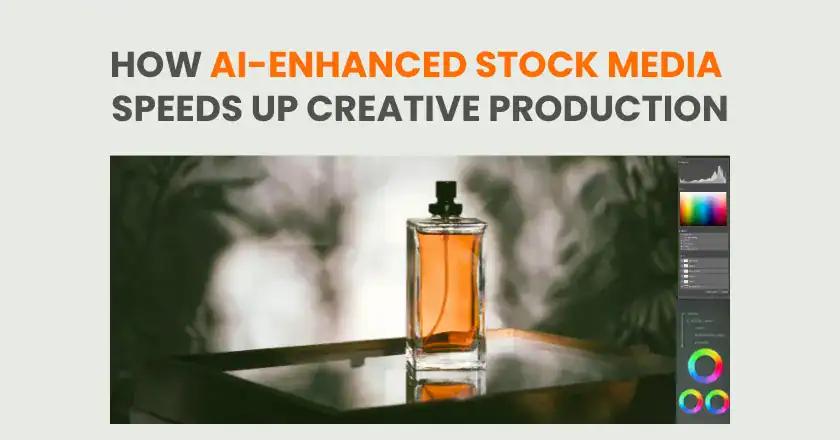
Historically, this required a linear and often redundant production chain. A single central image had to be manually cropped, resized, and often reconstructed to fit various aspect ratios. According to industry benchmarks, creative teams spend up to 70% of their time on repetitive production tasks—such as background removal, resizing, and minor retouching—rather than high-level art direction or strategic brand development. By utilizing AI-enhanced stock media, firms are effectively "buying back" this time. The ability to begin with a high-resolution, professionally lit, and legally cleared asset allows designers to bypass the foundational labor of staging, lighting, and initial composition.
A Chronology of Creative Sourcing: From Film to Generative AI
To understand the current state of AI-enhanced media, it is necessary to view it within the broader timeline of creative sourcing. The industry has evolved through four distinct eras:
- The Physical Era (Pre-1990s): Creative teams commissioned bespoke photography or sourced physical transparencies from stock agencies. This process was slow, expensive, and reserved for high-budget campaigns.
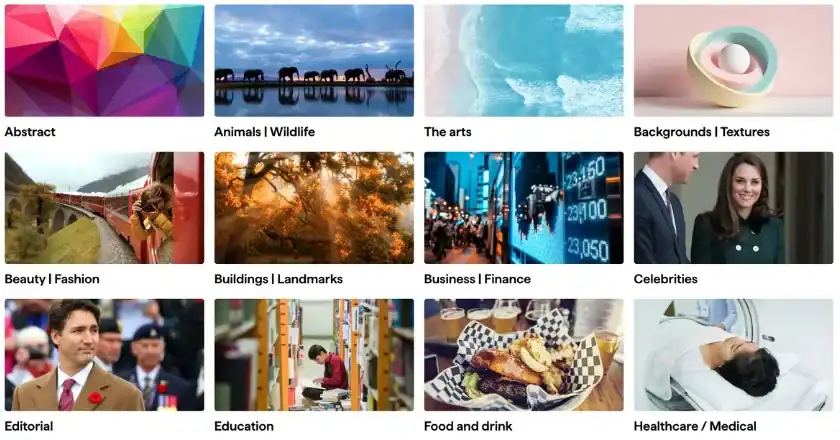
- The Digital Proliferation (1990s–2010s): The rise of the internet and digital photography led to the birth of massive online libraries like Shutterstock. This democratized access to professional imagery but left the burden of editing and adaptation entirely on the user.
- The Integrated Workflow Era (2010s–2022): Stock platforms began integrating directly into design software (e.g., Adobe Creative Cloud), reducing the friction between sourcing and editing.
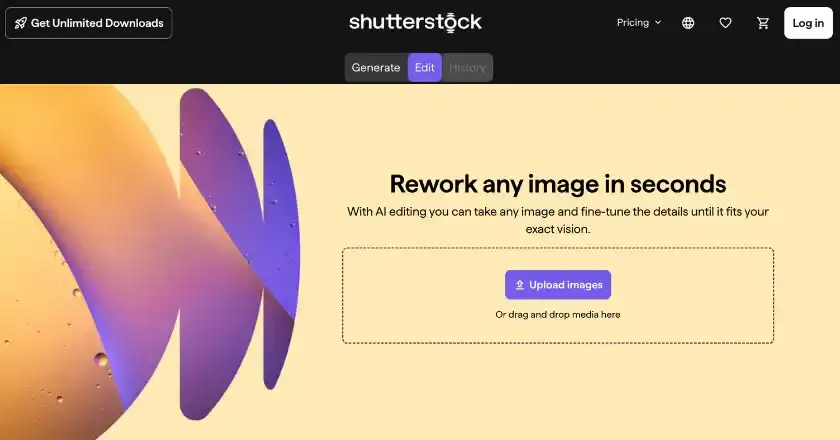
- The AI-Enhanced Era (2023–Present): The current phase, where stock media is no longer a static "finished product" but a "dynamic starting point." AI tools now allow users to expand borders (outpainting), swap backgrounds, and modify subjects within a licensed asset in seconds.
This chronology illustrates a move toward "modular production," where the source material is a flexible building block rather than a fixed end-state.

Technical Capabilities: Redefining Asset Flexibility
The primary friction point in traditional stock media was its lack of flexibility. If a designer found an image with the perfect emotional tone but the wrong aspect ratio, the asset was often unusable. AI-assisted editing has effectively eliminated this constraint. Tools such as generative expansion allow a horizontal photograph to be transformed into a vertical format for mobile social media by "hallucinating" and extending the background with pixel-perfect consistency.
Furthermore, the integration of "Generative Fill" and smart search algorithms has shortened the distance between a creative brief and a usable asset. Modern search engines on stock platforms no longer rely solely on metadata tags; they use computer vision to understand composition, lighting, and mood. A search for a "modern international team in a collaborative office setting" now yields results that can be filtered by negative space (for text overlay), lighting temperature, and depth of field. This precision ensures that the starting point is as close to the final requirement as possible, minimizing the "fix it in post" mentality that often drains creative budgets.
Supporting Data: The Efficiency Gap
Recent market data highlights why this shift is becoming mandatory for competitive firms. A study by the Content Marketing Institute revealed that 67% of marketers are being asked to do more with less, even as the number of required assets per campaign has increased by an estimated 300% over the last five years.

Furthermore, performance marketing data suggests that "creative fatigue"—the point at which an audience stops responding to an ad due to overexposure—sets in faster than ever. On platforms like Meta and TikTok, the half-life of a creative asset can be as short as 48 to 72 hours. To maintain engagement, brands must constantly refresh their visuals. AI-enhanced stock media allows for "controlled variation," where a single core concept can be refreshed with new backgrounds, subjects, or color palettes without the need for a new photoshoot. This reduces the cost of creative testing, allowing brands to deploy ten variations of an ad to see which performs best, rather than gambling on a single, expensive bespoke visual.
Industry Responses: The Shift Toward Creative Direction
The reaction from the creative community has been a mixture of pragmatic adoption and strategic repositioning. While there were initial concerns regarding the displacement of traditional photographers and illustrators, many Chief Marketing Officers (CMOs) argue that AI is elevating the role of the designer.
"The value of a designer is moving from the hand to the eye," notes one industry analyst. "We are seeing a shift where ‘Creative Direction’ is no longer a title reserved for senior executives; it is becoming the primary task of every designer. When you don’t have to spend three hours masking a background, you spend those three hours thinking about how that background communicates the brand’s values."

Official statements from major stock providers emphasize that AI is a tool for augmentation, not replacement. By training AI models on licensed, high-quality professional libraries, platforms ensure that the output maintains a level of "commercial readiness" that pure generative AI often lacks. This includes technical standards like proper exposure, realistic anatomy, and, crucially, legal indemnification—a major concern for enterprise-level marketing.
Global Scaling and Modular Localization
For multinational corporations, the implications of AI-enhanced stock media are particularly profound. A global campaign must resonate across diverse cultural landscapes, requiring variations in clothing, environments, and ethnic representation.
In the traditional model, this required either a massive multi-location shoot or the purchase of dozens of unrelated stock images that often lacked visual consistency. With AI-enhanced modular production, a brand can select a "visual family" of assets and use AI to subtly adapt them for different regions. A central campaign image of a family at dinner can be modified to reflect local cuisines or interior design styles while maintaining the same lighting, color grade, and brand "feel." This ensures global brand consistency while respecting local cultural nuances, all at a fraction of the traditional cost.
Broader Impact and Ethical Implications
The shift toward AI-integrated creative workflows also brings broader implications for the media industry. One of the most significant impacts is the "Efficiency Paradox": as it becomes easier to produce content, the total volume of content in the world increases, making it harder for any single piece of content to stand out. This places an even higher premium on the "human" elements of creativity—strategy, empathy, and storytelling.
From a legal and ethical standpoint, the move toward using AI on top of licensed stock media provides a solution to the "black box" problem of generative AI. Because the AI is being applied to a known, licensed source, the provenance of the image is clear. This provides a level of security for brands that are wary of the copyright uncertainties surrounding images generated entirely from scratch by unvetted AI models.
Conclusion: The Hybrid Future
The "blank canvas" will always remain a symbol of artistic purity, but in the high-velocity world of commercial marketing, it is becoming a luxury that few can afford. The future of creative production is undeniably hybrid. By combining the technical excellence of professional stock media with the transformative power of artificial intelligence, marketing teams are moving into an era of "frictionless creativity."

In this new environment, the focus shifts from the labor of construction to the power of selection and direction. The goal is no longer to spend the most time on an asset, but to reach the most effective outcome in the shortest possible window. As AI tools continue to mature, the distinction between "sourcing" and "creating" will continue to blur, resulting in a workflow that is faster, more modular, and ultimately more responsive to the demands of the digital age. The productivity gain is not merely in the speed of the software, but in the liberation of human talent from the mundane, allowing the next generation of creatives to focus on the ideas that truly move the needle.