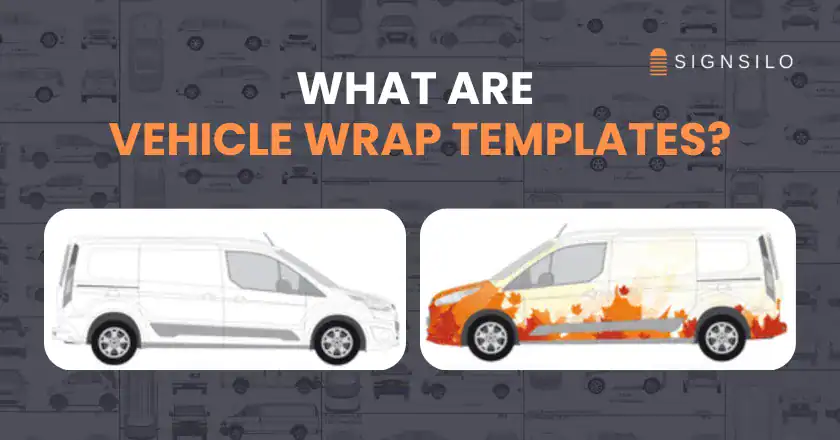
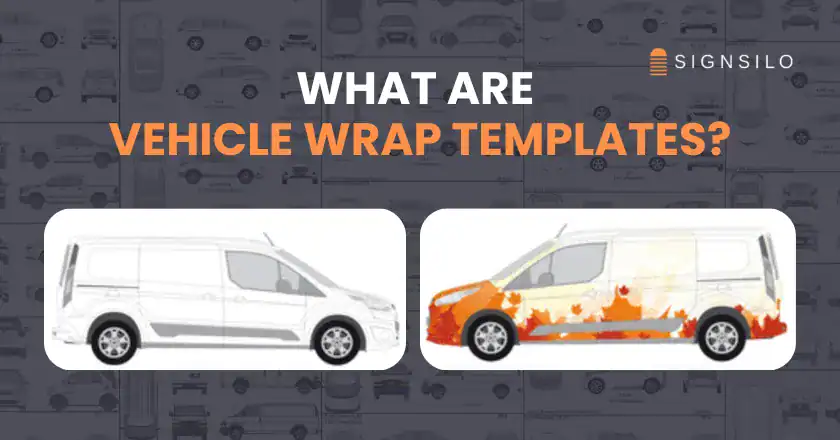
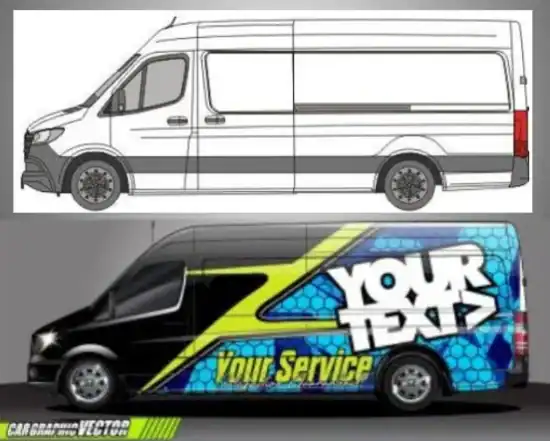
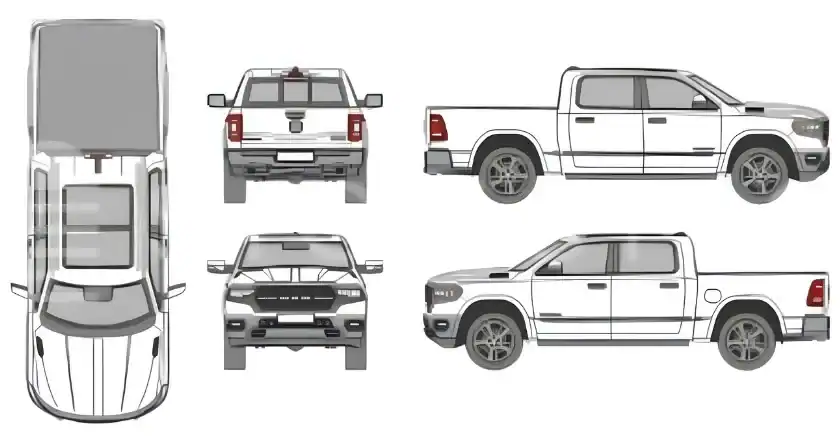
The Evolution and Technical Necessity of Precision Vehicle Wrap Templates in the Modern Graphics Industry serves as the foundational framework for the multi-billion dollar vehicle branding sector, transforming how businesses approach mobile advertising and fleet aesthetics. In the contemporary visual communications landscape, a vehicle wrap template is defined as a scaled, dimensionally accurate vector outline of a specific vehicle, providing a comprehensive blueprint from every functional angle, including the sides, front, rear, and roof. As the automotive industry introduces more complex aerodynamic curves and sensor-integrated body panels, the reliance on these precise technical drawings has shifted from a convenience to an operational necessity for professional design houses and sign shops worldwide.
The Architectural Blueprint of Mobile Marketing
At its core, a vehicle wrap template functions as an architectural plan for a vehicle’s exterior. Unlike generic clip art or low-resolution photographs, these templates are sophisticated vector files—typically in AI, EPS, or PDF formats—that map out the exact proportions and key features of a specific make, model, and year. The precision of these files is critical because vehicle body shapes often undergo significant structural changes between generations or even between specific trim levels. A template for a 2024 Ford Transit, for instance, may feature different sliding door tracks or sensor placements than a 2020 model, necessitating a unique digital blueprint to ensure graphic alignment.
The primary function of the template is to allow designers to build artwork on top of an exact digital replica of the vehicle. This process eliminates the guesswork involved in identifying the location of door handles, seams, fuel doors, and wheel wells. By using these outlines, a designer can ensure that a corporate logo does not get bisected by a door hinge or that a crucial contact phone number is not obscured by a flared wheel arch. In the professional workflow, the template remains the technical underlay, while the creative design occupies separate layers above it, allowing for a seamless transition from digital concept to physical application.
Technological Composition and Scalability
The technical integrity of a vehicle wrap template is rooted in vector mathematics. Because vectors are based on mathematical paths rather than pixels, they can be scaled infinitely without losing clarity. This is a vital feature in the large-format printing industry, where a design created on a computer screen must eventually be printed onto vinyl sheets spanning 15 to 20 feet in length.
Standard professional-grade templates are usually provided in specific scales, such as 1:20 or 1:10. In a 1:20 scale, one inch on the digital template represents 20 inches on the actual vehicle. High-end libraries, such as those provided by industry leaders like SignSilo, offer these files with built-in layers that distinguish between the vehicle’s body lines, windows, and "non-wrap" areas like rubber seals and lights. This layering allows designers to apply "clipping masks," ensuring that the print files only contain the imagery intended for the vinyl panels, thereby reducing ink waste and simplifying the installation process for the wrap technician.
The Economic Imperative: Reducing Margin of Error
The adoption of standardized templates is driven largely by the high cost of material and labor in the vehicle wrap industry. A full wrap for a commercial van can cost between $3,000 and $6,000, with high-performance cast vinyl alone representing a significant portion of that expense. If a design is printed and found to be misaligned by even two inches during installation, the entire panel—and sometimes the entire side of the vehicle—must be reprinted and re-installed.
By utilizing a make-and-model-specific template, production shops mitigate these risks. Data from industry surveys suggests that shops using professional template libraries report a 30% reduction in "re-work" and material waste compared to those relying on manual measurements or generic outlines. Furthermore, the use of templates accelerates the proofing process. Clients are more likely to approve a design when they see it accurately placed on a digital representation of their specific vehicle, leading to faster project turnaround times and improved cash flow for the graphics provider.

A Chronology of Vehicle Branding Technology
The history of vehicle branding has evolved through three distinct technological eras:
- The Manual Era (Pre-1990s): Before the digital revolution, vehicle lettering was primarily achieved through hand-painting (pinstriping) or simple cut-vinyl lettering. Sign painters would take physical measurements with tape measures and create hand-drawn sketches. Accuracy was dependent entirely on the skill and experience of the individual craftsman.
- The Early Digital Era (1990s–2005): The introduction of wide-format inkjet printers allowed for full-color "wraps." However, digital templates were rare and often inaccurate. Designers frequently relied on "flat" side-view photographs, which failed to account for the three-dimensional curvature of the vehicle, leading to significant distortion during installation.
- The Precision Vector Era (2006–Present): The emergence of dedicated vehicle template services revolutionized the market. Companies began using 3D scanning and CAD (Computer-Aided Design) data to create 2D vector layouts that account for the "unrolled" surface area of the vehicle. This era has seen the integration of templates into specialized design software, allowing for the rapid creation of complex, wrap-around graphics.
Market Analysis: The Rise of Fleet Graphics
The demand for precision templates is closely tied to the growth of the global vehicle wrap market. According to market research reports, the global automotive wrap film market was valued at approximately $5.8 billion in 2022 and is projected to expand at a compound annual growth rate (CAGR) of over 20% through 2030.
This growth is fueled by several factors:
- Mobile Advertising Efficiency: Studies by the Outdoor Advertising Association of America (OAAA) indicate that a single intra-city truck can generate between 30,000 and 70,000 impressions daily. This makes vehicle wraps one of the most cost-effective forms of advertising on a cost-per-thousand (CPM) basis.
- Asset Protection: Modern wraps protect the original factory paint of fleet vehicles, preserving resale value.
- Customization Culture: The rise of "color change" wraps for personal luxury vehicles has increased the need for high-detail templates for sports cars and high-end SUVs.
As the market expands, the complexity of the vehicles increases. The transition toward electric vehicles (EVs) has introduced new design challenges, such as the absence of traditional grilles and the inclusion of aerodynamic flush-mounted door handles. Precision templates for models like the Tesla Model 3 or the Rivian R1T are now among the most searched-for items in professional template libraries.
Standardized Workflow: From Digital Vector to Physical Vinyl
A professional design workflow utilizing vehicle wrap templates follows a rigorous sequence to ensure quality control:
- Template Acquisition: The designer identifies the exact year, make, model, and wheelbase of the vehicle. For commercial vehicles, they must also note the roof height (low, medium, or high) and the presence of side windows.
- The Design Phase: Using software like Adobe Illustrator, the designer places the template on a locked layer. Graphics are designed on separate layers. A "bleed" of 2 to 6 inches is typically added beyond the vehicle’s edges to provide the installer with enough material to wrap around the doors and panels.
- The Technical Check: The designer cross-references the design against known "dead zones"—areas where the vinyl cannot be applied or where it would be cut away, such as grilles, lights, and sliding door tracks.
- Client Approval and Mockup: While the template is used for technical layout, a "mockup" (a realistic 3D-style render) is created to show the client how the finished product will look in a real-world environment.
- Production and Tiling: The final vector design is "tiled" into printable sections that match the width of the vinyl rolls (usually 54 or 60 inches). These tiles are printed, laminated, and sent to the installation bay.
Addressing the Limitations: The Necessity of Physical Verification
Despite the high degree of accuracy in modern vector templates, industry experts maintain that they are not a total replacement for physical inspection. Aftermarket modifications—such as roof racks, specialized bumpers, ladder racks, or custom rims—are not accounted for in standard factory templates. Furthermore, minor mid-year production changes by manufacturers can occasionally result in slight variations in trim placement.
Professional installers are advised to perform a "pre-wrap inspection," where they verify the template’s dimensions against the actual vehicle. This "measure twice, cut once" philosophy remains the gold standard in the industry. Templates provide the 95% accuracy needed for the design and production phase, but the final 5% of precision is achieved through the skill of the installer at the point of application.
The Convergence of Templates and 3D Mockups
In recent years, the distinction between a "template" and a "mockup" has become increasingly important for client communication. While the template is the flat, technical blueprint used for printing, the mockup is the marketing tool. Advanced software now allows designers to "project" their 2D template designs onto 3D models. This allows clients to rotate the vehicle virtually and see how the graphics transition from the side panels to the rear doors. This synergy between technical accuracy and visual presentation has set a new standard for professionalism in the sign industry.
Future Outlook: Automation and AI Integration
The future of vehicle wrap templates lies in increased automation. Emerging technologies are exploring the use of Artificial Intelligence to automatically adjust graphic elements to fit different vehicle shapes within a fleet. For example, a design for a large box truck could be automatically "resized" and "re-flowed" by AI to fit a smaller sedan while maintaining brand consistency and avoiding critical obstructions.
Additionally, Augmented Reality (AR) is beginning to play a role. Some shops are experimenting with AR apps that allow installers to see the digital template overlaid on the physical vehicle through a tablet or AR glasses, providing a real-time guide for graphic placement.
Conclusion
Vehicle wrap templates represent the intersection of automotive engineering and graphic design. As mobile branding continues to dominate the local advertising landscape, the precision offered by these digital blueprints is indispensable. By providing a dimensionally accurate foundation, templates empower designers to create bold visual statements, allow production shops to minimize waste, and ensure that the final physical product matches the digital vision. In an era where every millimeter counts, the vehicle wrap template remains the most critical tool in the wrap professional’s arsenal.