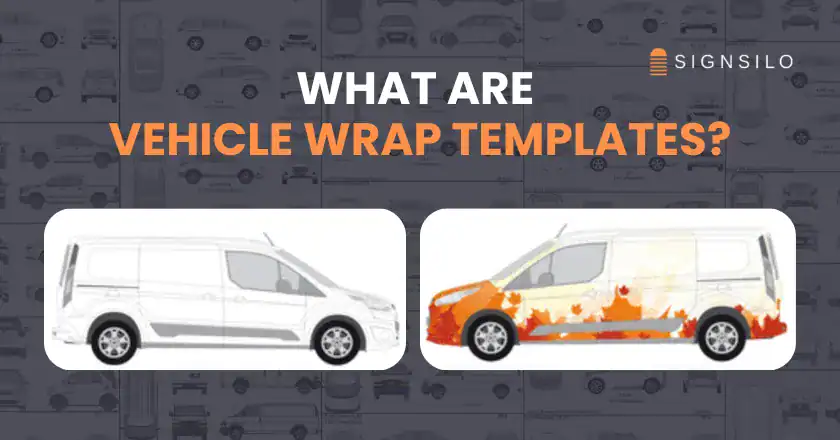
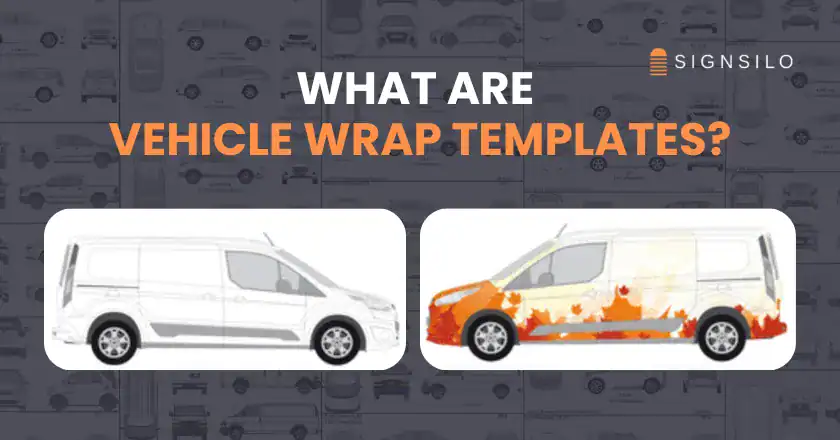
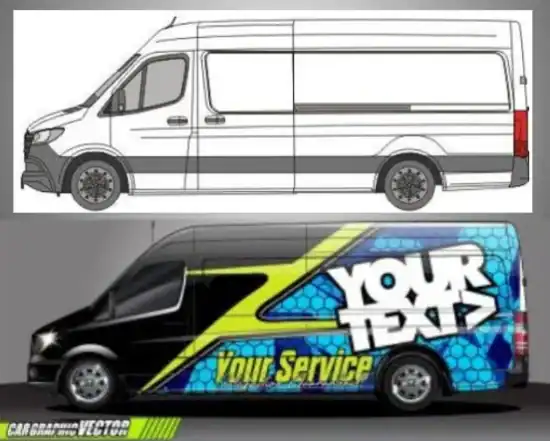
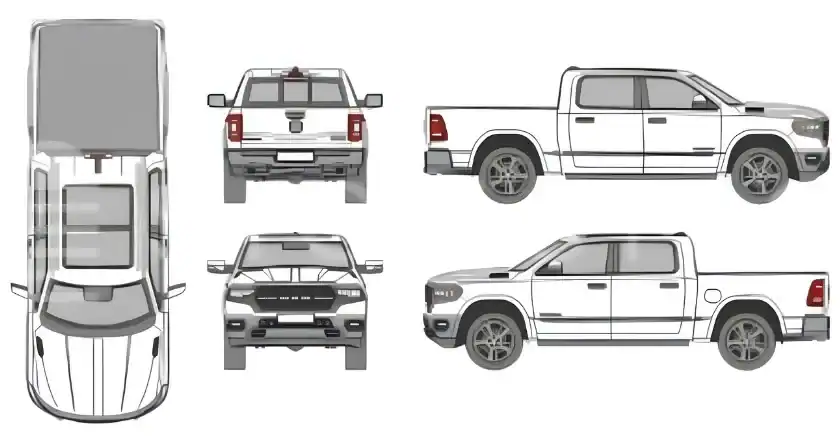
Vehicle wrap templates represent the foundational architecture of the mobile advertising industry, serving as precision-engineered digital blueprints that allow designers to translate two-dimensional graphics onto complex three-dimensional automotive surfaces. In the contemporary marketing landscape, where vehicle branding has become a multi-billion dollar global enterprise, these templates act as the vital bridge between creative vision and physical execution. A vehicle wrap template is defined as a scaled, dimensionally accurate vector outline of a specific vehicle, encompassing every relevant angle including the sides, front, rear, and roof. This technical drawing provides a precise map of a vehicle’s exterior, identifying the exact placement of door handles, fuel caps, body seams, wheel wells, and sensors. By utilizing these templates, designers can ensure that branding elements, such as logos and contact information, are perfectly aligned and not obstructed by the vehicle’s physical features once the vinyl is installed.
The Economic Landscape of the Vehicle Wrap Industry
The significance of vehicle wrap templates is best understood through the lens of the broader automotive wrap market. According to recent industry reports, the global vehicle wrap market was valued at approximately $5.8 billion in 2022 and is projected to expand at a compound annual growth rate (CAGR) of 22.2% through 2030. This explosive growth is driven by the increasing demand for mobile advertising, which offers a lower cost-per-impression compared to traditional stationary billboards.
In this high-stakes environment, precision is not merely a preference but a financial necessity. The cost of a professional full-vehicle wrap can range from $2,500 to $6,000, depending on the complexity and the quality of the vinyl used. Errors in the design phase—such as a logo being cut off by a sliding door handle or a phone number disappearing into a wheel arch—can necessitate expensive reprints and labor-intensive re-installations. Consequently, the adoption of high-fidelity vehicle wrap templates has become a standard risk-mitigation strategy for professional sign shops and graphic design firms worldwide.
Technical Anatomy: What Constitutes a Professional Template
A professional-grade vehicle wrap template is far more than a simple drawing; it is a sophisticated vector file designed for scalability and technical accuracy. Most industry-standard templates are built at a specific scale, such as 1:10 or 1:20 of the vehicle’s actual size. This scaling allows designers to work on manageable file sizes while maintaining the ability to blow up the artwork to full scale for large-format printing without any loss of resolution.
Key components of a comprehensive template include:

- Multi-View Perspectives: Standard templates provide five views: driver side, passenger side, front, rear, and roof.
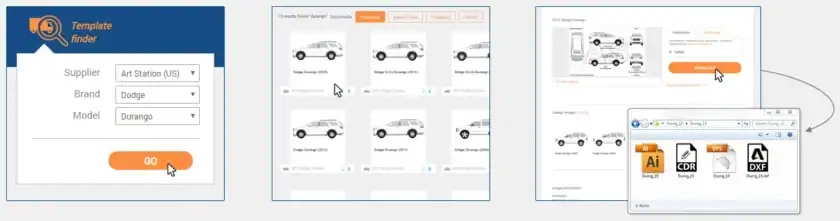
- Vector Architecture: Utilizing formats such as .AI (Adobe Illustrator), .EPS (Encapsulated PostScript), or .CDR (CorelDRAW), these files allow for infinite scaling.
- Precision Layering: High-quality templates feature separate layers for the vehicle outline, dimensions, and hardware details, allowing designers to place their artwork on a dedicated layer beneath or above the technical markers.
- Hardware Identification: Detailed markers for "non-wrap" areas, including rubber seals, headlights, taillights, and plastic trim, which are critical for calculating the actual square footage of vinyl required.
Chronology of Design: From Manual Measurement to Digital Precision
The evolution of vehicle wrap technology mirrors the broader digital transformation of the printing industry.
- The Pre-Digital Era (1980s – Early 1990s): Before the advent of specialized software, vehicle branding was largely limited to hand-painted lettering or simple cut-vinyl decals. Designers had to manually measure every inch of a vehicle with tape measures and create hand-drawn sketches.
- The Rise of Digital Plotters (Mid-1990s): As digital vinyl cutters became more accessible, the need for basic digital outlines grew. However, these early "templates" were often crude and lacked the three-dimensional nuance of modern vehicle bodies.
- The Introduction of Wide-Format Printing (Early 2000s): The ability to print full-color graphics on large adhesive sheets revolutionized the industry. This created an immediate demand for highly accurate, scaled templates to manage complex "full wraps."
- The Standardization Phase (2010 – Present): Companies like SignSilo and Pro Vehicle Outlines established massive libraries of make-and-model-specific templates. Today, the integration of 3D modeling and AI-assisted design is further refining the accuracy of these blueprints.
The Strategic Importance of Make-and-Model Specificity
A common misconception in the graphics industry is that a generic "van" or "sedan" shape is sufficient for design purposes. However, professional installers emphasize that even minor year-to-year updates by manufacturers can significantly alter a vehicle’s "wrap-ability." For instance, a 2023 Ford Transit may have different sensor placements or trim moldings than a 2024 model.
Specific templates account for these variations, including different wheelbase lengths (short vs. long), roof heights (low, medium, or high), and window configurations (cargo vs. passenger). Using a generic template often leads to "stretch and pull" issues during installation, where the vinyl must be unnaturally manipulated to fit the actual contours of the car, leading to premature lifting or failure of the adhesive.
Operational Workflow: Integrating Templates into Production
The professional workflow for creating a vehicle wrap follows a rigorous sequence to ensure quality control:
- Vehicle Identification and Acquisition: The designer identifies the exact year, make, model, and trim of the client’s vehicle. They then acquire the corresponding template from a reputable library.
- Design and Layering: The template is opened in vector-based software. The designer creates the artwork on a separate layer, ensuring that critical brand elements are placed within "safe zones"—areas away from handles, hinges, and deep recesses.
- Physical Verification: Despite the accuracy of digital templates, industry best practices dictate a "real-world check." The installer or designer will take 3-4 key measurements of the physical vehicle to confirm they match the template’s proportions.
- Client Approval via Mockup: The 2D template design is often imported into a 3D mockup software to show the client a realistic representation of the finished product.
- Production and Tiling: The design is scaled to 100% and "tiled" into printable panels, usually 50 to 60 inches wide, matching the width of the vinyl rolls.
- Installation: The printed panels are applied to the vehicle, using the template-guided design to ensure every seam and overlap aligns perfectly.
Risk Mitigation and the Cost of Error
The use of precision templates serves as a primary defense against the "hidden costs" of the wrap business. Industry analysts point out that the labor involved in removing a failed wrap and cleaning the adhesive residue can sometimes exceed the cost of the initial installation. Furthermore, the environmental impact of wasted vinyl—a non-biodegradable PVC material—is a growing concern. Accurate templates minimize material waste by allowing for precise nesting of print jobs, contributing to more sustainable business practices within the print industry.
Statements from veteran installers suggest that the "guesswork" era of vehicle branding is effectively over. "A template is our insurance policy," says one industry consultant. "Without it, you are essentially gambling with the client’s time and your own profit margins. When a wrap aligns perfectly at the seams, it’s a testament to the quality of the template used during the design phase."
Technological Convergence: Templates, Mockups, and 3D Renders
As technology advances, the line between a technical template and a visual mockup is beginning to blur. While a template is a 2D technical tool, mockups provide a 3D aesthetic preview. The current trend in the industry is the "digital twin" approach, where high-resolution 3D scans of vehicles are used to create templates that can be rotated and viewed from any angle in a virtual environment. This allows designers to see how a graphic will warp or stretch over a fender in real-time, long before the vinyl ever touches the printer.
Industry Outlook: The Future of Digital Templates
Looking forward, the vehicle wrap template industry is expected to integrate more deeply with Augmented Reality (AR). Some software developers are already testing applications that allow installers to overlay a digital design onto a physical vehicle using AR glasses, ensuring that the placement matches the template’s specifications exactly.
Additionally, as electric vehicles (EVs) become more prevalent, template libraries are rapidly expanding to include the unique aerodynamic shapes of Tesla, Rivian, and Lucid models. These vehicles often feature smoother surfaces but more complex sensor arrays, making the precision of a professional template more critical than ever.
In conclusion, the vehicle wrap template is much more than a simple drawing; it is an indispensable technical instrument that ensures the viability of mobile advertising. By providing a scaled, accurate, and detailed blueprint of the automotive canvas, these templates empower designers to create stunning visual displays while providing installers with the roadmap necessary for a flawless execution. As the industry continues to grow and evolve, the reliance on high-quality, model-specific templates remains the hallmark of professional excellence in the world of large-format graphics.