The Economic Reality of Modern Content Demand
The necessity for this technological shift is driven by the sheer volume of assets required for a contemporary marketing campaign. A decade ago, a major product launch might have centered on a television spot, a print ad, and a handful of web banners. Today, the same launch requires a sophisticated matrix of content: hero images for desktop sites, vertical video for TikTok and Instagram Stories, carousels for LinkedIn, localized banners for international markets, and dozens of iterations for algorithmic A/B testing.
Industry data suggests that marketing teams are now expected to produce up to ten times the amount of content they did five years ago, often without a proportional increase in budget or headcount. According to recent surveys of creative professionals, nearly 60% of a designer’s time is spent on "non-creative" production tasks—resizing images, removing backgrounds, and adjusting layouts for different aspect ratios. This "production tax" drains resources that could otherwise be spent on high-level strategy and brand innovation.
The Evolution of Stock Media: From Archives to Engines
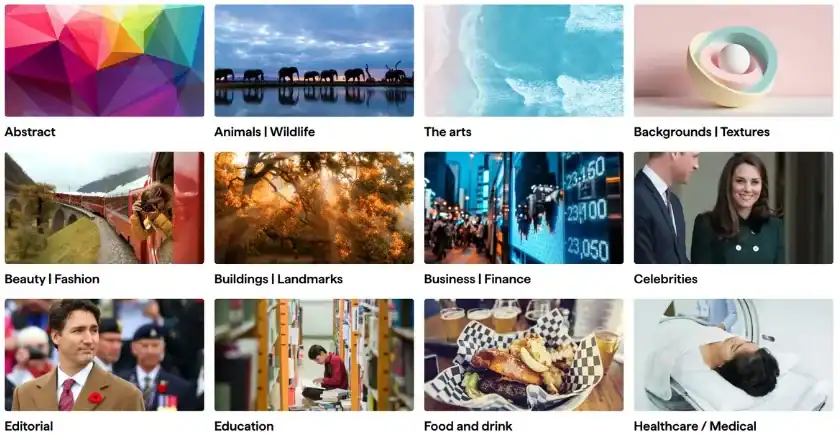
To understand the impact of AI-enhanced stock media, one must look at the historical trajectory of the industry. The stock photography business began in the early 20th century as a way to repurpose outtakes from professional shoots. By the 1990s and early 2000s, platforms like Shutterstock revolutionized the field by digitizing these archives, making millions of images instantly searchable.
However, even with millions of options, the "perfect" image remained elusive. A designer might find a photograph with the right lighting and subject, but the wrong aspect ratio or a cluttered background. Historically, fixing these issues required hours of manual retouching in software like Adobe Photoshop.
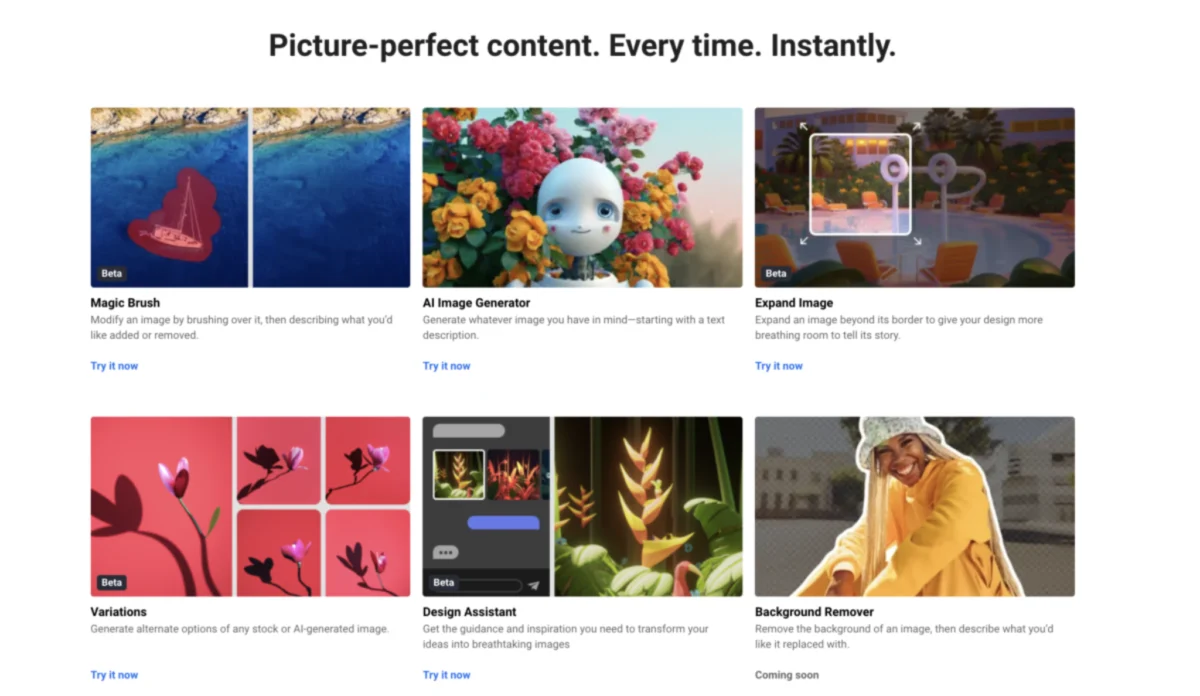
The current era, which industry analysts refer to as "Stock 3.0," integrates generative AI directly into the library interface. In this new paradigm, the stock photo is no longer a finished, static product; it is a dynamic "starting layer." With the integration of tools such as generative expand, object removal, and AI-powered color grading, the distance between "finding" an image and "deploying" an asset has been reduced from hours to seconds.

Quantifying the Productivity Gains of AI-Assisted Editing
The integration of AI into stock platforms addresses three primary bottlenecks in the creative pipeline: discovery, adaptation, and iteration.
1. Accelerated Discovery Through Semantic Search
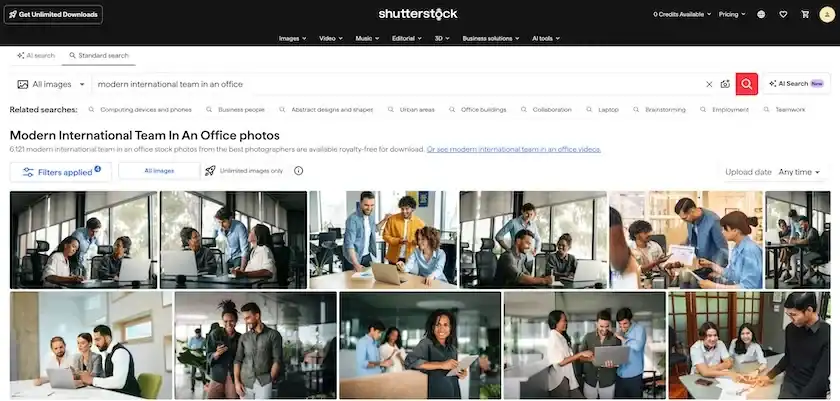
Traditional keyword-based search often fails to capture the nuance of a creative brief. A search for "team meeting" might yield 500,000 results, most of which are irrelevant to a specific brand aesthetic. AI-enhanced platforms now utilize computer vision and natural language processing to understand "vibe," lighting styles, and emotional subtext. This allows designers to find a viable starting point in a fraction of the time, moving the project into the design phase much earlier.
2. The Power of Generative Expansion
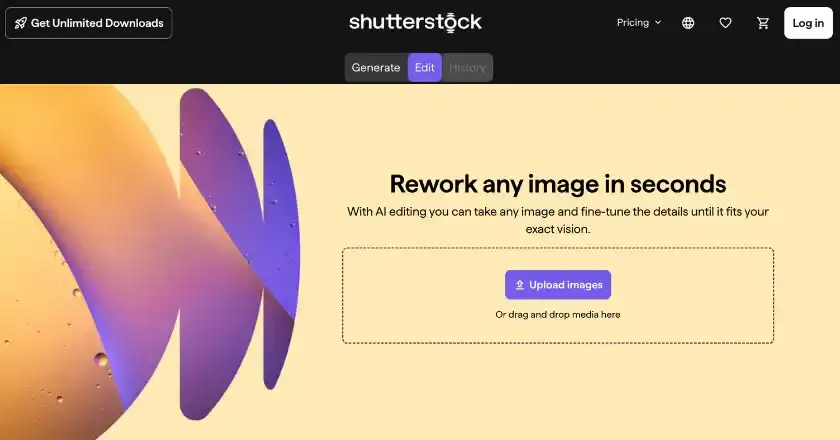
One of the most significant technical hurdles in multi-platform campaigns is the aspect ratio. An image shot in a 16:9 landscape format for a website header often cannot be cropped into a 9:16 vertical format for mobile without losing the subject. AI-powered "outpainting" or "generative expand" allows the software to synthesize new pixels that match the original style, lighting, and texture of the photograph, effectively "extending" the image beyond its original frame. This eliminates the need for expensive re-shoots or compromise-heavy crops.

3. Rapid Iteration for Performance Marketing
Performance marketing relies on constant testing to see which visuals drive the highest engagement. AI-enhanced stock media allows teams to create dozens of variations of a single concept—changing the background color, swapping out a product on a table, or adjusting the ethnicity of a model to suit a specific demographic—at a negligible cost. This level of granular testing was previously reserved for brands with massive production budgets.
Addressing the "Creative Fatigue" Phenomenon
Digital audiences are subject to "creative fatigue" at a faster rate than ever before. Research in digital advertising indicates that the effectiveness of a social media ad can begin to drop significantly after just three to five exposures. To maintain performance, brands must refresh their visuals constantly.
AI-enhanced stock media provides a sustainable solution to this problem. Instead of commissioning an entirely new creative concept every two weeks, brands can use AI tools to "refresh" their existing assets. By subtly altering compositions or backgrounds while maintaining the core brand message, companies can extend the life of a campaign and maintain audience interest without the overhead of a full production cycle.
Localization and the Global Marketplace
For multinational corporations, the challenge of content production is compounded by the need for cultural relevance. A campaign designed in London may not resonate in Tokyo or Sao Paulo if the environmental cues, clothing, and subjects feel out of place.
Professional stock libraries like Shutterstock have invested heavily in diverse, global content. When combined with AI editing tools, these libraries allow global teams to take a centralized creative concept and "localize" it with surgical precision. A designer can start with a professionally shot scene and use AI to adjust specific elements to better reflect the local market’s cultural nuances, ensuring that the brand feels "at home" in every territory it inhabits.
The Changing Role of the Creative Professional
The rise of AI in creative production has sparked a debate regarding the future of human labor in the industry. However, the emerging consensus among CMOs and creative directors is that AI is not a replacement for creativity, but a shift in its location.
In the traditional model, a designer was often valued for their technical proficiency in execution—how quickly they could mask an image or clone a background. In the AI-enhanced model, value is found in "creative direction" and "curation." The human professional becomes the ultimate arbiter of taste, brand consistency, and emotional resonance. By automating the repetitive "production" work, AI allows designers to spend more time on the strategic decisions that actually move the needle for a business.
"We are moving from a world of ‘doing’ to a world of ‘directing,’" says one industry analyst. "The designer of 2025 is more like a film director, using AI tools to assemble and refine a vision, rather than a painter meticulously applying every brushstroke by hand."
Strategic Implications and Future Outlook
As AI models continue to mature, the integration between stock media and generative tools will become even more seamless. We are likely approaching a future where "text-to-asset" workflows allow marketers to describe a specific variation of a stock photo and have the platform generate it in real-time, backed by the legal protections and high-resolution quality of a professional library.

The broader implication for the business world is a democratization of high-quality production. Small and medium-sized enterprises (SMEs) that previously could not afford the production costs of a multi-channel campaign can now compete with global brands by leveraging AI-enhanced stock media.
Conclusion: A Hybrid Future
The transition away from the blank canvas does not signal the end of originality; rather, it marks the beginning of a more efficient, modular, and scalable form of creativity. By combining the technical excellence and legal reliability of professional stock media with the speed and flexibility of artificial intelligence, marketing teams can finally meet the demands of the digital age.
The future of creative production is undeniably hybrid. It is a system where professional human artistry provides the foundation, AI provides the acceleration, and human judgment provides the purpose. In this environment, the most successful brands will be those that stop trying to "start from scratch" and instead master the art of starting several steps ahead.