Turning a beloved work into a live-action adaptation is always an ambitious undertaking, fraught with the immense challenge of satisfying a passionate global fanbase while translating fantastical elements into a tangible reality. So when Netflix announced they were making a live-action One Piece, based on Eiichiro Oda’s record-breaking manga and anime, the entertainment world was understandably stunned. One Piece is not merely one of the longest-running and most beloved anime in history; it is a cultural phenomenon, boasting over 500 million manga copies sold worldwide and an anime series that has aired over 1,000 episodes since its debut in 1999. Adapting such an expansive and fantastical narrative meant navigating colossal fan expectations, managing a sprawling crew of 400 to 500 people, and meticulously constructing a believable world populated by pirates, Devil Fruits, and bizarre creatures.
The Ambitious Undertaking: Bringing a Fantastical World to Life
The history of live-action anime adaptations is littered with cautionary tales, often criticized for failing to capture the source material’s essence, tone, or visual flair. From Dragonball Evolution to Death Note, these attempts frequently highlight the inherent difficulties in translating two-dimensional animation, which is unbound by physical limitations, into a live-action format constrained by budgets, camera limitations, and the laws of physics. One Piece, with its distinctive art style, exaggerated character designs, and a universe built on the premise of extraordinary powers and whimsical maritime adventures, presented an even greater hurdle. How does one realistically depict a rubber-limbed protagonist, talking reindeer, or ships that sail on clouds, without sacrificing the charm and authenticity that defines the series?
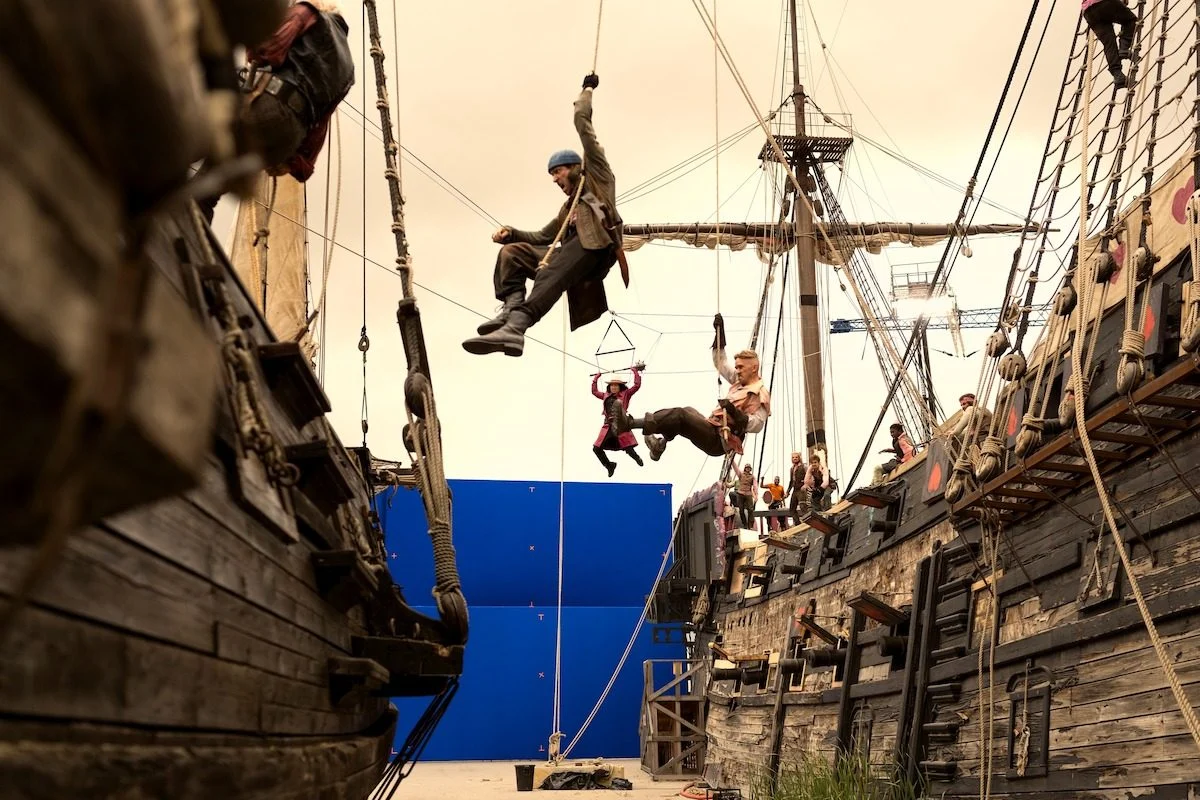
Netflix and the creative crew, led by showrunners Steven Maeda and Matt Owens, chose an audacious path: to prioritize practical effects and real-world locations over a heavy reliance on green screens and CGI. This decision marked a significant departure from many contemporary blockbuster productions, signaling a commitment to a timeless approach to filmmaking. The production chose South Africa as its primary filming location, a decision that not only cost seven months of intensive shooting but also necessitated the construction of elaborate, functional sets, including full-scale pirate ships, and a production schedule meticulously arranged around the sun’s natural light, reminiscent of classic Hollywood filmmaking techniques.
A Return to Practicality: Filming on Location in South Africa
The choice to film on location, particularly for a pirate-themed series where much of the action unfolds on the open sea, was both a logistical marvel and a creative gamble. While animation offers boundless freedom, live-action is tethered to reality. Camera limitations, available locations, and special effects budgets are all critical considerations that must be approved and planned rigorously. Yet, Netflix embraced these challenges head-on. The production employed a massive workforce of 400 to 500 individuals, dedicated to bringing the diverse and vibrant world of One Piece to life, from crafting intricate sets to managing complex on-water sequences.
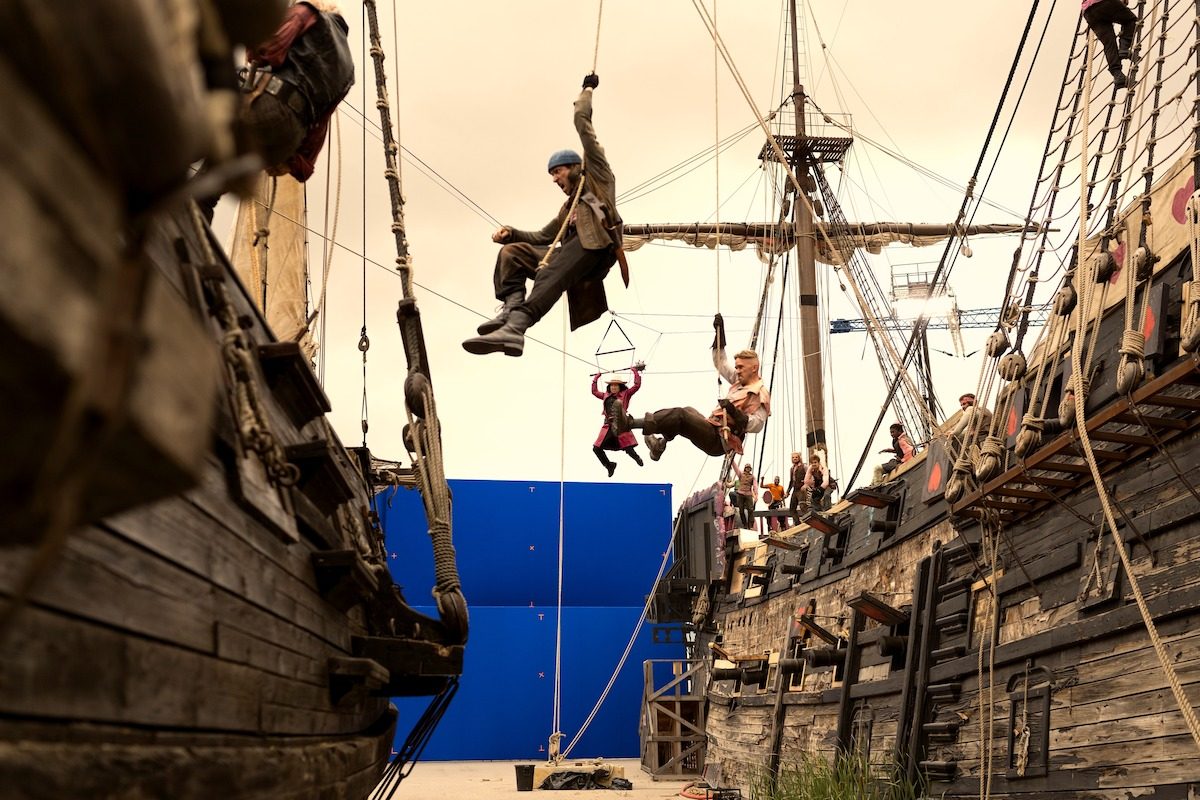
Director of Photography Nicole Hirsch Whitaker, in an interview with Buzz magazine, illuminated the practical difficulties and ingenious solutions employed during the South African shoot. "Available daylight is always an issue, and not being able to rotate the ships," Whitaker explained. "We had very big rigs, and it’s windy in South Africa! It took some time to work out how to make it all look really good, but with a great crew, we learned to schedule things around the sun." This dedication to working with the elements, rather than trying to overpower them with digital manipulation, imbued the series with a tangible quality that resonated deeply with viewers. The wind, the sun, the ocean spray – these weren’t simulated; they were real, contributing to an immersive experience that digital environments often struggle to replicate.
Crafting the Visuals: Custom Lenses and High-End Gear
The technical prowess behind One Piece was equally impressive. Netflix productions adhere to a strict list of "Netflix Approved Cameras" to ensure a consistent standard of image quality. For One Piece Season One, the team opted for the large-format ARRI Alexa Mini LF cameras, renowned in the industry for their exceptional image fidelity, dynamic range, and cinematic look. This choice provided a robust foundation for capturing the show’s ambitious visuals.
However, the real innovation came with the lensing. To achieve a specific aesthetic that would honor the anime’s scope while grounding it in live-action, the production required custom anamorphic lenses. As Nicole Hirsch Whitaker shared with NoFilmSchool, "We actually went to Hawk, and they built us a set of lenses from scratch to basically allow us to do what we needed to do because there really wasn’t a large format lens out there that we could do the same type of photography with if they hadn’t built us those lenses." These Hawk MHX / MiniHawk hybrid anamorphic lenses were specifically engineered to cover the large-format sensor of the ARRI Alexa Mini LF, delivering the desired widescreen aspect ratio, characteristic oval bokeh, and subtle barrel distortion that contribute to a distinctly cinematic feel. The investment in these bespoke lenses, which Netflix had to approve and fund, underscored the production’s commitment to visual excellence. For Season Two, the team plans to transition to the legendary Panavision Primo 70 lenses, indicating a continued pursuit of premium optics.
The Production Timeline and Critical Reception
The commitment to practical filmmaking and custom equipment naturally led to an extended production timeline. First announced in 2020, the journey to screen was a long one. After extensive pre-production, filming for One Piece Season One commenced, lasting approximately seven months. The series finally premiered globally in August 2023.
The payoff was immediate and resounding. Against initial widespread skepticism, the live-action One Piece was met with critical acclaim and overwhelmingly positive fan reception. It debuted as the number one series in 46 countries and reached the Top 10 in 93, quickly becoming one of Netflix’s most successful adaptations. Critics praised its faithfulness to the source material’s spirit, its impressive production design, and the strong performances of its cast. On Rotten Tomatoes, it earned a critics’ score of 85% and an audience score of 94%, a rare feat for an anime adaptation. This impressive release quickly translated into a vote of confidence from Netflix, which renewed One Piece for a second season only two weeks after its premiere, a swift decision that highlighted its undeniable success.
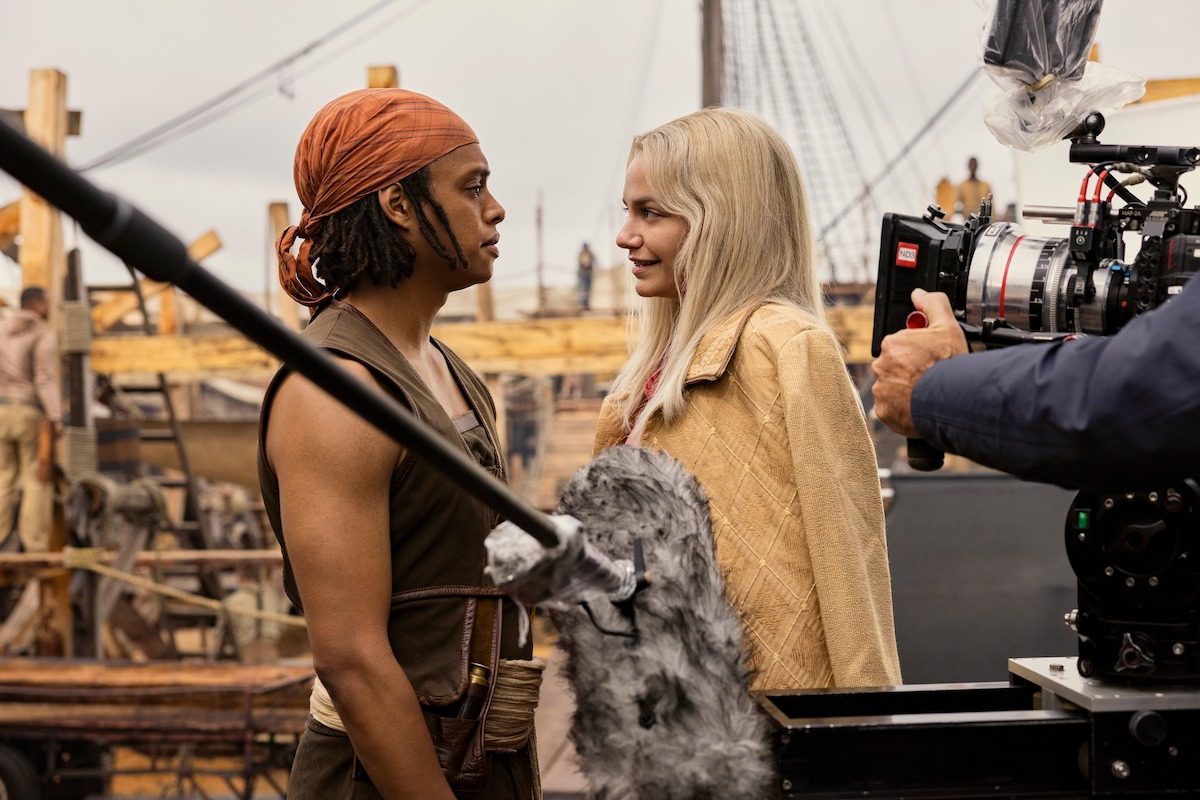
Why Practicality Paid Off: A Case Study in Immersion
The triumph of Netflix’s One Piece offers a compelling argument for the enduring power of practical filmmaking. In an era where advanced CGI and virtual production (volume walls) are increasingly prevalent, there’s a growing sentiment within the industry and among audiences that digital effects, while powerful, do not always equate to "better." Viewers are becoming more adept at spotting artificial environments, and an actor integrated into a volume wall can sometimes feel visually disconnected from their surroundings.
One Piece circumvented this by embracing a tried-and-true method: building real sets, utilizing real locations, and integrating practical effects wherever possible. This "timeless approach" to filmmaking compels the crew to work with the elements – the sun, the wind, the physical textures of the sets – to truly immerse viewers in the story. While practical filmmaking can be exceedingly expensive, requiring months of location shooting, hundreds of crew members, and custom-made equipment, the authentic visual impact it delivers often justifies the investment. The tangibility of the world, the genuine interaction of light, and the believable scale of the pirate ships and environments all contributed to a viewing experience that felt more grounded, despite the fantastical premise.
The Broader Industry Shift: Insights from Dream Con
The lessons learned from One Piece‘s production extend far beyond the confines of a multi-million-dollar Netflix series. Lensrentals.com, a key player in providing access to high-end camera equipment, actively engages with the creative community by attending various conventions. This year, they added Dream Con, a Houston convention celebrating anime, gaming, cosplay, TV, and film, to their roster, alongside industry stalwarts like NAB, WPPI, and ImagingUSA. What they discovered at Dream Con was a room buzzing with aspiring creators who shared the same ambitious spirit as the One Piece crew, albeit without Netflix-level budgets.
Lensrentals.com observed a consistent pattern: creators overwhelmingly want to own their camera body. The camera body often represents a significant investment, a personal tool, and a core component of their creative identity. What these creators seek to rent, however, is everything else that elevates their projects: high-quality glass (lenses) first, followed by streaming gear and other additive pieces that push a production up a tier. This trend, "owning your body, renting your glass," highlights a growing sophistication among independent filmmakers who understand that while the camera body captures the image, the lens fundamentally shapes its look and feel. They weren’t asking to rent a body they could buy; they were asking about the specialized glass that makes their owned body truly worth possessing.
Empowering Independent Filmmakers: The Democratization of Tools
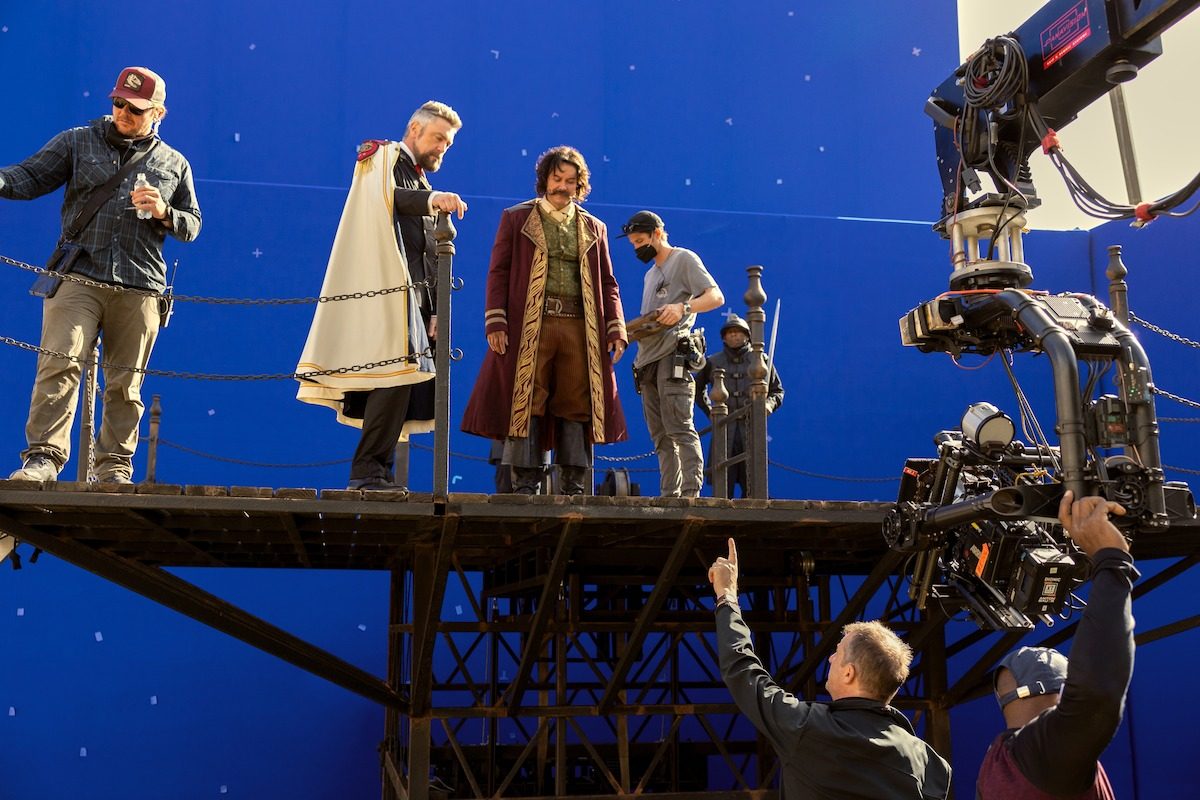
This shift in how creators approach equipment acquisition has profound implications for the democratization of high-quality filmmaking. While independent creators may lack the crew size or custom lenses of a Netflix production, they are not lacking in access to the very same professional-grade tools. The ARRI Alexa Mini LF, the same camera body used for One Piece, is available for rent, putting cinema-grade image capture within reach of smaller productions. For those seeking the distinctive large-format anamorphic look, options like the Atlas Mercury Full-Frame 1.5x line offer full-frame coverage with classic anamorphic characteristics. If a clean, spherical look is preferred, the Zeiss Supreme Primes provide exceptional image quality and cover the large-format image circle Whitaker needed.
The ability to rent specialized lenses and high-end camera bodies allows independent filmmakers to achieve cinematic aesthetics that were once exclusive to major studios. This means that a creator with a limited budget can still access the tools that define the visual language of top-tier productions, allowing them to experiment with different looks and elevate their storytelling without the prohibitive cost of outright purchase. Rental services bridge the gap, enabling creative vision to transcend financial constraints.
Beyond Netflix: Indie Success Stories
The world of creativity is not just shifting; it has already undergone a profound transformation. Independent creators are increasingly demonstrating that compelling storytelling and high production value are not solely the domain of massive budgets. Kane Parsons, for example, built "The Backrooms" as a web series in his teenage years, eventually directing a feature film adaptation for roughly $10 million that went on to gross over $400 million worldwide, becoming A24’s biggest film in history. Similarly, Curry Barker’s film "Obsession," shot in just twenty days for $750,000, cleared half a billion dollars. These examples serve as powerful proof that audiences and industry professionals are receptive to productions that start with budgets remarkably close to those of aspiring creators, provided the creative vision and execution are strong.
The success of One Piece on Netflix, built on a foundation of courageous practical filmmaking and strategic technical choices, offers a blueprint not just for future blockbuster adaptations, but for every filmmaker striving to tell their story. It underscores that authenticity, immersion, and a deep understanding of visual storytelling can triumph over skepticism. For independent creators looking to emulate this success, the path is clearer than ever. Whether it’s through a full anamorphic lineup, from full-frame sets to kits compatible with existing cameras, or by renting the very ARRI Alexa Mini LF used on One Piece, the tools to achieve cinematic excellence are readily available. The message is clear: if Netflix can make a practical bet and win big, so too can the next generation of filmmakers, armed with vision and access to the right equipment. The key lies in understanding how to leverage these resources to best support one’s unique creative vision.