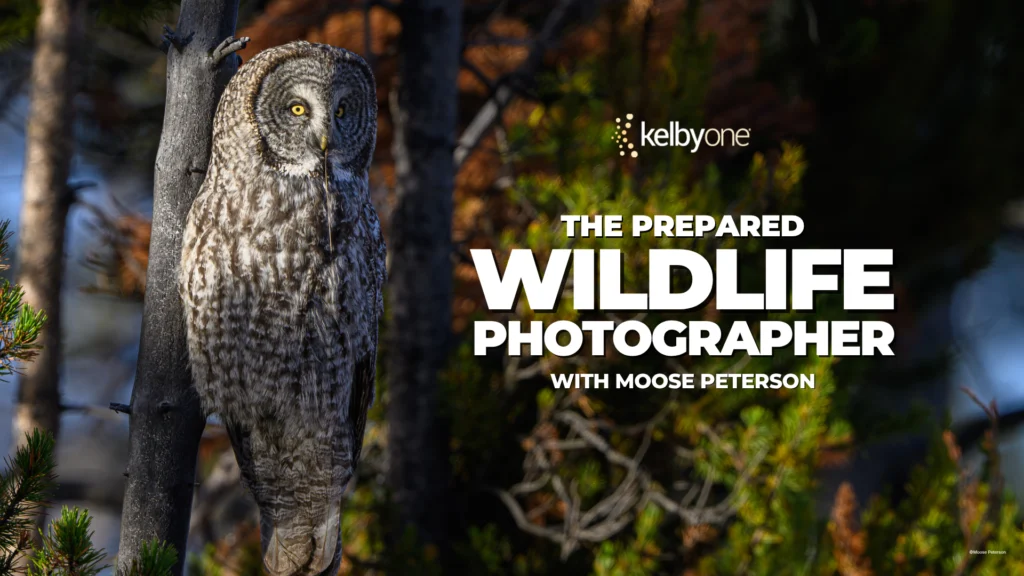
The unpredictable world of wildlife photography demands not only skill and patience but also an unparalleled level of technical preparedness. In a field where decisive moments unfold in mere seconds, the ability to react instantaneously and accurately can distinguish a fleeting glimpse from an iconic capture. This core philosophy underpins "The Prepared Wildlife Photographer," a new educational course developed by renowned photographer and educator Moose Peterson, launched through the KelbyOne platform. The initiative aims to equip aspiring and experienced photographers alike with the systematic approach necessary to pre-empt technical challenges, allowing them to focus entirely on the subject and the narrative when critical opportunities arise.
The Imperative of Instantaneous Capture
Wildlife photography, by its very nature, is a discipline fraught with variables. Animals do not pose, light conditions can shift dramatically, and action often erupts without warning. A fraction of a second can be the difference between a blurry, missed shot and a perfectly frozen frame of a predator mid-pounce or a bird taking flight. Traditional photographic education often emphasizes reactive problem-solving in the field—adjusting settings as a scene unfolds. However, Mr. Peterson’s course posits a paradigm shift: that optimal results are achieved when technical considerations are largely resolved before the photographer even steps into the field. This proactive methodology seeks to transform the technical operation of a camera into a second nature, an automatic response that frees the photographer’s cognitive resources for composition, timing, and storytelling.
The Architect of Preparedness: Who is Moose Peterson?
Moose Peterson is widely recognized as a titan in the realm of wildlife and aviation photography, with a career spanning several decades. His work, characterized by breathtaking clarity, dynamic composition, and a deep respect for his subjects, has graced the pages of countless publications, including National Geographic, Audubon, and Outdoor Photographer. Beyond his iconic imagery, Peterson has cultivated a reputation as a prolific author, educator, and advocate for conservation. His previous courses and workshops have consistently emphasized practical, real-world techniques, distilling complex photographic principles into actionable strategies. He is known for his pragmatic approach to gear, focusing on maximizing the potential of existing equipment through meticulous preparation and understanding. This new course is a natural extension of his long-held belief that technical mastery is not an end in itself, but a vital tool that unlocks creative freedom in the demanding environment of nature photography. His philosophy aligns with the idea that the camera should be an extension of the photographer’s eye and mind, rather than a barrier of buttons and menus.
Dissecting the Curriculum: Key Modules and Techniques
"The Prepared Wildlife Photographer" is structured to guide participants through a comprehensive regimen of pre-field camera and lens preparation, advanced technical settings, and innovative practice techniques. The course moves systematically from fundamental checks to sophisticated operational strategies, ensuring a holistic understanding of readiness.
-
Pre-Field Camera Optimization:
The course begins with the foundational elements of camera maintenance and setup. Mr. Peterson meticulously details the importance of routine firmware checks, explaining how outdated firmware can lead to compatibility issues with new lenses or accessories, introduce bugs, or even hinder performance in critical situations like continuous autofocus tracking. He outlines a systematic approach to verifying and updating firmware, a step often overlooked by even seasoned photographers. Following this, the critical process of sensor cleaning is addressed. Dust particles on a camera’s sensor can manifest as distracting spots in images, particularly noticeable against clear skies or uniform backgrounds. Peterson provides practical guidance on safe and effective sensor cleaning methods, emphasizing preventative measures and the correct tools to avoid damaging the delicate sensor surface. These initial modules underscore the belief that a well-maintained camera is the first step toward reliable performance. -
Mastering Exposure and Light:
One of the most challenging aspects of wildlife photography is managing dynamic lighting conditions and rapidly changing scenes. The course delves deeply into getting exposure dialed in ahead of time. This involves understanding the interplay of aperture, shutter speed, and ISO, not as isolated settings, but as a cohesive system tailored to specific photographic scenarios. Mr. Peterson demonstrates how to anticipate common lighting situations—from bright midday sun to low-light dawn or dusk—and pre-set base exposures. He covers advanced metering techniques, exposure compensation, and how to utilize exposure bracketing effectively when conditions are highly variable. Crucially, the course also explores the strategic use of flash for color. Beyond merely adding light, flash can be employed to enhance saturation, provide catchlights in animal eyes, and balance ambient light, particularly in challenging backlighting situations. Techniques like high-speed sync (HSS) and balancing flash output with ambient exposure are demystified, offering photographers tools to overcome difficult lighting challenges. -
Navigating Focal Length and Reach:
Wildlife photography frequently requires significant focal length to capture distant or shy subjects. The course addresses the complexities of working with long lenses, including proper handling techniques to minimize camera shake, optimal tripod and gimbal head usage, and considerations for lens weight and balance. A particularly insightful segment focuses on the strategic decision-making between using teleconverters and crop mode. Teleconverters optically extend the focal length of a lens but come with trade-offs in terms of light transmission and potential image quality degradation. Crop mode, on the other hand, utilizes only a central portion of the camera’s sensor, effectively increasing the reach but reducing the overall megapixel count of the final image. Mr. Peterson provides a nuanced comparison, guiding photographers on how to assess their specific gear, lighting conditions, and desired output to make an informed choice that maximizes reach while preserving image quality. This discussion is particularly relevant given the advancements in sensor technology and resolution, making crop mode a more viable option than in previous generations of cameras. -
Innovative Practice Methodologies:
Perhaps one of the most unique and illustrative components of the course is the teddy bear exercise for practicing exposure. Recognizing that real wildlife encounters are rare and fleeting, Mr. Peterson advocates for simulated practice. The "teddy bear exercise" involves setting up a stationary subject (like a teddy bear) in various lighting conditions and practicing rapid exposure adjustments, focusing, and composition. This seemingly simple exercise allows photographers to ingrain technical responses without the pressure of a live subject, building muscle memory and confidence. It’s a testament to the course’s practical orientation, providing a low-stakes environment for high-gain learning. This method extends beyond exposure, applicable to practicing focus tracking, burst shooting, and framing, transforming theoretical knowledge into ingrained skill.
The Imperative of Readiness: Why Preparation is Paramount
The rationale behind Mr. Peterson’s emphasis on preparedness is rooted in the inherent challenges of wildlife photography. Unlike studio or landscape photography, where photographers often have control over lighting or ample time for composition, wildlife moments are ephemeral. A hawk diving for prey, a deer leaping across a stream, or a bear emerging from the woods may last only a fraction of a second. If a photographer is fumbling with aperture settings, struggling with autofocus modes, or realizing their battery is low, the moment is lost.
Data from photographic communities and professional surveys consistently highlight technical proficiency as a major barrier for aspiring wildlife photographers. Studies often point to missed shots due to incorrect exposure, out-of-focus subjects, or inadequate shutter speeds as common frustrations. By pre-setting and pre-visualizing, photographers can eliminate many of these technical hurdles. This systematic readiness not only increases the hit rate of successful captures but also significantly reduces post-processing time, as images are closer to optimal straight out of the camera. The mental bandwidth saved from not having to actively think about technical settings can then be redirected to more creative aspects: anticipating animal behavior, refining composition, and truly observing the subject’s interaction with its environment. This mental shift allows for a deeper connection with the subject and, ultimately, more impactful storytelling.
Educational Impact and Broader Implications
The launch of "The Prepared Wildlife Photographer" through KelbyOne signifies a continued evolution in photography education. KelbyOne, a leading online platform for creative education, regularly partners with industry experts to deliver specialized content to a global audience. Offering Mr. Peterson’s course democratizes access to high-level instruction that might otherwise only be available through expensive workshops or limited-attendance seminars. This accessibility is crucial for fostering a new generation of skilled wildlife photographers worldwide.
The broader implications of such comprehensive training extend beyond individual artistic achievement. Well-executed wildlife photography plays a critical role in conservation efforts. Stunning images can raise public awareness about endangered species, highlight habitat destruction, and inspire action. When photographers are technically proficient, they are better able to capture the raw beauty and vulnerability of wildlife, creating compelling visual narratives that resonate with a wider audience. Moreover, a prepared photographer is often a more ethical photographer, less likely to disturb subjects in pursuit of a shot, as they can maximize opportunities with minimal intrusion. By instilling discipline and foresight, the course indirectly contributes to responsible wildlife observation and documentation.
Availability and Access
"The Prepared Wildlife Photographer with Moose Peterson" is now available on the KelbyOne platform. Recognizing the value of introductory access, the platform offers the first lesson for free, allowing prospective students to experience Mr. Peterson’s teaching style and the course’s foundational principles before committing to the full curriculum. This approach aligns with KelbyOne’s mission to provide accessible, high-quality instruction to a broad community of photographers eager to hone their craft. The course is presented through high-definition video lessons, complete with Mr. Peterson’s engaging commentary and practical demonstrations, ensuring a rich and immersive learning experience for all participants.
In an era where digital photography has made taking pictures easier than ever, mastering the art of photography, especially in demanding genres like wildlife, requires a commitment to excellence and a structured approach. Moose Peterson’s new course offers precisely that: a roadmap to technical mastery that transforms potential frustration into creative liberation, ensuring that when that incredible wildlife moment happens, the photographer is not just present, but truly prepared to capture it.