The global aviation community remains in a state of profound shock following the catastrophic crash of Air India Flight AI-171 on June 12, 2025. The aircraft, a Boeing 787-8 Dreamliner, was completing a long-haul journey from London Heathrow (LHR) to Sardar Vallabhbhai Patel International Airport (AMD) in Ahmedabad, India, when it went down during its final approach. Of the 245 souls on board, including passengers and crew members, authorities have confirmed that only one individual survived the impact, a figure that highlights the extreme violence of the accident. As the wreckage is secured and the grieving process begins for hundreds of families across the United Kingdom and India, the focus of the international aviation industry has shifted toward the recovery and analysis of the aircraft’s "black boxes"—the Flight Data Recorder (FDR) and the Cockpit Voice Recorder (CVR). These devices, now under intensive scrutiny at a specialized laboratory in New Delhi, hold the key to understanding the final moments of the flight and determining whether a mechanical failure, human error, or environmental factors led to the disaster.
Chronology of Flight AI-171
Flight AI-171 departed London Heathrow at its scheduled time, carrying a mix of business travelers, families, and tourists. According to preliminary radar data and flight tracking logs, the journey across Europe and the Middle East was largely uneventful. The Boeing 787-8, a cornerstone of Air India’s modernized fleet following the airline’s acquisition by the Tata Group, was operating within all standard parameters for the majority of the flight. As the aircraft entered Indian airspace and began its descent toward Ahmedabad, weather reports indicated typical monsoon-season conditions, including intermittent heavy rain and moderate turbulence, though nothing that was deemed outside the operational limits of a modern wide-body jet.
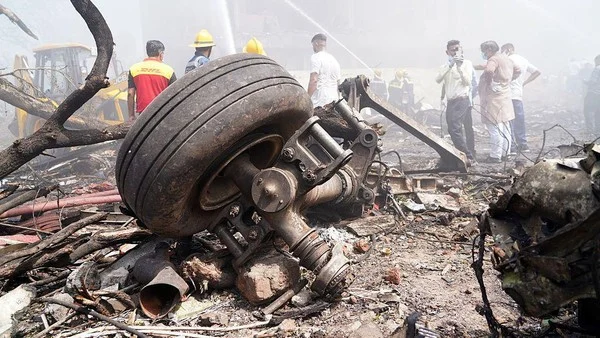
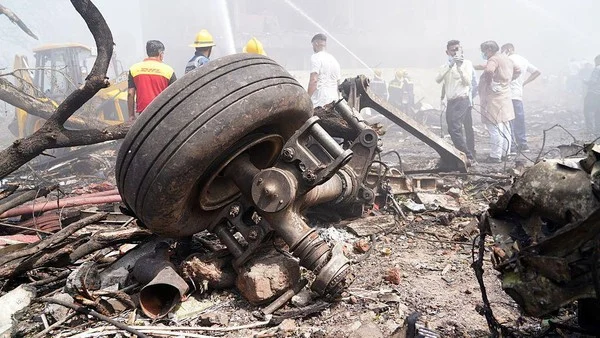
The critical phase of the flight began at approximately 11:45 PM local time. Air Traffic Control (ATC) in Ahmedabad cleared AI-171 for an Instrument Landing System (ILS) approach to Runway 23. At an altitude of approximately 4,000 feet, the aircraft’s descent rate began to fluctuate abnormally. Witnesses on the ground near the airport perimeter reported seeing the aircraft flying unusually low with an unstable pitch before it disappeared from radar screens. The wreckage was subsequently located in a semi-rural area just kilometers from the runway threshold. Emergency services reached the scene within minutes, but the intensity of the post-crash fire limited the possibility of finding survivors, making the discovery of the lone survivor a miraculous exception in an otherwise total tragedy.
The Science of the Investigation: Decoding the Black Boxes
The recovery of the Flight Data Recorder (FDR) and the Cockpit Voice Recorder (CVR) occurred within 24 hours of the crash. Despite the term "black box," these units are painted in high-visibility international orange to aid recovery teams in debris fields. The devices are engineered to withstand extreme G-forces, crushing pressures, and temperatures exceeding 1,100 degrees Celsius. The Indian Ministry of Civil Aviation has confirmed that the units were transported under heavy security to the Directorate General of Civil Aviation (DGCA) laboratory in New Delhi.
The FDR is expected to provide a second-by-second account of the aircraft’s technical performance. It records over 80 parameters, including airspeed, altitude, vertical acceleration, engine thrust, and the positions of flight control surfaces. Meanwhile, the CVR will provide the investigative team with the audio environment of the cockpit. This includes not only the conversations between the captain and the first officer but also automated radio transmissions, cockpit alarms, and ambient sounds that can indicate mechanical shifts, such as the movement of landing gear or the engagement of the flap system. The synchronization of these two data streams will allow investigators to reconstruct a digital "flight animation," providing a clear picture of what the pilots saw and felt versus how the aircraft actually responded.
Technical Focus: The Role of the Flap System
While the investigation is in its infancy, preliminary focus has shifted toward the Boeing 787’s wing flap system. Reports from preliminary maintenance log reviews and early data telemetry suggest that the aircraft may have experienced a "flap asymmetry" or a total failure of the flap extension mechanism during the approach. Flaps are movable panels on the trailing edge of the wings that increase lift and drag, allowing an aircraft to fly safely at the lower speeds required for landing.
If the flaps fail to deploy correctly, or if they deploy unevenly (asymmetry), the aircraft can become incredibly difficult to control. A failure at low altitude leaves the flight crew with very little time to troubleshoot. In a flap-up landing scenario, the aircraft must maintain a much higher approach speed, which increases the risk of a runway excursion or a stall if the speed drops too low. Investigators are currently analyzing whether the AI-171 crew faced such a mechanical emergency and how they attempted to compensate for it in the final seconds of the flight.

International Cooperation and Official Responses
Given the international nature of the flight and the origin of the aircraft, the investigation is a multi-national effort. Under ICAO Annex 13 protocols, India’s Aircraft Accident Investigation Bureau (AAIB) is leading the probe. They are being assisted by the United States National Transportation Safety Board (NTSB) and the Federal Aviation Administration (FAA), representing the country of manufacture. Boeing has also dispatched a team of technical advisors to provide specific data regarding the 787-8’s fly-by-wire systems and composite airframe integrity.
A spokesperson for the Indian Ministry of Civil Aviation stated, "Our primary objective is transparency and accuracy. We owe it to the victims and their families to find the unvarnished truth. No stone will be left unturned, and no technical possibility will be ignored." Boeing issued a brief statement expressing its "deepest condolences" and affirming its commitment to supporting the AAIB. Meanwhile, Air India has grounded several other 787s in its fleet for "precautionary inspections" of their flight control systems, a move that has caused significant disruption to its international schedule but has been praised by safety advocates.
The Boeing 787 Dreamliner’s Safety Record
The Boeing 787 Dreamliner is generally regarded as one of the safest and most advanced aircraft in the world. Since its entry into service in 2011, it has maintained an excellent safety record, though its early years were marred by battery overheating issues that led to a temporary global grounding. However, the 787 had not been involved in a major fatal hull-loss accident involving passengers until the AI-171 event.
The crash has raised questions about the aging of the early-build 787-8 models and whether there are undiscovered fatigue issues in the composite materials or latent software bugs in the flight control computers. Aviation analysts note that as the global fleet of Dreamliners matures, maintenance protocols must evolve. The data from AI-171 will be vital for Boeing and operators worldwide to determine if the Ahmedabad crash was an isolated incident or indicative of a systemic vulnerability in the 787 platform.
Global Impact and Industry Implications
The ripple effects of the AI-171 crash are being felt across the aviation industry. Insurance markets are bracing for one of the largest payouts in recent Indian history, involving both hull loss and passenger liability. Furthermore, the crash has prompted a debate over pilot training. Modern aircraft are highly automated, and some safety experts argue that "automation dependency" can leave pilots unprepared for rare, catastrophic mechanical failures where manual flying skills are paramount.
For Air India, this tragedy comes at a time of massive expansion. The airline recently placed record-breaking orders for hundreds of new aircraft to compete with global giants. While the crash is a significant setback, the airline’s management has reiterated its focus on safety-first operations. "The transformation of Air India cannot happen without a world-class safety culture," said a senior Tata Group executive. "We are cooperating fully with investigators to ensure we learn every possible lesson from this tragedy."
Conclusion and Future Outlook
The analysis of the AI-171 black boxes is expected to take several weeks for a preliminary report and up to a year for a final, comprehensive determination. In the interim, the aviation world waits for answers. The lone survivor, currently in critical but stable condition at a specialized trauma center in Ahmedabad, may eventually be able to provide a firsthand account of the cabin environment during the descent, but the heavy lifting of the investigation will be done by the engineers and data scientists in New Delhi.
The tragedy serves as a somber reminder of the inherent risks of flight, despite the industry’s best efforts to mitigate them. However, history has shown that every major aviation accident leads to improvements in technology, training, and regulation. The legacy of Air India Flight AI-171 will likely be a new set of safety mandates that will protect millions of future passengers, ensuring that the lives lost on June 12, 2025, contribute to a safer sky for everyone. As the "orange boxes" yield their secrets, the mystery of AI-171 will move from speculation to certainty, providing the closure that the families and the global public so desperately seek.