The integration of the AVSS PRS-M30 parachute system has officially transformed the DJI Matrice 30 (M30) series into a compliant solution for complex aerial operations, specifically allowing the DJI M30 to fly over crowds and populated urban environments. In the rapidly evolving landscape of industrial unmanned aerial vehicles (UAVs), safety remains the paramount concern for regulators and operators alike. This technological advancement represents a significant leap forward, as it addresses the primary risk factor associated with urban drone use: the potential for kinetic impact in the event of a system failure. By combining DJI’s robust enterprise hardware with AVSS’s specialized recovery technology, the industry is witnessing a new standard for public safety, infrastructure inspection, and emergency response.
The Evolution of Safety in Industrial UAVs
The DJI M30, since its inception, was designed to bridge the gap between the portability of smaller drones and the high-end capabilities of the larger Matrice 300 RTK. However, despite its advanced obstacle avoidance and redundant systems, flying over people remained a regulatory hurdle due to the strict safety requirements imposed by aviation authorities such as the Federal Aviation Administration (FAA) in the United States and the European Union Aviation Safety Agency (EASA).
The introduction of the PRS-M30 parachute system by Aerial Vehicle Safety Solutions (AVSS) provides the necessary safety layer to satisfy these regulatory bodies. The system is specifically engineered to comply with the ASTM F3322-18 standard, which is the international benchmark for small UAS parachutes. This certification involves rigorous testing, including dozens of successful deployments across various failure scenarios, such as motor failure and loss of control. With this system installed, the DJI M30 can significantly reduce the descent energy of the aircraft, ensuring that in the event of a total power loss, the drone drifts slowly to the ground rather than falling at terminal velocity.
Technical Specifications of the PRS-M30 System
The AVSS PRS-M30 is not merely a passive safety device; it is a sophisticated, integrated recovery suite. It consists of several key components that work in tandem to protect both the drone and the public below:
- Electronic Module: This serves as the "brain" of the parachute system. It utilizes independent sensors to monitor the drone’s flight telemetry in real-time. If it detects an abnormal flight attitude or a sudden drop, it can trigger the parachute autonomously.
- Parachute Pod: A pre-packaged, replaceable canister containing the parachute canopy. The pod design allows for rapid deployment—often in less than a second—and can be easily swapped out after a deployment.
- Flight Termination System (FTS): Crucially, the system includes a "kill switch" that cuts power to the drone’s motors the moment the parachute is deployed. This prevents the rotors from tangling in the parachute lines or causing further injury upon landing.
- Manual Triggering: While the system is designed to be autonomous, operators retain a manual override via a dedicated remote, allowing them to deploy the parachute if they visually identify a risk that the sensors have not yet flagged.
The weight of the system is optimized to ensure that the DJI M30 maintains its impressive flight endurance. While any added weight affects battery life, the PRS-M30 is designed to have a negligible impact on the M30’s 41-minute maximum flight time, typically reducing it by only a few minutes.
The DJI M30 Platform: A Versatile Workhorse
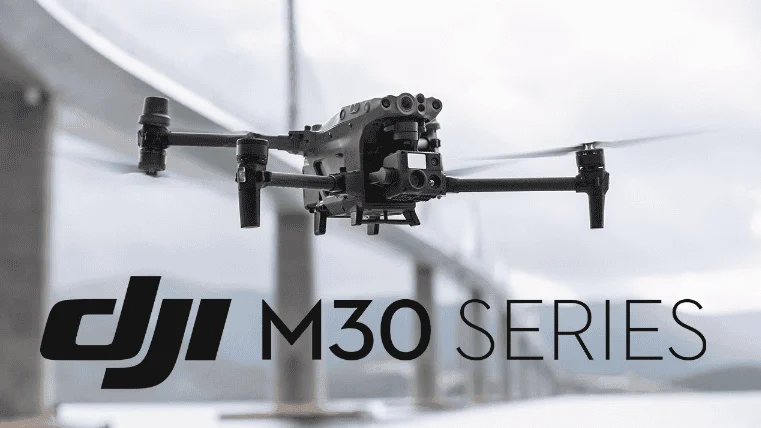
The drone itself, the DJI M30, provides the foundation for this safe operations ecosystem. It is equipped with a multi-sensor payload that is essential for the missions it is now authorized to perform over populated areas. The standard M30 model features a 48-megapixel 1/2" CMOS zoom camera capable of 5x to 16x optical zoom (and up to 200x digital zoom), a 12-megapixel wide-angle camera, and a laser rangefinder that can provide accurate coordinates for objects up to 1,200 meters away.
The M30T variant adds a 640×512 radiometric thermal camera, which is indispensable for search and rescue (SAR) operations and firefighting. For a fire department operating in a dense city, the ability to fly the M30T over a crowd to reach a high-rise fire while having the safety of a parachute system is a game-changer. It allows for the identification of heat signatures and trapped individuals without the legal and safety liabilities of an unprotected drone flight.
Furthermore, the M30 series boasts an IP55 rating, meaning it can operate in heavy rain and extreme temperatures ranging from -20°C to 50°C. This weather resistance, combined with 360-degree omnidirectional obstacle sensing, ensures that the drone is less likely to encounter a failure in the first place, with the parachute acting as the final, fail-safe layer of protection.
Chronology of Development and Certification
The journey toward making the DJI M30 a crowd-safe drone followed a specific timeline of engineering and regulatory milestones:
- March 2022: DJI officially launches the Matrice 30 series, positioning it as the ultimate tool for enterprise users who need portability without sacrificing power.
- Late 2022: AVSS begins development on a dedicated parachute system for the M30, recognizing the demand from police and fire departments for a "Flight Over People" (FOP) solution.
- 2023: The PRS-M30 undergoes extensive testing to meet ASTM F3322-18 standards. This involves 45 successful deployment tests, including manual and automatic triggers.
- 2024: Global adoption increases as regulatory agencies begin to accept the M30/AVSS combination as a valid "Category 2" or "Category 3" aircraft for operations over people under various national frameworks.
- Present: The integration is now a standard recommendation for any enterprise user operating in urban environments or during large-scale public events.
Regulatory Impact and "Flight Over People" (FOP)
To understand the importance of this development, one must look at the regulatory context. In the United States, the FAA’s Part 107 rules strictly limit flights over people to prevent injuries. Drones are categorized based on the level of risk they pose. The DJI M30, being a medium-sized industrial drone, naturally falls into a category that requires significant mitigation to be allowed over crowds.
By integrating the AVSS parachute, operators can apply for waivers or operate under specific categories because the "kinetic energy" of the drone in a fall is drastically reduced. In many jurisdictions, this setup satisfies the requirement that a drone must not cause a certain level of impact force (measured in Joules) upon a person. This opens doors for:
- News Media: Safely capturing aerial footage of parades, protests, and sporting events.
- Event Security: Monitoring crowd flow and identifying potential security threats in real-time.
- Urban Planning: Conducting high-resolution mapping of city centers without closing down streets.
Statements and Industry Reactions
Industry experts have hailed this integration as a necessary step for the maturation of the drone economy. A spokesperson for a leading North American public safety agency noted, "The ability to deploy a drone like the M30 over a city street during a pursuit or a missing person search, with the absolute certainty that a hardware failure won’t result in a tragedy on the ground, is what we have been waiting for. It moves drones from being a ‘cool tool’ to an ‘essential, safe utility’."
AVSS leadership has emphasized that their goal is to provide "peace of mind" for the operator. They argue that while DJI provides the best flight experience and data collection, the PRS-M30 provides the "insurance policy" required for high-stakes missions.
Broader Implications for the Drone Industry
The success of the DJI M30 and AVSS partnership is likely to trigger a ripple effect across the industry. It proves that third-party safety integrations are a viable path to regulatory compliance, rather than waiting for manufacturers to build parachutes directly into every airframe. This modular approach allows for faster innovation and gives operators the choice to add safety features based on their specific mission profiles.
Furthermore, this development supports the expansion of "Drone as a First Responder" (DFR) programs. In a DFR model, drones are stationed on rooftops and dispatched to 911 calls. These drones must navigate urban corridors and often fly over unsuspecting citizens to reach the scene. The inclusion of a parachute system is frequently a prerequisite for the FAA to grant the BVLOS (Beyond Visual Line of Sight) waivers necessary for these programs to function effectively.
Conclusion: A New Standard for Urban Missions
The fact that the DJI M30 can fly over crowds through the integration of the PRS-M30 parachute system is more than just a technical achievement; it is a shift in the operational philosophy of the drone industry. It acknowledges that while technology can be made highly reliable, it can never be perfect. By planning for the "unthinkable" failure, operators can maximize the utility of their drones while upholding their duty of care to the public.
As urban environments become more congested and the demand for real-time aerial data grows, the DJI M30 equipped with AVSS technology stands as the premier choice for professionals. It offers a sophisticated blend of high-end imaging, all-weather reliability, and, most importantly, a proven safety mechanism that allows the drone to operate where it is needed most: right above the action, safely and effectively.