The landscape of portable solid-state drives (SSDs) has long been dominated by a singular focus: the relentless pursuit of an optimal price-to-speed ratio. However, with the global surge in memory component costs rendering high-capacity personal storage increasingly expensive, a new paradigm is emerging. The Glyph Atom EX80, a recent entry into the high-performance SSD market, signals a significant shift, offering a compelling blend of cutting-edge speed, robust design, and previously unseen value-added features that cater directly to the demanding needs of photographers and filmmakers. This device is not merely a storage solution; it represents a thoughtful response to real-world challenges faced by creative professionals in an era of burgeoning data.
Redefining Value in Professional Storage
For nearly a decade, the evaluation of external storage devices has largely centered on raw speed metrics relative to cost. While performance remains paramount, the Glyph Atom EX80 introduces elements that compel a re-evaluation of what constitutes true value in professional-grade storage. Its integration of 80 Gbps (240 watt) performance, a speed previously observed in only a select few devices, is complemented by innovative features such as MagSafe compatibility and built-in tracking capabilities accessible via both Android apps and Apple FindMy. These additions transcend conventional SSD offerings, positioning the EX80 as a comprehensive tool designed to enhance workflow efficiency and data security, rather than just a fast data repository.
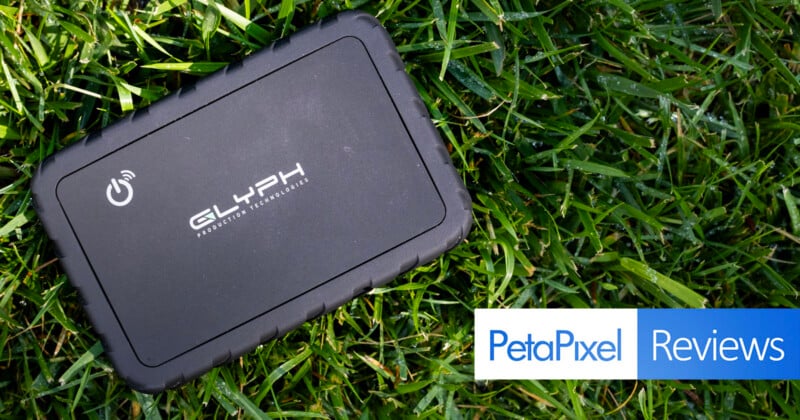
The decision by Glyph to incorporate these "bonus" features reflects a deep understanding of its target audience. Photographers and filmmakers frequently work on location, manage massive files, and often need to transport sensitive data across various environments or even ship physical drives to clients. In such scenarios, the ability to securely attach a drive to a device, locate it if misplaced, and monitor its transit becomes invaluable, far outweighing a marginal difference in pure speed. This strategic enhancement aims to address critical pain points, thereby establishing a new benchmark for utility in the professional storage segment.
Unrivaled Performance and Stability for Demanding Workflows
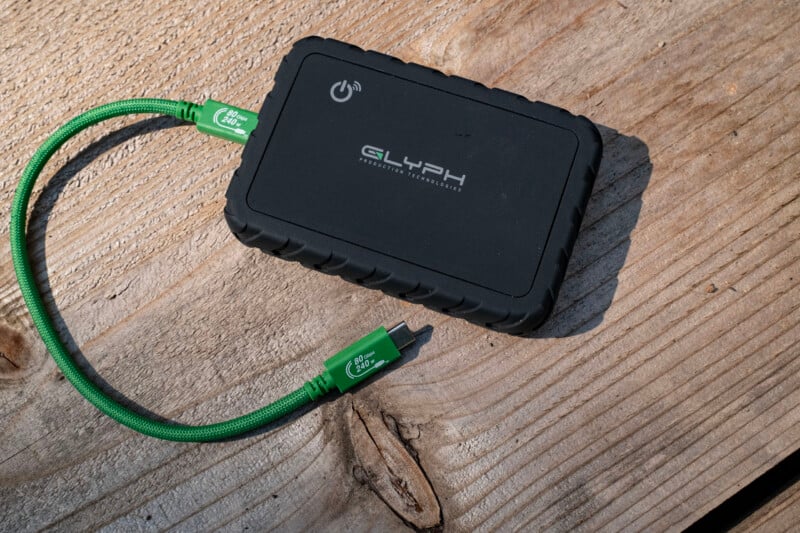
At its core, the Glyph Atom EX80 delivers exceptional performance, boasting transfer speeds that place it among the fastest portable SSDs available. Utilizing the advanced 80 Gbps USB standard (equivalent to USB4 Gen 4×2 or Thunderbolt 5, though the latter is primarily a PCIe-based interface standard), the EX80 achieves impressive data throughput crucial for handling large media files typical in 4K, 6K, and even 8K video production, as well as high-resolution photography workflows. This high-spec connection is backward compatible with Thunderbolt 5, 4, and 3, ensuring that users benefit from the maximum possible speeds on their current hardware while future-proofing their investment for upcoming computer upgrades.
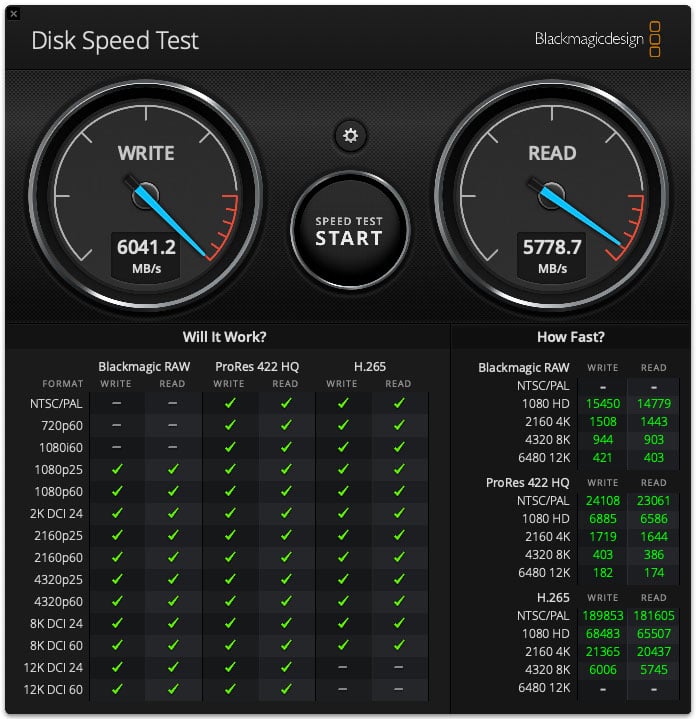
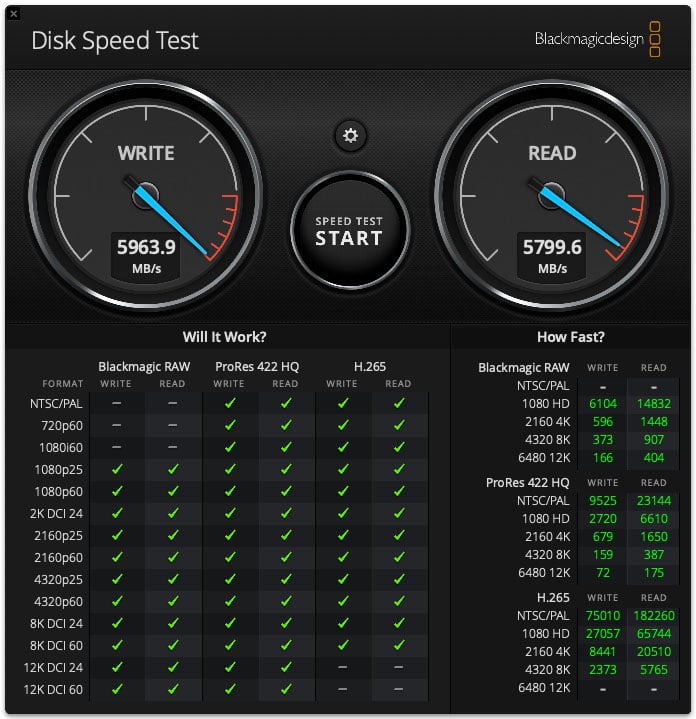
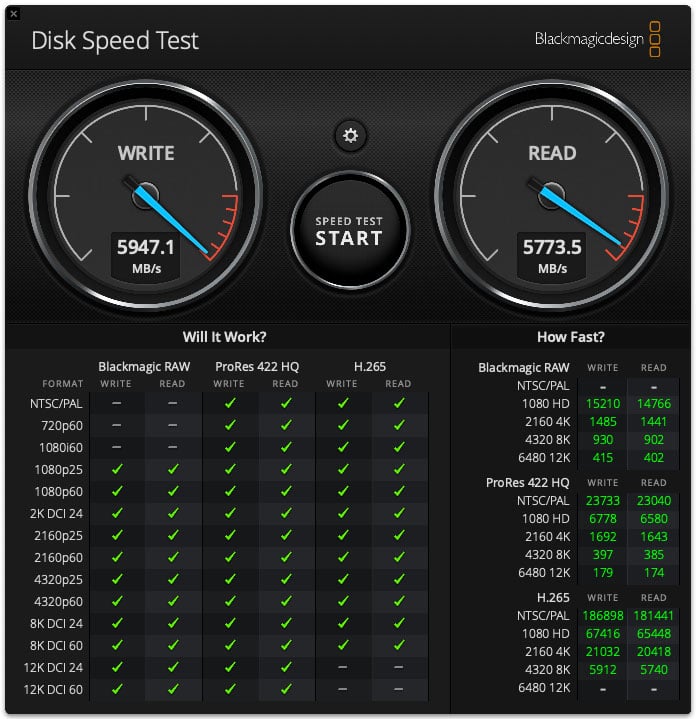
Rigorous testing procedures underscore the EX80’s capabilities. In Blackmagic Disk Speed Test evaluations, the drive consistently demonstrated stellar performance. When new, it recorded write speeds of 6,041.2 MB/s and read speeds of 5,778.7 MB/s. Crucially, this performance remained remarkably stable even when the drive was filled to capacity, registering 5,799.6 MB/s write and 5,936.9 MB/s read, well within a negligible margin of error. Post-formatting, speeds held strong at 5,947.1 MB/s write and 5,773.5 MB/s read. This consistency is a hallmark of a well-engineered device, indicating superior thermal management and controller stability, which are critical for sustained, intensive professional use.
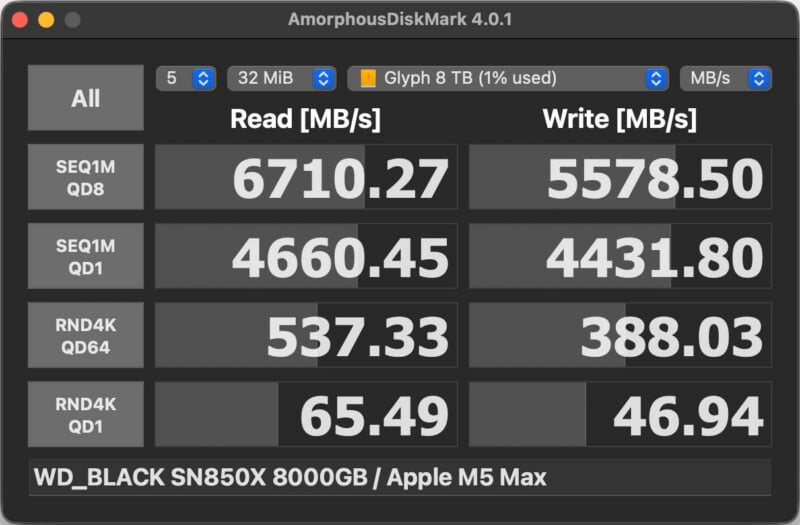
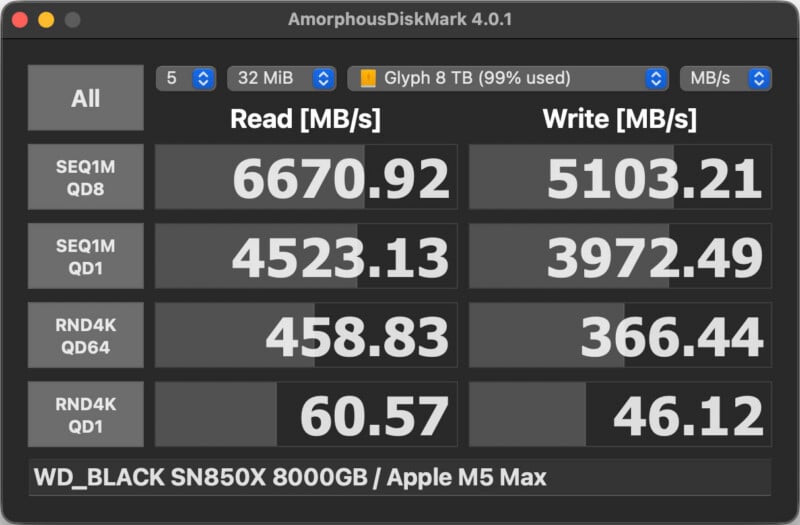
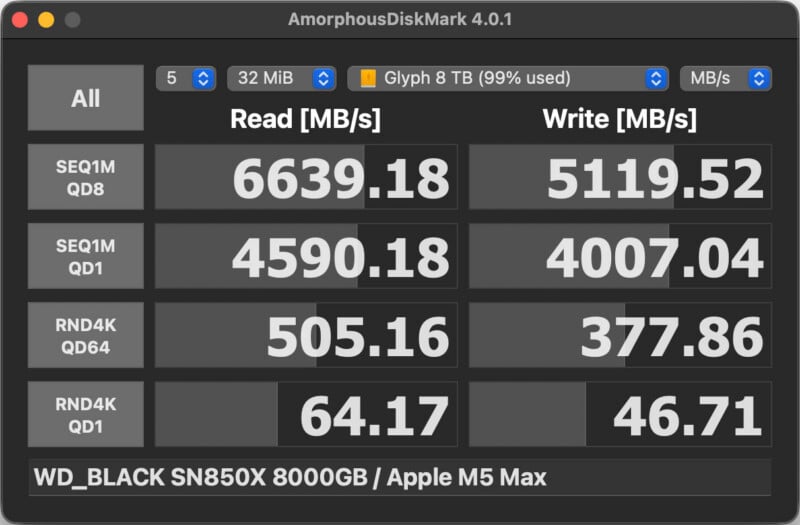
Further analysis with Crystal Disk Mark (also known as Amorphous Disk Mark) provided deeper insight into the EX80’s sustained performance. While Blackmagic primarily assesses peak sequential speeds, Crystal Disk Mark offers a more granular view, including random access speeds that are particularly relevant for active data manipulation and long-term storage scenarios. The RND4K QD64 numbers, which represent random read/write operations with a queue depth of 64, were robust and aligned with expectations for a drive of this caliber. These results confirm that the EX80 not only achieves high peak speeds but also maintains excellent responsiveness across various access patterns.
A significant advantage the Glyph Atom EX80 holds over some competitors, such as the Oyen U35 Bolt+, is its ability to avoid SLC cache exhaustion. While the Oyen drive might exhibit higher peak speeds, it can experience temporary performance dips as its SLC cache fills during prolonged heavy writes. The EX80, conversely, demonstrated rock-solid consistency throughout all tests, regardless of the data load or duration of abuse. This unwavering performance is a testament to Glyph’s engineering, ensuring that professionals can rely on continuous high-speed data transfer without unexpected bottlenecks, a crucial factor when dealing with time-sensitive projects.
Furthermore, thermal management, a common concern with high-speed external SSDs, is expertly handled by the EX80. Despite transferring terabytes of data, the drive remained warm to the touch but never excessively hot, and no thermal throttling was observed. Glyph’s claim of an "increased thermal ceiling" is substantiated by these findings, ensuring sustained performance even under heavy workloads.
Innovative Design and User-Centric Features
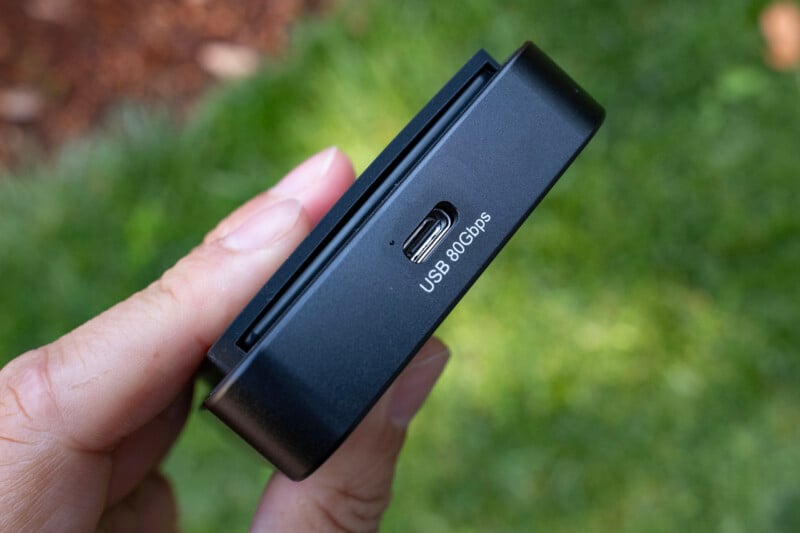
Beyond its raw performance, the Glyph Atom EX80 distinguishes itself through thoughtful design and an array of user-centric features. Glyph, though a relatively newer entrant in the mainstream photo and video storage space, demonstrates a keen understanding of product branding and user experience. Unlike some utilitarian alternatives that prioritize function over form, the EX80 exudes a premium quality that feels like a truly finished product.
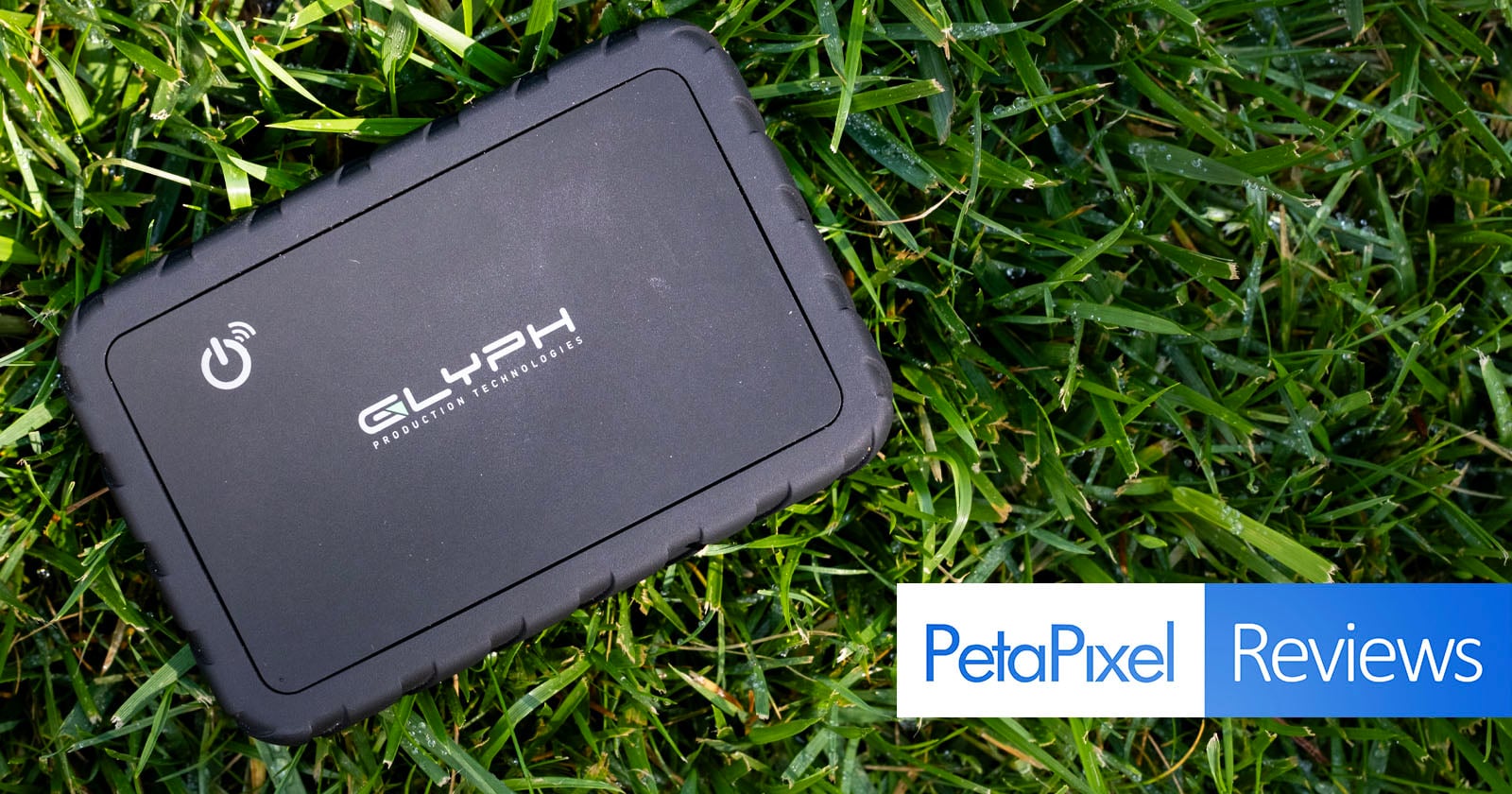
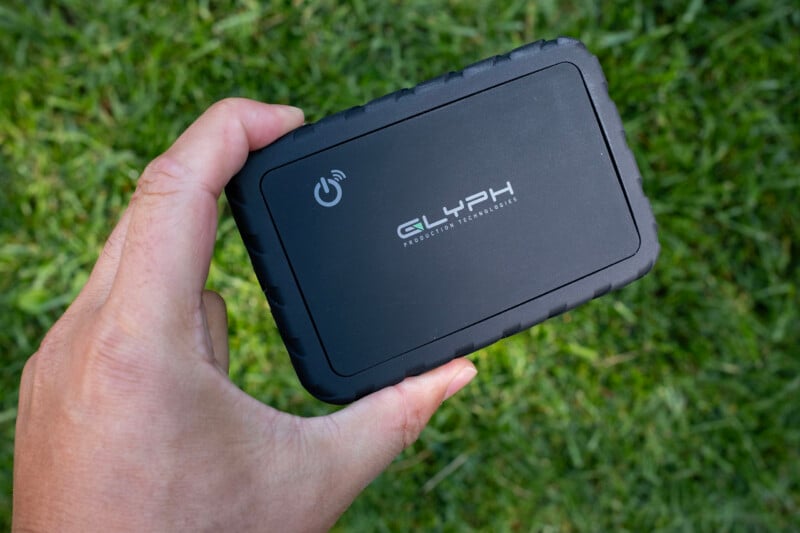
The device’s aesthetic is characterized by a sleek, black aluminum housing encased in a precisely fitted silicone bumper. This bumper not only provides robust protection against shock and vibration but also offers a pleasant, textured grip. The inclusion of a bright green, woven USB-C cable adds a distinctive visual flair and reinforces the sense of a complete, well-considered package, making the EX80 a device users would be proud to display on their desk.
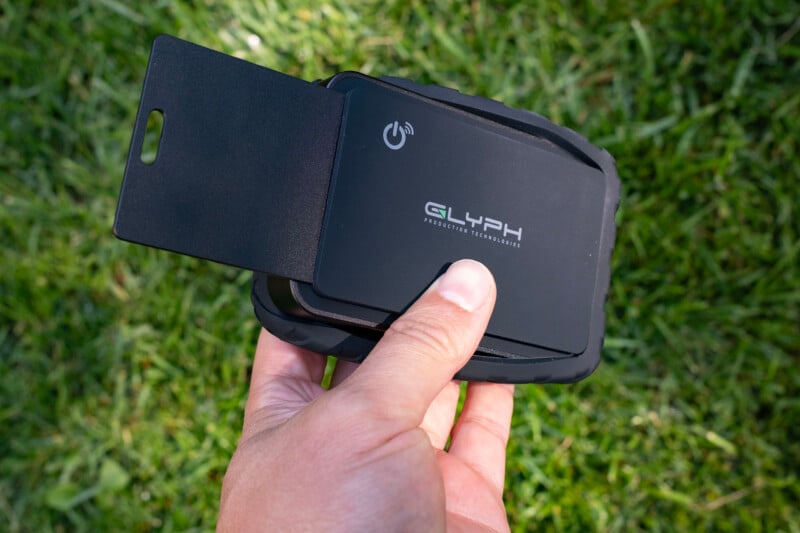
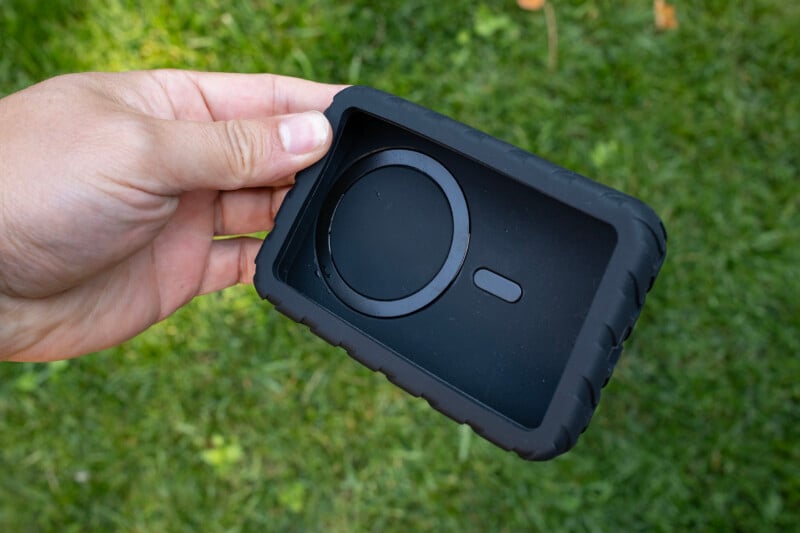
A standout feature is the integrated MagSafe magnet. While the magnet is housed within the removable silicone case rather than the SSD itself, its functionality remains highly practical. It allows the EX80 to securely attach to any MagSafe-compatible iPhone, streamlining mobile workflows, or to any metallic surface, such as the edge of a magnetic desk (like the Secretlab Magnus Pro), keeping the workspace tidy and the drive accessible. This magnetic attachment enhances convenience and reduces clutter, especially for professionals who frequently move between workstations or integrate their mobile devices into their workflow.
Perhaps the most groundbreaking feature is the built-in tracking mechanism. Concealed within a raised silicone bump on the SSD’s surface is a thin, business card-sized tracker. Activated once upon initial setup, this tracker immediately begins broadcasting a pairing signal, making it discoverable via Apple FindMy or compatible Android applications. This functionality essentially transforms the EX80 into a smart device, allowing users to monitor its location with the same precision as an AirTag, relying on the extensive network of nearby Bluetooth devices to log its whereabouts.
While the tracker is not inductively charged by the SSD itself, Glyph has designed it to be wirelessly rechargeable via any Qi charger, either by removing it from its pocket or even through the silicone bumper. With a battery life projected for a couple of years, and the ability to monitor its charge status through the tracking app, this minor inconvenience is easily mitigated. For those moments when the drive is misplaced in the same room, a loud audible alert can be triggered to pinpoint its exact location.
This tracking feature represents a significant value proposition, particularly for professionals. It provides invaluable peace of mind for travelers concerned about leaving an expensive and data-rich SSD behind. More critically, it addresses a substantial logistical challenge for production studios that frequently ship SSDs across vast distances. Sending physical drives remains a faster alternative to cloud uploads for massive projects, and the ability to track the shipment and confirm its arrival at the destination is a monumental advantage, enhancing accountability and reducing the risk of lost assets.
Addressing Professional Workflow Challenges
The Glyph Atom EX80’s combination of speed, robust design, and intelligent features directly tackles several critical challenges in modern professional workflows:
- Data Security and Loss Prevention: The integrated tracking provides an unprecedented layer of security. In an industry where data loss can be catastrophic, knowing the precise location of a drive, whether it’s forgotten at a coffee shop or in transit, is invaluable.
- Workflow Efficiency: The 80 Gbps performance ensures that even the most demanding tasks, such as editing 8K video directly from the drive or managing vast photo libraries, are smooth and efficient, eliminating bottlenecks. The consistent performance, free from SLC cache issues, means predictable speeds even during prolonged, heavy data transfers.
- Mobile Production: MagSafe compatibility facilitates seamless integration with mobile devices, expanding possibilities for on-the-go data management and capture, especially as modern smartphones become increasingly capable production tools.
- Logistics and Asset Management: For large production houses, the ability to track shipped drives offers significant improvements in logistics, inventory management, and client communication, transforming a potential vulnerability into a reliable process.
- Durability and Reliability: The robust silicone bumper protects against physical shocks and vibrations, crucial for field use. While the lack of an IP rating for water resistance is a minor area for future improvement, the existing protection ensures longevity in typical professional environments.
Market Context and Competitive Landscape
In the highly competitive portable SSD market, the Glyph Atom EX80 stands out. While popular consumer drives like the Samsung Shield series (T7 and T9) are widely adopted, they often fall short of the sustained performance required for professional video editing or rapid photo library loading. Their lower speeds mean they are not viable alternatives for active professional work, despite their accessibility.
For professionals prioritizing raw speed, alternatives such as Oyen’s U35 Bolt+, OWC’s Envoy Ultra, and ProGrade Digital’s PG10 offer comparable high-speed connections. However, as noted, the EX80’s superior thermal management and consistent performance give it an edge over drives like the Oyen U35 Bolt+, which can experience performance dips. Glyph also offers its own EX40, a reliable alternative that, while not as fast due to its 40 Gbps connection, shares the brand’s commitment to quality and design.
The EX80’s blend of top-tier speed with genuinely useful, integrated features like MagSafe and tracking positions it uniquely. It moves beyond simply offering faster storage to providing a more holistic solution that understands and anticipates the practical needs of its users. This approach is particularly resonant in a market where memory costs are escalating, forcing professionals to seek maximum utility and reliability from their investments.
Future Outlook and Industry Impact
The introduction of the Glyph Atom EX80 could mark a pivotal moment in the evolution of professional portable storage. By demonstrating the tangible benefits of integrating smart features beyond pure performance, Glyph is setting a new standard. It encourages competitors to think beyond basic speed and capacity, prompting a shift towards more feature-rich, user-centric designs that address the full spectrum of professional needs. Future iterations of portable SSDs may well incorporate similar tracking, magnetic attachment, or even more advanced security and management features, driven by the precedent set by the EX80. This device serves as a compelling example of how innovation in design and functionality can redefine market expectations and elevate the user experience in the critical realm of data management.
Conclusion
The Glyph Atom EX80 is an outstanding external SSD that excels in both performance and practicality. It delivers blistering 80 Gbps speeds with remarkable stability and thermal efficiency, making it an ideal choice for the most demanding creative workflows. Crucially, its innovative features—including MagSafe compatibility and an integrated, wirelessly rechargeable tracking system—provide invaluable utility, enhancing data security, streamlining workflows, and offering unprecedented peace of mind. In a market where memory costs are high, the EX80’s comprehensive value proposition, addressing actual problems faced by photographers and filmmakers, makes it a highly recommended investment. It stands as a testament to thoughtful product development, proving that an SSD can be both a powerhouse of performance and an intelligent tool designed specifically for the modern professional.
Full disclosure: Glyph is a sponsor of the PetaPixel YouTube channel. However, it has no input on editorial content, and all opinions shared are those of PetaPixel.
Affiliate Disclosure: PetaPixel articles may include affiliate links; we may earn a commission if you buy through one.