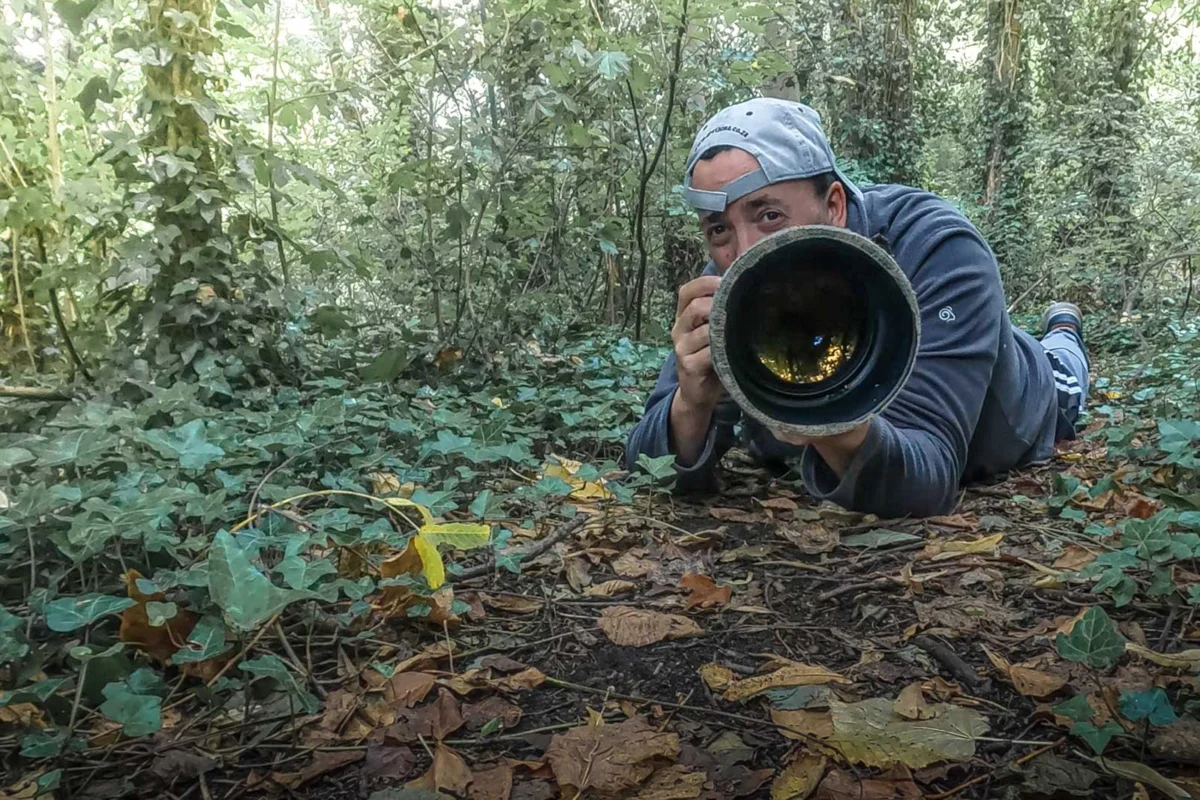
The world of nature photography, a realm where patience meets passion, often sees enthusiasts embark on a long, winding path from casual observer to respected professional. This journey is rarely linear, punctuated by moments of doubt, bursts of inspiration, and relentless dedication to the craft. In an exclusive interview series, "From Amateur to Professional," Nature TTL delves into the evolution of established nature photographers, charting their growth, technical advancements, and the pivotal decisions that shaped their careers. This installment features Victor Soares, a South African-born wildlife photographer whose nearly two-decade odyssey recently culminated in a full-time professional commitment, driven by a profound love for nature and an unwavering pursuit of photographic excellence.
Victor Soares, now based in the UK and leading tours across Europe and Africa, has carved a distinctive niche in the competitive landscape of wildlife photography. His work, celebrated for its evocative portrayal of animal emotion and meticulous composition, has garnered widespread recognition, gracing the pages of leading publications and earning accolades from prestigious associations. His story is a testament to the enduring power of passion, the invaluable role of mentorship, and the resilience required to transform a cherished hobby into a thriving profession.
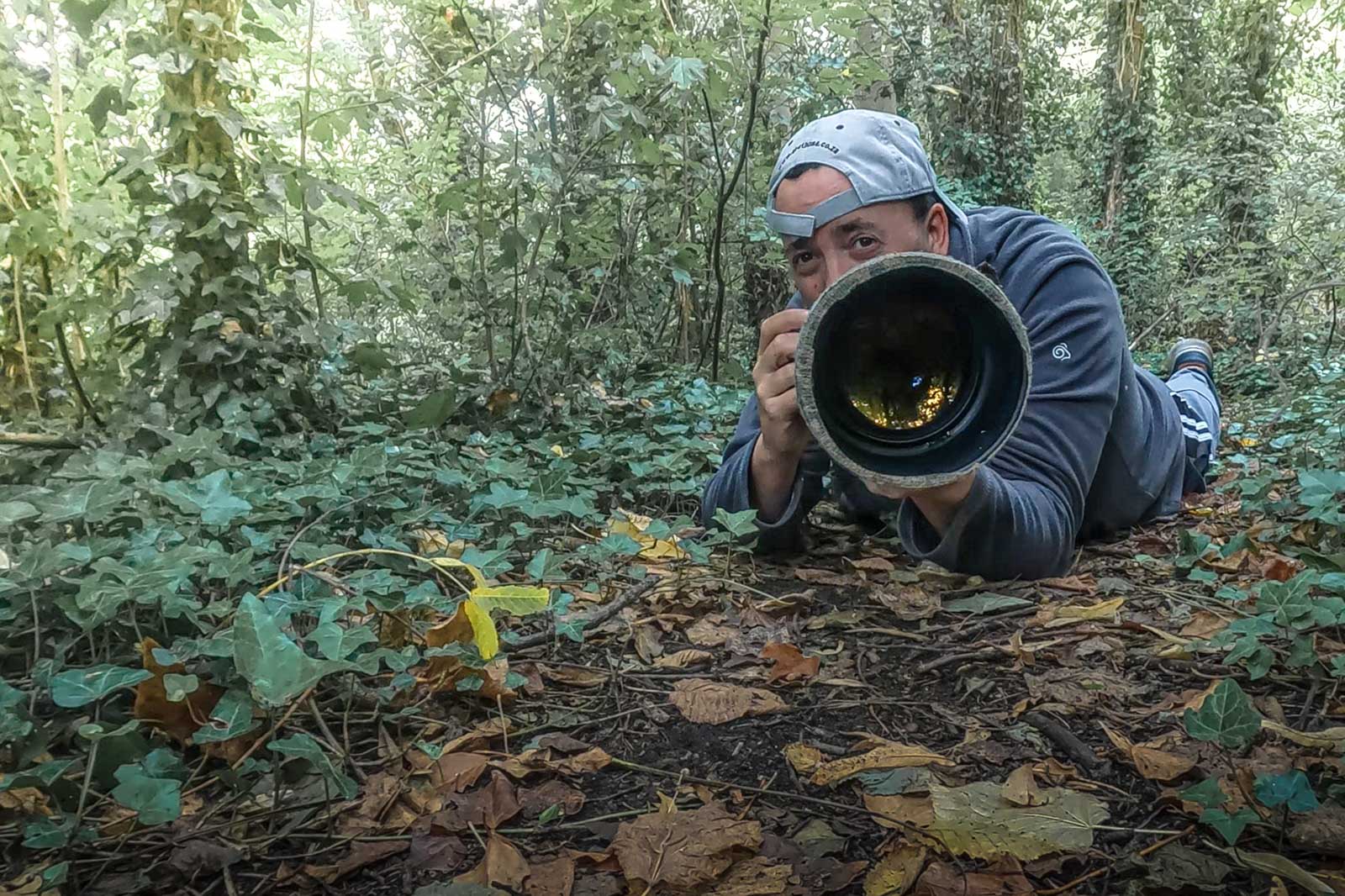
The Genesis of a Lifelong Passion: South African Roots and a Digital Revelation
Soares’ connection to the natural world was forged in the rich, diverse ecosystems of South Africa, a country renowned for its unparalleled biodiversity. Growing up amidst this natural splendor, the wild became his sanctuary, a peaceful escape from what he describes as a "dramatic world." Birds, in particular, captivated his imagination, offering endless hours of observation through binoculars, fueling a nascent curiosity that would later define his artistic direction.
The advent of digital photography in the early 2000s marked a pivotal moment. In 2004, Soares acquired his first DSLR, a Canon 300D (known as the EOS Digital Rebel in North America). This camera was a game-changer for amateur photographers, democratizing access to professional-level imaging with its relatively affordable price point and 6.3-megapixel sensor, which was revolutionary at the time. Initially purchased to document holiday memories, a trip to the iconic Kruger National Park would inadvertently ignite his professional aspirations.
It was during a visit to a local photo lab to print his Kruger images that fate intervened. The owner, Johan Combrink, himself a wildlife photography enthusiast, displayed striking images of various species. Handing over his holiday snapshots, Combrink offered a polite "nice pictures" – a common courtesy that failed to satisfy Soares’ burgeoning ambition. "…but I want to take photos like that," Soares blurted out, pointing to a captivating image of a Cattle Egret. Combrink’s response was simple yet life-altering: "Then come back here tomorrow with your camera, and I will show you a few things." This generous offer sparked a mentorship that would lay the foundation for Soares’ future. He spent countless days at Combrink’s shop, diligently learning camera techniques and post-processing skills, receiving invaluable motivation through the inevitable "dark times" of a photographer’s learning curve. This foundational guidance, freely given, remains a cornerstone of Soares’ gratitude and a powerful example of community in the photographic world.
Tracing the Evolution: From Blurry Cormorant to Masterful Fox Portrait
Every photographer has a "first shot" – often a humbling reminder of where they began. Soares recalls his initial attempt with the Canon 300D: a blurry, distant image of a cormorant in terrible light, an ambitious undertaking for a novice. While that specific image no longer exists, discarded during a fresh start in 2007, it encapsulates the initial struggles.

A Christmas gift in late 2006, a Canon Rebel XT (EOS 400D in Europe), marked a significant upgrade. This model offered an 8-megapixel sensor, improved autofocus, and a more robust build, allowing for greater creative freedom. On a New Year’s trip to Kruger Park with his then-girlfriend (now wife), Soares captured an image of a Steenbok that, while far from perfect, represented a tangible leap in quality. He reflects on it now with a critical eye, acknowledging issues like a cropped composition, an inappropriate f/8 aperture for subject isolation, and the use of Aperture Priority mode when Manual mode would offer greater control. The technological limitations of the era are also evident: "Back then, AUTO ISO wasn’t available, and noise was a much bigger concern, so I didn’t dare go beyond an ISO of 400 in order to keep noise low." This contrasts sharply with modern DSLRs and mirrorless cameras that comfortably handle ISOs upwards of 3200-6400, revolutionizing low-light photography. Despite its flaws, the Steenbok image was a motivator, a tangible sign of progress that fueled his interest.
Fast forward to today, and Soares’ work exemplifies a sophisticated understanding of light, composition, and emotional storytelling. One of his most cherished photographs is a captivating portrait of a yawning fox, captured in a small park in Sutton, London, after his move to the UK in 2016 and then to London in 2018. Having grown up where red foxes were mythical creatures of fairytales, encountering them in the UK was a dream come true. This particular image, taken as a friendly fox yawned post-hedge-jump amidst autumn leaves, encapsulates his evolved style. The shallow depth of field isolates the subject, blurring the background into a painterly wash of autumnal hues. The visible detail of the fox’s cold breath, its teeth mid-yawn, and its graceful pose speak volumes about his command of technique and artistic vision. This image, he explains, brought a "childhood fantasy" to life, demonstrating a profound connection between photographer and subject.
Landmark Recognition: The Natural History Museum’s Nod

While the journey from amateur to professional is often a gradual accumulation of skills and experiences, certain moments serve as powerful affirmations. For Soares, one such "turning point" arrived in 2012 when an image reached the final round of the Natural History Museum’s Photography Awards, then known as the Veolia Environmental Awards. This competition, now known as the Wildlife Photographer of the Year, is one of the most prestigious photographic contests globally, attracting over 48,000 entries from more than 90 countries annually. To be shortlisted in such a highly competitive field is an immense honor, a validation that transcends mere technical proficiency.
"It was a moment in my photographic career where I felt, ‘Maybe I am good enough… maybe,’" Soares recalls. This internal shift, from self-doubt to cautious confidence, is crucial for any aspiring professional. Although the image did not progress to be displayed at the NHM, the experience provided an "enormous feather in my cap," a benchmark against which he could measure his potential. This recognition served as a potent motivator, underscoring the quality of his work and hinting at the professional path that lay ahead.
The Professional Leap: A Calculated Risk and Unwavering Support

The decision to transition from a stable engineering career to the unpredictable world of professional photography is rarely taken lightly. Soares acknowledges the financial realities, stating, "It’s no secret that most photographers don’t earn a great living, often doing it professionally as an extension of a hobby." The engineering profession offered significantly better remuneration, making the "jump" a daunting prospect, even with a simmering ambition. For years, the idea brewed in his subconscious, explored through various avenues, but never fully embraced due to the perceived financial instability.
However, life sometimes presents unexpected catalysts. In early 2024, a company-wide restructuring led to Soares’ position being made redundant. While initially a "shock," this unforeseen event transformed into a unique opportunity. Rather than seeking another engineering role, Soares, with the "instrumental" support of his wife – whom he describes as his "biggest fan and strongest supporter" – made the courageous decision to commit entirely to wildlife photography. This transition, which began tentatively in 2023 with leading photography trips and teaching in his spare time, officially solidified into a full-time professional endeavor in 2024. This narrative highlights a common thread among creatives: sometimes, external circumstances, combined with internal resolve and a strong support system, provide the impetus needed to pursue a long-held dream. The market for wildlife photography tours and workshops has also seen steady growth, offering a viable income stream for photographers like Soares who combine their artistic talent with teaching and guiding expertise.
Revisiting Subjects: A Deeper Understanding and Evolving Approach

Professionalism brings not just a change in career status but also a deepened engagement with the craft. Soares’ approach to revisiting familiar subjects and locations has evolved significantly. While living in South Africa, game parks were a regular haunt, fostering an intuitive understanding of photographing from a car, anticipating action, and identifying photographic opportunities. Upon moving to the UK, these African safaris became less frequent but more cherished, viewed through a more discerning lens.
He now approaches safaris with heightened awareness, meticulously considering factors he once "took for granted": the direction and quality of light, potential distractions in the background or foreground, and optimal shooting angles. Critically, his understanding of animal behavior has matured. "When an animal behaves in a certain way, what does it mean, and how do those actions affect other animals? Every time I go on safari, I learn something new." This deep immersion in ethology is a hallmark of truly impactful wildlife photography, allowing photographers to capture not just images, but narratives of animal life.
Closer to home in the UK, the annual deer rut presents another compelling opportunity for repeated engagement. While initially drawn to the sheer spectacle of bellowing stags and occasional clashes, Soares now seeks more nuanced and artistic moments. He actively looks for "bellow steam" on cold mornings, the interplay of autumn light breaking through trees, or subtle interactions between females. Beyond the dominant red deer stags, he dedicates time to the less-favored fallow deer, whose "intense" fights offer dramatic photographic potential. This iterative approach, returning to the same subjects with an ever-refining vision, underscores his commitment to continuous learning and artistic development.

Navigating the Challenges: Motivation, Perseverance, and the Siren Song of Technology
The path of a photographer, particularly in the digital age, is fraught with challenges. Soares identifies his biggest hurdle as "finding the motivation to keep going." The constant exposure to "impressive work from others" can be a double-edged sword, inspiring but also fostering feelings of inadequacy. "It’s easy to think you’ll never be as good as your heroes and role models," he admits, a common sentiment known as imposter syndrome that plagues many creatives. His crucial realization: these role models are placed on pedestals by you, and their perceived superiority serves as a perpetual, albeit sometimes frustrating, motivator. The key, he advises, is "to keep going. Persevere."
He stresses the importance of embracing criticism, both positive and negative, as an opportunity for growth. In today’s fast-paced world, balancing creative pursuits with family, work, and societal pressures can feel overwhelming. Yet, Soares’ message remains resolute: "Keep going. Enjoy what you are doing as a process and a journey that has no destination, and learn something new as often as you can."

Reflecting on the advice he would give his younger self, Soares distills it into a single word: "be patient." He acknowledges the modern inclination for immediate results, often leading photographers to focus on acquiring new camera features rather than mastering fundamental skills. "If a new camera had a higher frames-per-second rate, I thought I was quicker. If it had more focus points, I assumed I could focus better. But that’s not true unless I already had the skills to be quick and focus accurately and hence take full advantage of the camera feature." This insight is particularly relevant in an era of rapid technological advancement, where cutting-edge gear can sometimes overshadow the timeless principles of light, composition, and subject interaction. He champions immersing oneself in "the basics, the essentials, the critical things," arguing that these enduring principles will outlast any fleeting camera feature.
Patience, he emphasizes, is not only crucial for personal growth but also for the very act of wildlife photography. "Many of the best images come from patience. The action-filled and impressive images we see often result from hours spent watching and observing the wild." This patient observation allows for an understanding of animal behavior, predicting moments of drama or intimacy that yield truly exceptional photographs.
A Commitment to Lifelong Learning and Community Engagement

With nearly two decades behind the lens, Victor Soares’ journey is far from over. He remains a fervent proponent of continuous learning, actively engaging with the photographic community. He maintains membership in a camera club, seeking insights from diverse experiences and techniques. His reading list includes numerous articles and magazines, keeping him abreast of industry news, tips, and evolving techniques. Critically, he continues to go on shoots with other photographers, valuing their company and benefiting from their varied approaches.
His ultimate advice resonates with both aspiring and established photographers: "don’t be afraid to ‘put yourself out there’." Showcasing one’s work and being open to constructive criticism, he argues, are indispensable for development. "Listen to those comments and use them to grow and learn. Both positive and negative feedback are opportunities to reflect and develop – listen to them equally." This open-mindedness, combined with his deep passion and technical mastery, positions Victor Soares as an inspiring figure in the dynamic world of nature photography. His story underscores that the transition from amateur to professional is not merely a change in title, but a profound evolution of skill, perspective, and unwavering dedication to the art of capturing the wild.