The intersection of digital sensor technology and specialized optical filtration has opened a new frontier for landscape photographers seeking to transcend the limitations of visible light. In a recent technical evaluation conducted on the parched terrain of the Old Hills in England, researchers and photographers explored the efficacy of various infrared (IR) filters on full-spectrum converted cameras. This study focused specifically on the "false color" phenomenon, a technique that reassigns non-visible infrared wavelengths to the visible RGB channels, resulting in surreal, high-contrast imagery. By comparing the Kolari IR Chrome, the ZB2 "deep blue" filter, and the Hoya Orange O(G) filter, the experiment provided critical insights into how drought-stricken vegetation—characterized by desiccated grass and resilient shrubs—responds to infrared radiation compared to traditional visible light.
The Technical Evolution of Full-Spectrum Photography
To understand the implications of this comparative study, one must first address the architecture of the modern digital sensor. Standard digital cameras are equipped with an internal IR/UV cut filter, often referred to as a "hot mirror." This filter is designed to block light outside the 400nm to 700nm range, ensuring that the sensor captures images that mimic human vision. However, for specialized applications in aerial surveillance, agriculture, and fine art photography, these hot mirrors are often removed in a process known as a "full-spectrum conversion."
Once a camera is converted to full-spectrum, the sensor becomes sensitive to ultraviolet light, visible light, and near-infrared light (up to approximately 1100nm). This allows the photographer to use external filters to isolate specific bands of the spectrum. While traditional infrared photography often utilizes a 720nm filter to produce high-contrast black-and-white images—where foliage appears bright white due to the "Wood Effect"—false color photography utilizes lower nanometer thresholds (590nm to 680nm) to allow some visible light to reach the sensor. This creates a data set that can be manipulated during post-processing to produce the iconic "Aerochrome" aesthetic, originally popularized by Kodak’s infrared film.
Methodology and Equipment Specifications
The study utilized two distinct Sony mirrorless platforms to evaluate the filters. The primary body was a Sony A7R2, a high-resolution full-frame sensor, paired with a Tamron 17-28mm lens. This specific lens was selected due to its lack of "hot spots"—a common optical defect in infrared photography where internal reflections create a bright flare in the center of the frame. The secondary body was a Sony Nex-6, an APS-C sensor paired with a Sony 18-55mm lens, providing a comparison across different sensor generations and sizes.
The filters selected represent the current industry standards for false color infrared:
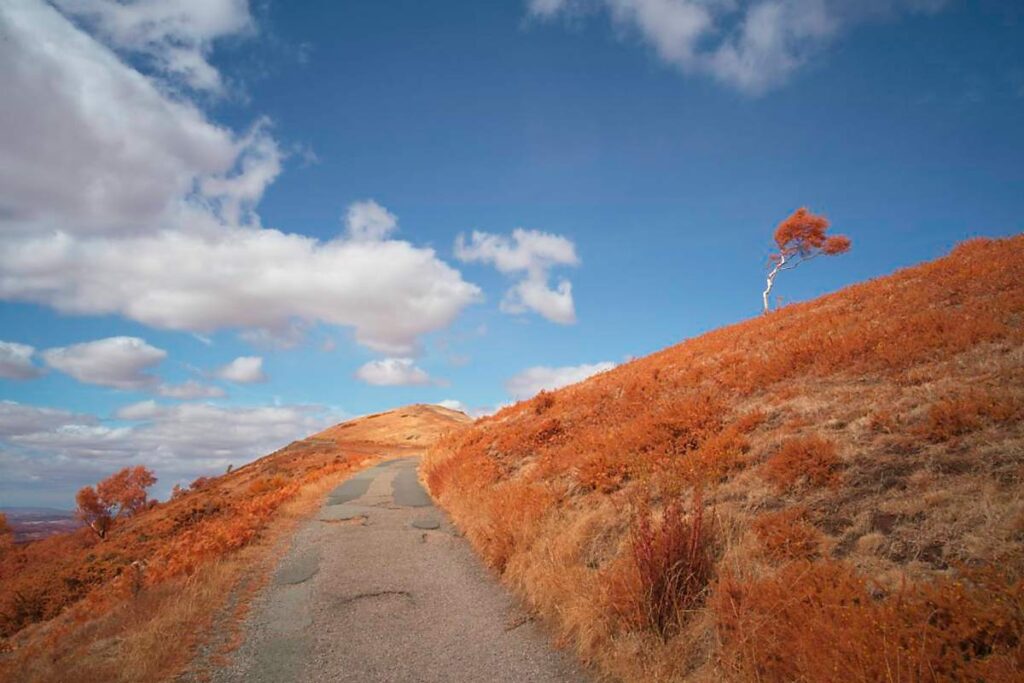
- Kolari IR Chrome: Designed to mimic the color rendition of Kodak Aerochrome film with minimal post-processing.
- ZB2 Deep Blue: A filter that yields a distinct blue sky and allows for significant color shifting in vegetation.
- Hoya Orange O(G) (590nm): A "Goldie" filter that blocks wavelengths below 590nm, frequently used to produce vibrant gold or pink foliage.
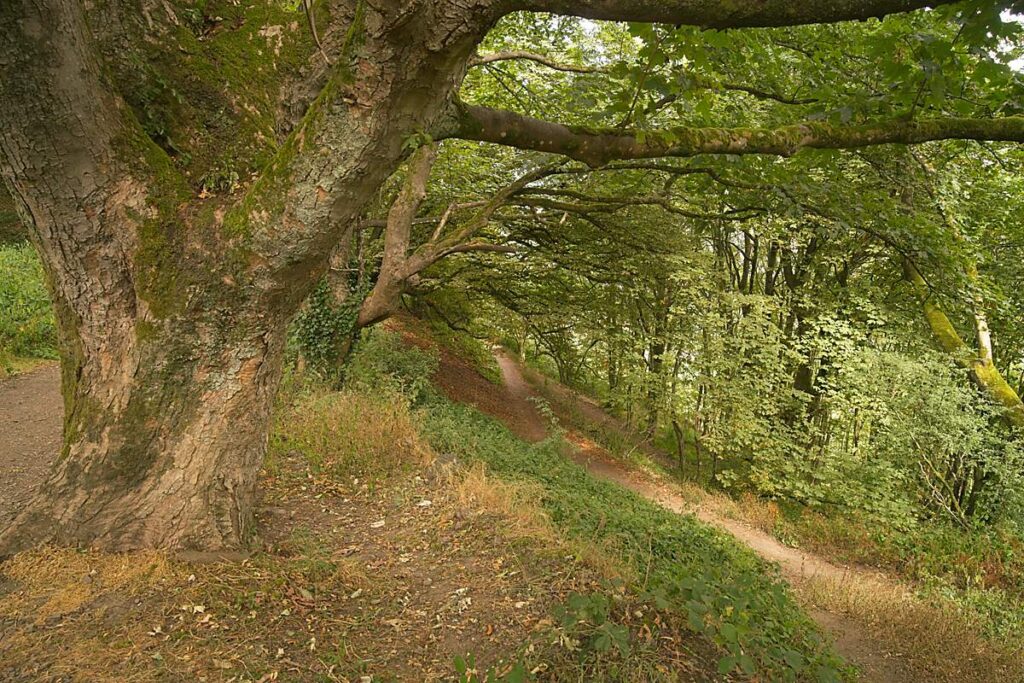
- Kolari Hot Mirror: Used as a control to capture the "visible light" baseline for the landscape.
The processing workflow involved initial RAW development in ON1, followed by specialized color calibration and channel swapping in DXO PhotoLab. Channel swapping is the fundamental technique of false color IR, where the red and blue channels are inverted to restore a natural blue hue to the sky while leaving the vegetation in a shifted state.
Comparative Analysis of Filter Performance on Parched Terrain
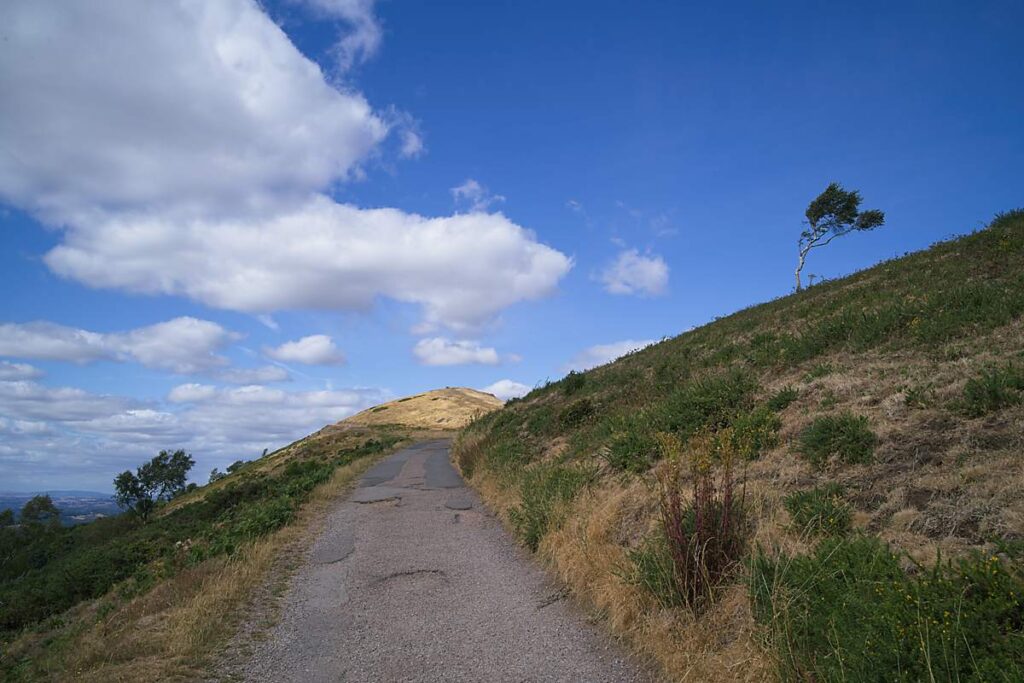
The core of the investigation focused on the reaction of dried-out grass and summer vegetation to these various filters. Under normal visible light, the Old Hills presented a palette of browns and muted greens, reflecting the "parched" state of the English countryside during a period of low rainfall.
The Kolari IR Chrome Results
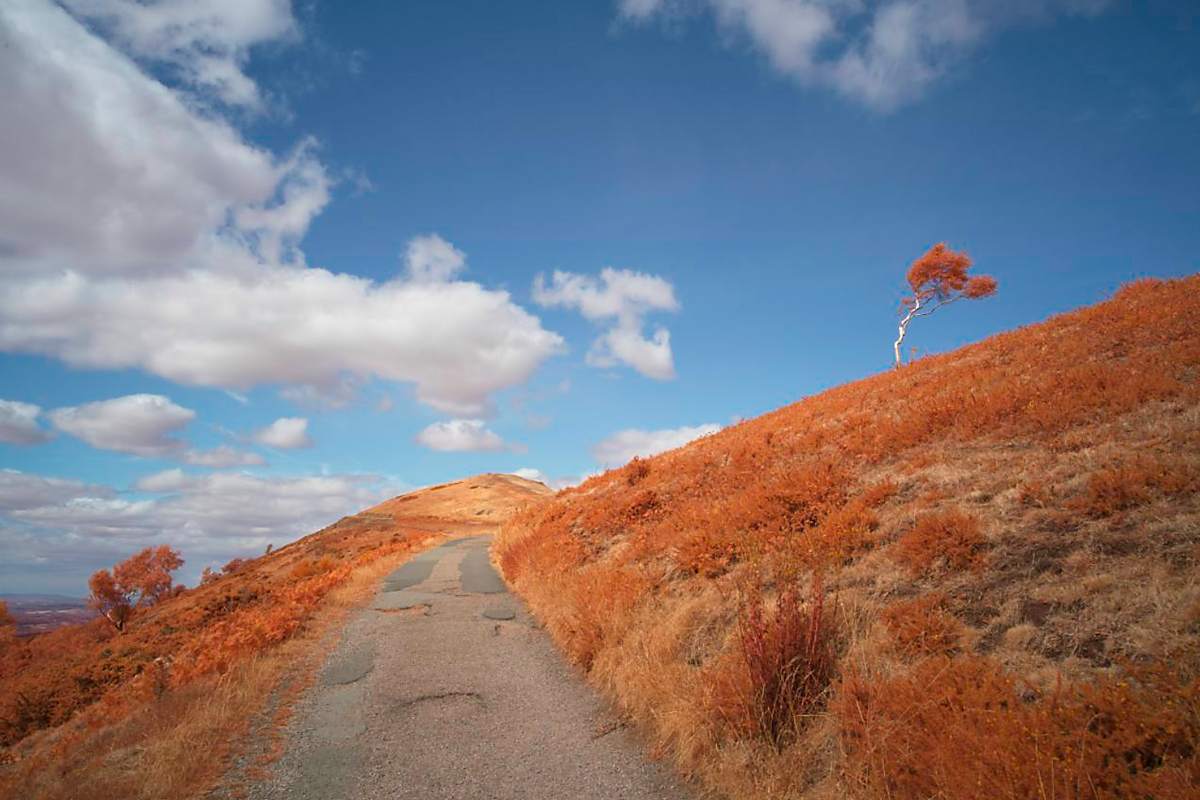
The IR Chrome filter produced the most immediate "surreal" effect. When the white balance was normalized against a neutral cloud, the vegetation shifted toward a vibrant orange-red. Interestingly, the parched grass—which appeared dull brown in the visible spectrum—retained a significant amount of IR reflectivity, though it lacked the tonal range seen in more hydrated, chlorophyll-rich plants like gorse or silver birch. The IR Chrome filter proved highly effective at distinguishing between different types of ground cover that appeared uniform in visible light.
The ZB2 Deep Blue and Hoya Orange Observations
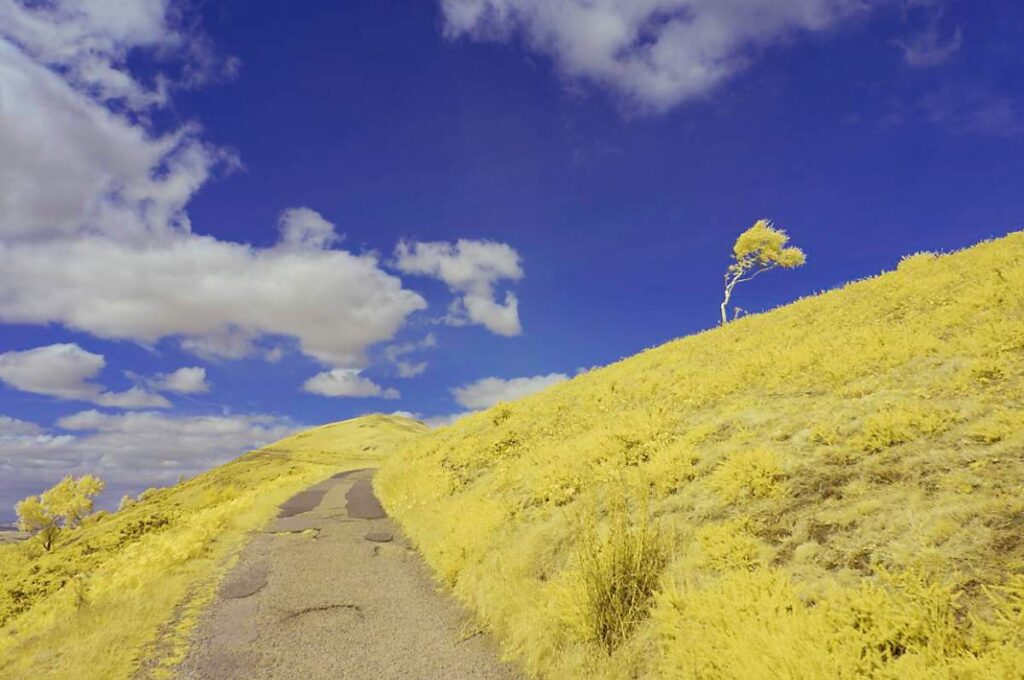
The ZB2 filter offered a starkly different tonal profile. The resulting images required more intensive white balance adjustments to prevent a total yellow wash. The experimenters noted that while the ZB2 filter provides a dramatic blue sky, it struggled to maintain a diverse range of tones in the dried vegetation, often flattening the foreground into a singular yellow-orange hue.
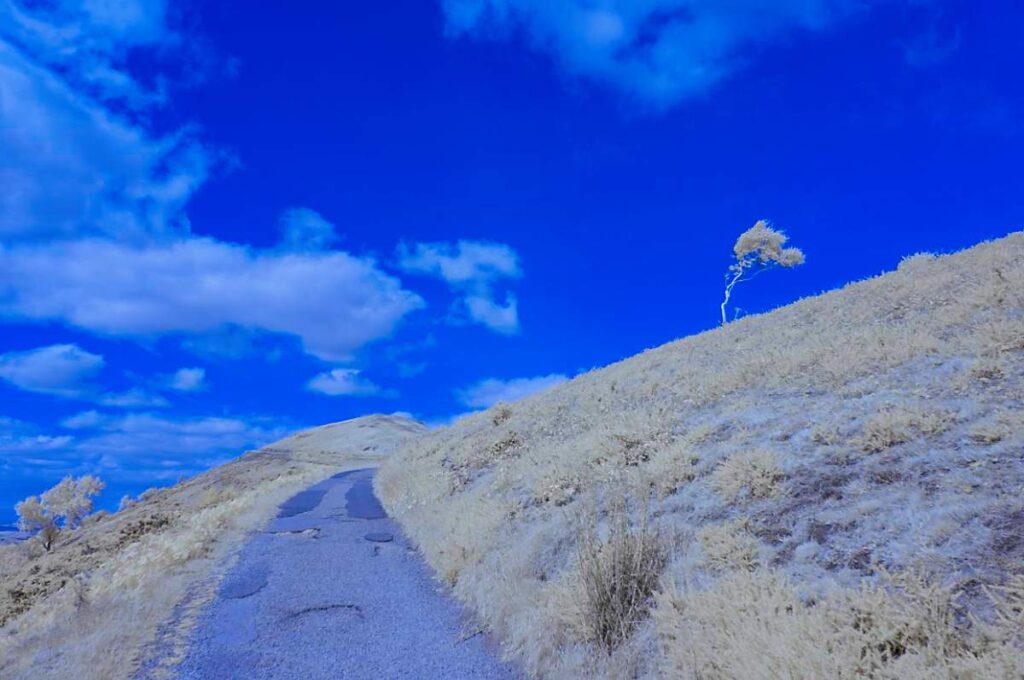
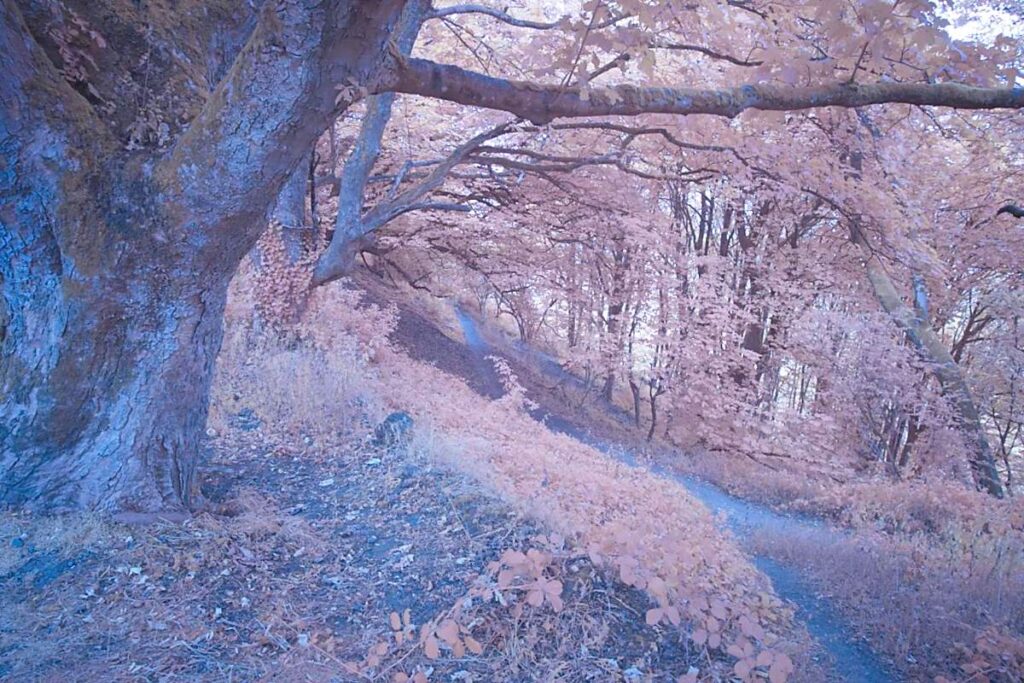
In contrast, the Hoya Orange (590nm) filter provided what many enthusiasts consider the most aesthetically pleasing results. By setting the white balance on the clouds and performing a standard channel swap, the photographer was able to render the sky in a natural blue while turning the parched vegetation into shades of pink and soft orange. This filter demonstrated the highest versatility for creative landscape work, particularly in high-contrast environments.
The Wood Effect and Vegetation Reflectivity
A critical component of this analysis is the "Wood Effect," named after physicist Robert W. Wood. This phenomenon describes the high reflectivity of chlorophyll-rich foliage in the near-infrared spectrum. Healthy leaves have a high reflectance in the IR band to prevent overheating, which causes them to appear bright or white in IR photography.
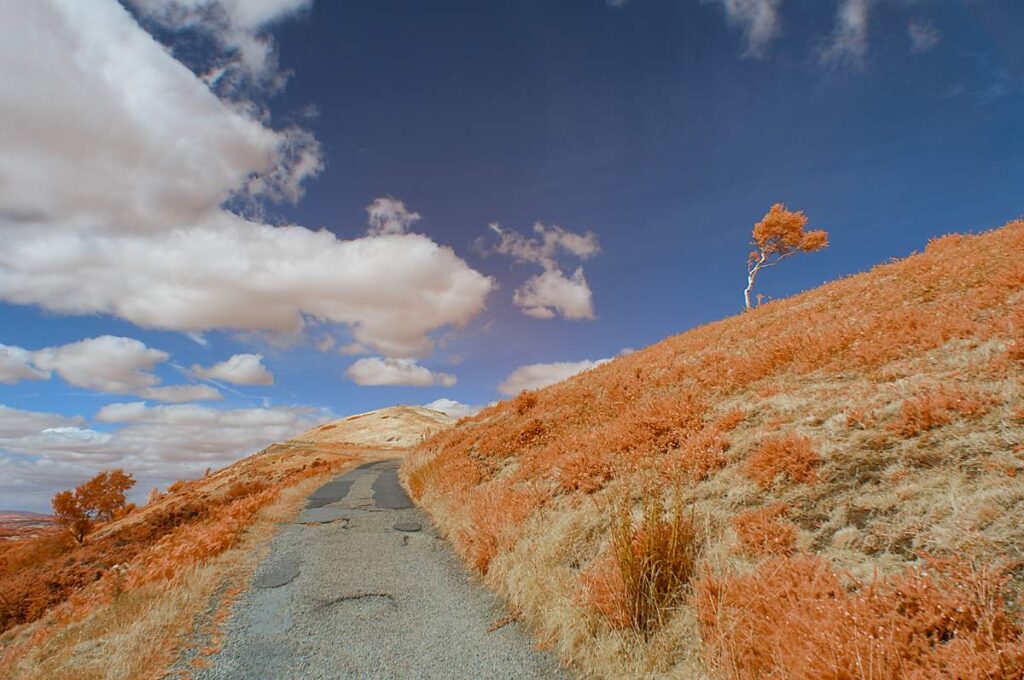
The study found that parched, brown grass still exhibits a degree of the Wood Effect, though significantly diminished compared to healthy green shrubs. This suggests that even as a plant loses its green pigmentation (chlorophyll), its cellular structure may still reflect infrared light, albeit at different intensities. This finding has implications for agricultural monitoring, where IR photography is used to assess crop health and moisture stress.
Chronology of Post-Processing Techniques
The transition from a RAW IR file to a finished false-color image follows a specific technical chronology:
- Custom White Balance: This is the most critical step. Photographers must calibrate the camera to a neutral source (like a white cloud or a grey card) to remove the heavy red or magenta cast inherent in IR-sensitive sensors.
- Channel Swapping: In software like Adobe Photoshop or DXO PhotoLab, the Red channel is set to 0% Red and 100% Blue, while the Blue channel is set to 100% Red and 0% Blue.
- Hue and Saturation Adjustments: Fine-tuning the specific shades of the foliage. In the case of the parched grass, additional adjustments were needed to prevent the browns from becoming muddy.
- Contrast and Luminance Mapping: Because IR light scatters differently than visible light, the luminance of the sky and ground must be balanced to maintain a naturalistic depth.
Industry Implications and Market Trends
The use of full-spectrum conversions is no longer limited to niche scientific communities. Companies like Kolari Vision and LifePixel have reported a surge in interest from landscape and wedding photographers looking for a unique visual signature. The market for specialized IR filters has grown in tandem with the rise of mirrorless cameras, which are better suited for IR work than DSLRs because their electronic viewfinders allow the photographer to see the infrared effect in real-time.
Furthermore, the environmental context of this study—shooting in "parched" conditions—highlights a growing trend in documentary photography. As climate change leads to more frequent droughts and altered landscapes, infrared photography provides a unique tool for visualizing environmental stress that might be less apparent in the visible spectrum.
Conclusion and Future Outlook
While the experimenters acknowledged that their results were part of an ongoing learning process, the study successfully demonstrated the profound impact that filter choice and post-processing have on the final image. The Hoya Orange filter emerged as a favorite for its tonal flexibility, while the Kolari IR Chrome was praised for its ability to deliver an Aerochrome-like result with greater efficiency.
The broader implication of this study is the realization that infrared photography is not merely a "trick" or a "gimmick," but a sophisticated method of data visualization. By stripping away the constraints of human vision, photographers can reveal the hidden textures and biological realities of the natural world. As sensor technology continues to evolve, the barrier to entry for full-spectrum imaging will likely decrease, leading to a new era of spectral exploration in the digital arts. Future research in this area may focus on the use of artificial intelligence to automate the complex channel-swapping process, potentially making false-color infrared photography accessible to a wider demographic of visual creators.