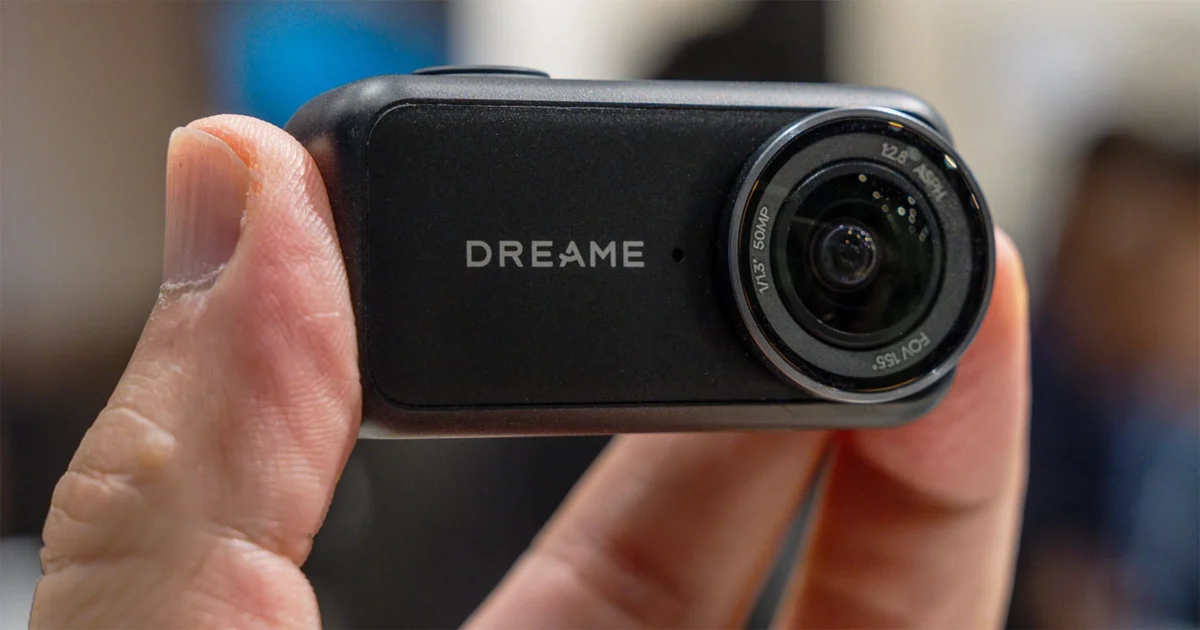
Dreame, a technology company predominantly recognized for its innovative advancements in smart home robotics, particularly robot vacuums and automated lawnmowers, is embarking on a strategic and ambitious pivot into the highly competitive action camera sector. The company’s inaugural offering, the Leaptic Cube, represents a significant diversification of its product portfolio, aiming to challenge established players with a focus on modularity, high resolution, and integrated artificial intelligence. Originally teased at the Consumer Electronics Show (CES) 2026, the Leaptic Cube is now confirmed for a retail launch in October 2026, following a comprehensive showcase at the Internationale Funkausstellung (IFA) in Berlin.
Dreame’s Strategic Shift: From Smart Homes to Action-Packed Imaging
Dreame’s decision to enter the action camera market, a domain dominated by giants like DJI and Insta360, marks a substantial strategic gambit. This move underscores a growing trend among technology companies to leverage their core competencies in manufacturing, R&D, and supply chain management to explore new, high-growth consumer electronics categories. For Dreame, a company with a strong reputation for engineering intelligent, user-friendly devices, the transition into imaging presents both formidable challenges and considerable opportunities. The company’s established global distribution networks and brand recognition within the smart home sphere could provide a unique foundation, yet the demands of the imaging market, particularly in terms of optics, image processing, and software ecosystems, are distinct.
The initial unveiling at CES 2026 generated considerable buzz, signaling Dreame’s serious intent. The subsequent full reveal at IFA in Berlin provided a deeper look into the Leaptic Cube’s capabilities and design philosophy, solidifying its position as a contender. Industry analysts have noted the inherent risks in entering such an entrenched market, yet they also acknowledge the potential for disruption if Dreame can deliver on its promises of innovation and performance. "Dreame’s entry into the action camera market is ambitious, given the entrenched positions of DJI and Insta360," commented one technology analyst, who preferred to remain unnamed due to ongoing market discussions. "While the 8K resolution and modular design are compelling, success will hinge on real-world performance, software stability, and their ability to build a robust ecosystem and community around the product."
The Leaptic Cube: A Deep Dive into Modular Innovation
At the heart of the Leaptic Cube’s design is a highly adaptable magnetic modular system, engineered to provide unprecedented flexibility for content creators. This modularity is not merely an aesthetic choice but a foundational principle that allows users to customize the camera’s configuration based on their specific shooting requirements, optimizing for size, weight, or extended functionality.
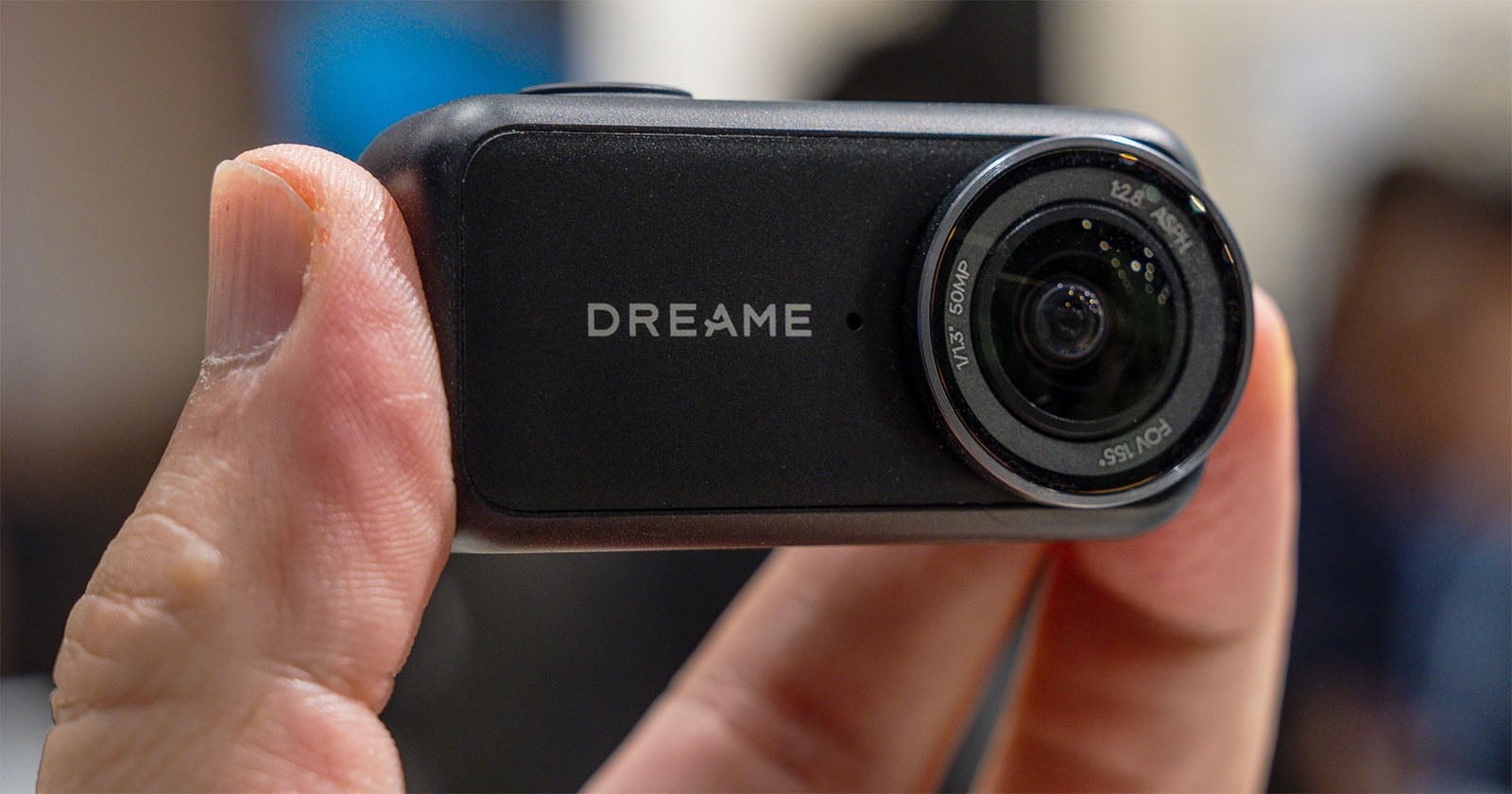
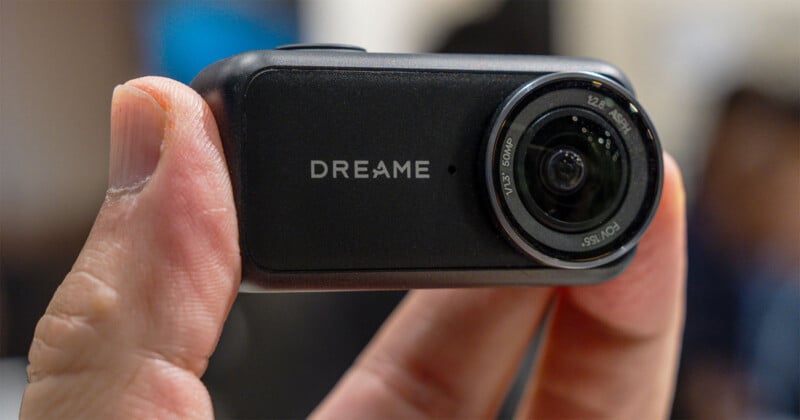
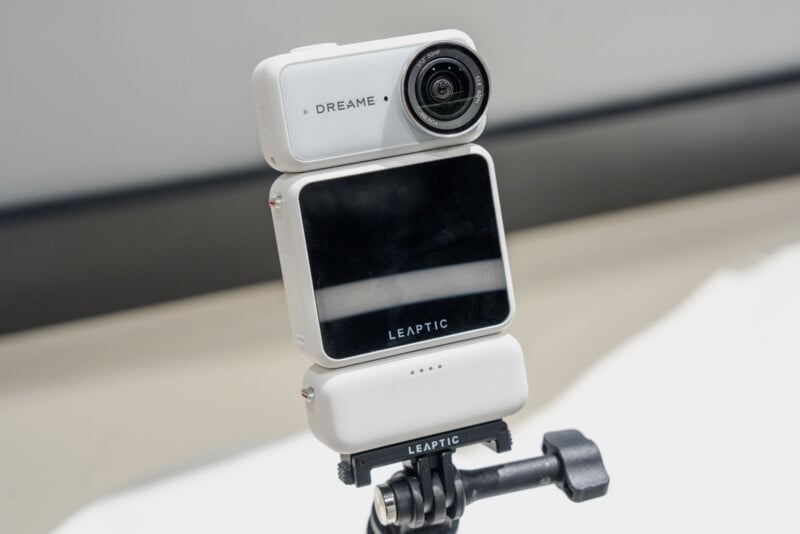
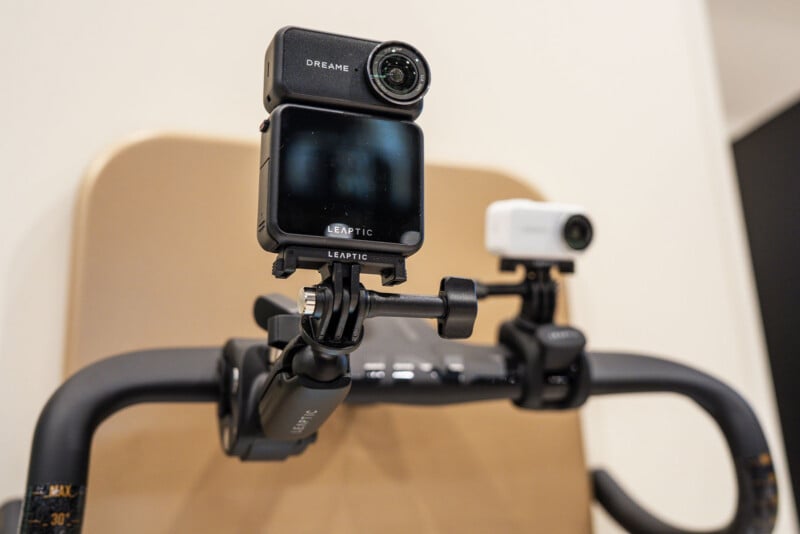
Core Design and Modularity: The primary camera unit is remarkably compact and lightweight, weighing approximately 56 grams. This diminutive size makes it ideal for a multitude of mounting scenarios, from helmets and backpack straps to surfboards and even pet collars, offering unique first-person perspectives. Critically, this core unit possesses the capability to capture and store footage independently, granting a degree of autonomy for minimalist setups.
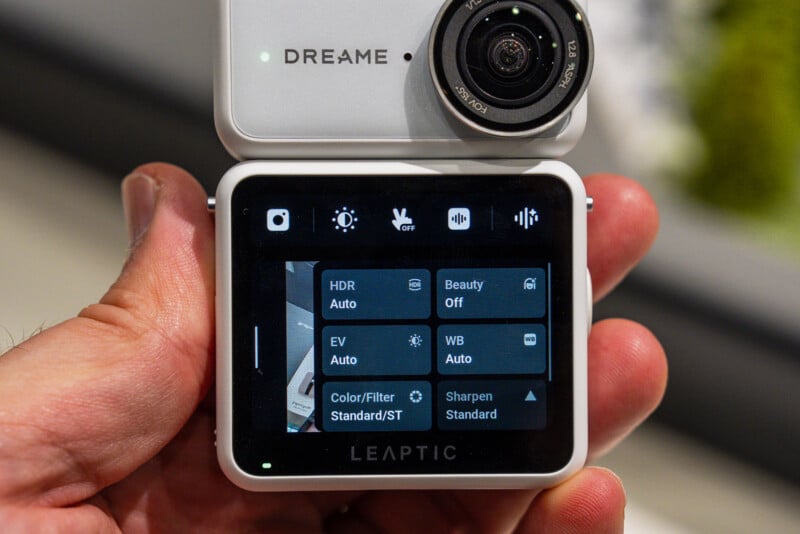
Enhancing this core is a separate base module featuring a 2.27-inch touchscreen. When the camera unit is magnetically attached to this base, the system transforms into a more traditional action camera setup, providing a live view for framing shots, intuitive on-device controls, and a significantly larger integrated battery for extended operation. This dual functionality addresses a key pain point for action camera users: the trade-off between portability and comprehensive control.
Enhanced Functionality and Versatility: Dreame further expanded the Leaptic Cube’s modular ecosystem at IFA with the introduction of a third magnetic battery pack. This addition extends the camera’s total operational runtime to an impressive 210 minutes, a crucial advantage for prolonged shoots in remote locations. The camera unit itself offers up to 110 minutes of recording on its internal battery and can recharge to 80% capacity in approximately 19 minutes, minimizing downtime. The modularity allows users to stack only the necessary components, tailoring the setup for maximum efficiency, whether prioritizing ultra-compact form factor or maximum battery life.
This modular approach, while not entirely novel (with DJI and Insta360 having previously explored similar concepts), introduces a fresh perspective with its detachable battery implementation. Unlike some competitors where the battery is integral to the main body, the Leaptic Cube’s independent camera battery means users can mount the core unit directly onto a battery pack or various mounts, shedding the main screen base when discretion or minimal weight is paramount.
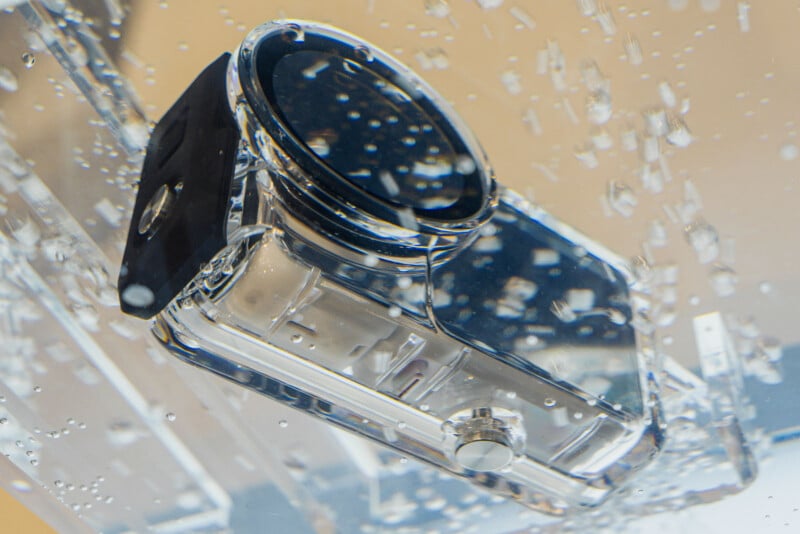
Durability and Environmental Readiness: Designed for the rigors of action sports and outdoor adventures, the Leaptic Cube boasts robust construction. The standalone camera body offers 10 meters of water resistance in clear water, making it suitable for splashes, rain, and shallow submersion. For more demanding underwater environments, a dedicated protective dive case extends this capability to 60 meters. It is important to note, however, that the dive case is designed exclusively for the standalone camera unit, necessitating the detachment of the screen module and other accessories before underwater deployment. Users must configure all settings prior to submerging the camera.
The lens itself is treated with what Dreame terms "CrystalShield coating," an innovative surface treatment designed to enhance scratch resistance and facilitate easy cleaning, repelling smudges, fingerprints, and water spots—a critical feature for maintaining image clarity in dynamic shooting conditions.
Storage Solutions: For data management, the base camera module is available in 64GB and 128GB internal storage variants. The screen module further augments storage capabilities by integrating a microSD card slot, supporting capacities up to 1TB. This combination ensures ample space for high-resolution footage, even during extended recording sessions. Company representatives have assured that USB transfer speeds are optimized for efficient handling of large 8K files, streamlining the post-production workflow.
Pushing the Boundaries: 8K Resolution and Image Quality
Dreame is directly challenging industry standards by positioning the Leaptic Cube as an 8Kp30 capable action camera, a significant leap beyond the 4K resolution typically offered by many competitors in this category, including what the original article refers to as the DJI Osmo Nano and Insta360 Go Ultra. This high resolution serves as a primary differentiator, offering substantial benefits for content creators.
Resolution Advantage: While the immediate prevalence of 8K playback ecosystems remains limited, the ability to capture footage at 8Kp30 provides immense flexibility in post-production. Filmmakers and videographers can crop, reframe, and stabilize 8K footage to produce pristine 4K or 1080p content without any loss of detail, effectively turning a single wide shot into multiple compositions. This "future-proofing" aspect caters to professional creators and enthusiasts who demand maximum creative latitude.
Sensor and Lens Specifications: The Leaptic Cube is built around a 1/1.3-inch CMOS sensor, paired with a 155-degree ultra-wide f/2.8 lens. This sensor size is relatively large for an action camera, promising improved light gathering capabilities compared to smaller sensors. Beyond video, the camera is capable of capturing high-resolution 50-megapixel still images, further enhancing its versatility. For dynamic action sequences, it supports 4K video recording at up to 120 frames per second, enabling stunning slow-motion effects that capture every detail of fast-paced movement.
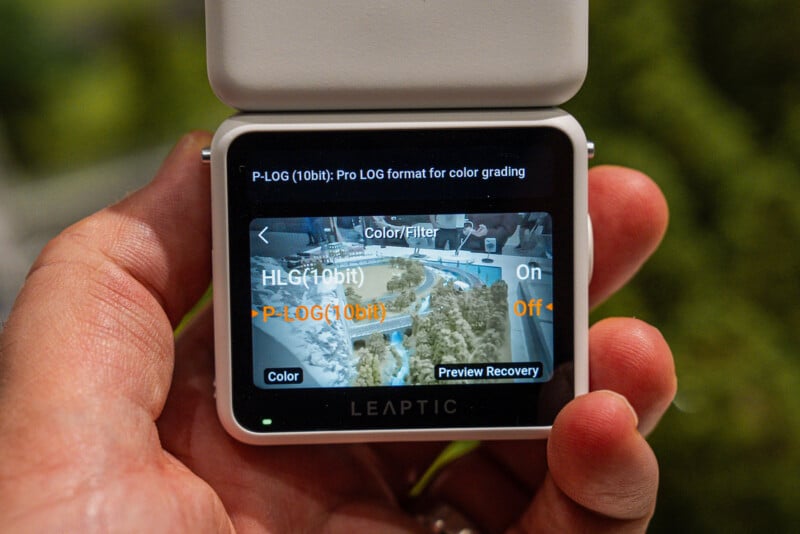
Professional Grading Capabilities: Recognizing the demands of professional content creation, Dreame has integrated advanced color capabilities into the Leaptic Cube. It offers a 10-bit color mode alongside its proprietary Log color profile. Company representatives assert that this combination delivers up to 13.5 stops of dynamic range, providing significantly more headroom for color grading and exposure adjustments in post-production. This feature positions the Leaptic Cube as a serious tool for creators seeking cinematic quality from a compact action camera.
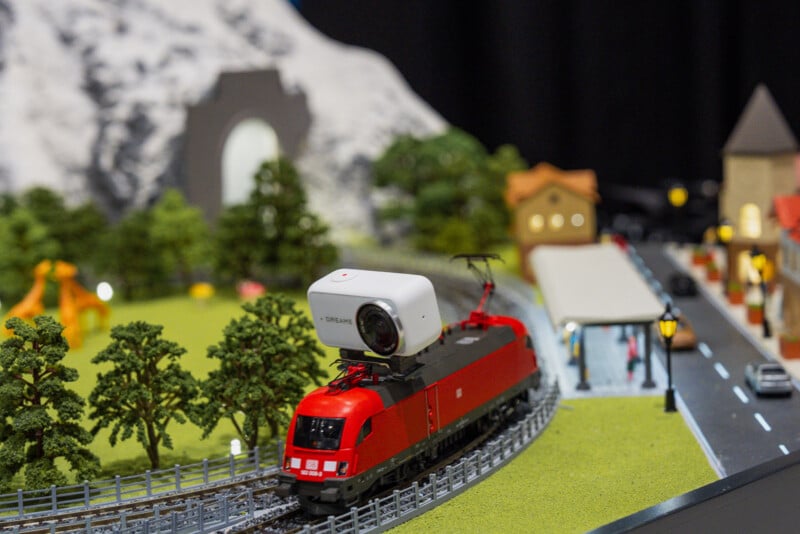
Addressing Performance Concerns: Despite the impressive specifications, questions naturally arise regarding the practical implementation of 8K recording within such a small form factor. Managing the enormous file sizes, processing demands, and critically, the heat generated by 8K video capture in a body barely larger than a thumb, presents considerable engineering challenges. While initial sample footage displayed during the IFA presentation appeared visually striking, it was captured under controlled, ideal lighting conditions. This leaves room for healthy skepticism regarding the camera’s low-light performance and the potential for aggressive in-body noise reduction or thermal throttling in real-world, less-than-ideal environments. A demonstration involving the camera mounted on a toy train traversing a mountain tunnel was too brief and the live feed too limited to provide a conclusive assessment of its low-light capabilities. Comprehensive independent reviews will be crucial to validate these performance claims.
Intelligence at its Core: AI Integration
Dreame is heavily leveraging artificial intelligence as a key differentiator for the Leaptic Cube, integrating a suite of AI-powered features designed to enhance user experience, streamline operation, and elevate creative output.
Moko Voice Assistant: A central AI feature is "Moko," a built-in voice assistant that allows hands-free control of various camera functions. By simply uttering "Hi Moko," users can issue commands to initiate or stop recording, add markers to footage, switch between shooting modes, and even power the camera on or off, all without physical interaction. This is particularly valuable when the camera is mounted in an inaccessible position or when users need to maintain focus on their activity. However, questions remain regarding Moko’s operational parameters: whether complex commands require a connection to the Leaptic Cube’s mobile app and a cloud connection, or if Moko can execute all functions locally without constant data connectivity. Clarification on these dependencies will be vital for users in remote or connectivity-challenged environments.
AI-Powered Scene Recognition and Tracking: The Leaptic Cube incorporates intelligent scene recognition algorithms that automatically identify diverse environments such as fireworks displays, vibrant city nights, or expansive skies. Upon recognition, the camera intelligently adjusts its settings to optimize exposure, white balance, and other parameters for the specific scene, simplifying the shooting process for users. Furthermore, a sophisticated subject-tracking mode utilizes AI to autonomously identify and keep a moving subject perfectly centered within the frame, providing smooth and consistent footage even during dynamic action.
Audio Enhancement and Portrait Mode: Recognizing the importance of clear audio in video content, the Leaptic Cube’s microphones employ AI-driven processing to amplify voices while simultaneously reducing distracting background noise in busy environments. This ensures that dialogue remains crisp and audible, preventing it from being drowned out by ambient sounds. For selfie and vlogging enthusiasts, a dedicated portrait mode utilizes AI to subtly process skin tones and facial details, enhancing appearance. Users retain the option to disable this feature if a more natural look is desired.
GyroSteady AI Stabilization: Dreame’s proprietary image stabilization system, dubbed "GyroSteady AI," promises exceptionally smooth footage. This system features several modes, including an advanced horizon-lock option designed to maintain a perfectly level horizon even if the camera itself undergoes significant tilts, rotations, or violent movements during a shot. This on-device AI feature provides a critical advantage for action sports, ensuring professional-looking stability and preventing inadvertent flipping or rotation of footage.
Market Landscape and Competitive Analysis
The action camera market is a dynamic but highly competitive arena, currently dominated by a few well-established brands that have cultivated loyal user bases and comprehensive ecosystems. DJI, with its Osmo Action and Osmo Pocket series, and Insta360, known for its modular One R/RS series and compact Go cameras, hold significant market share. These companies have invested heavily in robust hardware, sophisticated software, and extensive accessory lines.
Dreame’s entry with the Leaptic Cube faces the challenge of carving out a niche against these entrenched players. While the Leaptic Cube’s 8K resolution and particular modular battery implementation offer compelling differentiators, success will hinge on more than just specifications. Brand recognition in the camera segment, reliability under extreme conditions, the maturity of its software ecosystem (including the mobile app and editing tools), and post-sales support will be critical factors. The modularity, while innovative, must also prove its practical advantage over existing modular systems. The open questions surrounding the Moko voice assistant’s connectivity requirements, for instance, highlight areas where real-world performance will either solidify or undermine Dreame’s value proposition.
Pricing and Availability
The Dreame Leaptic Cube is slated for its global retail launch in October 2026. Official pricing for the UK market has been confirmed, with the 64GB variant standard package starting at £349. Dreame also anticipates offering bundled sets that include various accessories, with pricing adjusted accordingly. Preliminary estimates provided at CES 2026 suggested a starting price of approximately $440 for the 64GB camera in the U.S., with the 128GB version expected to be in the $460 range. These price points place the Leaptic Cube competitively within the premium action camera segment, directly challenging high-end offerings from its rivals.
Future Outlook and Implications
Dreame’s foray into the action camera market with the Leaptic Cube signifies a bold statement of intent and a strategic diversification for the company. Should the Leaptic Cube deliver on its promised performance, particularly in areas like 8K image quality, heat management, and the seamless integration of AI features, it has the potential to disrupt the existing market hierarchy and offer consumers a compelling new choice. The emphasis on modularity empowers users with unprecedented flexibility, while the AI features aim to democratize advanced filmmaking techniques.
Beyond the Leaptic Cube, Dreame also offered a glimpse into its long-term vision by showcasing a concept Gimbal Mirrorless Camera behind a glass enclosure at IFA. This suggests that the Leaptic Cube may be just the first step in a broader strategy to establish Dreame as a significant player across various consumer imaging categories. The success of the Leaptic Cube will undoubtedly influence the pace and scope of these future endeavors. The industry, and particularly the action camera community, will be keenly watching in October 2026 to see if Dreame’s ambitious leap from smart home robotics to high-performance imaging can capture the market’s attention and deliver a truly revolutionary experience.