The DJI Osmo Pocket 4P has officially entered the market, following one of the most unconventional and protracted product rollouts in recent memory, mere months after the release of its predecessor, the Pocket 4. This new "Pro" iteration arrives amidst significant industry buzz, primarily driven by its ambitious claims regarding dynamic range and the integration of novel sensor technology. The Pocket series, since the original Osmo Pocket and particularly with the acclaimed Pocket 3, has carved out a substantial niche among travelers, content creators, and adventure enthusiasts due to its unparalleled portability combined with stabilized video capture. While the Pocket 4 offered a competent, if incremental, update, it did not ignite the same level of excitement as the Pocket 3. The swift introduction of the Pocket 4P, however, suggests that DJI may have been strategically holding back groundbreaking innovations, now unleashed in this advanced model.
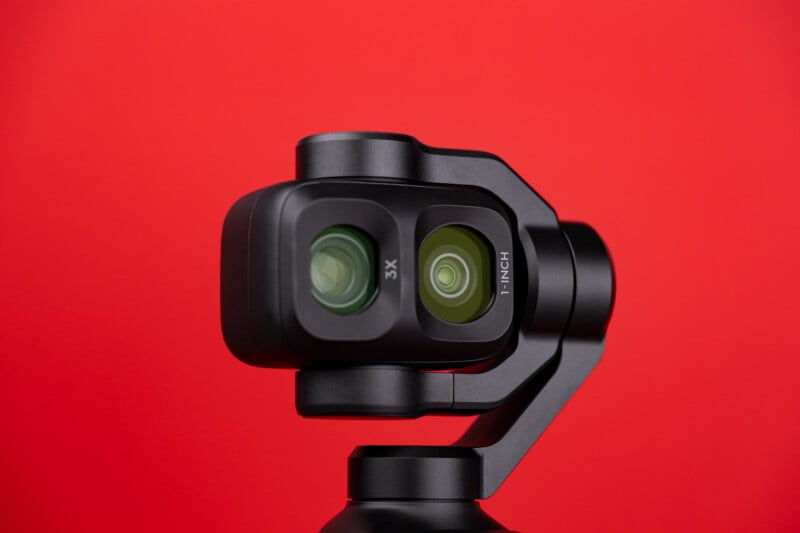
At the core of the Pocket 4P’s distinction is its dual-camera design, coupled with impressive new sensor technology, particularly the Low-Light Optical Filter Integration Circuit (LOFIC) sensor in its main camera. This technological leap promises to redefine expectations for image quality in a compact form factor. However, initial expert assessments indicate a nuanced reality: while the camera delivers shockingly capable performance and outstanding image quality, particularly from its main sensor, it falls short of DJI’s advertised 17 stops of dynamic range. This blend of revolutionary capability and practical limitations forms the crux of the Pocket 4P’s narrative.
The Evolution of the Osmo Pocket Series and Market Context
DJI, a global leader in drone and camera technology, revolutionized the compact video segment with the introduction of the Osmo Pocket. This series democratized professional-grade gimbal stabilization, making it accessible in a highly portable, consumer-friendly device. The Osmo Pocket 3, in particular, was lauded for striking an ideal balance between image quality, stabilization, and user experience, becoming a go-to tool for vloggers and casual filmmakers. Its success established a high benchmark for subsequent iterations.
The Pocket 4, launched as a standard annual update, brought expected refinements but lacked a headline-grabbing feature that would significantly differentiate it from its highly successful predecessor. This conservative approach, in hindsight, appears to have been a prelude to the more ambitious Pocket 4P. The "weird, most prolonged rollouts" referenced by industry observers likely alludes to the rapid succession of models, suggesting DJI’s strategy to segment its releases, perhaps to fine-tune and perfect the LOFIC technology before its broader unveiling. This rapid iteration underscores DJI’s commitment to pushing technological boundaries in the highly competitive compact camera market, where innovation cycles are increasingly short.
The market for compact gimbal cameras is fiercely contested, with players like Insta360 offering compelling alternatives. DJI’s continued dominance relies on its ability to integrate cutting-edge technology into user-friendly packages. The Pocket 4P is a direct response to this competitive pressure, aiming to solidify DJI’s position by offering professional-grade features in a pocketable device.
Technical Deep Dive: The Cameras and Their Capabilities
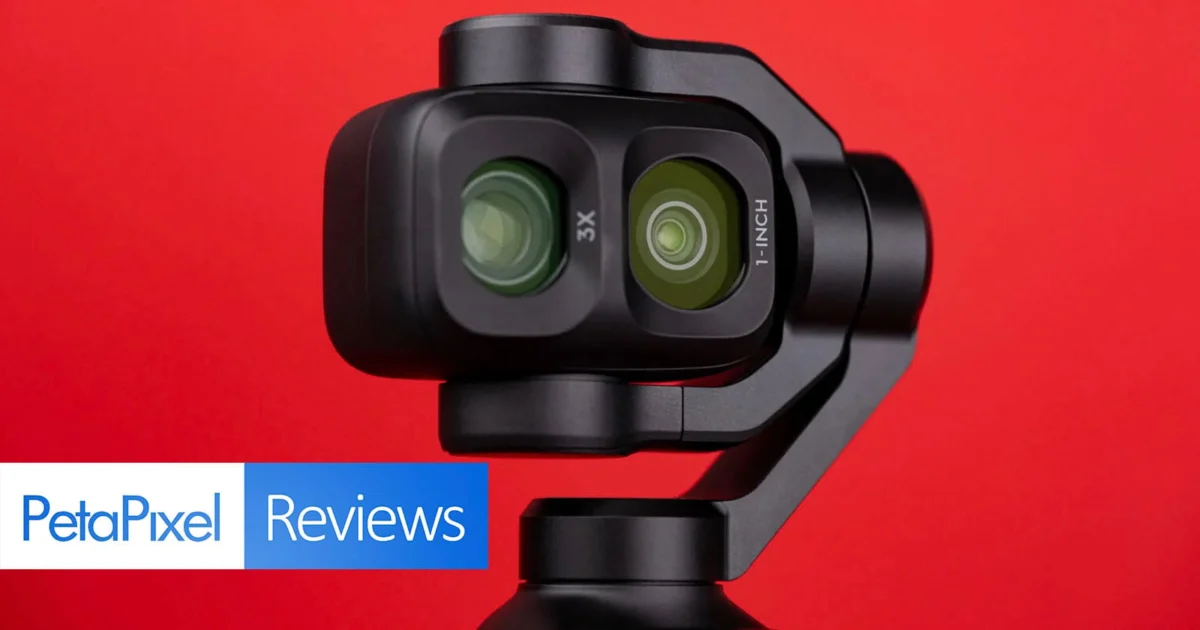
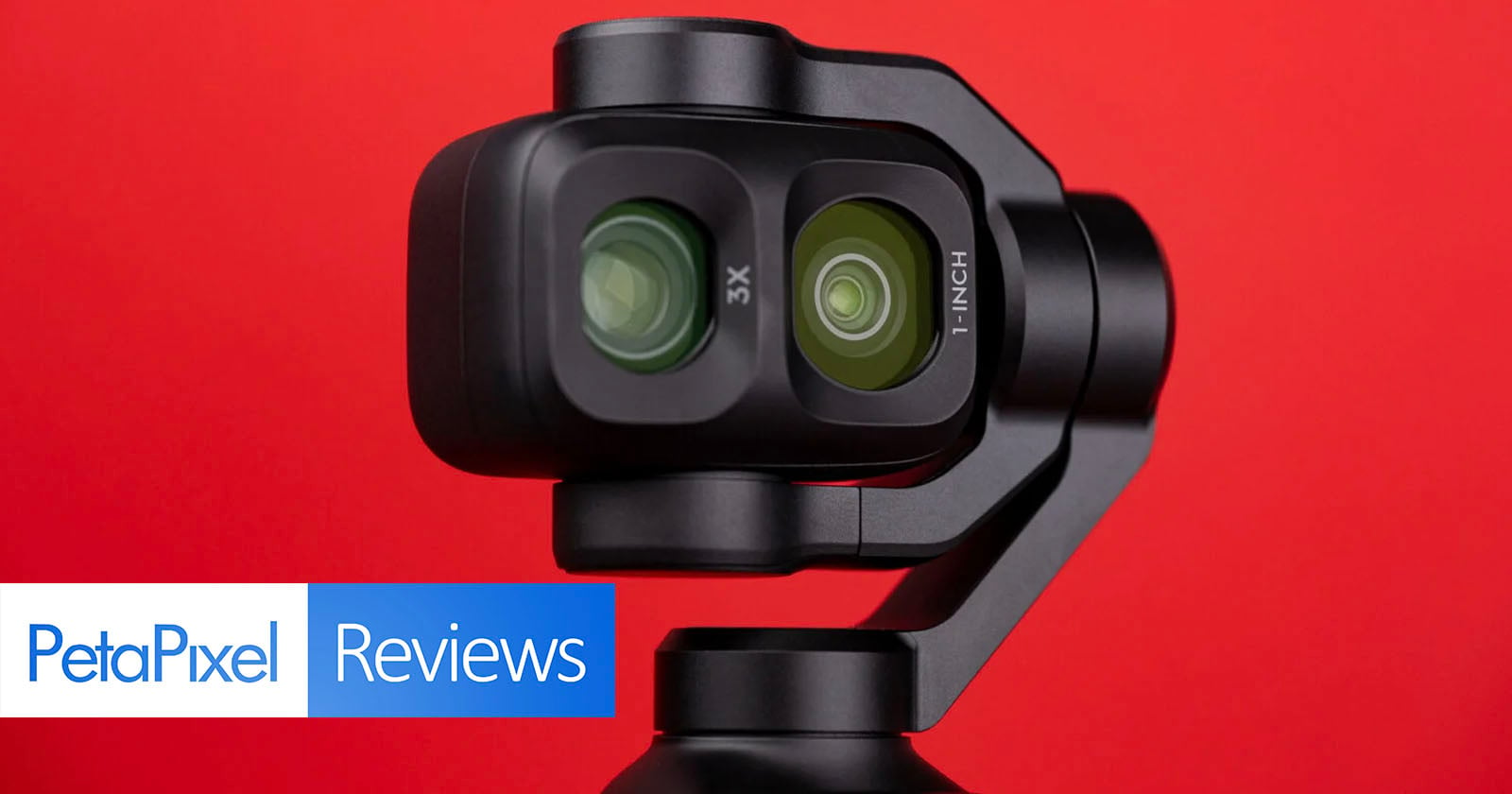
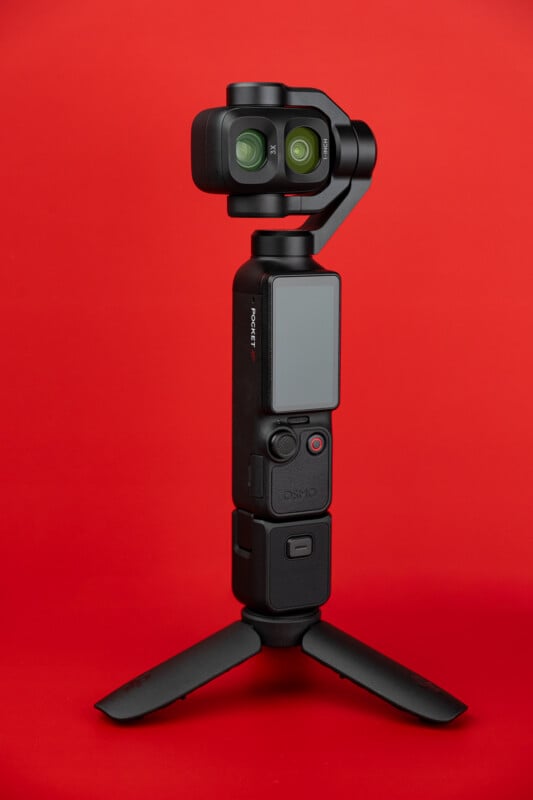
The DJI Osmo Pocket 4P distinguishes itself primarily through its sophisticated camera system, featuring a dual-lens setup that offers versatility in capturing different perspectives.
The Main Wide-Angle Camera: A LOFIC Revolution
The primary camera boasts a 20mm full-frame equivalent field of view with an f/2 aperture, maintaining the wide-angle perspective favored for vlogging and environmental capture, similar to the Pocket 4. This focal length provides a natural perspective, and the relatively fast aperture allows for some shallow depth of field when subjects are close, approximating an f/5.6 full-frame equivalent.
The true innovation, however, lies in the sensor behind this lens. It remains a Type 1, 4:3 ratio sensor but now incorporates LOFIC (Low-Light Optical Filter Integration Circuit) technology. LOFIC is designed to significantly enhance dynamic range by intelligently managing bright areas that would typically clip, allowing for a much wider range of tones to be captured. This advanced technology is the basis for DJI’s bold claim of 17 stops of dynamic range – a figure that, if fully realized, would place this miniature camera in the league of high-end cinema cameras like the Arri Alexa 35, which itself offers over 15 stops, and significantly surpasses many full-frame photographic cameras. This claim alone generated substantial industry anticipation and scrutiny.

To leverage this expanded dynamic range, DJI has introduced a new D-Log 2 log curve, specifically optimized for the LOFIC sensor. Log profiles are crucial for professional videographers as they capture a flat image with maximum tonal information, providing extensive flexibility during post-production color grading. The implementation of D-Log 2 signifies DJI’s intent to position the Pocket 4P as a serious tool for demanding creators.
The Telephoto Camera: Versatility with Caveats
Complementing the main camera is a new telephoto lens, offering a 60mm full-frame equivalent field of view with a faster f/1.8 aperture. This focal length is ideal for isolating subjects, capturing details, or creating more cinematic compressed perspectives. While the faster aperture is beneficial for low-light performance and subject separation, this camera is paired with a smaller Type 1/1.28 sensor. This combination results in an f/6.3 equivalent aperture, meaning its ability to achieve shallow depth of field is more limited compared to the main camera.
Crucially, the telephoto sensor does not utilize LOFIC technology. This absence translates directly to a significantly reduced dynamic range compared to the main camera. It relies on the older D-Log profile, which, while more flexible than the Pocket 3’s D-Log M, falls considerably short of the D-Log 2 profile available on the main camera. This disparity in sensor technology and log profiles between the two lenses introduces a significant challenge for professional users aiming for consistent image quality across their footage.
Frame Rates and Slow-Motion Capabilities
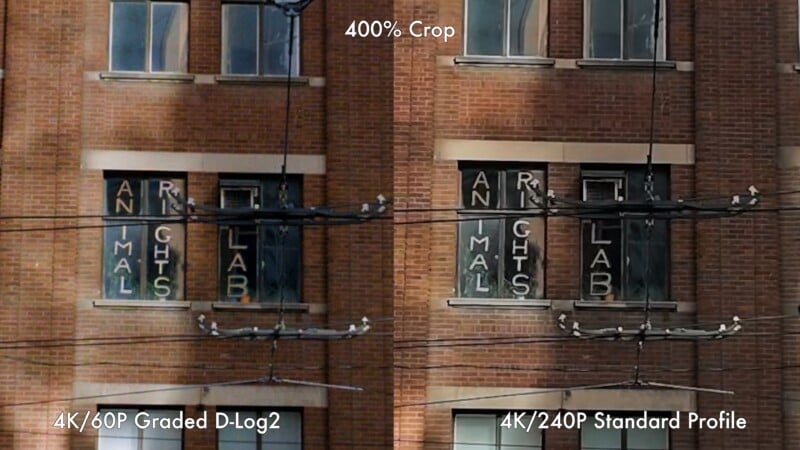
Both cameras are capable of capturing 4K Log footage at up to 60 frames per second (60p), providing high-resolution, color-gradable video. For high-speed recording, the Pocket 4P offers impressive slow-motion capabilities. The main camera can achieve up to 240p, while the telephoto camera maxes out at 200p. However, engaging slow-motion mode disables the log profiles, meaning these high frame rate shots will be recorded in a standard profile, limiting post-production flexibility. A notable user interface quirk requires users to manually reduce the frame rate to 200p on the main camera to unlock the 3x zoom option in slow-motion mode, rather than a seamless transition.
Design, Usability, and Accessories
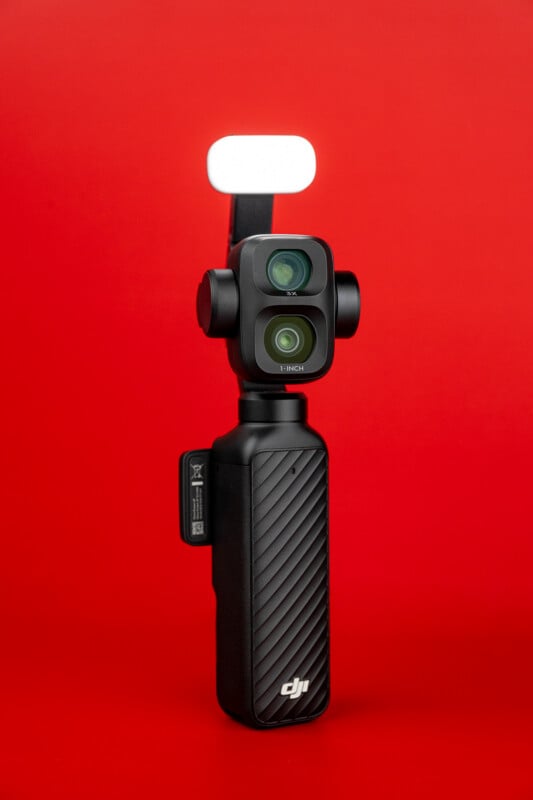
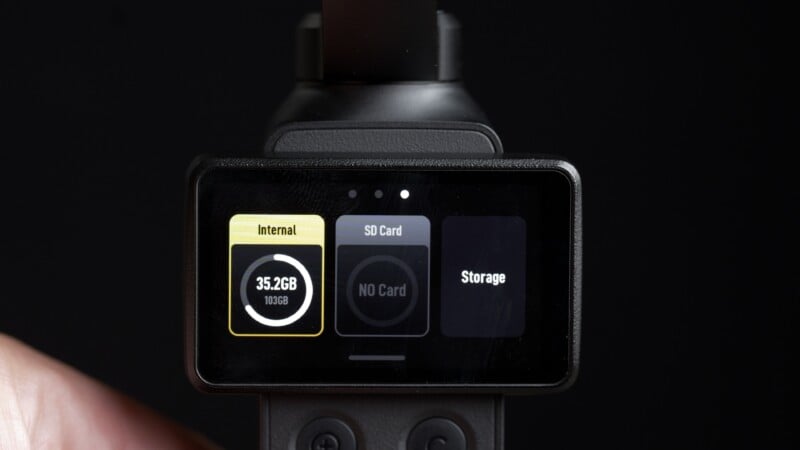
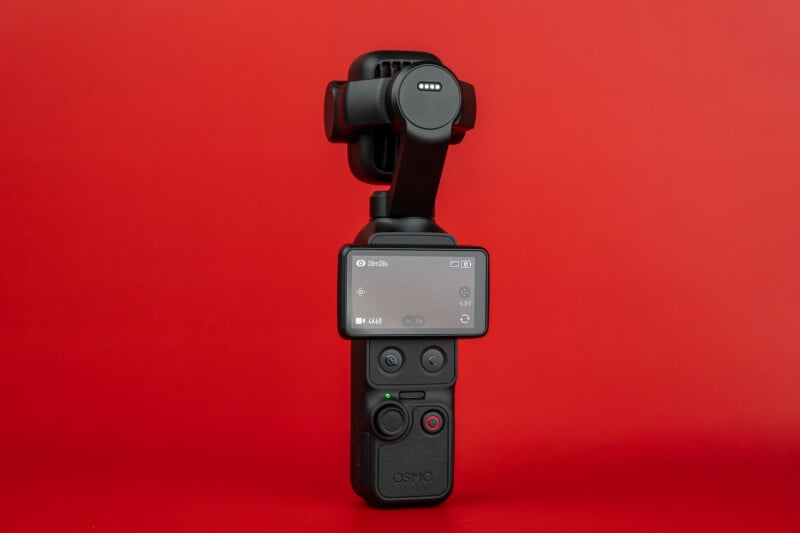
The physical design of the Pocket 4P largely mirrors its predecessor, the Pocket 4, emphasizing portability and ergonomic handling. Its compact body is designed to be easily pocketable, making it an ideal companion for on-the-go content creation. The device features internal storage of 103GB, which can be further expanded via a microSD card slot, offering ample space for extended shooting sessions.
DJI has retained the magnetic accessory holder, allowing users to attach external LED lights or microphones, enhancing the camera’s versatility for various shooting scenarios. The welcome addition of limited custom buttons from the Pocket 4 also returns, providing some degree of personalized control.
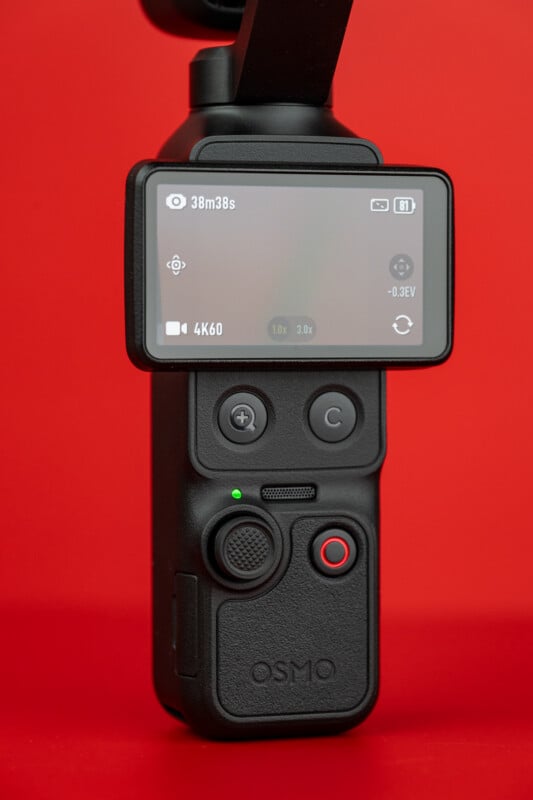
Operation is primarily managed through a small, two-inch touchscreen LCD with just over half a million dots of resolution. While reasonably bright, the reviewer noted difficulties in accurately selecting smaller icons or making precise manual adjustments. A significant oversight for professional users is the absence of crucial exposure assist tools like a histogram or waveform directly on the built-in screen, especially critical when shooting in log profiles with expansive dynamic range. While a histogram is available through the DJI Mimo app, this necessitates a cumbersome process of connecting a mobile device, disrupting the workflow. The ability to assign a full-screen histogram or waveform to a custom button would be a substantial improvement.
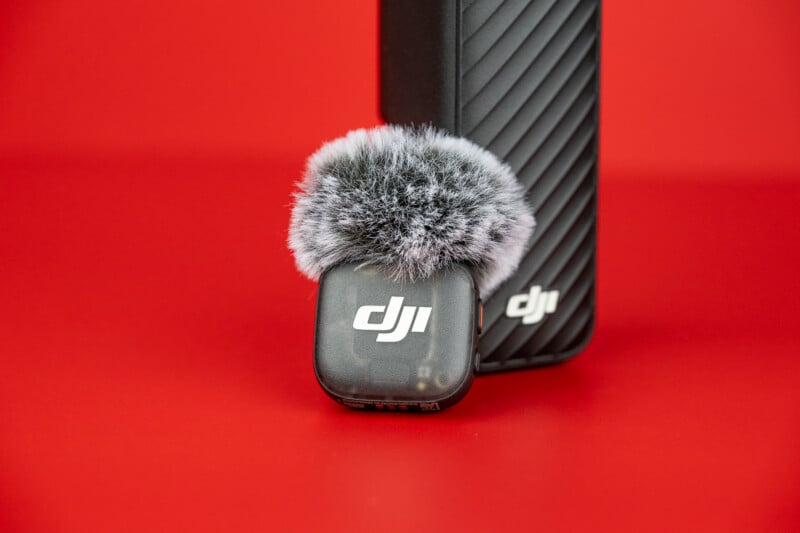
Audio capabilities are enhanced by the option to connect two wireless microphones directly to the camera without requiring a separate receiver. DJI offers a kit that includes a transmitter, making it a convenient solution for vloggers and presenters. The built-in microphone, while susceptible to wind noise and exhibiting a slight tinniness, performs adequately for casual use.
Stabilization and Autofocus: Industry-Leading Performance
Consistent with previous Osmo models, the Pocket 4P excels in stabilization and tracking. The 3-axis mechanical gimbal provides remarkably smooth footage, effectively counteracting camera shake. The autofocus system, tightly integrated with the tracking algorithm, demonstrated robust performance across diverse testing environments. This combination ensures sharp, stable video, even when the subject is in motion. However, like all compact 3-axis gimbals, it cannot entirely compensate for vertical movement, which can result in a subtle "bouncy" effect during casual walking, a common limitation of this form factor.
Image Quality: A Closer Look at Dynamic Range and Low Light
The central claim of the Pocket 4P—17 stops of dynamic range with D-Log 2—demanded rigorous evaluation. For context, this figure surpasses the photographic dynamic range of many medium format cameras and aligns with high-end cinema cameras known for their exceptional latitude. To assess this, the reviewer compared the Pocket 4P against a Panasonic S1 II in its Dynamic Range Boost mode, which delivers over 15 stops of usable dynamic range by simultaneously reading dual native gain sensitivities.
In tests where both cameras were exposed to maximize highlight retention without clipping, the noise levels were remarkably similar, with the Pocket 4P showing only a marginal advantage, certainly not the advertised two-stop difference. This indicates that while the LOFIC sensor is truly impressive for its size, achieving a dynamic range comparable to the S1 II’s full-frame sensor, it does not quite reach the 17 stops claimed by DJI. It is plausible, as suggested by the reviewer, that the D-Log 2 profile is designed with future cameras in mind that might fully exploit this theoretical maximum, or that the measurement methodology differs from standard industry practices.
Beyond dynamic range, the main camera demonstrated noticeable improvements in low-light performance over the LOFIC-less Pocket 4. Whether shooting at high ISOs in Log or utilizing the dedicated Low-Light Mode, the footage exhibited reduced noise and better detail retention, a clear benefit of the new sensor technology. Slow-motion footage, despite lacking log profile flexibility, was found to be highly detailed, providing excellent visual quality for dramatic effect.
The telephoto camera, however, presented a different image profile. Its output was more reminiscent of the Pocket 3, with highlights more prone to blowing out. The reviewer also observed instances of "wax-face" where skin tones in high-contrast lighting lost smooth gradations, suggesting a limitation in tonal reproduction. The stark differences in highlight retention and overall tonal characteristics between the D-Log 2 of the main camera and the D-Log of the telephoto camera make seamless cuts between the two lenses challenging without extensive post-production matching.
User Experience: Interface Frustrations and Workflow Hurdles
Despite the groundbreaking image quality, particularly from the main camera, the user interface of the Pocket 4P introduces significant workflow frustrations for advanced users seeking to harness its full potential through log profiles and manual controls.
A primary issue arises when attempting to switch between the main and telephoto lenses while recording in D-Log 2 on the main camera. The camera displays an error message: "10-Bit D-Log 2 only supports 1.0x zoom," requiring the user to manually switch the log profile back to the original D-Log before the 3x telephoto option becomes available. This manual menu diving interrupts the creative flow, unlike an ideal scenario where the camera would automatically switch to the compatible log profile with a user notification.
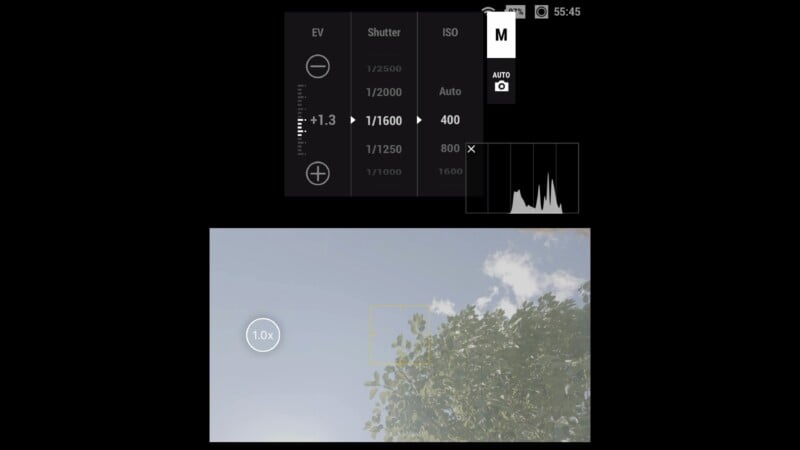
Further complicating matters, D-Log 2 and D-Log have different native base ISOs (100 for D-Log 2, 400 for D-Log) and clip at different points in the histogram. Consequently, switching to the telephoto lens necessitates not only changing the log profile but also re-exposing the image. This process is exacerbated by the lack of on-screen exposure assist tools, forcing users to launch the DJI Mimo app on a mobile device just to view a histogram. Compounding this, when switching back to the main camera and D-Log 2, the camera defaults to the 400 ISO of the telephoto, rather than remembering the D-Log 2’s native ISO 100, requiring yet another manual adjustment.
These procedural hurdles significantly hinder the efficient use of the telephoto camera in log modes, leading the reviewer to largely abandon its use for critical log footage. The good news is that these are primarily software issues, suggesting that DJI could address them through future firmware updates. However, for skilled shooters who rely on precise control and consistent workflow, these limitations currently undermine the "Pro" designation and the utility of the dual-camera system.
Broader Impact and Implications
The DJI Osmo Pocket 4P represents a significant technological achievement, particularly with its LOFIC-powered main sensor. It sets a new benchmark for image quality in a highly compact form factor, promising professional-grade video capabilities to a wider audience. This could empower a new generation of content creators, enabling them to produce visually stunning footage without the bulk and complexity of larger camera systems.
However, the interface frustrations create a dichotomy: casual users, who primarily rely on standard profiles and auto-exposure, will likely enjoy the camera’s convenience and impressive output without encountering its workflow limitations. Conversely, professional videographers, who would most benefit from the advanced dynamic range and log profiles, will find their workflow hampered by the cumbersome lens-switching and exposure management. This suggests a potential misalignment between the camera’s "Pro" aspirations and its current user experience for its most demanding audience.
Alternatives in a Dynamic Market
The competitive landscape for compact gimbal cameras is evolving, and external factors like regulatory actions also play a role. For consumers in the USA, DJI products, including the Pocket 4P, currently face import and sales restrictions. This creates a vacuum for alternatives.
- Xtra Muse 2 Pro: This product is notably similar to the Pocket 4P, appearing to be a rebranded DJI model. However, its availability is uncertain following recent FCC actions against Xtra, highlighting the complexities of navigating geopolitical trade restrictions in the tech sector.
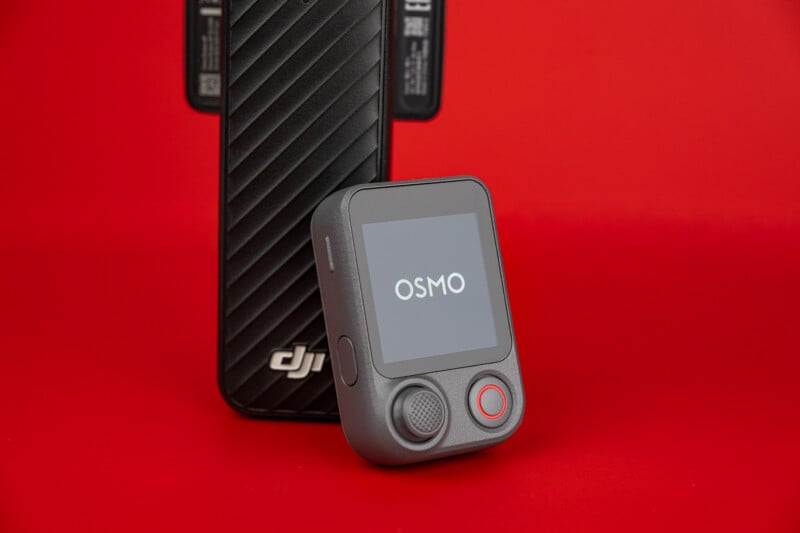
- Insta360 Luna Ultra: This camera is positioned as a direct competitor, featuring a dual-camera design with similar focal lengths. It also boasts a convenient removable remote monitor/LCD/microphone unit, enhancing its appeal for self-filming. While the Luna Ultra offers a more enjoyable user experience, its main camera’s image quality is significantly less performant than the Pocket 4P’s LOFIC-powered sensor. The choice between the two boils down to prioritizing user experience and ecosystem integration versus raw image quality potential.
- DJI Osmo Pocket 4: The immediate predecessor remains a viable option, especially if found at a reduced price. While limited to a single wide-angle camera and lacking the LOFIC sensor’s advancements, it still offers excellent stabilization and portability. However, the substantial image quality improvements in the Pocket 4P make it a compelling upgrade for those not constrained by the US market ban or interface issues.
Conclusion: A Promising but Imperfect Vision
The DJI Osmo Pocket 4P is a testament to DJI’s engineering prowess, pushing the boundaries of what’s possible in a pocket-sized gimbal camera. Its LOFIC main sensor delivers truly outstanding image quality and dynamic range, albeit not quite the advertised 17 stops, offering performance that rivals much larger and more expensive cameras. The robust stabilization and autofocus further solidify its position as a powerful tool for visual storytelling.
However, the camera’s full potential is currently hampered by significant software and interface shortcomings. The disjointed workflow when switching between lenses and log profiles, coupled with the lack of essential on-screen exposure tools, creates a frustrating experience for professional users. These issues effectively relegate the innovative telephoto lens to a secondary, less-utilized role for those committed to a log-based workflow.
Ultimately, the Pocket 4P stands as a camera of stark contrasts: revolutionary hardware shackled by underdeveloped software. While most of the frustrations could theoretically be resolved with future firmware updates, DJI’s commitment to addressing these professional workflow pain points remains to be seen. For casual users who operate primarily in standard profiles, the Pocket 4P offers an unparalleled combination of portability and image quality. For the discerning professional, however, it represents a powerful tool with a steep and often irritating learning curve, making it a nuanced recommendation in the current market.