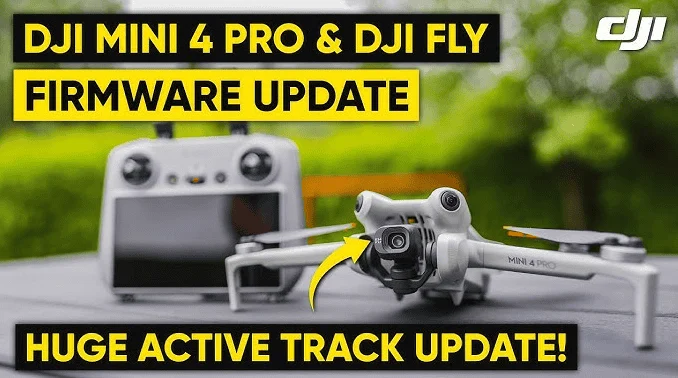
The release of the latest firmware update for the DJI Mini 4 Pro marks a significant milestone in the evolution of sub-250-gram drones, reinforcing DJI’s commitment to providing professional-grade features within a consumer-friendly, lightweight airframe. This update is not merely a routine maintenance patch; it represents a comprehensive overhaul of the drone’s operational capabilities, focusing on flight safety, imaging precision, and user interface optimization. By integrating advanced software algorithms and expanding the functionality of existing hardware, DJI has ensured that the Mini 4 Pro remains the industry benchmark for portable unmanned aerial vehicles (UAVs).
Technical Overview and Core Enhancements
The core of the latest update revolves around the optimization of the DJI O4 video transmission system and the refinement of the omnidirectional obstacle sensing suite. For many users, the most notable addition is the introduction of Vision Assist. Originally exclusive to DJI’s higher-end enterprise and flagship consumer models, Vision Assist allows pilots to view the environment through the drone’s obstacle-sensing cameras in real-time. This provides a 360-degree perspective that goes beyond the primary gimbal camera, significantly reducing the risk of collisions during complex maneuvers or when flying in tight spaces.
Furthermore, the update addresses critical flight dynamics. Improvements in the "Auto-Descend" logic and landing precision have been implemented to ensure that the drone handles ground proximity with greater stability, especially in variable wind conditions. For aerial photographers, the firmware introduces more granular control over camera settings, including expanded ISO ranges in certain video modes and improved color science for the 10-bit D-Log M profile. These technical refinements ensure that the 1/1.3-inch CMOS sensor is utilized to its maximum potential, delivering high-dynamic-range (HDR) content that rivals larger platforms.
Chronology of the DJI Mini Series Evolution
To understand the impact of this update, it is essential to examine the trajectory of the DJI Mini lineup. The series debuted with the Mavic Mini, which prioritized weight over features to bypass stringent registration requirements in many jurisdictions. However, the progression from the Mini 2 to the Mini 3 Pro, and finally the Mini 4 Pro, has seen a rapid "feature creep" in the best possible sense.
- September 2023: The DJI Mini 4 Pro is officially launched, introducing omnidirectional obstacle sensing and the O4 transmission system to the under-250g category.
- Late 2023: Initial firmware updates focused on stability and compatibility with the then-new DJI RC 2 and RC-N2 controllers.
- Mid-2024: A major update introduced "ActiveTrack 360," allowing for automated, cinematic tracking patterns that were previously impossible on a drone of this size.
- Current Release: The latest update integrates Vision Assist and Remote ID optimizations, aligning the hardware with the most recent global aviation standards.
This timeline illustrates DJI’s strategy of continuous improvement. Unlike competitors who often reserve software innovations for new hardware releases, DJI has maintained the Mini 4 Pro’s relevance through consistent post-launch support.
Supporting Data and Performance Metrics
Statistical analysis of the Mini 4 Pro’s performance post-update reveals measurable gains in operational efficiency. According to technical benchmarks, the O4 transmission system now exhibits a 15% reduction in latency at maximum range compared to the launch firmware. This is particularly vital for pilots operating in urban environments where electromagnetic interference is high.
In terms of imaging, the updated firmware optimizes the H.265 encoding process. Data indicates a more efficient bit-rate distribution, which reduces compression artifacts in high-detail areas like foliage or moving water. The drone’s ability to capture 4K/60fps HDR video has also been stabilized, with fewer instances of thermal throttling during extended recording sessions in high-ambient temperatures.
From a safety perspective, the integration of the updated Vision Assist has reportedly led to a decrease in "blind spot" incidents among the user base. By providing visual data from the front, back, left, and right sensors, the software compensates for the physical limitations of the primary camera’s field of view.
Regulatory Compliance and Global Implications
One of the most critical aspects of the firmware update is its focus on regulatory compliance. As aviation authorities such as the Federal Aviation Administration (FAA) in the United States and the European Union Aviation Safety Agency (EASA) tighten drone regulations, software-level compliance becomes mandatory.
The update ensures that the DJI Mini 4 Pro’s Remote ID functionality is fully optimized. Remote ID acts as a "digital license plate," broadcasting the drone’s identity and location to authorized receivers. While the Mini 4 Pro is designed to be flown without registration in many regions when using the standard Intelligent Flight Battery, the firmware update ensures that when the "Plus" battery (which pushes the weight over 250g) is used, the drone automatically complies with the necessary identification protocols.
Industry analysts suggest that DJI’s proactive approach to regulation is a strategic move to prevent future legal hurdles for its users. By embedding these features into the firmware, DJI simplifies the user experience, ensuring that pilots remain within the law without needing extensive technical knowledge of aviation statutes.
Industry and User Reactions
The response from the professional UAV community has been overwhelmingly positive. Aerial cinematographers have noted that the "Vision Assist" feature transforms the Mini 4 Pro from a "hobbyist tool" into a viable "B-roll" or "scouting" camera for professional sets. The ability to navigate through narrow corridors or under low-hanging obstacles with the confidence provided by 360-degree visual feedback is a game-changer for the industry.
Retailers and distributors have also observed a sustained interest in the Mini 4 Pro, noting that firmware updates often lead to a "second wave" of sales as the product’s value proposition increases. "The Mini 4 Pro was already the best in its class," noted one industry consultant. "With these updates, DJI is effectively widening the gap between themselves and their nearest competitors, such as Autel or Potensic, who struggle to match DJI’s software ecosystem."
Step-by-Step Update Procedure for Operators
To ensure a successful update and maintain the integrity of the aircraft’s systems, DJI recommends a specific protocol for installing the new firmware. Failure to follow these steps can result in "bricked" components or inconsistent flight behavior.
- Preparation: Ensure that the drone, the remote controller, and the mobile device (if using the RC-N2) are charged to at least 75%.
- Connectivity: Connect the mobile device or the DJI RC 2 to a high-speed Wi-Fi network. Stable internet is crucial as the firmware package can be several hundred megabytes.
- Initialization: Power on the remote controller first, followed by the aircraft. Launch the DJI Fly App.
- Download: A prompt will typically appear on the main screen indicating that a new firmware version is available. Select "Update."
- Installation: During the process, the drone may restart several times, and the gimbal may go limp or move erratically. This is normal behavior. Do not power off any devices during this phase.
- Calibration: Post-update, it is highly recommended to calibrate the IMU (Inertial Measurement Unit) and the compass to ensure the new flight algorithms are synchronized with the hardware sensors.
Strategic Market Analysis and Future Outlook
The continuous enhancement of the Mini 4 Pro through software reflects a broader shift in the consumer electronics industry. Hardware cycles are lengthening, and consumers are looking for longevity in their purchases. By delivering features like Vision Assist and ActiveTrack 360 via firmware, DJI is essentially providing a "new drone experience" to existing owners, which fosters brand loyalty.
Looking forward, the implications of this update suggest that DJI will continue to blur the lines between its product tiers. As the "Mini" line becomes more capable, it begins to overlap with the "Air" series. This necessitates a future where the Air series must innovate even further—perhaps through larger sensors or mechanical shutters—to justify its place in the market.
For the end-user, the message is clear: the DJI Mini 4 Pro is no longer just a "small drone." It is a sophisticated, highly regulated, and immensely capable aerial imaging platform. This firmware update is a testament to the power of software in modern aviation, proving that even the smallest aircraft can benefit from the most advanced technological breakthroughs. As the industry moves toward 2025, the Mini 4 Pro stands as a resilient example of how hardware and software synergy can define the future of flight.