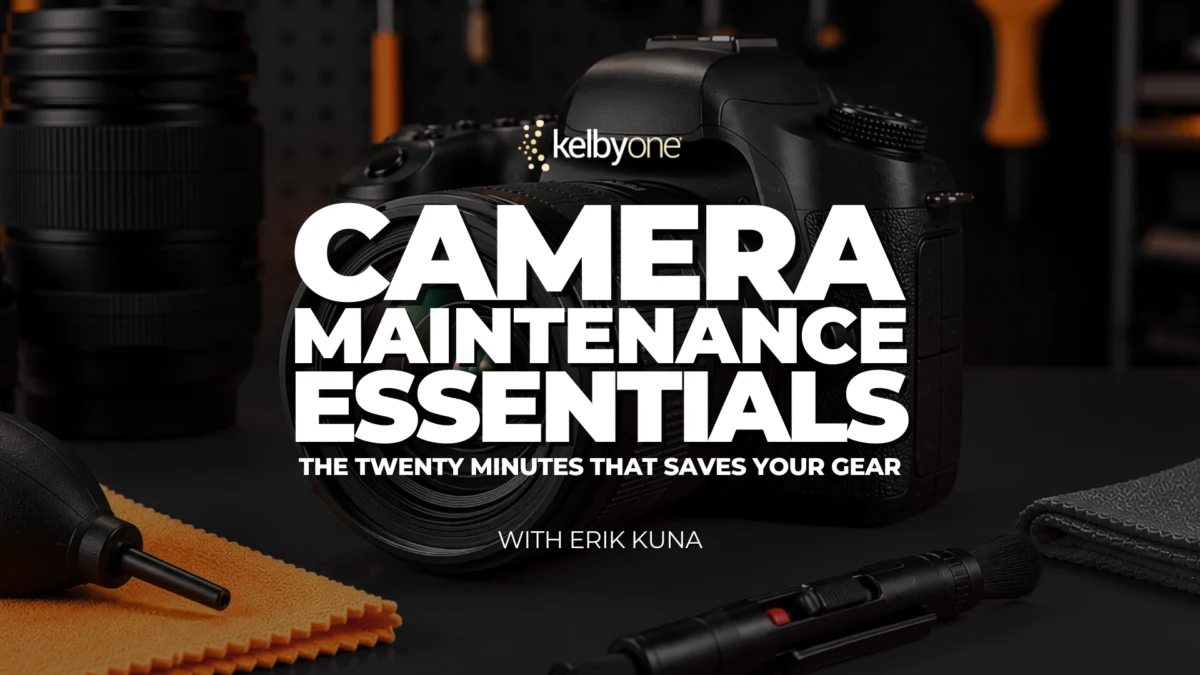
The often-overlooked discipline of camera maintenance, frequently relegated to an afterthought until critical issues arise, is now the central focus of a new educational initiative spearheaded by veteran photographer Erik Kuna. Recognizing that sensor dust and equipment malfunctions are common pitfalls for photographers, regardless of their experience level, Kuna has distilled 15 years of rigorous field experience into a comprehensive new class designed to empower users with the knowledge and techniques to safeguard their valuable photographic investments. This program, offered through KelbyOne, addresses a critical gap in many photographers’ skill sets, providing a structured approach to prevent costly repairs and ensure consistent image quality.
The Critical Imperative of Camera Maintenance
Photography equipment represents a significant financial investment for professionals and enthusiasts alike. A high-quality camera body can range from hundreds to several thousands of dollars, with specialized lenses often surpassing these figures. Yet, this substantial investment is frequently left vulnerable to the insidious effects of dust, grime, and general wear and tear, largely due to a lack of understanding regarding proper care protocols. Neglecting routine maintenance not only degrades image quality through artifacts like sensor dust and smudged lenses but also accelerates the wear on mechanical components, leading to decreased performance, potential malfunctions, and ultimately, a reduced operational lifespan for the equipment.
Historically, camera maintenance has evolved significantly. In the film era, the primary concerns revolved around keeping lenses clean and ensuring light seals were intact. The advent of digital photography, particularly with Digital Single-Lens Reflex (DSLR) cameras and later mirrorless systems, introduced a new and formidable challenge: sensor cleaning. Unlike film, which is constantly advanced, the digital sensor remains static, acting as a magnet for microscopic dust particles that can enter the camera body during lens changes or through normal operation. These particles, though tiny, cast discernible shadows on images, particularly at narrower apertures, necessitating time-consuming post-processing removal or, worse, requiring professional intervention.
Protecting Your Investment: Beyond the Initial Purchase
The economic implications of poor maintenance are substantial. Professional sensor cleaning services typically range from $50 to $100 per instance, a recurring cost that can quickly accumulate. More severe neglect, leading to internal component damage or lens degradation, can escalate repair costs into the hundreds or even thousands of dollars, often approaching the price of new equipment. Conversely, a camera body or lens meticulously maintained not only performs optimally throughout its life but also retains a significantly higher resale value. Market analysis of used photographic equipment consistently shows that well-cared-for gear, free from visible blemishes, dust, or functional issues, can command 20-30% higher prices compared to neglected counterparts. This protection of asset value underscores the financial prudence of adopting a proactive maintenance regimen.
The Environmental Gauntlet: How Conditions Impact Gear
Erik Kuna’s extensive experience, honed over 15 years of shooting in "seriously tough conditions," highlights the diverse environmental challenges photographers face. These conditions span a wide spectrum: from the fine, abrasive dust of desert landscapes that can infiltrate lens mechanisms and camera bodies, to the high humidity and corrosive salt spray of coastal regions that accelerate corrosion and fungal growth on optics. Extreme cold can stiffen lubricants and deplete battery life, while sudden temperature changes can lead to condensation, posing a risk of short circuits and internal fogging. Each environment presents unique threats to delicate electronic and optical components. Kuna’s methodology is born from confronting these realities, developing robust strategies not just for cleaning, but for preventative care that anticipates and mitigates environmental damage, ensuring gear reliability when it matters most.
Erik Kuna: A Master Craftsman’s Journey to Impart Knowledge
Erik Kuna’s credentials as an instructor are firmly rooted in his practical experience. His journey through various demanding photographic environments has provided him with an unparalleled understanding of equipment resilience and the critical need for meticulous care. His claim of performing over 1,000 sensor cleanings without a single instance of damage is a testament to his precision, patience, and deep technical knowledge. This statistic is particularly significant given the delicate nature of camera sensors, which are highly susceptible to scratches or improper handling, rendering them permanently damaged and requiring expensive replacement. Kuna’s track record underscores not just his technical proficiency but also his systematic approach to a task many photographers find daunting.
Fifteen Years in the Field: Forging Resilience and Expertise
Kuna’s 15-year tenure in photography has likely encompassed a wide array of genres, from photojournalism in challenging locales to wildlife photography in remote areas, and perhaps studio work where dust control is still a factor. His exposure to diverse scenarios has allowed him to observe common equipment failures and degradation patterns firsthand. This practical insight has been crucial in developing a maintenance routine that is not merely theoretical but intensely pragmatic and effective. He understands the pressures of professional photography, where equipment failure is not an option, and the need for a routine that is both efficient and thorough.
The Art of Sensor Cleaning: A Thousand Successes
The digital camera sensor, the heart of any modern photographic system, is an extremely sensitive and costly component. Its surface is typically covered with a series of filters (low-pass, infrared, anti-aliasing) that are easily scratched or smudged. The fear of damaging this vital component often deters photographers from attempting self-cleaning, leading them to tolerate dust spots or incur professional cleaning costs. Kuna’s achievement of over a thousand damage-free cleanings speaks volumes about his refined technique and understanding of the specific tools and methodologies required. His class aims to demystify this process, transforming a source of anxiety into a manageable, routine task for his students.
Unpacking the "Camera Maintenance Essentials" Curriculum
The "Camera Maintenance Essentials" class is structured to provide a comprehensive, step-by-step guide to gear upkeep. It moves beyond generic advice, offering actionable strategies for various aspects of camera and lens care.
Diagnosing the Invisible: Identifying Sensor Dust
Before any cleaning can commence, accurately identifying the presence and location of sensor dust is crucial. Kuna’s class teaches precise methods for this diagnosis. Typically, this involves taking a test shot of a plain, evenly lit surface (like a clear blue sky or a white wall) at a narrow aperture (e.g., f/16 or f/22) and slightly out of focus. This maximizes the visibility of dust motes, which appear as dark, soft-edged spots. The class details how to interpret these test shots, distinguishing between dust on the sensor, on the lens, or even on the rear element of the lens, ensuring that subsequent cleaning efforts are correctly targeted. This diagnostic step is foundational, preventing unnecessary or misdirected cleaning attempts.
Precision Cleaning: A Step-by-Step Guide to Sensor Health
Kuna breaks down the sensor cleaning process into manageable, safe steps. This includes:
- Preparation: Ensuring the camera battery is fully charged to prevent power loss during the cleaning cycle, which could cause the mirror to drop (on DSLRs) or the shutter to close prematurely, potentially damaging the sensor or cleaning tool.
- Accessing the Sensor: For DSLRs, engaging the "mirror lock-up" function; for mirrorless cameras, carefully removing the lens to expose the sensor.
- Initial Dry Cleaning: Using a specialized, air-bulb blower (not compressed air, which can contain propellants and moisture) to dislodge loose dust particles without physical contact.
- Wet Cleaning (If Necessary): For stubborn, oily, or static-adhered dust, Kuna demonstrates the correct use of single-use, individually sealed sensor swabs paired with approved sensor cleaning solutions. He emphasizes the importance of a single, smooth pass across the sensor surface in one direction, followed by a second pass in the opposite direction with a fresh swab, to avoid re-depositing contaminants or introducing new ones. The class details how to choose the right size swab for different sensor formats and the correct amount of cleaning solution.
- Post-Cleaning Check: Repeating the diagnostic test shot to confirm successful dust removal.
The emphasis throughout is on sterility, gentle technique, and the use of purpose-built tools, mitigating the risks commonly associated with DIY sensor cleaning.
Nurturing Your Lenses: The Gateway to Pristine Imagery
Lenses, equally as vital as the camera body, require their own specific care regimen. Kuna’s class covers comprehensive lens maintenance, including:
- External Cleaning: Gentle removal of dust and smudges from front and rear elements using specialized lens cleaning solutions and lint-free microfiber cloths, ensuring no abrasive particles are dragged across the glass.
- Barrel and Body Care: Cleaning the lens barrel, focus, and zoom rings to prevent dust ingress and ensure smooth operation.
- Protective Measures: The importance of using lens caps when not in use, lens hoods to prevent accidental bumps and flare, and potentially UV or clear protective filters (with a discussion on their pros and cons).
- Storage: Proper storage techniques, including humidity control (especially in damp climates to prevent fungus), and avoiding extreme temperature fluctuations.
The Peril of Common Cleaners: What to Avoid at All Costs
One of the most critical sections of the class addresses the dangers of using everyday household products for camera and lens cleaning. Kuna explicitly identifies and warns against items such as:
- Paper products (facial tissues, paper towels): These are abrasive and can scratch delicate lens coatings or sensor filters.
- Clothing/Shirt tails: Often contain dirt, lint, or synthetic fibers that can scratch surfaces or leave residue.
- Glass cleaners (e.g., Windex): Contain ammonia or other chemicals that can damage lens coatings, plastic components, or leave streaks.
- Compressed air cans: While seemingly innocuous, these often contain propellants that can spray liquid onto sensitive components, causing damage or leaving residue. They can also create extreme cold, potentially damaging electronics.
- Breath moisture: Contains saliva particles and acids that can leave residues or streaks.
Instead, the class champions the exclusive use of professional-grade, purpose-designed cleaning solutions and tools, which are chemically neutral, non-abrasive, and specifically formulated for photographic equipment.
The Tangible Benefits: Data and Economic Impact
The insights provided by Kuna’s course translate into tangible benefits for photographers.
Mitigating Repair Costs and Extending Lifespan
Industry data suggests that a significant percentage of camera repairs, outside of accidental damage, stem from neglect-related issues such as sensor contamination, lens fungus, or seized mechanisms due to dirt ingress. By proactively managing these risks, photographers can significantly reduce their out-of-pocket repair expenses. Studies have indicated that cameras and lenses subjected to consistent, proper maintenance can exhibit a functional lifespan up to 50% longer than those that are routinely neglected. This directly translates to greater value extraction from the initial investment.
Enhancing Resale Value in a Dynamic Market
In the secondary market for photography gear, condition is paramount. A camera body with a pristine sensor and clean, unscratched lenses will invariably command a higher price than one showing signs of neglect, even if both are functionally sound. The perception of care translates directly into monetary value. As noted, a 20-30% uplift in resale value for well-maintained equipment is not uncommon, representing hundreds of dollars on higher-end gear.
Optimizing Workflow: The Hidden Cost of Neglect
Beyond direct repair costs, neglecting maintenance imposes a "hidden cost" in terms of workflow inefficiency. Images marred by sensor dust require meticulous cloning and spot removal in post-processing. Depending on the severity and frequency of dust spots, this can add minutes, or even hours, to the editing time for a single shoot. For professional photographers, this directly impacts profitability and turnaround times. A clean sensor ensures a pristine starting point, dramatically streamlining the post-production process and allowing more time for creative work.
Industry Perspective and Empowering the Photographic Community
The introduction of "Camera Maintenance Essentials" by Erik Kuna on the KelbyOne platform reflects a broader industry trend towards empowering users with practical skills.
KelbyOne’s Commitment to Education
A spokesperson for KelbyOne articulated the platform’s strategic vision: "Our core mission at KelbyOne is to equip photographers at every stage of their journey with the comprehensive skills they need to excel. This extends beyond creative techniques to encompass the fundamental practices that ensure equipment longevity and reliability. Erik Kuna’s class fills a crucial void, providing accessible, expert-led instruction on a topic that directly impacts image quality and financial investment. We believe this initiative underscores our commitment to holistic photographic education."
Kuna’s Vision: Demystifying Maintenance for All
Erik Kuna himself expressed his motivation behind creating the course: "Throughout my career, I’ve observed countless photographers, from passionate hobbyists to seasoned professionals, investing heavily in their gear only to neglect the simple, yet vital, steps that protect that investment. The fear of damaging expensive equipment often paralyzes individuals from attempting maintenance themselves. My aim with ‘Camera Maintenance Essentials’ is to demystify these processes, break down the barriers of intimidation, and empower everyone to confidently care for their equipment. It’s about turning a potentially intimidating task into a routine, confidence-building practice that ultimately saves money, time, and ensures your creative vision is never compromised by preventable equipment issues."
This class represents more than just a tutorial; it is an investment in a photographer’s long-term success and creative freedom. By providing a structured, expert-led routine, Kuna and KelbyOne are addressing a pervasive challenge within the photographic community, offering a practical solution that promises to extend the life of valuable equipment and elevate the quality of photographic output.
Conclusion: An Investment in Longevity and Creativity
In an era where technology evolves rapidly and photographic equipment represents a significant financial commitment, the ability to properly maintain one’s gear is not merely a technical skill but a foundational pillar of responsible ownership. Erik Kuna’s "Camera Maintenance Essentials: The Twenty Minutes That Saves Your Gear" is positioned as a timely and invaluable resource. By sharing his extensive knowledge and proven methodologies for detecting sensor dust, performing safe cleaning, caring for lenses, and avoiding damaging practices, Kuna empowers photographers to take control of their equipment’s health. This proactive approach translates directly into extended gear lifespan, preserved image quality, reduced repair costs, and enhanced resale value. Ultimately, the class offers photographers the confidence and practical skills necessary to ensure their tools remain reliable companions on their creative journey for years to come.