Waking before dawn aboard the SeaLegacy 1, a ritual etched into the routine of the Pacific crossing from Mexico to Tahiti, this particular morning carried an electric current of anticipation. The crew and I were poised for what promised to be the apex of our expedition: a dive into the heart of Fakarava’s legendary annual grouper spawning. Under the ethereal glow of a full moon illuminating a star-dusted sky, we donned our masks and submerged into the inky blackness of the ocean depths. What initially greeted us was a deceptive calm, a prelude to the spectacular, churning ballet that would soon unfold.
A Natural Phenomenon of Epic Proportions
Fakarava, an atoll situated approximately 700 nautical miles north of Papeete, French Polynesia, is renowned for its pristine turquoise lagoons, postcard-perfect beaches, and coral reefs teeming with an astonishing array of marine life. For much of the year, this UNESCO Biosphere Reserve serves as a sanctuary for countless fish species, seabirds, sea turtles, and majestic manta rays, all coexisting in a delicate equilibrium. However, as the warmer months arrive, a profound transformation occurs, drawing in thousands of resident groupers for their annual reproductive congregation.
This gathering is not merely a biological event; it is a critical pillar of the Fakarava atoll’s ecological health. The aggregation, which can span several weeks, sees an increasing number of groupers converging near the mouth of the channel connecting the atoll’s lagoon to the open sea. This expansive area, roughly 10 by 30 nautical miles, becomes a crucial nexus. The powerful tidal currents, dictated by the ebb and flow of the ocean, play a vital role. Every six hours, deep, nutrient-rich ocean water surges into the lagoon, and then recedes, a rhythmic pulse that facilitates nutrient distribution and, crucially, the dispersal of the groupers’ eggs. The peak of this biological spectacle typically aligns with the full moon, when tidal forces are at their strongest, creating the perfect conditions for spawning to commence.

The Shark’s Role: Guardians of the Balance
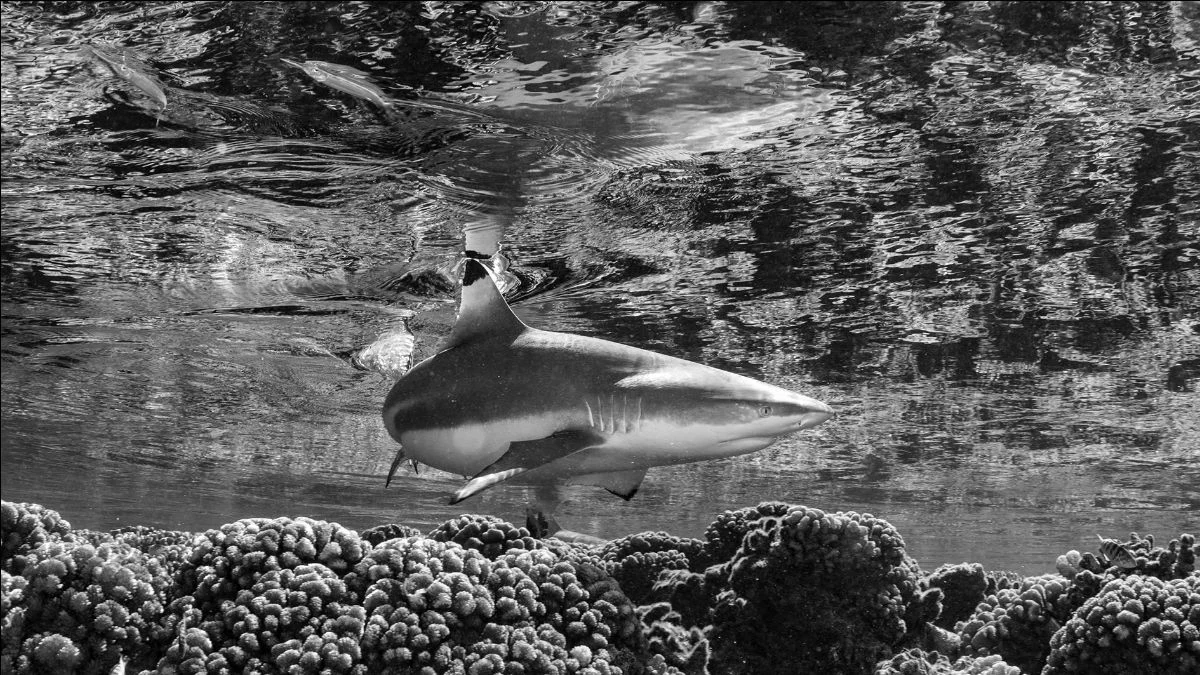
Following in the wake of this prodigious piscine gathering is a formidable, yet essential, fleet of hundreds of sharks. These apex predators, often misunderstood and feared, descend upon the reefs like organized patrols, their presence a direct consequence of the abundant food source. Their role, far from being solely predatory, is intrinsically linked to the health and balance of the entire ecosystem.
From our vantage point at the edge of the atoll, precisely positioned for optimal observation, we began our descent along the dramatic drop-off at the channel’s mouth. The initial sight was breathtaking: thousands of groupers, their bodies perfectly still against the vibrant coral heads, relying on their innate camouflage for protection. Each fish seemed to claim its own coral territory, their large eyes swiveling to track the silent passage of the patrolling sharks. The profound stillness was periodically shattered by the visceral crunch of predation, followed by the sudden, chaotic thrashing of numerous sharks, a stark reminder of the raw power and interconnectedness of this underwater world.
A Frenzy of Life and Survival
Around 100 feet below the surface, the pivotal moment arrived. The female groupers, their bodies laden with eggs, began their ascent into the currents to release their precious cargo. In an instant, the tranquil waters erupted into a swirling vortex of activity. Dozens of male groupers, their senses honed to the signal, followed each female, fertilizing the released eggs with milt. This synchronized release, orchestrated by thousands of individuals, marked the perpetuation of the species. The scene was a dramatic interplay of life and survival, a breathtaking ballet of reproduction and predation that unfolded with astonishing speed. The cycle of life was in full, unadulterated motion, a spectacle that was as awe-inspiring as it was poignant.
The Ecological Significance: More Than Just a Meal
The intricate processes observed during the Fakarava grouper spawning underscore a fundamental truth about marine ecosystems: what may appear chaotic or violent to the human observer is often the result of millennia of evolutionary refinement, leading to a state of precarious equilibrium. Every element, from the subtle mottling of a grouper’s scales to the fate of each individual egg – whether fertilized or consumed by another organism – contributes to the overall health and stability of the reef.

Predators, including sharks, are not merely consumers; they are integral to the functioning of the ecosystem. By preying on weakened individuals or surplus populations, they prevent disease outbreaks and ensure that resources are not depleted. Furthermore, their movements distribute vital nutrients across the reef, fertilizing the coral and supporting the growth of smaller organisms. The presence of healthy shark populations is, therefore, a strong indicator of a thriving and balanced marine environment.
A Call for Conservation: Living With, Not Beside, Marine Life
The enduring message from Fakarava is clear: humanity does not simply coexist with sharks and other marine wildlife; our very existence is intrinsically linked to their well-being. For millennia, these creatures have fulfilled vital roles within our oceans, long before human intervention, such as large-scale fishing, began to disrupt natural balances.
The photographer and naturalist Paul Nicklen, whose powerful imagery captures the essence of this event, articulates this sentiment profoundly: "There is no such thing as ‘learning to live’ with sharks and other wildlife. We live because of them. Or more specifically, because of the vital role they have served within our ocean for millennia."
The capture of such profound natural dramas, like the Fakarava spawning, serves a critical purpose beyond mere documentation. It is a potent tool for conservation, aiming to inspire local communities and global audiences alike to champion the protection of these wild and vital ecosystems. The future of Fakarava, and indeed countless other marine environments, hinges on our ability to recognize their intrinsic value and to implement robust conservation strategies that safeguard these natural wonders for generations to come.

Supporting Data and Implications
The Fakarava atoll, as a UNESCO Biosphere Reserve, is subject to specific management plans aimed at preserving its ecological integrity. These plans often involve regulating fishing activities, particularly during sensitive periods like the grouper spawning season, and promoting sustainable tourism. However, the pressures of climate change, including ocean acidification and rising sea temperatures, pose significant long-term threats to coral reef ecosystems and the species they support.
The decline in grouper populations in some regions, often attributed to overfishing, highlights the vulnerability of these aggregations. The Fakarava spawning event, while currently robust, serves as a critical case study for understanding the ecological dynamics that sustain these populations and the potential consequences of their disruption. Conservation efforts must extend beyond local protections to address global challenges that impact marine health.
The successful reproduction of groupers, facilitated by the presence of sharks, has cascading effects throughout the food web. A healthy grouper population supports a diverse range of smaller fish species that feed on their eggs and larvae, while also serving as a crucial food source for larger predators, including sharks themselves. Any imbalance in this intricate web can lead to unforeseen consequences, potentially impacting fisheries and the overall biodiversity of the region.
The commitment to protecting such critical habitats is not just an environmental imperative; it is an economic one. Thriving marine ecosystems support local economies through tourism, fishing, and other marine-dependent industries. The preservation of the Fakarava spawning event, therefore, represents an investment in the long-term health of both the natural world and the human communities that depend upon it.