The transition from the sweltering heat of the Moroccan summer to the more temperate climes of early autumn marks a significant shift in the administrative and social life of Marrakech. As the calendar turns toward mid-September, the city undergoes a metamorphosis, moving from a period of relative local quietude into the bustling activity of its primary tourist season. This seasonal pivot provides a unique window for observers to witness the authentic rhythms of the city, unobstructed by the dense crowds that typically define the historic Medina. Observations recorded in late 2026 highlight a period where the "touristic humdrum" is noticeably absent, allowing for a clearer analysis of the city’s internal mechanics, its transport infrastructure, and the peculiar social vignettes that define its streets.
The Seasonal Economics of Moroccan Tourism
Marrakech remains the crown jewel of Morocco’s tourism sector, an industry that contributes approximately 7% to the national Gross Domestic Product (GDP). According to data from the Moroccan Ministry of Tourism, the city attracts over three million international visitors annually. However, the timing of these visits is heavily concentrated. The "shoulder season," occurring between late August and mid-September, represents a critical lull. During this period, the intense heat—which frequently exceeds 40 degrees Celsius in July and August—begins to dissipate, yet the massive influx of European and American travelers has not yet reached its peak.
For the local economy, this period is one of preparation. In the Medina, the historic fortified heart of the city, shopkeepers utilize the quieter morning hours to restock and organize. Business typically commences later in the day; before 10:00 AM, the labyrinthine alleys are characterized by closed shutters and the scent of cedarwood and spices lingering in the cool air. This window offers a rare opportunity for ethnographic observation, where the interactions between locals are more visible than the transactional nature of the tourist trade.
Urban Mobility and the Infrastructure of the "Petit Taxi"
The logistics of navigating Marrakech are central to understanding its urban development. For many visitors staying in the modern districts or the outskirts, the primary mode of transport into the historic center is the "Petit Taxi." These small vehicles, typically painted ochre to match the city’s walls, operate under strict municipal regulations but offer a remarkably low-cost entry point for transit.
A three-kilometer journey from the residential peripheries to the gates of the Medina currently averages a fare of approximately 2.50 Euro (roughly 27 Moroccan Dirhams). This pricing structure reflects a subsidized or regulated approach to urban mobility, ensuring that both locals and tourists can navigate the city without the necessity of private vehicle ownership. Traffic patterns in Marrakech are notoriously volatile; while the early morning hours facilitate rapid transit, the congestion that develops after 10:00 AM serves as a significant bottleneck for the city’s productivity.
The efficiency of these transit routes is vital for the city’s "Vision 2030" goals, which aim to modernize infrastructure while preserving the UNESCO World Heritage status of the Medina. The contrast between the high-speed traffic of the outer boulevards and the pedestrian-only zones of the interior creates a unique tension in the city’s geographical layout.
A Chronology of the Morning Routine: From Prayer to Commerce
The daily lifecycle of Marrakech is dictated by a blend of religious observance and commercial necessity. The following timeline outlines the typical progression of a morning in the city:
- 05:30 AM – 06:30 AM: The first Adhan (call to prayer) echoes across the city. This marks the beginning of the day for the majority of the local population. Movement is centered around local mosques.
- 07:00 AM – 08:30 AM: The city’s logistics network comes alive. Delivery carts (koutchis) and small trucks bring fresh produce and artisanal goods into the Medina.
- 09:00 AM: This is the "golden hour" for observation. The air is clear, the heat is manageable, and the streets are occupied by residents going about their morning business—buying bread from communal ovens or heading to work.
- 10:00 AM: The commercial engine ignites. Shop shutters are raised, and the first waves of tourists emerge from riads and hotels.
- 11:00 AM – 12:00 PM: Traffic density reaches its first peak. The main arteries leading to the Jemaa el-Fnaa square become saturated with taxis, motorbikes, and buses.
The Phenomenon of the "Roundabout Jogger"
Within this structured environment, anomalies in public behavior offer profound insights into the local culture’s tolerance and social philosophy. A specific recurring event has been noted by commuters and tourists alike involving a middle-aged man who engages in a daily ritual within one of the city’s major traffic circles.
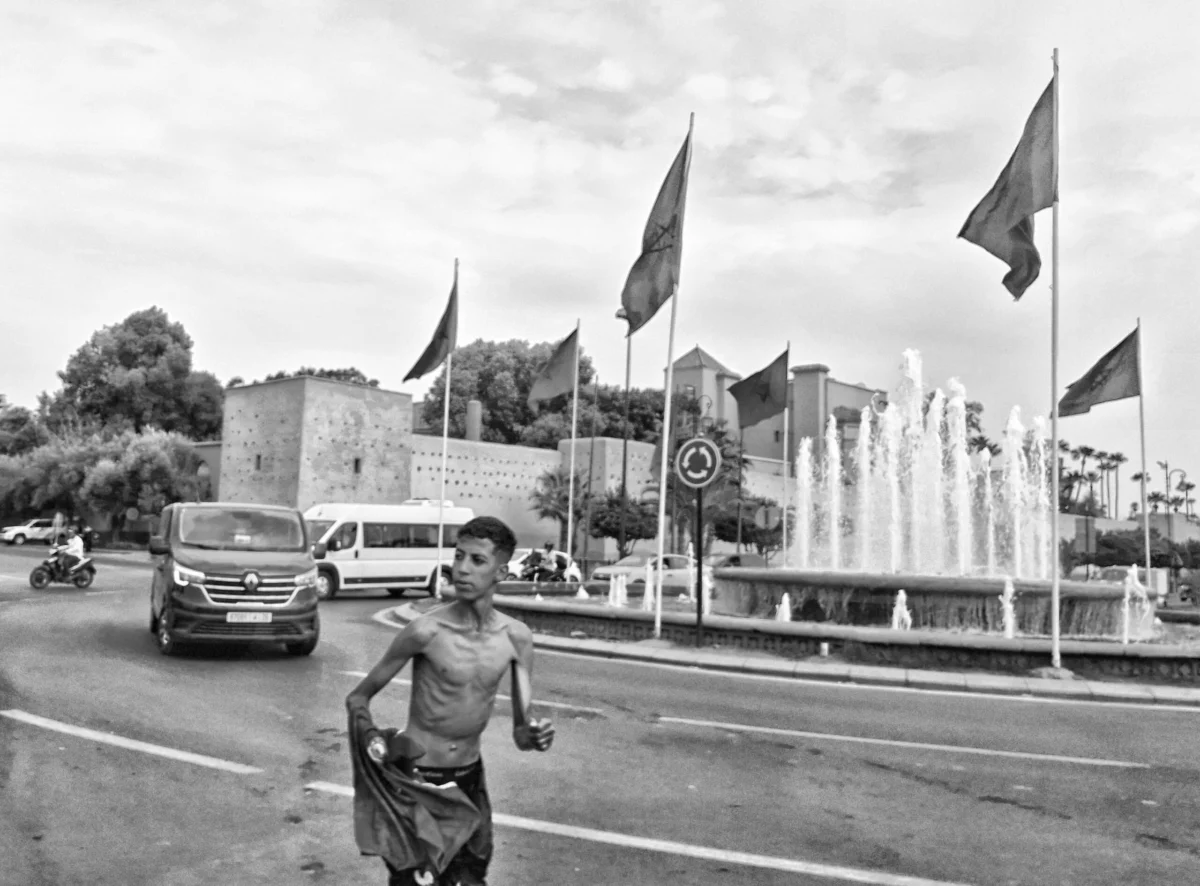
Witness accounts describe the individual as a shirtless man who jogs in a consistent, rhythmic pattern within the roundabout, navigating the flow of vehicles with a "matter-of-fact" demeanor and a slight smile. Unlike typical urban protests or erratic public behavior, this individual’s actions are characterized by a lack of aggression and a high degree of predictability. Local taxi drivers, who represent the front line of the city’s daily intelligence, report that this man performs this routine at the same hour every day.
The only interruption to this routine occurs during the call to prayer. This suggests a deep-seated integration of religious structure even within what might be perceived as eccentric or non-conformist behavior. The man’s adherence to the prayer schedule indicates that his actions are not merely random but are governed by a personal or spiritual logic that respects the city’s overarching cultural framework.
Sociocultural Analysis: The "Maktub" Perspective
The reaction of the local populace to such eccentricities is perhaps more telling than the act itself. When questioned about the man’s safety or the reasons behind his dangerous choice of exercise location, local drivers often respond with a shrug and a reference to divine will. The phrase "no human knows what the Lord above decides" is reflective of a broader Moroccan social philosophy rooted in the concept of Maktub (it is written).
In many Western urban environments, an individual running through a high-traffic roundabout would likely face immediate intervention from law enforcement or emergency medical services. However, in Marrakech, there exists a level of communal tolerance for the "majzub"—a term sometimes used in North African culture to describe individuals who are "attracted" to a different reality or who possess a harmless eccentricity.
This tolerance is manifest in the driving patterns of the locals. Observations indicate that every vehicle entering the roundabout gives the man priority. There is a silent, uncoordinated consensus among drivers to accommodate his presence, treating him as a permanent, albeit moving, fixture of the urban landscape. This reflects a society that prioritizes communal harmony and acceptance over rigid adherence to standardized public behavior.
Road Safety and Pedestrian Dynamics
From a formal journalistic and safety perspective, the presence of pedestrians in high-traffic roundabouts poses significant risks. Morocco has made strides in improving road safety through the National Road Safety Agency (NARSA). Statistics from 2023 showed a downward trend in urban traffic fatalities, largely due to increased enforcement of helmet laws for motorcyclists and better-regulated pedestrian crossings.
However, the "roundabout jogger" represents a gap between formal regulation and informal social practice. The fact that no accidents involving this individual have been reported highlights the hyper-vigilance of Marrakech’s professional drivers. Taxi drivers in the city possess an intricate understanding of the "flow" of the streets, which allows them to navigate around obstacles—whether they be animal-drawn carts, tourists, or local eccentrics—with a level of intuition that formal traffic systems often lack.
Broader Implications for the Future of Marrakech
As Marrakech continues to grow as a global destination, the tension between maintaining its unique social fabric and adopting international standards of urban management will persist. The city’s ability to accommodate individuals who exist outside the "norm" is a testament to its cultural resilience.
For the tourism sector, these moments of authentic, unscripted interaction are what differentiate Marrakech from more sanitized travel destinations. The "myriads of colours, scents and exotic scenery" are not just aesthetic choices for the benefit of visitors; they are the lived reality of a city that functions on a different clock and a different set of social priorities.
In conclusion, the quiet mornings of late summer in Marrakech reveal a city that is both a high-functioning economic hub and a deeply traditional community. The presence of the man in the roundabout serves as a metaphor for the city itself: moving at its own pace, governed by its own internal logic, and respected by those who navigate its complexities every day. As the high season approaches and the "touristic humdrum" returns, these quiet observations provide a necessary reminder of the human element that remains the heart of the "Red City." Future urban planning in Morocco will need to account for this human element, ensuring that as the city modernizes, it does not lose the tolerance and communal spirit that allows such unique daily rituals to exist.