The global aviation community remains in a state of profound shock following the catastrophic loss of Air India Flight AI-171, a Boeing 787 Dreamliner that crashed on June 12, 2025, during its final approach to Sardar Vallabhbhai Patel International Airport in Ahmedabad. The flight, which originated from London’s Heathrow Airport, was carrying 245 individuals, including 233 passengers and 12 crew members. In a tragedy of such immense scale, emergency responders have confirmed that only one passenger survived the impact, a miraculous occurrence currently being handled with the utmost medical sensitivity. As the nation mourns, the focus has shifted decisively toward the technical investigation, with the recovery and subsequent opening of the aircraft’s "black boxes"—the Flight Data Recorder (FDR) and the Cockpit Voice Recorder (CVR)—marking the beginning of a meticulous quest for answers.
The Final Descent: A Chronology of Flight AI-171
Flight AI-171 departed London at approximately 9:30 AM GMT, embarking on what was expected to be a routine nine-hour journey to the capital of Gujarat. According to preliminary radar data and air traffic control logs, the flight proceeded without incident across European and Middle Eastern airspace. The Boeing 787-8, a flagship of the Air India fleet known for its advanced composite materials and fuel efficiency, maintained a steady cruise altitude of 39,000 feet for the majority of the voyage.
The situation began to change as the aircraft entered Indian airspace and commenced its descent toward Ahmedabad. At approximately 10:30 PM local time, the aircraft was cleared for an Instrument Landing System (ILS) approach to Runway 23. Weather reports at the time indicated typical pre-monsoon conditions, characterized by high humidity and moderate wind gusts, but nothing that would immediately suggest a grounded risk for a modern wide-body jet.
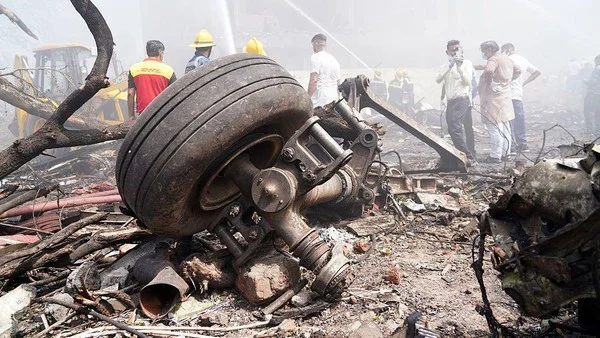
However, at 10:42 PM, witnesses on the ground reported seeing the aircraft flying unusually low with an erratic pitch. Seconds later, the Dreamliner disappeared from radar screens, impacting an open area approximately five kilometers from the airport perimeter. The resulting fire and structural disintegration necessitated a massive response from the National Disaster Response Force (NDRF) and local fire services, who worked through the night to secure the site and locate the flight recorders.
The Technical Investigation: Decoding the Black Boxes
The recovery of the FDR and CVR is the most critical milestone in any aviation accident investigation. Despite their colloquial name, these devices are painted a high-visibility international orange to aid recovery teams. On the morning of June 13, investigators from the Directorate General of Civil Aviation (DGCA) confirmed that both units had been retrieved from the tail section of the wreckage, which remained relatively intact compared to the forward fuselage.
The analysis is currently being conducted at a specialized laboratory in New Delhi. Given the international nature of the accident—involving an American-manufactured aircraft and a flight originating in the United Kingdom—the Indian government has invited the U.S. National Transportation Safety Board (NTSB) and technical advisors from Boeing to assist. This collaborative effort ensures that the data extraction meets global standards of transparency and technical precision.
The Flight Data Recorder is expected to provide a second-by-second account of the aircraft’s performance. It monitors thousands of parameters, including airspeed, altitude, vertical acceleration, engine thrust, and the positions of flight control surfaces. Meanwhile, the Cockpit Voice Recorder will offer the investigation team a clear window into the human element of the tragedy. By capturing the final two hours of cockpit conversation, ambient noise, and radio transmissions, investigators can determine if the pilots were aware of a mechanical failure or if human factors, such as fatigue or spatial disorientation, played a role.
Investigating the Flap System Anomaly
While the investigation is in its infancy, early focus has been placed on the aircraft’s wing flap system. Preliminary reports suggest that the flight crew may have encountered difficulties as they attempted to configure the aircraft for landing. Flaps are movable panels on the trailing edge of the wings that increase lift and drag, allowing an aircraft to fly safely at the lower speeds required for approach and touchdown.
If a "flap asymmetry" or a total failure of the flap actuation system occurred, it could lead to a significant loss of control, particularly if the aircraft was already at a low altitude. Such a mechanical failure would force the pilots to land at a much higher speed than normal, or in the worst-case scenario, lead to an aerodynamic stall. The FDR data will be instrumental in confirming whether the flaps responded correctly to pilot inputs or if a mechanical jam or hydraulic failure compromised the aircraft’s stability.

The Human Toll and Official Responses
The sole survivor of the crash, whose identity is being protected for privacy reasons, is currently in critical but stable condition at a premier medical facility in Ahmedabad. Medical experts describe the survival as "against all odds," given the velocity of the impact and the subsequent post-crash fire.
In a televised address, the Indian Minister of Civil Aviation expressed deep condolences to the families of the victims, many of whom were members of the Indian diaspora returning home for the summer holidays. "The loss of AI-171 is a national tragedy. We owe it to the families and the traveling public to leave no stone unturned in our pursuit of the truth," the Minister stated. He also announced an interim compensation package for the next of kin and promised a transparent inquiry process.
Boeing, the manufacturer of the 787 Dreamliner, issued a formal statement expressing their "deepest sympathies" and confirming their full cooperation with the Indian authorities. This incident marks one of the most significant hull losses for the 787 program since its inception, and the company is under immense pressure to ensure that the crash does not point to a systemic design flaw.
Broader Implications for Global Aviation
The crash of Flight AI-171 has sent ripples through the global aviation industry, prompting several immediate reactions from regulators and airlines:
- Safety Audits: Civil aviation authorities in several countries have announced "spot checks" on Boeing 787 fleets, specifically focusing on the maintenance logs of flight control systems and wing actuators.
- Air India’s Transformation: This tragedy comes at a sensitive time for Air India, which has been undergoing a massive multi-billion-dollar restructuring and fleet modernization under the ownership of the Tata Group. The airline must now manage a major crisis while maintaining passenger confidence in its safety protocols.
- Training Protocols: If the investigation reveals that the pilots struggled with a specific mechanical failure, it will likely lead to updated simulator training requirements for Dreamliner crews worldwide, emphasizing emergency flap-less landing procedures.
- Technological Scrutiny: The 787 is a "more-electric" aircraft, relying heavily on electrical systems rather than traditional hydraulics for many functions. Investigators will look closely at whether an electrical bus failure could have impacted the flight controls.
Contextual Background: The Boeing 787 Record
To understand the gravity of the AI-171 crash, one must look at the history of the Boeing 787 Dreamliner. Introduced into commercial service in 2011, the 787 was a revolutionary aircraft, being the first major airliner to use a primary structure made of composite materials. While it had a troubled start—including a global grounding in 2013 due to lithium-ion battery fires—it has since become a workhorse of long-haul aviation with a generally excellent safety record.
However, in recent years, Boeing has faced increased scrutiny over its manufacturing processes and quality control. While there is currently no evidence linking the AI-171 crash to manufacturing defects, the investigation will undoubtedly look at the specific airframe’s maintenance history and any "Deferred Maintenance Items" (DMIs) that were active at the time of departure from London.
The Path Toward a Final Report
The process of analyzing the black boxes and reconstructing the accident will not be rapid. While preliminary findings may be released within 30 days, a comprehensive final report often takes 12 to 18 months to complete. This involves metallurgical testing of engine components, software simulations of the final flight path, and a thorough review of the airline’s operational procedures.
The goal of the investigation is not to assign blame, but to identify the chain of events that led to the disaster. In aviation, accidents are rarely the result of a single failure; they are typically the culmination of multiple factors—technical, environmental, and human—aligning in a "Swiss Cheese" model of failure.
As the data from the New Delhi laboratory begins to paint a clearer picture of those final moments over Ahmedabad, the aviation world watches with bated breath. The lessons learned from the wreckage of AI-171 will eventually be written into the safety manuals of the future, ensuring that the 244 lives lost were not in vain. For now, the focus remains on the grieving families and the arduous task of extracting the truth from the orange boxes that hold the secrets of Flight AI-171.