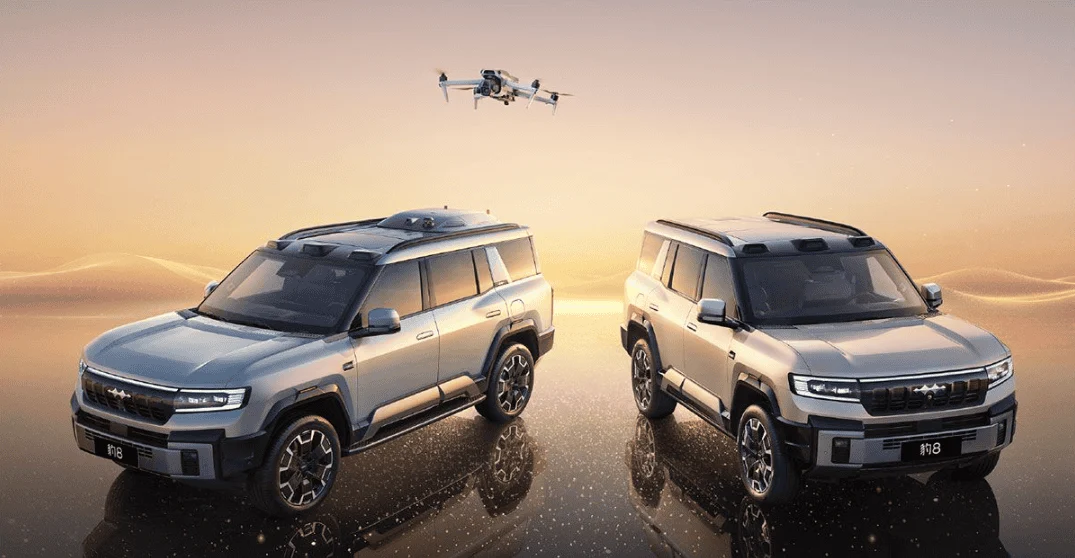
The automotive landscape is undergoing a profound transformation as BYD, the world’s leading manufacturer of new energy vehicles (NEVs), officially launches its integrated smart drone system developed in collaboration with DJI, the global leader in civilian drones and aerial imaging technology. This partnership marks a significant milestone in the evolution of the "Software-Defined Vehicle," moving beyond traditional propulsion and infotainment into the realm of integrated aerial robotics. By embedding a specialized drone ecosystem directly into the architecture of its premium electric vehicles, specifically starting with the Yangwang U8 luxury SUV, BYD is positioning itself at the vanguard of a new era where transportation and autonomous aerial reconnaissance converge. This innovation is not merely an accessory but a deeply integrated hardware and software suite designed to enhance navigation, safety, and the documentation of travel through high-level artificial intelligence and automated flight protocols.
Technical Architecture and System Integration
The core of this innovation lies in the "Vehicle-Mounted Drone System," which features a custom-engineered housing unit integrated into the roof of the vehicle. Unlike third-party drone accessories that require manual setup, BYD’s system is designed for seamless deployment. The roof-mounted compartment serves as a hangar, charging station, and launchpad. When the driver initiates a drone command via the vehicle’s central touchscreen or voice interface, the compartment opens automatically, and the drone—a customized DJI unit optimized for high-speed vehicular tracking—takes flight.
Technologically, the system is powered by BYD’s proprietary "Xuanji" architecture, an intelligent vehicle brain that coordinates between the car’s sensors and the drone’s flight controller. This allows for a level of synchronization previously unseen in the industry. The drone is equipped with high-definition cameras capable of 4K video transmission, supported by DJI’s industry-leading O3+ image transmission technology. This ensures that the driver receives a low-latency, high-fidelity feed of the surrounding terrain directly on the vehicle’s internal displays. Furthermore, the drone utilizes advanced obstacle avoidance sensors and GPS-independent positioning systems to navigate complex environments, such as forested trails or mountainous regions, where traditional satellite signals may be intermittent.
Chronology of Development and Public Reveal
The journey toward this product launch began in late 2022, when BYD and DJI established a joint task force to explore the feasibility of a fully automated vehicle-drone ecosystem. While several automotive companies had showcased "concept" drones in the past, BYD sought to create a production-ready solution that addressed the primary pain points of drone operation: battery management and ease of use.
In January 2024, during the BYD Dream Day event held at its headquarters in Shenzhen, the company provided the first live demonstration of the technology. The demonstration showcased a Yangwang U8 SUV navigating an off-road course while its integrated drone performed an automated "scout" mission. The drone flew ahead of the vehicle to identify obstacles and path viability, relaying the data back to the driver in real-time. Following successful field tests in various climatic conditions—ranging from the high-altitude regions of Tibet to the humid coastal areas of Guangdong—BYD confirmed the commercial rollout of the drone-equipped "Master Edition" of its flagship vehicles.
Supporting Data and Performance Metrics
The performance data released by BYD and DJI highlights the rigorous engineering behind the system. The drone is designed to withstand wind speeds of up to 12 meters per second (Level 6 winds), ensuring stability during high-altitude photography or high-speed tracking. The automated battery-swapping mechanism within the roof hangar is perhaps the most significant data point; the system can automatically replace a depleted drone battery with a fully charged one from a rotating internal magazine, allowing for near-continuous aerial coverage during long expeditions.
Furthermore, the drone features a "One-Click Takeoff" and "One-Click Return" functionality that is synchronized with the vehicle’s movement. If the car is traveling at speeds up to 25 km/h, the drone can still safely dock and undock, a feat that requires millisecond-level precision in flight path calculation. The camera system utilizes a 1/1.3-inch CMOS sensor, capable of capturing 48-megapixel stills, providing professional-grade documentation for travelers and content creators.
Strategic Objectives and Official Responses
Industry analysts view this move as a strategic attempt by BYD to differentiate its high-end brands, such as Yangwang and Fangchengbao, from competitors like Tesla and Rivian. By offering a "flying eye" for the vehicle, BYD is catering to the growing luxury off-road market in China and abroad, where users value both technological prestige and functional utility in remote environments.

While official statements from DJI have been characteristically focused on the technical synergy, a DJI spokesperson noted that the collaboration represents the "next frontier of spatial intelligence," where drones become an extension of ground-based mobility. BYD’s leadership has emphasized that the drone system is a component of their broader "Smart Intelligence" strategy, which aims to integrate AI into every facet of the driving experience. According to BYD Chairman Wang Chuanfu, the goal is to provide a "comprehensive sensing dimension" that goes beyond what traditional cameras and LiDAR on the vehicle chassis can perceive.
Broader Impact on Safety and Navigation
Beyond the aesthetic appeal of aerial photography, the integration of smart drones into the EV ecosystem has profound implications for vehicle safety and situational awareness. In off-road or search-and-rescue scenarios, the drone can act as an advanced scout, identifying flooded roads, landslides, or traffic congestion miles ahead of the vehicle’s current position. This "bird’s eye view" allows drivers to make informed decisions before encountering a hazard, effectively extending the vehicle’s sensor range from a few hundred meters to several kilometers.
In urban environments, the drone could theoretically assist in finding parking spots or navigating complex multi-level interchanges, although current airspace regulations in many cities remain a hurdle. However, by building the hardware now, BYD is readying its fleet for a future where regulatory frameworks—such as Low-Altitude Economy (LAE) initiatives in China—become more permissive for autonomous aerial vehicles.
Analysis of Market Implications and Future Trends
The launch of the BYD-DJI drone system is expected to trigger a "feature war" among luxury EV manufacturers. As electric drivetrains become commoditized, manufacturers are increasingly turning to unique software and hardware integrations to justify premium price points. We are likely to see competitors like Geely, NIO, and Xpeng explore similar partnerships with aerospace firms to avoid falling behind in the "smart cockpit" race.
Furthermore, this development signals a shift in the role of the driver. As vehicles become more autonomous, the human inside the car transitions into a "mission commander" who manages various systems, including drones, rather than just a pilot of a ground vehicle. The integration of AI-driven drones suggests a future where the car is the hub of a personal "internet of things" (IoT) ecosystem that includes aerial, ground, and perhaps even aquatic sensors.
Challenges and Regulatory Considerations
Despite the technological triumph, the rollout of vehicle-integrated drones faces significant challenges. Airspace regulation is the most prominent obstacle. In many jurisdictions, operating a drone from a moving vehicle is either restricted or requires specific licensing. BYD has addressed this by implementing "geofencing" software that prevents the drone from taking off in restricted zones, such as near airports or sensitive government installations.
Privacy concerns also remain a topic of debate. A vehicle equipped with a high-resolution hovering drone could potentially infringe on the privacy of others. BYD and DJI have stated that the system is designed with strict data encryption and that the drone’s primary focus is the immediate vicinity of the host vehicle. However, as these systems become more common, international regulators will likely need to draft new laws specifically addressing vehicle-mounted aerial platforms.
Conclusion
BYD’s launch of the smart drone system, in tandem with DJI, represents a landmark achievement in the convergence of the automotive and aerospace industries. By moving beyond the limitations of ground-based sensors, BYD has provided a glimpse into the future of "all-terrain" intelligence. The system’s ability to automate complex flight tasks, manage its own power supply, and integrate directly into the vehicle’s operating system sets a new benchmark for what a luxury electric vehicle can offer.
As the technology matures and costs eventually decrease, what is currently a flagship luxury feature may eventually trickle down to mainstream models, fundamentally changing how we document our journeys and navigate our world. BYD has proven that it is no longer just a car company, but a holistic technology giant capable of orchestrating complex ecosystems that span from the ground to the sky. The success of this initiative will be measured not just in sales of the Yangwang U8, but in how quickly the rest of the global automotive industry moves to follow BYD’s upward trajectory.