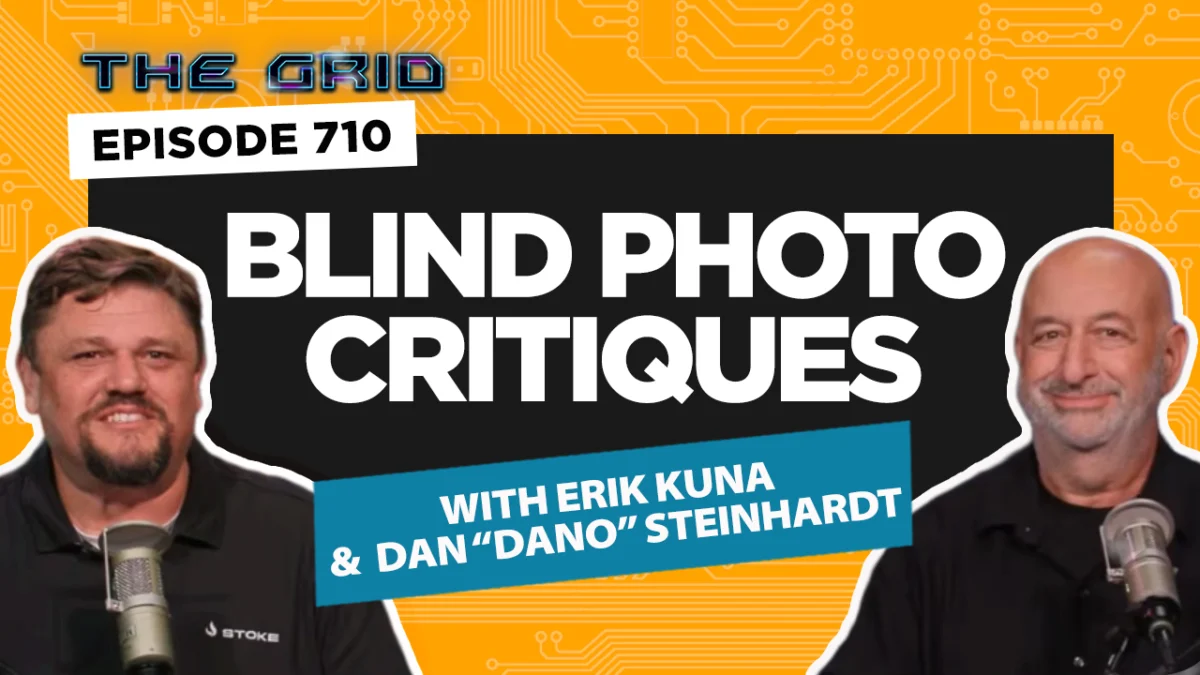
This week’s highly anticipated episode of The Grid, a cornerstone program in the KelbyOne educational ecosystem, featured an insightful and practical session on "Blind Photo Critiques," led by host Erik Kuna and renowned photographer and educator Dan "Dano" Steinhardt. The episode, titled "The Grid 710," provided a comprehensive review of diverse photographic genres, ranging from the immediate narratives of street photography and the intricate details of astrophotography to the dynamic worlds of wildlife and sports, the evocative scenes of travel, the intimate captures of portraits, and the structured beauty of architecture. Across the varied submissions, a singular, overarching principle emerged as a critical takeaway: the profound power of a strong edit to meticulously guide and control the viewer’s gaze, ensuring the intended narrative and emotional impact are fully realized.
The Grid and KelbyOne: A Platform for Photographic Mastery
The Grid, broadcast weekly by KelbyOne, has established itself as a pivotal resource for photographers worldwide, offering a blend of technical instruction, creative inspiration, and industry insights. KelbyOne, founded by Scott Kelby, is a leading online platform dedicated to photography, Photoshop, and Lightroom education, catering to a global community of amateur enthusiasts and seasoned professionals alike. Its mission revolves around democratizing access to high-quality instruction, fostering skill development, and keeping its members abreast of the latest techniques and trends in digital imaging. Erik Kuna, a prominent figure within the KelbyOne faculty, is celebrated for his expertise in lighting, post-processing, and his engaging teaching style. Dan "Dano" Steinhardt, another revered instructor, brings a wealth of experience in various photographic disciplines, particularly known for his practical approach and ability to demystify complex concepts. Their combined presence on The Grid typically promises a dynamic and informative exchange, and this episode on blind critiques was no exception, reinforcing KelbyOne’s commitment to actionable, real-world education.
The Art of Blind Critique: Unpacking the Format’s Pedagogical Value
The "Blind Photo Critiques" format is a time-honored tradition in photography education, designed to offer objective and unbiased feedback. In this setup, submitted photographs are presented without revealing the photographer’s identity, preventing any preconceived notions or personal biases from influencing the critique. This approach encourages evaluators to focus solely on the visual merits of the image – its composition, lighting, subject matter, technical execution, and emotional resonance. For the submitting photographers, it offers an invaluable opportunity to receive candid, professional assessment of their work, highlighting areas of strength and identifying specific opportunities for improvement. For the broader audience watching The Grid, it serves as an accelerated learning experience, allowing them to observe seasoned professionals dissect images in real-time, articulate their observations, and offer constructive solutions. This process not only teaches specific editing techniques but also cultivates a critical eye, helping viewers develop their own analytical skills for evaluating photography, both their own and others’. The pedagogical value lies in its transparency and the immediate applicability of the lessons learned.
A Spectrum of Genres: From Street to Stars
The breadth of photographic genres examined in this episode underscored the universal applicability of effective post-processing principles. Each category presents unique challenges and opportunities for enhancement:
- Street Photography: Often spontaneous and raw, street photography benefits from editing that enhances mood, isolates subjects from chaotic backgrounds, and refines light to tell a compelling story without losing authenticity. Distractions are common, making careful cropping and localized adjustments crucial.
- Astrophotography: This highly technical genre demands precise editing to bring out faint celestial details, manage noise, correct color casts from light pollution, and stack multiple exposures. The goal is to reveal the unseen beauty of the cosmos while maintaining scientific accuracy where applicable.
- Wildlife Photography: Editors in this field often focus on enhancing sharpness on the animal’s eyes, balancing exposure in challenging natural light, and subtly isolating the subject from a busy environment without making it appear artificial. Cropping to emphasize action or emotion is also common.
- Travel Photography: Images captured during travel aim to convey the essence of a place, its culture, and its people. Editing here might involve color grading to evoke a specific mood, correcting perspectives in architectural shots, or enhancing the vibrancy of landscapes to reflect the live experience.
- Sports Photography: Speed and decisive moments define sports photography. Editing often involves sharpening subjects in motion, adjusting white balance under varied stadium lighting, and cropping to amplify the drama and impact of the athletic feat.
- Portraits: The human element is central. Editing techniques for portraits typically include subtle skin retouching, enhancing eye sparkle, shaping light to flatter the subject’s features, and creating a background that complements rather than distracts.
- Architecture Photography: Precision is key in architectural images. Editing often corrects lens distortions, ensures perfect vertical and horizontal lines, enhances textures, and manages highlights and shadows to reveal structural details and grandeur.
Across all these varied domains, Erik Kuna and Dan Steinhardt consistently returned to the foundational idea that while the subjects differ, the purpose of the edit remains the same: to serve the photograph’s narrative and optimize its visual impact.
The Guiding Principle: Controlling the Viewer’s Gaze
The central tenet reiterated throughout the critiques was that a strong edit should meticulously control where the viewer’s eye travels within an image. This isn’t about manipulation in a deceptive sense, but rather about enhancing clarity, emphasis, and emotional connection. Photographers, much like painters, aim to lead the viewer through their composition, highlighting key elements and downplaying distractions. Without conscious control, a viewer’s eye can wander, miss the intended subject, or become fixated on an irrelevant detail, thereby diluting the photograph’s message. Kuna and Steinhardt elaborated on how this control is achieved through a combination of compositional adjustments and targeted post-processing techniques. Their insights provided a roadmap for photographers to move beyond mere aesthetic tweaks and engage in intentional, purpose-driven editing that elevates an image from good to compelling.
Mastering Compositional Refinement
Several practical tips were shared to achieve this mastery:
- Cropping for Impact: Eliminating Distractions: Cropping is perhaps the most fundamental editing tool. It’s not just about fitting an image into a frame; it’s about eliminating extraneous elements that detract from the main subject or narrative. An effective crop can instantly strengthen composition, adhere to principles like the rule of thirds or golden ratio, and bring the viewer closer to the core of the image. The hosts demonstrated how even a seemingly minor crop could dramatically alter the perceived message and focus of a photograph, transforming a busy scene into a concise visual statement. They emphasized that photographers often capture more than necessary, and the editing phase is the opportunity to refine that initial capture.
- Sculpting with Light: Dodging, Burning, and Gradients: Beyond basic exposure adjustments, sophisticated light manipulation plays a crucial role. Dodging (lightening) and Burning (darkening) are techniques inherited from the analog darkroom, now digitally replicated in software like Adobe Lightroom and Photoshop. These tools allow photographers to selectively brighten specific areas to draw attention or darken others to recede them, effectively sculpting light and shadow within the frame. This can create depth, enhance textures, and add drama. Gradients, both linear and radial, offer another powerful way to control light. Linear gradients are often used to balance exposure between a bright sky and a darker foreground in landscapes, while radial gradients can create spotlight effects, subtly brightening a subject or darkening its periphery to create a natural vignette. These techniques are not about creating artificial light, but rather about enhancing the light that was present, or guiding the viewer’s eye through contrast.
- Perspective and the "Photo Within the Photo": While primarily a shooting angle consideration, the concept of a "stronger shooting angle" often comes into play during editing when reviewing an image. Sometimes, the best perspective wasn’t perfectly captured in-camera, but a significant improvement can be achieved through a strategic crop or slight rotation. This leads to the intriguing idea of discovering a "much better photo within the photo." This refers to the process where, upon review, a photographer realizes that a small, isolated section of their original image, when cropped and refined, stands on its own as a more powerful or interesting photograph than the wider shot. It encourages a meticulous review process, looking for hidden gems within the initial capture.
Essential Digital Darkroom Techniques
The episode also delved into specific digital editing techniques, highlighting their utility in guiding the viewer’s eye:
- Precision Sharpening: The Art of Selective Focus: Sharpening is essential for clarity, but indiscriminate global sharpening can introduce artifacts and noise, especially in areas that should remain soft (like backgrounds or skin). Selective sharpening, conversely, allows photographers to apply sharpening only to specific areas of interest, such as a subject’s eyes in a portrait, the intricate details of a building, or the sharp edges of a street scene. This technique ensures that critical elements pop with detail while maintaining a natural look elsewhere, further directing the viewer’s attention to the intended focal points.
- The Power of the Vignette: Drawing Attention to the Subject: Vignettes, a subtle darkening or lightening of the image edges, are powerful compositional tools. While they can be overused, a carefully applied vignette can effectively frame the subject, drawing the viewer’s eye inwards towards the center of the frame. Modern editing software allows for precise control over the shape, feathering, and intensity of vignettes, enabling photographers to create a subtle, natural effect that enhances focus without appearing artificial.
A Live Demonstration: Simplicity’s Impact
One of the most impactful segments of the episode featured a live editing demonstration. The hosts took a seemingly ordinary photograph and, with just a few thoughtful adjustments, transformed it. The key elements of this transformation were a simple, yet decisive, crop and the careful placement of a vignette. The initial image likely suffered from extraneous background elements or an unbalanced composition that allowed the viewer’s eye to stray. By cropping out these distractions, the subject was immediately brought into sharper focus, and the composition became more robust. The addition of a subtly applied vignette then further reinforced this focus, gently darkening the periphery to ensure that the viewer’s attention was firmly anchored on the central theme. This live edit served as a potent reminder that highly effective editing doesn’t always necessitate complex layers or intricate manipulations. Often, a few precise, intentional adjustments in software like Adobe Lightroom are all it takes to elevate an image, making its message clearer and its visual impact stronger.
The KelbyOne Philosophy: Empowering Accessible Education
This episode perfectly encapsulated KelbyOne’s overarching philosophy: to provide practical, accessible, and high-quality photography education that empowers individuals at all skill levels. By demystifying complex editing concepts and demonstrating their real-world application through blind critiques, Erik Kuna and Dan Steinhardt delivered immense value. The emphasis on "thoughtful adjustments" over "complicated edits" resonates deeply with a broad audience, many of whom might feel intimidated by advanced post-processing techniques. This approach encourages photographers to understand the why behind their edits, fostering a more deliberate and artistic workflow rather than simply applying presets or following rote instructions. It reinforces the idea that mastery in photography, including post-processing, is an ongoing journey of learning and refinement.
Broader Implications for Modern Photography
The lessons from this The Grid episode extend beyond individual skill improvement, touching upon broader implications for contemporary photography:
- The Digital Age and Post-Processing’s Evolution: In the era of digital photography, post-processing is no longer an optional add-on but an integral part of the photographic process. From smartphones with built-in editing capabilities to professional software suites, the ability to refine an image after capture is ubiquitous. Understanding the principles discussed by Kuna and Steinhardt is crucial for anyone engaging with visual media today, whether as a creator or a discerning viewer.
- Ethical Considerations and Responsible Editing: While the episode focused on enhancing images, it implicitly underscored the importance of responsible editing. The goal is to improve clarity and impact, not to deceive or misrepresent. The techniques shared are tools for refinement, not for fabricating reality, which is a critical distinction in journalistic and documentary photography.
- The Continuous Journey of Learning: The ever-evolving landscape of digital tools and photographic trends means that continuous learning is paramount. Platforms like KelbyOne and shows like The Grid play a vital role in keeping photographers updated and inspired, ensuring that the craft continues to evolve and thrive.
In conclusion, "The Grid 710" featuring Erik Kuna and Dan Steinhardt’s Blind Photo Critiques offered more than just a review of images; it delivered a masterclass in the philosophy and practical application of intentional post-processing. By consistently highlighting the editor’s role in guiding the viewer’s gaze, the episode provided invaluable insights into cropping, light manipulation, and selective adjustments. It served as a powerful reminder that simplicity, when applied thoughtfully, can yield profound results, transforming good photographs into truly compelling visual narratives. For anyone looking to elevate their photographic output, the replay of this episode offers a treasure trove of actionable advice and enduring principles that underscore the art and science of digital image making.