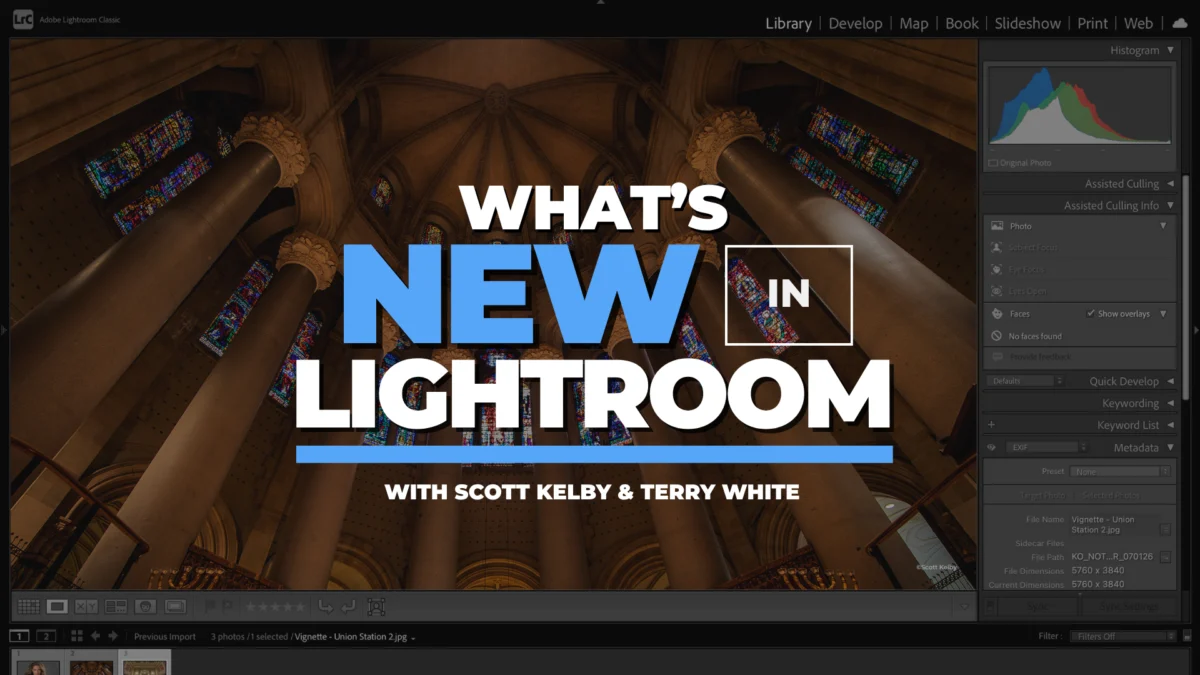
Adobe has recently rolled out a series of significant updates to its widely-used Lightroom ecosystem, spanning Lightroom Classic, Lightroom Cloud, and Lightroom Mobile. These enhancements are poised to revolutionize how photographers and content creators manage, edit, and optimize their digital assets. To provide a comprehensive, hands-on understanding of these new functionalities, Adobe’s Principal Worldwide Evangelist, Terry White, joined a specialized course to demonstrate their practical application on real images, moving beyond mere menu navigation to showcase their true impact on creative workflows. The updates, which include a sophisticated duplicate finder, an innovative Assisted Culling feature, dramatically faster noise reduction capabilities, and new AI-powered video clip functionalities, underscore Adobe’s ongoing commitment to leveraging artificial intelligence and computational power to streamline and elevate the digital content creation process.
A Deep Dive into the Core Enhancements
The recent suite of updates addresses several long-standing challenges and introduces advanced capabilities that cater to the evolving needs of the creative community. Each feature has been designed not just to add functionality, but to significantly improve efficiency and output quality.
The Duplicate Finder: Revolutionizing Asset Management
One of the most persistent headaches for digital photographers and content creators is the proliferation of duplicate files. Whether through accidental imports, multiple backups, or iterative editing processes, duplicate images consume valuable storage space and complicate library organization. The introduction of a dedicated duplicate finder within Lightroom is a game-changer. This intelligent tool scans user libraries across Lightroom Classic, Cloud, and Mobile, identifying identical or near-identical images.
Historically, managing duplicates often involved tedious manual review or reliance on third-party software, which could be cumbersome and prone to errors. Adobe’s integrated solution is expected to offer a seamless experience, allowing users to efficiently locate, review, and remove redundant files directly within their primary editing environment. This not only frees up significant storage space—a critical concern given the ever-increasing resolution and file sizes of modern cameras—but also declutters photo libraries, making it easier to find and manage specific assets. For professionals handling tens of thousands or even hundreds of thousands of images, the time saved and the organizational clarity gained by this feature alone could be substantial, translating directly into enhanced productivity and reduced administrative overhead. The underlying algorithms likely employ advanced hashing and image analysis techniques to ensure accurate identification, even across different file formats or minor metadata variations.
Assisted Culling: Optimizing the Selection Process
Culling, the process of reviewing and selecting the best images from a large shoot, is often considered one of the most time-consuming and mentally fatiguing stages of a photographer’s workflow. The new Assisted Culling feature aims to dramatically accelerate this critical phase. While specific details on its mechanics are proprietary, it is inferred that this functionality leverages AI and machine learning to analyze image characteristics such as sharpness, focus, exposure, composition, and even potential subject matter, to offer intelligent suggestions for keepers or discards.
For photographers covering events, weddings, sports, or any scenario involving high-volume capture, the sheer volume of images can be overwhelming. Traditional culling involves meticulously going through each shot, often rating them with stars or color labels. Assisted Culling could potentially pre-filter images, highlight those with technical imperfections, or even group similar shots, allowing the photographer to make informed decisions more quickly. This shift from purely manual review to an AI-assisted process represents a significant step towards automating the more repetitive aspects of post-production, enabling creatives to dedicate more time to the artistic editing process rather than administrative selection. The feature is expected to be customizable, allowing users to set preferences and override AI suggestions, ensuring that creative control remains firmly in the photographer’s hands while benefiting from algorithmic efficiency.
Dramatically Faster Noise Reduction: A Leap in Image Quality
Noise reduction has always been a computationally intensive task, particularly with high ISO images captured in low-light conditions. While previous versions of Lightroom offered robust noise reduction tools, the processing time could be a bottleneck, especially when dealing with multiple high-resolution files. The "dramatically faster noise reduction" update signifies a major performance improvement, likely driven by optimized algorithms, enhanced GPU utilization, and potentially further integration of AI/machine learning models.
This advancement is particularly beneficial for photographers working in challenging lighting environments, such as astrophotography, concert photography, or indoor events without flash. The ability to quickly and effectively clean up noisy images without a significant time penalty means a smoother workflow and greater flexibility in pushing camera ISO limits. Faster processing also encourages experimentation and iterative adjustments, as photographers can see the results of their noise reduction settings almost instantly, leading to higher quality final outputs. This improvement is not merely about speed; it’s about empowering photographers to achieve cleaner, more professional-looking images from difficult captures with unprecedented efficiency, ultimately expanding their creative possibilities in low-light scenarios.
AI-Powered Video Clips: Expanding Creative Horizons
Perhaps one of the most forward-looking additions is the integration of AI-powered video clip editing capabilities within Lightroom. This marks a significant step in Adobe’s strategy to converge photo and video editing workflows, acknowledging the increasing demand for hybrid content creation. With social media platforms and digital marketing heavily favoring video content, many photographers are now expected to produce short video clips in addition to still images.
The "AI-powered" aspect suggests a suite of intelligent tools designed to simplify complex video editing tasks. This could include features such as automatic color grading and exposure correction, intelligent stabilization to smooth shaky footage, object detection for easier masking or tracking, smart cropping to optimize aspect ratios for different platforms, or even AI-driven enhancement of video quality (e.g., upscaling, de-noising specific to video). By bringing these capabilities into Lightroom, Adobe lowers the barrier to entry for photographers wanting to venture into video, allowing them to leverage a familiar interface and existing asset libraries. This integration provides a seamless transition between still and motion, enabling creators to tell more comprehensive stories without needing to export assets to a separate, more complex video editing suite like Premiere Pro for basic tasks. It positions Lightroom as a more versatile content creation hub, catering to the evolving demands of the modern visual storyteller.
The Context of Adobe’s Strategic Evolution
These updates are not isolated incidents but rather integral components of Adobe’s broader strategic vision for its Creative Cloud ecosystem. Adobe has long dominated the professional creative software market, with Lightroom and Photoshop serving as industry standards for photography. The company’s transition to a subscription-based Creative Cloud model nearly a decade ago enabled a continuous delivery of updates and innovations, moving away from the cyclical major version releases of perpetual licenses. This model fosters ongoing development and immediate deployment of new features, directly responding to user feedback and emerging technological trends.
The strategic distinction between Lightroom Classic (a desktop-centric, robust solution for large local libraries) and Lightroom Cloud (a cloud-native, cross-device platform emphasizing mobile editing and collaborative workflows) has been a significant point of discussion within the user community. These latest updates appear to bridge this gap further, ensuring feature parity and a consistent experience across both platforms where technically feasible. This unification strategy aims to provide flexibility, allowing users to choose the workflow that best suits their needs while still benefiting from the latest innovations.
The Pervasive Role of Artificial Intelligence
The most prominent thread running through these updates is the pervasive integration of Artificial Intelligence and Machine Learning. Adobe has been at the forefront of AI adoption in creative software, particularly with its Sensei AI platform. AI is no longer a peripheral feature but a core engine driving efficiency, automation, and enhanced creative possibilities. From intelligent content-aware fills in Photoshop to subject selection in Lightroom, AI has been progressively taking over mundane and complex tasks, freeing up creatives to focus on their artistic vision.
The duplicate finder, Assisted Culling, and faster noise reduction all benefit from sophisticated algorithms that can analyze image data with speed and precision far beyond human capability. The AI-powered video features exemplify the convergence of different media types under the AI umbrella, demonstrating how machine intelligence can democratize complex editing tasks and expand the creative toolkit of photographers. This trend reflects a broader industry shift where AI is seen as an indispensable partner in the creative process, augmenting human skills rather than replacing them.
Industry Reactions and Broader Implications
Initial reactions from industry observers and early testers suggest a positive reception to these updates. Terry White’s involvement in a hands-on demonstration underscores Adobe’s commitment to showcasing the practical, real-world benefits of these features. As a prominent figure and educator in the Adobe ecosystem, White’s endorsement carries significant weight, helping users understand how to integrate these tools effectively into their existing workflows.
For the professional photography and content creation industry, these updates carry several implications:
- Enhanced Productivity: The time saved by automated culling, duplicate removal, and faster processing directly translates into more efficient workflows, allowing professionals to take on more projects or devote more time to the creative aspects of their work.
- Improved Output Quality: Faster and more effective noise reduction means higher quality images in challenging conditions, while AI-powered video tools enable photographers to produce polished video content with less specialized knowledge.
- Democratization of Advanced Features: By integrating sophisticated AI capabilities into a user-friendly interface, Adobe makes advanced editing techniques accessible to a wider audience, from seasoned professionals to enthusiastic hobbyists.
- Maintaining Competitive Edge: In a rapidly evolving market with competitors like Capture One, Luminar Neo, and various open-source alternatives, continuous innovation and the integration of cutting-edge technology are crucial for Adobe to maintain its market leadership. These updates reinforce Lightroom’s position as a comprehensive, state-of-the-art solution.
- Future of Content Creation: The emphasis on AI and video capabilities signals Adobe’s vision for a future where content creation is increasingly hybrid, intelligent, and seamless across various media types and devices.
Accessibility and Continued Learning
For users eager to master these new features, educational resources remain vital. The course featuring Terry White serves as an accessible pathway to understanding the practical applications and optimizing workflows with the latest Lightroom tools. Priced at $39 for individual purchase or accessible via a KelbyOne subscription at $19.99 a month (with flexible cancellation and a money-back guarantee), such platforms provide invaluable learning opportunities. This model of providing expert-led training alongside software updates ensures that users can fully leverage the power of new functionalities, maximizing their investment in Adobe’s ecosystem. The availability of such structured learning underscores the complexity and depth of modern creative software, where ongoing education is key to staying proficient and competitive.
In conclusion, Adobe’s latest wave of Lightroom updates represents a significant stride in digital imaging and content creation. By strategically integrating advanced AI capabilities, addressing common workflow bottlenecks, and expanding into hybrid media formats, Adobe continues to solidify its position as an industry innovator. These enhancements are set to empower photographers and content creators with more efficient, powerful, and intelligent tools, pushing the boundaries of what is possible in the digital creative landscape.