The global aviation community remains in a state of mourning and intense scrutiny following the catastrophic loss of Air India Flight AI-171, which crashed on June 12, 2025, during its final approach to Sardar Vallabhbhai Patel International Airport in Ahmedabad. The aircraft, a state-of-the-art Boeing 787 Dreamliner, was completing a long-haul journey from London Heathrow with 245 souls on board, including 232 passengers and 13 crew members. In a tragedy that has sent shockwaves through the industry, search and rescue teams confirmed that only one individual survived the impact, a miracle that stands in stark contrast to the devastating scene at the crash site. As of this week, the focus of the international aviation community has shifted from recovery to the technical post-mortem, as investigators officially began the extraction and analysis of the aircraft’s "black boxes"—the Flight Data Recorder (FDR) and the Cockpit Voice Recorder (CVR).
The recovery of these devices in relatively pristine condition has provided a glimmer of hope for a swift resolution to the mystery of why a modern, well-maintained aircraft fell from the sky in the final minutes of an otherwise routine flight. The investigation is being spearheaded by the Aircraft Accident Investigation Bureau (AAIB) of India, with significant technical support from the United States’ National Transportation Safety Board (NTSB) and engineers from Boeing, the aircraft’s manufacturer. This collaborative effort aims to provide a transparent and exhaustive account of the mechanical, environmental, or human factors that led to the deadliest aviation incident on Indian soil in decades.
A Chronology of the Final Moments
To understand the gravity of the investigation, one must look at the timeline of Flight AI-171. The aircraft departed London Heathrow at approximately 01:30 GMT, scheduled for an early morning arrival in Ahmedabad. Satellite tracking data and Air Traffic Control (ATC) logs indicate that the flight proceeded without incident across Europe and the Middle East. The Boeing 787-8, bearing the registration VT-ANP, was cruising at 37,000 feet when it entered Indian airspace over the Arabian Sea.
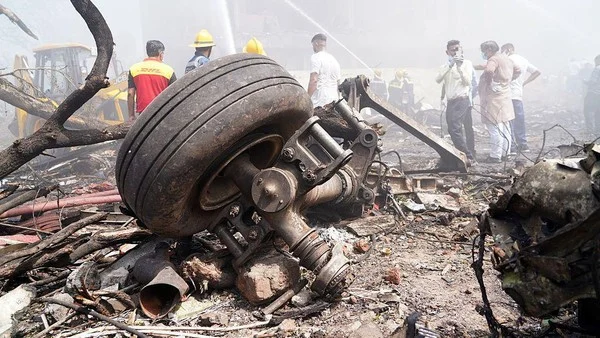
The descent began at 08:10 IST as the aircraft approached the Gujarat coastline. According to preliminary radar telemetry, the descent profile appeared normal until the aircraft reached an altitude of approximately 5,000 feet. At 08:24 IST, the flight crew acknowledged landing clearance from Ahmedabad ATC. However, just three minutes later, at 08:27 IST, the aircraft’s altitude and airspeed began to fluctuate erratically. Witnesses on the ground reported seeing the aircraft banking sharply before disappearing behind a line of trees approximately four kilometers from the runway threshold. The subsequent impact and fire resulted in the near-total destruction of the airframe, leaving a debris field that stretched for nearly half a mile.
The Role of the Flight Data and Cockpit Voice Recorders
The "black boxes," which are actually painted a high-visibility international orange, are the primary tools for reconstructing the final moments of any flight. The Flight Data Recorder (FDR) captures a massive array of parameters, including airspeed, altitude, vertical acceleration, engine performance, and the movement of every control surface on the wings and tail. For a sophisticated aircraft like the Boeing 787, the FDR tracks thousands of variables per second, providing a digital "fingerprint" of the plane’s mechanical health.
The Cockpit Voice Recorder (CVR) is equally vital, as it records all sounds in the cockpit, including pilot conversations, radio transmissions, and ambient noises such as engine hums or mechanical clicks. In the case of AI-171, investigators are listening for any "master caution" alarms or verbal confirmations of mechanical failure between the Captain and the First Officer. The analysis is currently taking place at a specialized laboratory in New Delhi, where experts are using ultrasonic cleaning and high-fidelity digital extraction to ensure no data is lost during the read-out process.
The Technical Focus: The Flap Failure Hypothesis
While the investigation remains in its early stages, a specific area of concern has emerged regarding the aircraft’s wing flaps. Preliminary analysis of the wreckage and initial telemetry data suggests that the "flaps"—movable panels on the trailing edge of the wings used to increase lift at lower speeds—may have failed to deploy symmetrically or suffered a mechanical jam.
Flaps are critical during the landing phase; they allow an aircraft to fly at slower speeds while maintaining the lift necessary to stay airborne. If one side’s flaps deploy while the other’s remain retracted (a condition known as "asymmetric flap"), it can cause an uncommanded and violent roll that is difficult for pilots to correct at low altitudes. Aviation experts have noted that any malfunction in the Dreamliner’s fly-by-wire flight control system regarding these surfaces will be clearly visible in the FDR data. Boeing has dispatched a dedicated team of flight control specialists to New Delhi to assist in interpreting the complex sensor data associated with the 787’s wing architecture.

International Cooperation and Official Responses
The scale of the AI-171 disaster has necessitated an international response. Indian Prime Minister Narendra Modi expressed his "deepest condolences to the families of those lost in this unimaginable tragedy" and assured the public that the investigation would be "thorough, transparent, and unsparing in its quest for the truth."
In Washington, the NTSB confirmed its involvement under ICAO Annex 13 protocols, which allow the country of manufacture to participate in the investigation. "Our goal is not to cast blame, but to find facts," said an NTSB spokesperson. "We are working closely with our Indian counterparts to download the data and provide a technical analysis of the Boeing 787’s systems."
Air India, which has been undergoing a massive brand and fleet modernization under the ownership of the Tata Group, has grounded several aircraft of the same vintage as VT-ANP for "precautionary inspections." The airline’s CEO issued a statement emphasizing that safety remains the company’s absolute priority and that they are cooperating fully with the AAIB.
The Lone Survivor and the Human Toll
Amidst the technical jargon of flight recorders and flap settings is the harrowing human story of the crash. The sole survivor, identified as a 28-year-old passenger seated in the rear section of the aircraft, remains in critical but stable condition at a specialized trauma center in Ahmedabad. Medical officials state that the survivor’s recovery is a "scientific anomaly," likely aided by the tail section breaking away from the main fuselage and the fire’s primary ignition point.
For the families of the other 244 victims, the wait for answers is agonizing. The passenger manifest included families returning for summer holidays, business professionals, and several international tourists. Consulates from the UK and several other nations have set up support centers in Ahmedabad to assist with the repatriation of remains and to provide counseling to the bereaved.
Broader Implications for the Boeing 787 and Global Aviation
The Boeing 787 Dreamliner has long been considered one of the safest and most advanced aircraft in the world. However, any crash involving a modern airframe triggers a global ripple effect. If the investigation into AI-171 reveals a systemic mechanical flaw or a software glitch in the flight control systems, aviation regulators like the Federal Aviation Administration (FAA) in the U.S. and the European Union Aviation Safety Agency (EASA) could issue Airworthiness Directives (ADs). These directives could mandate immediate inspections or hardware changes for the hundreds of 787s currently in service worldwide.
Furthermore, this incident puts a spotlight on the training protocols for "unusual attitude recovery." If the black box reveals that the pilots struggled with a mechanical failure, the industry will look at whether current simulator training adequately prepares crews for the specific failure modes experienced by AI-171.
The Path Forward
The analysis of the black boxes is expected to yield a preliminary report within 30 days, as per international aviation standards. This report will provide a factual summary of the data recovered but will likely stop short of naming a "probable cause." The final report, which includes deep-dive analysis and safety recommendations, could take twelve to eighteen months to complete.
As the technical teams in New Delhi work through the gigabytes of data and hours of cockpit audio, the world watches closely. The loss of Air India Flight AI-171 is a sobering reminder that despite the incredible safety record of modern aviation, the margin for error at 500 miles per hour remains razor-thin. The findings from this investigation will ultimately be used to write new safety chapters, ensuring that the 244 lives lost contribute to a future where such a tragedy never happens again. For now, the orange boxes held in a high-security lab contain the only objective truth of what transpired in the skies over Ahmedabad on that fateful June morning.