Waking before dawn aboard the SeaLegacy 1, a vessel that had become a mobile home during the Pacific crossing from Mexico to Tahiti, was a ritual deeply ingrained in the daily rhythm of the expedition. Yet, on this particular morning, an electric current of anticipation pulsed through the crew. The air thrummed with a palpable excitement as preparations commenced for what was billed as the most anticipated dive of the voyage. Under the ethereal glow of a full moon illuminating a star-dusted sky, masks were donned, and the team slipped into the inky embrace of the ocean depths. Initially, the underwater world was deceptively serene, a silent prelude to the grand theater about to unfold. Soon, however, the waters began to stir, a subtle churn that signaled the imminent commencement of one of the ocean’s most extraordinary spectacles.
The Fakarava Atoll: A Jewel of Biodiversity
Located approximately 700 nautical miles north of Papeete, the Fakarava atoll in French Polynesia is renowned globally for its pristine, crystal-clear lagoons, idyllic white-sand beaches, and vibrant coral reefs that teem with an astonishing array of marine life. For much of the year, countless species of fish, seabirds, majestic sea turtles, and graceful manta rays patrol these underwater realms in relative tranquility. However, the ecological balance of Fakarava undergoes a dramatic transformation during the warmer months when thousands of resident groupers converge for their annual spawning event, a phenomenon that draws both awe and scientific interest.
A Natural Calendar: The Grouper Spawning Cycle
The aggregation of groupers is a meticulously timed biological event, dictated by lunar cycles and oceanographic conditions. Over several weeks, pregnant females, their bodies laden with eggs, and expectant males begin their pilgrimage towards the mouth of the atoll’s channel. This critical juncture, a nexus between the sheltered lagoon and the vast, open sea, spans an area of roughly 10 by 30 nautical miles. The dynamic interplay of ocean currents is paramount to this reproductive strategy. Every six hours, the deep, nutrient-rich waters of the ocean surge into the lagoon, and then, for the subsequent six hours, they recede. This tidal ebb and flow serves a dual purpose: it facilitates the dispersal of vital nutrients throughout the marine environment and, crucially, aids in the widespread distribution of the groupers’ fertilized eggs. The apex of this process, coinciding with the highest tide and the luminous presence of the full moon, marks the official commencement of spawning.

The Shark Spectacle: A Feeding Frenzy
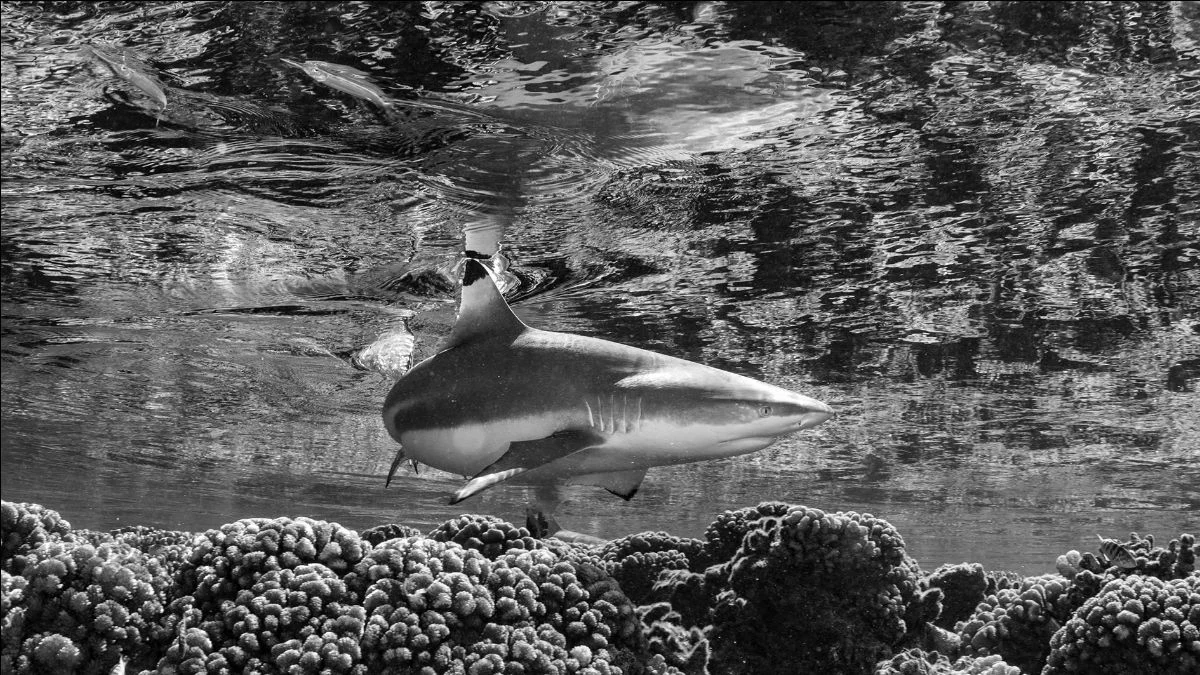
Emerging from the shadows, a formidable fleet of hundreds of sharks, akin to synchronized squadrons, arrives to capitalize on this ephemeral abundance. These apex predators, often perceived with apprehension, play an indispensable role in this intricate ecosystem. They navigate the coral reefs with a predatory grace, their presence a stark reminder of the complex food webs that sustain marine life. The arrival of the sharks transforms the serene seascape into a dynamic arena of life and death, a breathtaking demonstration of natural selection in action.
An Underwater Vantage Point: Witnessing the Event
The expedition team, positioned strategically at the atoll’s edge to secure the clearest vantage point, commenced their descent along the dramatic drop-off at the channel’s mouth. As they navigated the submerged landscape, the initial sightings revealed thousands of groupers, their forms meticulously arranged along the coral heads. These fish, masters of camouflage, seemed to possess an innate understanding that stillness was their greatest defense against the roving predators. Each grouper occupied its own coral territory, their large eyes diligently tracking the movements of the prowling sharks. The otherwise profound silence of the deep was periodically shattered by the resonant crunch of predation, an auditory cue that would instantly ignite a swirling vortex of activity as hundreds of sharks engaged in a ballet of pursuit and evasion.
The Climax: A Frenzy of Life and Renewal
At approximately 100 feet below the surface, the pivotal moment arrived. The female groupers began to release their precious cargo of eggs, and the surrounding waters erupted into a maelstrom of reproductive activity. With each ascent of a female to deliver a cloud of eggs into the current, a multitude of males would surge forward, enveloping the eggs in a cloud of milt, thereby ensuring fertilization. In a breathtaking surge of instinct, thousands of groupers simultaneously responded, accelerating the cycle of life. This spectacular, nature-orchestrated display of perpetuation was immediately followed by the swift descent of hundreds of sharks, creating a mesmerizing tableau of predator and prey. The scene was simultaneously awe-inspiring and profoundly poignant, a fleeting yet unforgettable spectacle that concluded as swiftly as it began.
Ecological Equilibrium: The Interconnectedness of Life
The dramatic events witnessed in Fakarava serve as a powerful illustration of the intricate and often delicate balance within marine ecosystems. Many vital natural cycles, when viewed through a human lens, can appear chaotic, even violent, prompting questions about their ultimate purpose. However, the reality is that these processes are the culmination of millennia of evolutionary refinement. Every minute detail, from the precise coloration of a grouper’s scales to the fate of each individual egg—whether fertilized and consumed or becoming part of the next generation—contributes to the ecosystem’s precarious equilibrium. Predators like sharks are not merely agents of destruction; they are integral components, facilitating nutrient cycling and maintaining population dynamics across the reef.

A Call for Conservation: Living Because of Wildlife
The notion of "learning to live" with sharks and other wildlife is a mischaracterization of our fundamental relationship with the natural world. As the author, Paul Nicklen, poignantly asserts, "We live because of them. Or more specifically, because of the vital role they have served within our ocean long before humans ever cast the first net to fish its waters." This profound statement underscores the ecological interdependence that has sustained life on Earth for eons. The breathtaking beauty, raw drama, and inherent wonder of places like Fakarava are not merely sights to behold; they are urgent calls to action. The hope is that by capturing and sharing these extraordinary moments, public awareness will be galvanized, inspiring robust local conservation efforts to safeguard these wild and vital ecosystems for the generations yet to come. The health of Fakarava, and indeed all marine environments, is intrinsically linked to the preservation of its apex predators and the intricate ecological processes they are part of.
Supporting Data and Scientific Context
The Fakarava Atoll, a UNESCO World Biosphere Reserve since 2007, is recognized for its exceptional biodiversity and the critical role it plays in the health of the surrounding ocean. Grouper spawning aggregations are a well-documented phenomenon in tropical and subtropical regions worldwide. These events are crucial for the recruitment of new fish into populations, which can be susceptible to overfishing. For example, the Napoleon wrasse (Cheilinus undulatus), a species often found in close proximity to grouper aggregations and also targeted by fisheries, is listed as Endangered by the IUCN. Similarly, many shark species are facing severe population declines due to targeted fishing and bycatch. The presence of large numbers of sharks in Fakarava during the spawning season is a strong indicator of a relatively healthy and functioning ecosystem, a stark contrast to many other oceanic regions where shark populations have been decimated. Studies on grouper spawning in the Pacific have indicated that these aggregations can involve thousands of individuals and can be highly predictable, occurring at specific lunar phases and times of the year. The concentration of predators during these events is a natural consequence of the predictable food availability. The management of these spawning sites is therefore critical for the long-term survival of both grouper populations and the associated marine life, including sharks.
Broader Impact and Implications
The spectacle witnessed in Fakarava carries significant implications for marine conservation policy and public perception of marine predators. The event highlights the crucial role of intact ecosystems in supporting biodiversity and facilitating natural processes like reproduction. The presence of a healthy shark population, as observed, is a positive sign for the overall health of the Fakarava marine environment. However, it also underscores the vulnerability of such aggregations to human activities, including fishing and habitat degradation. Protecting these spawning sites requires a multi-faceted approach, encompassing effective marine protected areas, sustainable fishing practices in surrounding waters, and robust enforcement to prevent illegal activities. The visual evidence captured by researchers and conservationists can be a powerful tool in advocating for stronger protective measures. By demonstrating the intrinsic value and ecological importance of these natural phenomena, conservation organizations aim to foster a deeper appreciation for marine life and galvanize support for global ocean conservation initiatives. The future of these vital ecosystems, and indeed our own, depends on recognizing and acting upon our interconnectedness with the natural world.
With gratitude and hope for the future,

Paul Nicklen